
Tangem Pay card reviewed: a self-custody Visa for the Tangem wallet crowd
 Available in US
The Tangem Pay card is a Visa debit card that draws from a self-custodied USDC balance inside the Tangem wallet app. That single design choice sets it apart from most crypto cards on the market, where the provider holds your funds and you trust them to behave. With Tangem Pay, the USDC sits in a smart contract you control, and the card only spends what you have loaded. The trade-off is geography, fees, and a service that is still finding its feet: only a virtual card is widely available today, the country list is not published, and physical plastic is shipping in limited batches.
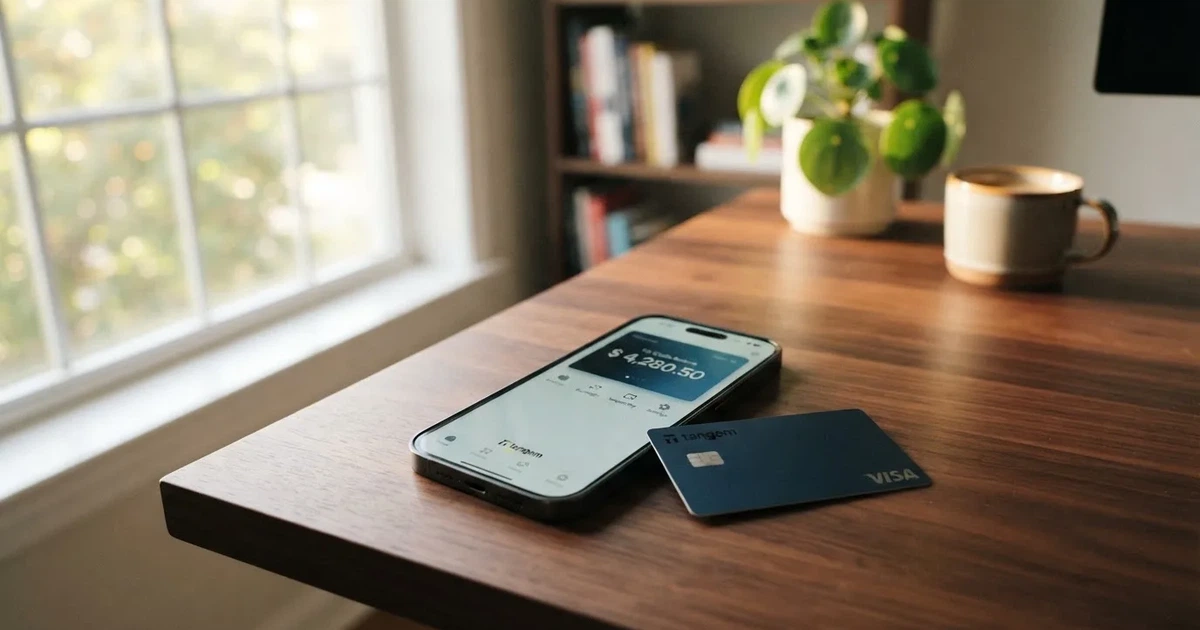
If you already keep crypto in a Tangem wallet, the card is a natural extension — one app, one balance, a Visa number that works wherever Visa is taken. If you are coming from outside that ecosystem, the question is whether the self-custody angle is enough to justify the gaps in coverage, the Basic tier’s 4% ATM fee, and the fact that a UK or EU launch is only promised for 2026.
Conditions are current as of October 28, 2026.
Verdict
Tangem Pay scores 6.9 out of 10 in my review. It is a competent prepaid-style Visa with a genuinely non-custodial backing account, but the limited country list, Basic tier fees, and a service that is still rolling out keep it from a higher mark.
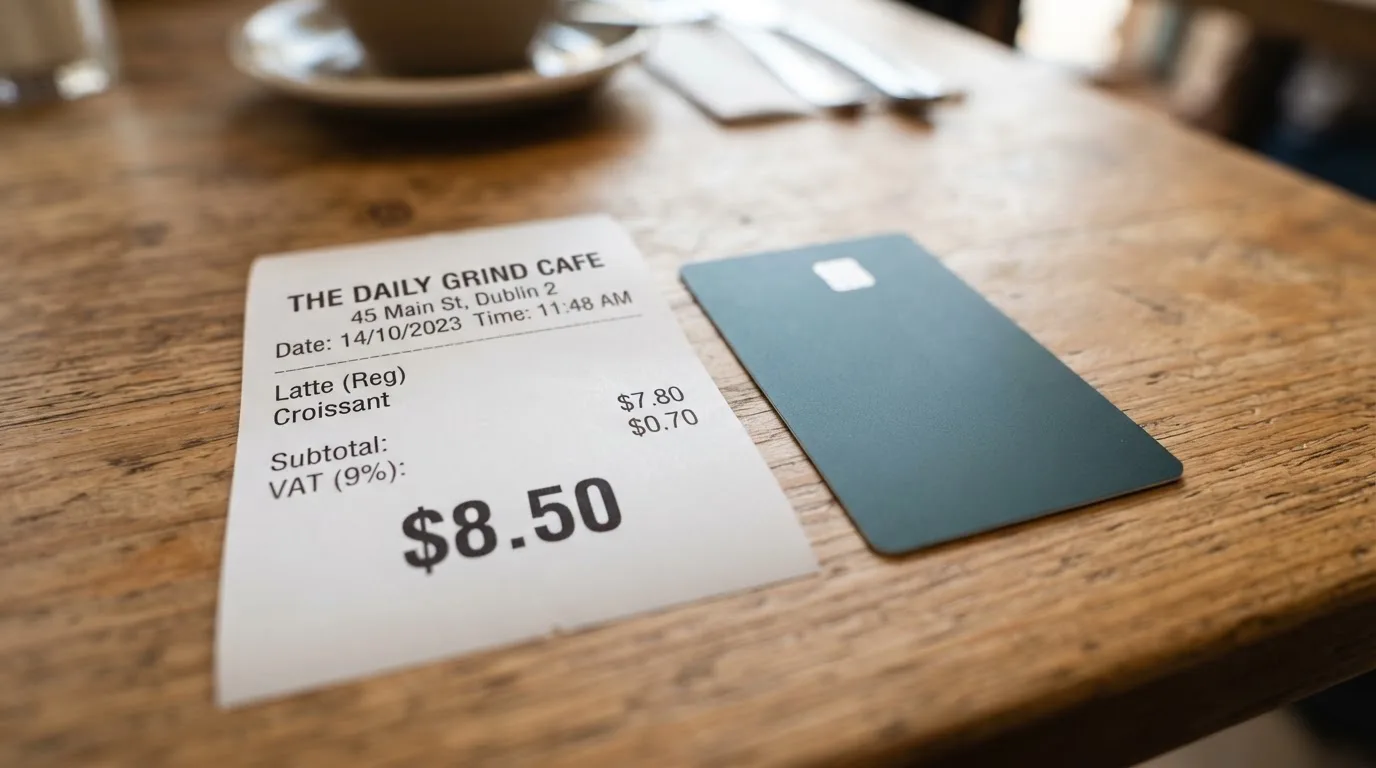
Here is the breakdown by criterion:
| Criterion | Mark | Why it scored there |
|---|---|---|
| Who can get it | 7 / 10 | Live in the U.S. and selected countries across LATAM, APAC, the Middle East and Africa; full country list not published; UK and EU planned for 2026 |
| Cost | 7 / 10 | Basic is free; Plus is $29.99 a month; transactions are $0; FX adds 1.5% on top of the Visa rate; Basic ATM fee is 4% |
| Top-up options | 6 / 10 | Native USDC on Polygon from any wallet, in-app swap, and ACH or FedWire bank onramp where available |
| Reliability and complaints | 7 / 10 | Card issued by Third National, programme managed by Rain, service run by Paera LLC; Tangem itself is not a regulated financial provider; reports of declines at gas stations and KYC lockouts |
| Everyday use | 7 / 10 | Basic is virtual; Plus gives a plastic card; Apple Pay and Google Pay work via card details; ATM is 4% on Basic and 2% on Plus |
The card suits Tangem wallet users who want a free virtual Visa backed by USDC they actually control. It suits less well anyone outside the supported countries, anyone who needs a physical card today, and anyone who plans to use ATMs regularly on the Basic tier.
Who will they give you the card
Tangem Pay is live in the United States (not all states) and a selection of countries across Latin America, the Asia-Pacific region, the Middle East and Africa. The card’s own page says eligibility is decided “based on your country and region of residence,” and the check happens inside the app during onboarding. A full list of supported countries is not published on the readable pages. I had to rely on third-party trackers for a more concrete picture: an unofficial list puts around 31 countries on the available side, including Argentina, Australia, the Bahamas, Brazil, Chile, Colombia, Hong Kong, Japan, Mexico, New Zealand, the Philippines, Singapore, South Africa, the United Arab Emirates and Uruguay, with the United Kingdom, Andorra and the 27 EU states on the restricted side pending a 2026 launch.
This is unofficial and not confirmed by the card itself, so take it as a starting point rather than a guarantee. The only way to know for sure whether you qualify is to download the app and start the onboarding flow — that is where the residence check happens.
For physical cards specifically, Tangem says shipping covers nearly 200 countries, with about 20 excluded, including China, Russia, North Korea and Palestine. So even if you can hold a Tangem Pay account, you may not be able to receive a plastic card at your address. And a press note on the first physical batch puts the cap at 5,000 cards, which suggests supply is tight at launch.
The card is Visa, denominated in US dollars, and comes in three tiers: Platinum (Basic), Signature (Plus) and Infinite (Prestige). Basic starts as virtual, with a plastic option in the comparison table; Plus is plastic; Prestige is virtual, plastic or metal. What cards the app actually issues today is a different question, which I cover under everyday use.
How to get it
The signup is built around the Tangem app and a quick identity check. There is no web form to fill in and no documents to upload before you start; the app walks you through country confirmation, then KYC, then card issuance.
Identity verification is described in the fee schedule and the help pages as “ID verification and eligibility checks.” In practice, the KYC step is run by Sumsub, a third-party verification provider, and takes two minutes: you confirm your country of residence, then submit a government ID and a face verification. What specific documents Sumsub asks for — whether a proof of address is required, what the minimum age is — is not stated on the readable pages. Treat it as a standard KYC for a US-issued Visa programme: passport or national ID plus a selfie is the likely minimum.
A few things are worth knowing before you start:
- The KYC applies to the Tangem Pay account only, not to your existing Tangem wallet. Your existing wallet credentials and seed phrase are unaffected.
- Transaction limits depend on your “risk profile, verification level, and account history.” The levels are not named, so the practical effect is that heavier users get higher caps after the system learns about them.
- Card issuance is automated: third-party sources report most cards are issued within five minutes, with manual review taking up to 48 hours. This is unofficial and not confirmed by Tangem.
If everything checks out, you walk out of onboarding with a virtual Visa number that you can add to Apple Pay or Google Pay through the card details, or use directly for online purchases.
What it really costs
Tangem Pay’s pricing has two layers: the plan fee, which buys you a tier with its own limits and perks, and the per-transaction costs, which mostly sit on top of whatever Visa charges for currency conversion. The headline numbers are friendly — Basic is free, transaction fees are $0 — but the real cost depends on how you use the card.
Here is the costs table, with values from the card’s own fee schedule and tier comparison:
| Fee or limit | Basic | Plus | Prestige |
|---|---|---|---|
| Plan fee | $0 / month | $29.99 / month | $999 / year (shown as ~$83/month) |
| First physical card issuance | $0 | $0 | $0 |
| Additional virtual card | $5 | $5 | $5 |
| Replacement card | $1 | $1 | $1 |
| Physical card delivery | $14.53 – $82.10 | $14.53 – $82.10 | $14.53 – $82.10 |
| Transaction fee | $0 | $0 | $0 |
| Non-USD conversion | Visa rate + 1.5% | Visa rate + 1.5% | Visa rate + 1.5% |
| USDC to USD conversion | 1:1, no spread | 1:1, no spread | 1:1, no spread |
| ATM withdrawal fee | 4% | 2% | 1% |
| ACH onramp (bank to card) | $1 | $0 | — |
| FedWire onramp | $10 | $0 | — |
| ACH offramp (card to bank) | $1 | $1 | — |
| FedWire offramp | $11 | $11 | — |
| Dispute fee | $30 | $30 | $30 |
| Daily spend limit | $10,000 | $50,000 | $100,000 |
| Cards per user | 3 | 5 | 10 |
| Annual limit per card | $10,000,000 | $10,000,000 | $10,000,000 |
| Cashback | 1% (cap $100/month) | 2% (cap $300/month) | 4% (cap $1,000/month) |
A few things stand out when you walk through real spending scenarios:
Paying for a coffee in New York with a Basic card. You have $50 of USDC loaded, the merchant charges in USD, and your card settles in USD. There is no conversion fee, no transaction fee, and 1% cashback (50 cents) lands in your account. Total cost: the coffee. This is the case Tangem Pay is built for, and it works cleanly.
Buying something online from a UK retailer with a Basic card. The merchant charges £40, Visa converts at the wholesale rate, and Tangem adds 1.5% on top. The takeaway: the 1.5% is the real cost of going non-USD, and it applies on top of whatever Visa itself charges for the conversion. You also earn 1% cashback, which offsets a few cents.
Withdrawing $200 from an ATM on a Basic card. The 4% ATM fee is $8. There is also an unofficial note from a third-party tracker that Basic-tier ATM withdrawals are not available in practice yet, with the higher tiers advertising ATM pricing that has not gone live. That is unofficial and not confirmed by Tangem, but it is worth checking before you rely on the ATM line. Free ATM allowance is not stated, so the 4% applies from the first dollar.
The fee schedule also notes that USDC converts 1:1 to USD with no spread, which is a meaningful point. Many crypto cards quote a stablecoin-to-fiat rate that quietly includes a margin of 0.5% to 1%; here it is stated as 1:1. That makes the comparison with a non-crypto Visa mostly about the 1.5% FX markup and any ATM fees you actually incur.
One last cost worth flagging: the $30 dispute fee. If you file a chargeback over a fraudulent or undelivered purchase, you pay $30 to do so. Timeframes for resolution are not stated. Compare that with mainstream bank cards, where chargebacks are free, and you have a real cost to weigh if something goes wrong.
How to top up Tangem Pay
Topping up is the area where Tangem Pay looks most like a crypto-native product. The card is a prepaid-style Visa: it spends only the balance you have loaded, so overdrawing is not possible. The question is how you get money onto it.
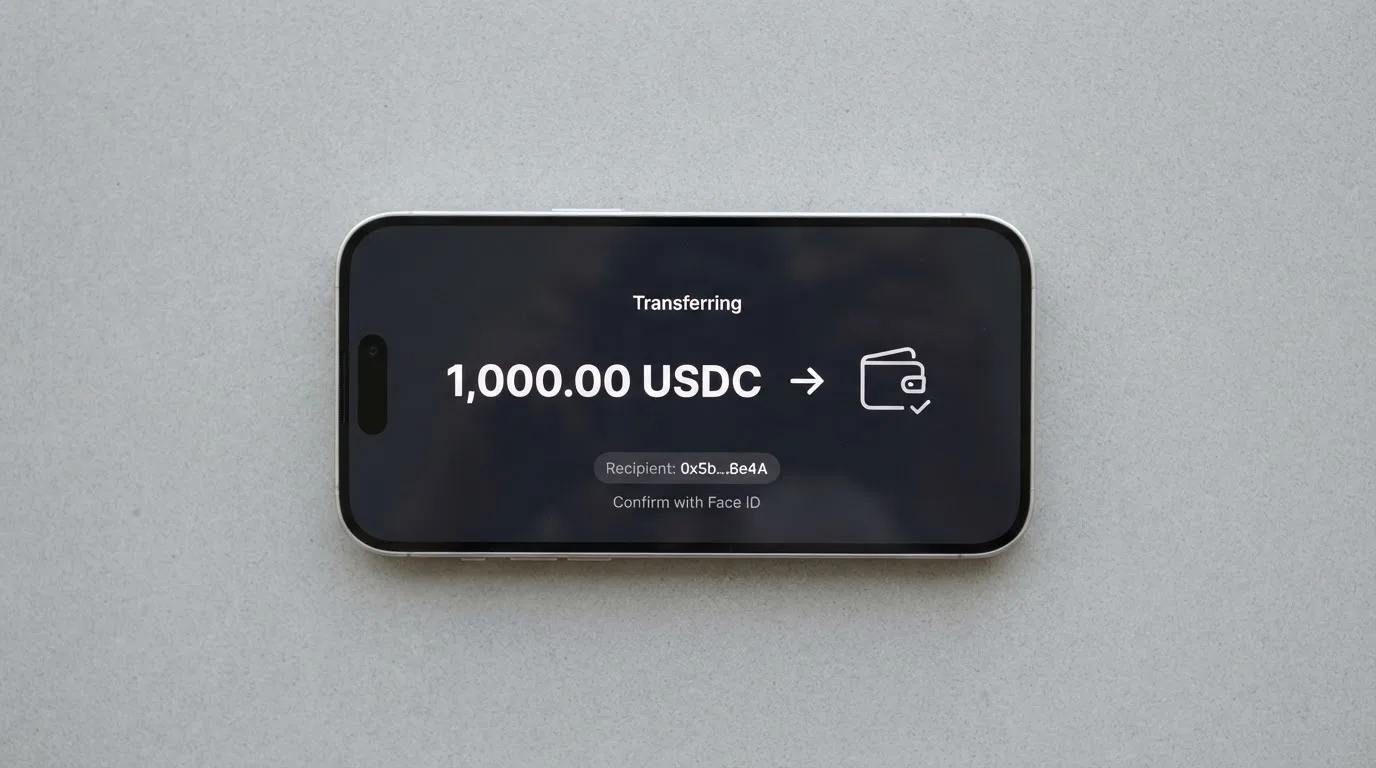
There are two routes, and the choice between them depends on whether you already hold USDC or whether you are starting from a bank account.
The first route is on-chain. Tangem Pay accepts native USDC on the Polygon network, sent from any wallet that supports it. That includes the Tangem wallet itself, but also MetaMask, Trust Wallet, Rainbow or any exchange wallet that lets you withdraw USDC on Polygon. You send USDC to the deposit address the app shows you, and the balance appears after the network confirms. On-chain withdrawal from Tangem back to your own wallet is $0 per the fee schedule, and transaction fees are $0 — meaning Tangem does not charge, but Polygon gas is paid by you to the network. Minimum top-up amount is not stated.
The second route is bank onramp, where available. In the U.S., this is ACH ($1 on Basic, $0 on Plus) or FedWire ($10 on Basic, $0 on Plus). Availability varies by jurisdiction, so what you actually see in the app depends on where you live. ACH and FedWire offramp costs are $1 and $11 respectively, and the remaining balance “stays in the account you control” as a smart contract balance rather than disappearing.
A third option sits in between: in-app swap. You can convert other tokens held in your Tangem wallet into USDC, which is then loaded onto the card. The exact fee on the swap is not stated on the readable page.
A practical note on the network choice. USDC exists on many chains, but Tangem Pay only accepts Polygon USDC. If you send USDC on Ethereum, Solana, Base or Arbitrum to the deposit address, the funds can be lost or need manual support recovery with no guarantee. The irreversibility of blockchain transfers is a recurring trap: the address looks right, the network is wrong, and the money is gone. Confirm the network in the app before you send.
For what it is worth, Polygon is one of the cheaper networks to move USDC around, with typical gas fees of a fraction of a cent. That makes the on-chain top-up path cheap for small and large amounts alike, once you are set up to send on Polygon.
Paying with it every day
Once the card is in your wallet, the day-to-day experience is closer to a prepaid Visa than to a bank-issued debit card. That is the point, but it also has consequences.
For online and contactless payments, the card works through Apple Pay and Google Pay once you add the card details from the Tangem app to your mobile wallet. The card is Visa, so it is accepted anywhere Visa is taken — the card’s pages put that at over 150 countries for merchants. The fee schedule does not list blocked merchant categories, but a third-party description mentions gambling, online casinos and liquor stores among the categories the card declines. The full blocked list was not read, and what applies in your region may differ.
For in-store use, you tap or insert the card, enter your PIN, and the purchase settles. A common point of friction with prepaid Visas is pre-authorisation holds: gas stations, hotels and restaurants often place a temporary hold of, say, $175 on a fuel pump before the final amount is known, and that hold can lock up your balance for several days. User reports gathered from Reddit describe exactly this kind of decline pattern. The card itself is not at fault — this is how Visa pre-auth works — but it is something to be aware of if your balance is small.
For cash, ATM withdrawals are advertised at 4% on Basic, 2% on Plus and 1% on Prestige, with a cap of three withdrawals per 24 hours and $250 per withdrawal. Third-party coverage reports that Basic-tier ATM access is not yet live in practice, and that the higher tiers advertise pricing for an ATM product that has not been activated. That is unofficial and not confirmed by Tangem, so I would not plan your cash access around it without checking the app.
Cashback is the everyday sweetener. Basic pays 1% with a $100 monthly cap, Plus pays 2% with a $300 cap, and Prestige pays 4% with a $1,000 cap. A “boosted” 5%, 10% and 15% on the first $500 of spend is marked as “coming soon” across all three tiers, alongside a welcome bonus “up to $75.” The payout currency for cashback is not stated, and there is no published date for when the boosted rates will go live.
The app itself is the Tangem wallet app, which sits at 4.9 out of 5 from around 25,000 ratings in the App Store as of October 2026. That rating covers the whole wallet app rather than Tangem Pay specifically, and there is no Tangem Pay-only Trustpilot page. Tangem Pay requires app version 5.35 or later.
What can go wrong
The first thing to be clear about is who is who. Tangem Pay has four names attached to it, and they are not the same entity. The Visa card itself is issued by Third National, a US bank. The card programme is managed by Rain, which describes itself as a Visa Principal Member. The Pay service is operated by Paera LLC, a US company responsible for onboarding, KYC and AML. And Tangem AG, the wallet maker, is the brand on the box but is not itself a regulated financial services provider — its own footer says it “does not hold, custody, or control users’ assets.”
What this means for you in practice: the funds that back your card sit in a smart contract you control, not in a bank account held by Tangem. If you freeze the card, you disconnect it from Visa, but the on-chain balance is unaffected and you can reconnect later or use it from the wallet directly. Identity data, on the other hand, goes to Sumsub, the KYC vendor, and Tangem does not see it. The card’s pages describe Elliptic as the transaction monitoring partner.
The complaints picture is mixed. Trustpilot for the Tangem brand is 4.1 out of 5 from 876 reviews, which is a healthy score for a crypto product, but there is no Tangem Pay-specific Trustpilot page. The main user-reported pain points, gathered from secondary sources that summarise Reddit threads, are:
- Declines at gas stations, hotels and restaurants because of pre-authorisation holds eating into small balances.
- KYC lockouts after the card has already been issued, which can leave the user unable to load or spend while the verification is sorted out.
- Activation problems where support asks for video proof, slowing down what is supposed to be a near-instant process.
None of these are unique to Tangem Pay, but the self-custody backdrop makes them feel different: there is no customer service number at the card issuer that can simply unfreeze your balance, because the balance is yours, in a smart contract.
The regulatory position is the other thing to weigh. Tangem itself is not a regulated financial services provider, and the US debit card reversal rights that come with Regulation E do not necessarily extend to a prepaid-style product like this. The dispute fee is $30, and the resolution timeframes are not stated. In the EU, the equivalent framework is MiCA, which sets out separate rules for the crypto side and the payment side — a crypto card often depends on two licences, and the protections differ between them. None of this is a reason to avoid the card, but it is a reason to keep balances modest and to treat any large holding as something you would hold in cold storage rather than on a payment card.
The programme history is short and worth a look. The card was announced as available to all users in selected countries on 26 March 2026, with an update on 27 May 2026. The fee schedule was reissued in September 2026, with the Basic and Plus tiers now clearly differentiated. UK and EU launches are planned for 2026 but have not happened at the time of writing. Programme closures in the wider crypto card market have happened before — WaveCrest was suspended by Visa in 2018, FTX’s programme was wound down in November 2022 — so a young programme is not in itself a red flag, but it is a reason to keep an eye on the news.
What to take instead
Tangem Pay is not the only crypto card on the market, and the alternatives differ in ways that matter depending on what you are optimising for. Here is how three of them compare.
BloFin Wallet Card (6.9 / 10) is the closest comparable on price. Activation, annual, issuance and dormancy fees are all $0. The catch is a spend fee of 1% by default, which falls with VIP tier and reaches 0% at the top. BloFin funds from USDT and USDC on Arbitrum and Base, which gives you a couple more network options. There is no cashback — BloFin’s pitch is that the saving is the absence of a cashback wait, not the presence of a cashback. Country list is not published on the card page; the starting data puts coverage at around 35 countries.
Decaf (6.2 / 10) is a Visa card issued through a different stack, with a long restricted-country list that includes Russia, Belarus, China, Iran, Iraq, Israel, Myanmar, Turkey, Cuba, Ukraine, Venezuela, Vietnam, Nicaragua, Puerto Rico, Nigeria, and twelve restricted US states. Activation is $5 for a virtual card and $10 for a US physical card, or $90 for a physical card shipped outside the US. There is no monthly or annual fee. Decaf’s pitch is “the FX is the one Visa offers” — no FX markup on top of the Visa rate. Top-up works by paying a Decaf payment link or account details by card, bank transfer or USDC.
SafePal (6.2 / 10) is a virtual Mastercard debit backed by a Swiss Fiat24 account, with spending limits given in euros. There is no account creation or management fee, the standard top-up fee is 0%, and Mastercard’s non-USD settlement fee is 1%. The headline tradeoff is rewards: SafePal does not pay cashback, and instead offers referral commissions and tier privileges tied to deposits, referrals and SFP staking. Top-up is from 40+ blockchains converted to USDC, with Arbitrum as the underlying network.
None of these is a clear upgrade across the board. BloFin is cheaper on no-monthly-fee terms but charges 1% on spend. Decaf has a stronger FX story but a heavier restricted-country list. SafePal gives you more chains to top up from but sits on a Mastercard and a Swiss account rather than a Visa and a US account. The Tangem Pay advantage remains the self-custody backing: USDC in a smart contract you control, with the card as a spend interface on top.
Who I would recommend it to
Tangem Pay is a sensible pick if you already use a Tangem wallet and want a Visa that draws from a USDC balance you control without giving up your seed phrase to a custodian. The Basic tier is genuinely free, the 1:1 USDC-to-USD conversion means no spread on the stablecoin side, and the on-chain withdrawal is $0, so moving money back into self-custody does not cost you a fee.
It is a less obvious pick if you live in a country where the service is not yet live, if you need a physical card today, or if ATMs are part of your plan and you would be on the Basic tier. The 4% ATM fee is high for a card you can get for free elsewhere, and there is no free allowance.
The Plus tier at $29.99 a month is a tougher sell. The 2% cashback, 2% ATM fee, free ACH and FedWire onramp, and a Signature card with purchase protection and two free lounge visits a year are real benefits, but the monthly fee is steep unless you spend heavily in non-USD currencies or rely on bank onramp. The Prestige tier at $999 a year is for the heaviest spenders, and the boosted cashback rates and welcome bonus are still “coming soon” at the time of writing.
If you are not already in the Tangem ecosystem and you are choosing on cost alone, a prepaid Visa with no monthly fee and no FX markup, paired with a hardware wallet for the USDC, may serve you just as well. Tangem Pay’s edge is the integration: one app, one balance, one seed phrase.
Frequently asked questions
What is the Tangem Pay card?
The Tangem Pay card is a Visa debit card that spends from a USDC balance held in a smart contract inside the Tangem wallet app. The card is issued by Third National, the programme is managed by Rain, and the service is operated by Paera LLC. Tangem AG markets the product but is not itself a regulated financial services provider.
How does Tangem Pay card work?
You load USDC on the Polygon network into a smart contract tied to your Tangem wallet, and the card spends that loaded balance. When you pay, USDC converts 1:1 to USD with no spread, and any non-USD transaction is converted at the Visa wholesale rate plus a 1.5% FX fee. The card is a prepaid-style Visa, so it cannot overdraw.
Is Tangem Pay a bank?
No. Tangem Pay is a Visa card programme, not a bank. The card is issued by Third National in the US. The funds that back the card sit in a smart contract you control, not in a bank account held by Tangem. Tangem AG, the brand behind the product, is not regulated as a financial services provider.
Who owns Tangem Pay?
Tangem Pay is the brand name of a card programme. The card itself is issued by Third National, a US bank, with the programme managed by Rain as a Visa Principal Member and the service operated by Paera LLC. Tangem AG, the company that makes the Tangem hardware wallet, is the consumer-facing brand.
Is Tangem Pay card available in my country?
Tangem Pay is live in the United States and a selection of countries across Latin America, the Asia-Pacific region, the Middle East and Africa. A full list is not published on the readable pages. The UK and the EU are planned for 2026 but not live at the time of writing. The only reliable way to check eligibility is to download the Tangem app and start the onboarding flow.
How do I apply for Tangem Pay?
You apply through the Tangem app. The process is country confirmation, then a Sumsub identity check (government ID and face verification, two minutes), then automated card issuance. Most cards are issued within five minutes, with manual review taking up to 48 hours. The KYC applies to the Tangem Pay account only and does not affect your existing wallet.
Does Tangem Pay card require KYC?
Yes. The KYC is run by Sumsub and takes two minutes: you confirm your country of residence, then submit a government ID and a face verification. What specific documents are required is not stated on the readable pages. Transaction limits depend on your risk profile and verification level, and the level names are not published.
How do I add Tangem Pay to Apple Wallet or Google Pay?
Once the card is issued, the app shows the card details, and you add them to Apple Pay or Google Pay through the standard flow on your phone. The card number is tokenised by the wallet, and each tap uses a one-time dynamic security code. The card works in stores and online wherever Apple Pay or Google Pay is accepted.
Is Tangem Pay card safe?
The USDC backing the card sits in a smart contract you control, and Tangem does not hold, custody or control user assets. KYC data goes to Sumsub and is not visible to Tangem, and transactions are monitored by Elliptic. On the other hand, Tangem is not a regulated financial services provider, the dispute fee is $30, and resolution timeframes are not stated. Prepaid-style cards do not necessarily have the same reversal rights as a bank-issued debit card.
How do I withdraw money from Tangem Pay?
You can withdraw on-chain back to your own wallet at $0 per the fee schedule, with Polygon gas paid by you to the network. The bank offramp is $1 by ACH and $11 by FedWire. After you close the card, the remaining balance “stays in the account you control” as the on-chain smart contract balance, ready to be sent wherever you want.
Wallet cards: the entry point – cryptocardportal.com
Content created by the «cryptocardportal.com» team