
The card that works like a prepaid Visa, without the paperwork — and without the paperwork that comes with it
 Available in US
IZIPAY sells you a card number you can pay with, and the money behind that number is crypto you convert first. That part is straightforward, and there are four card options at prices from $49.99 to $459.99. What is not straightforward is everything around it: the card’s own pages never name a legal entity, a licence, a jurisdiction or an issuing bank, and the reviews people have left describe balances disappearing. I have gone through the public pages and the complaint records, and I want to walk you through what is actually established, what is only claimed by third parties, and where I would put my own money — because the answer is not the same for everyone.
The conditions described here are current as of October 28, 2026.
My score for this card is 5.5 out of 10. That number sits in the middle for a reason: the mechanics of the card are good, the transparency underneath it is not, and those two facts pull in opposite directions. Below, I break down exactly which part earns which mark, then tell you plainly who should consider it and who should not.
| Criterion | Mark | Why |
|---|---|---|
| Who can get it | 6 / 10 | Site says worldwide with no eligibility list; a third-party catalogue says it is barred for US, UK and EU users |
| Cost | 5 / 10 | $49.99 / $49.99 / $59.99 / $459.99 by tier, $0 monthly, 3% top-up; unofficial sources add free FX and 1% ATM |
| Top-up options | 9 / 10 | USDT, BTC, ETH, SOL, BNB, also USDC; TRC20, ERC20, BEP20, Solana |
| Reliability and complaints | 1 / 10 | Operator undisclosed, no entity, licence or issuer named; Trustpilot 4.1 from 59 reviews about lost funds and deleted accounts (Mar–Jul 2026); domain registered 8 January 2025 |
| Everyday use | 8 / 10 | Virtual Visa, virtual Mastercard, Apple Pay Mastercard with Apple Pay and Google Pay, Metal for ATMs |
| Total | 5.5 / 10 | Good mechanics, poor transparency |
Who this suits. You already hold crypto, you are comfortable deciding in advance how much of it this card may ever see, and you can afford to treat whatever you load as money that might not come back. In that situation the card does a clean job: many coins, several networks, a $0 monthly fee, and a metal option that works at cash machines.
Who this does not suit. Anyone treating this as a replacement for a normal bank account, anyone whose income or savings depend on the balance sitting there, and anyone who cannot afford to lose the deposit. If a provider does not tell you who it is, no issuer, no licence, no jurisdiction — that is not a detail you can look past when the money is yours.
Will they give you the card?
The site says the card works anywhere Visa and Mastercard are accepted and presents it as available worldwide, with no eligibility list at all. That is the official position, and on its face it is unusually open. A third-party catalogue, though, says the card is “explicitly prohibited for users in the US, UK, and EU” — and that is unofficial, undated, and not confirmed anywhere in the card’s own material.
Take that contradiction seriously rather than resolving it in whichever direction suits you. If you live in one of those three regions, the site’s global claim and the third-party exclusion cannot both be right, and the only way to find out which one governs is to try. That is a poor way to learn that the answer is no. The same logic applies in reverse: the absence of an eligibility list on the site is not a promise that any particular country’s rules do not reach you.
Note also what is not stated anywhere on the public pages, because these are the questions that decide eligibility and the card leaves them blank. The card does not name a legal entity, a jurisdiction, a licence, or an issuing bank. It does not publish account tiers. It does not state a KYC level beyond its “no KYC” claim for standard usage limits. And it does not say what the age requirement is.
How to get it
The signup story is the shortest part of the whole process, and that is either the feature or the warning, depending on why you want it. The card is marketed as “No KYC, No ID, Anonymous”, and the FAQ says that for standard usage limits no document upload is needed — just an email address.
The sequence is: choose a card, pay the price in crypto, and the card is ready in under 2 minutes after blockchain confirmation. There is no application form, no document check, no waiting queue. If you have decided this card is for you, you will not be slowed down.
The four options, with their prices as published:
- Virtual Visa — $49.99
- Virtual Mastercard — $49.99 (online only, no Apple Pay or Google Pay)
- Apple Pay Mastercard — $59.99
- Physical Metal Card — $459.99
Balance currencies are USD, EUR and GBP. Physical cards ship globally in 7–14 business days; the shipping cost is not stated, and the cost of a replacement card is not stated either.
Pause on the metal card for a moment. The metal card costs $459.99, while the virtual card costs $49.99. If you are still reading this and that price has not put you off, you are probably in the market for something the card does not clearly offer: no cashback, no rewards, no tier progression. There are no account tiers — the four card types are the only variants that exist.
Fees: what it really costs to use the IZIPAY card
The headline numbers are reasonable, which makes it easy to miss what is missing. Here is every cost the card publishes:
| Fee or limit | Value |
|---|---|
| Issuance — Virtual Visa | $49.99 |
| Issuance — Virtual Mastercard | $49.99 |
| Issuance — Apple Pay Mastercard | $59.99 |
| Issuance — Physical Metal Card | $459.99 |
| Monthly fee | $0 |
| Top-up fee | Flat 3% |
| FX fee | Not stated officially (unofficial sources: free) |
| ATM fee | Not stated officially (unofficial sources: 1%) |
| Deposit limits | Listed as “Zero” |
| Spending limits | Not stated officially (unofficial sources: $50,000 daily, $200,000 monthly) |
| ATM allowance | Not stated officially (unofficial sources: unlimited) |
Note the shape of that table. The fees the card charges you are clear: 3% flat on top-ups from a crypto wallet, and the card says there is no hidden spread padding. The fees charged *to* you by things outside the card — the FX rate, the cash machine, the blockchain — are the ones left blank. The card claims the flat 3% is the whole story on the crypto side, and I have no reason to doubt it. But “the card charges no FX fee” is a different sentence from “converting currencies is free”, and only the first is official.
One more unofficial line, offered for completeness and with the emphasis it deserves: a third-party catalogue states the FX fee is free, the decline fee is free, and that three consecutive declines result in a permanent block. That last one is the kind of rule that does not appear on any schedule and gets enforced anyway.
Three everyday payments, and which fees actually bite.
*Buying coffee.* Nothing extra from the card — the 3% came off the top-up, not the purchase. What you will notice is whether the shop’s terminal accepts a prepaid card with a foreign BIN, which is a coin flip depending on the merchant, not the card.
*An $80 online subscription in a currency your balance is not held in.* Your balance sits in USD, EUR or GBP. Converting between them at the point of sale is exactly where an unstated FX fee would hide. Third-party sources say it is free; the card does not say.
*Withdrawing $60 from a cash machine in Mexico.* The metal card is the one built for this. The fee and the allowance are not stated officially; a third-party catalogue says 1% with no withdrawal limit. If that is right it is excellent value. If it is wrong, you find out at the machine.
How to Top up the card
This is where the card earns its best mark, 9 out of 10, and the strength is breadth. The deposit selector offers USDT, BTC, ETH, SOL and BNB; the FAQ also names USDC, and an earlier check listed TON. Networks supported are TRC20, ERC20, BEP20 and Solana.
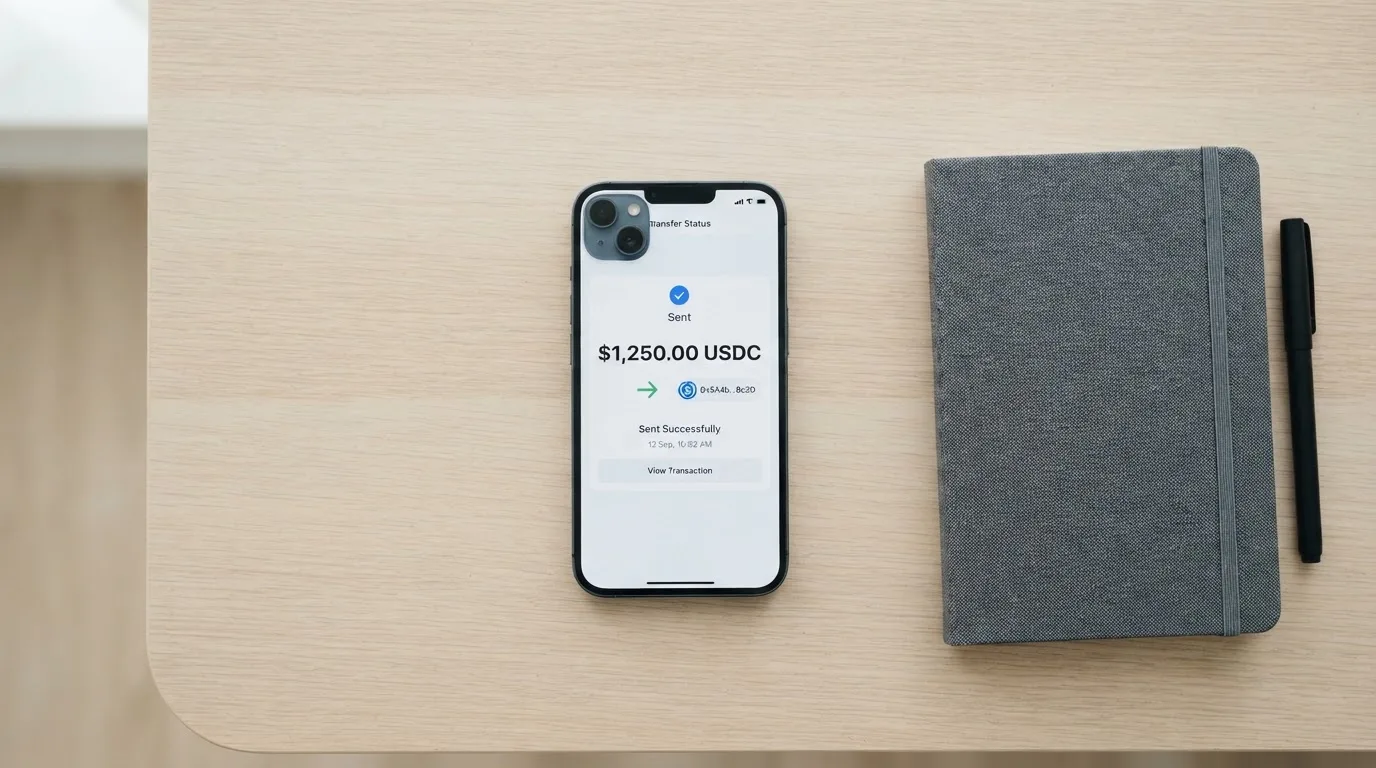
What that means in practice: you are not locked into one coin, and if you hold assets on more than one of those chains you can send from whichever is cheapest at the time. That flexibility is the single most practical thing about the card, and for a user who already moves money across chains it is a genuine reason to keep it funded.
The fee is a flat 3% on top-ups. Beyond that, the card does not state:
- the minimum top-up
- whether fiat top-ups are possible (no method is described)
- who pays the network fee for the transfer
- how, or whether, you can withdraw back out to a wallet or bank
Those four blanks matter more than they look. A card you can fill but not empty is a spending tool, not a wallet, and you should treat it that way when you decide how much to leave on it.
Paying with it every day
For everyday use the card scores 8 out of 10, and the reason is the choice of three working formats rather than one. The Apple Pay Mastercard at $59.99 adds to both Apple Pay and Google Pay and works in physical stores — that is the one to buy for daily life, because tap-to-pay is where most card friction disappears. The plain virtual Mastercard has no Apple Pay or Google Pay, which limits it to online and, given the merchant-decline issues below, to places you have already shopped at.
What is not stated: blocked merchant categories. Almost every card in this category blocks gambling by policy, and it matters — a card that fails at a betting site when you expected it to work is a bad experience — but this card publishes no list, so you cannot check in advance. There is also no app; this is a web service. That means your balance and card controls live behind a browser session, which is worth weighing against how much you keep there.
Rewards are thin. There is no cashback. A third-party site mentions a $10 referral bonus; officially, nothing is stated.
No dispute process is published. When a payment goes wrong, there is no stated route to challenge it — which, in a card business, is one of the more important documents to have.
What can go wrong
This is the section that takes the score from “interesting” to “careful”, and it is the reason I do not recommend this card to anyone who cannot absorb a total loss.
Nobody will tell you who they are. Only “IZIPAY” is named. A legal entity, a jurisdiction, a licence and an issuing bank are all absent from the public pages. In card issuing, those four facts are the foundation: they tell you who is responsible for your money, which regulator can compel them to behave, and which scheme rules you are under. Without them you have a card number and a counterparty you cannot name.
The complaints are about money vanishing, not about bad service. Trustpilot shows 4.1 out of 5 across 59 reviews, read on 21 October 2026, with 76% five-star and 19% one-star; the profile is flagged “associated with high-risk investments”. The one-star themes are not complaints about a wrong coffee order — they are reports of lost or vanished funds and deleted accounts (May–July 2026), Telegram support blocking or going silent over the same months, and the company describing complaints as false. Trustindex shows 4.9 from 27 reviews (Aug–Oct 2026), but those are short and generic.
One third-party catalogue alleges a pattern more specific than mere failure: that small transactions succeed first and larger deposits are then withheld. I did not verify this independently. But it is worth naming the shape of that allegation, because it is the shape of a card that is being tested by the people running it — and if it is true, you are the test.
The business is young. The domain was registered on 8 January 2025, per WHOIS cited by a third-party site — unofficial, not something the card publishes. That does not make it a scam, but it means there is no long history through which to judge it. There is also a name collision worth knowing about: this card shares a brand name with an unrelated Peruvian payment network called Izipay, which is unrelated to this service. Confusion between the two is not your problem, but people who get confused may search for you in support threads.
Custody means the provider holds your funds. A third-party catalogue describes the setup as custodial, and the card states no security features of its own. That is the standard trade: convenience in exchange for the fact that you cannot verify who holds the key material. And the underlying category has a long record of custodial failure — Mt. Gox (about US$350 million reported stolen, 2011–2014), Coincheck (about US$400 million, 2018), Ronin Network (US$625 million, 2022). The blockchain has no customer service; a transfer to a wrong address or a wrong network may be gone.
Merchants can decline you for reasons that have nothing to do with you. The card’s BIN can be looked up to see the issuer’s country, and a card that looks foreign draws extra scrutiny. Address verification, which compares your typed billing address against issuer records, is mainly offered in the US, Canada and the UK and is generally unavailable for foreign-issued cards — a common source of declines at checkout. And declined authorisations can leave a hold on your funds for days, typically up to 7.
Nobody has said when a programme might end. Visa has terminated card programmes before — WaveCrest in Europe in 2018, and FTX’s US debit card after Visa ended its agreements in November 2022. When that happens, the order is always the same: a notice period, then loading and spending stop, then you are asked to withdraw whatever is left. Your exposure in that window is whatever you did not withdraw.
I want to be clear about one thing here, because it is the honest line to draw: I am not telling you this card is a scam. I have no evidence for that, and “the operator is not disclosed” is an absence, not a theft. I am telling you that you are being asked to hand over money to a party that declines to identify itself, whose complaints are about missing balances, and whose domain is under two years old. Decide whether that is acceptable to you with that in mind.
What to take instead
None of these are endorsements, and none of them fixes every problem — each has its own. But you should compare against something concrete rather than against the idea of a card.
| IZIPAY | Cardex | TakeCard | OkiCard | |
|---|---|---|---|---|
| Score | 5.5 / 10 | 5.6 / 10 | 5.5 / 10 | 6.0 / 10 |
| Who | Site says worldwide; unofficial: barred in US, UK, EU | “One crypto card, 200+ countries”, no exclusions listed | Physical card Bolivia only; virtual wider | 150+ countries; must confirm not in a sanctioned jurisdiction |
| Card | Virtual Visa, virtual Mastercard, Apple Pay Mastercard, Metal | Debit card on VERVE, Visa, Mastercard, UnionPay; virtual and physical | Virtual (immediate) and physical (Bolivia); Visa, issued in the US, USD | Virtual card, page also mentions physical; network unspecified |
| Price | $49.99 / $49.99 / $59.99 / $459.99; $0 monthly | Not stated | Virtual $5; physical $20 issuance + $20 shipping | Issuance $0 monthly, starting price $15 (pages disagree) |
| Fees | 3% top-up; FX and ATM not stated officially | Conversion at payment time, “AI-Powered Conversion Rate”, no percentage stated | 1% per purchase; USD 1:1, others at the Visa rate | Load fee 3%; USD transaction fee 0%; FX not stated |
| Top-up | USDT, BTC, ETH, SOL, BNB, USDC; TRC20, ERC20, BEP20, Solana | USDT, USDC, BTC; networks not stated | Takenos balance; unofficial: USDC/USDT via Polygon, BNB Chain, Tron, Ethereum | USDT on BSC, Ethereum, Tron, Solana; USDC and others “coming soon” |
A few observations from walking that table.
Cardex scores fractionally higher on the same underlying pattern — a crypto card sold widely, with the same unanswered question about who stands behind it — and its App Store listing is Naira-focused, which hints at where it actually operates. Its pricing is not stated at all, which is worse for planning than IZIPAY’s transparent $49.99. Its conversion claim, that an “AI-Powered Conversion Rate” scans global exchange rates and picks the best one when you spend, is the kind of phrase that costs nothing to write and tells you nothing you can check.
TakeCard is the one with the clearest footing on what it is: prepaid, Visa, issued in the United States, USD at 1:1, with a published 1% commission and no monthly fee. It is also the most restricted, with the physical card Bolivia-only, and its own help centre contradicts itself on physical pricing ($20 + $20 in one article, $10 in another) — a small thing that tells you about how carefully the documentation is maintained.
OkiCard is the most conventional of the four: a virtual card, $15 starting price, $0 issuance and $0 monthly on the pricing page, 3% load fee, 0% transaction fee on USD, and deposits in USDT across BSC, Ethereum, Tron and Solana. It says 150+ countries, asks users to confirm they are not in a sanctioned jurisdiction, and mentions an initial deposit of 100 USDT. That is a company that has thought about compliance paperwork — which is not the same as being a good card, but it is a different risk profile from “no entity named at all”.
The honest summary: if anonymity-without-paperwork is the reason you are here, IZIPAY and Cardex are the names in this space; if predictability is, OkiCard publishes the most numbers; if you need a card you can reason about concretely, TakeCard at least tells you its issuer and its rules. None of these is a bank deposit.
Who I would recommend it to
I would recommend IZIPAY to someone in this specific position: you already hold crypto, you have read the complaints section above and accepted the risk with open eyes, you decide on a fixed amount to load and treat it as spending money rather than savings, and you check the withdrawal and dispute situation yourself before committing more than you can lose. For that person the card works — many coins, many networks, no monthly fee, a working mobile wallet, and a metal option if you genuinely need cash.
I would recommend it to nobody who is choosing a first card, nobody who needs to receive salary or hold savings, nobody in the US, UK or EU given the unofficial exclusion, and nobody who would be distressed by a balance disappearing without recourse.
And to everyone else, my actual recommendation is this: if you read this far and the transparency still bothers you — and after the section above, I cannot blame you — then the right move is not to find a better anonymous card. It is to use a card from a named, licensed issuer, even if it asks you for an ID. The convenience difference is smaller than it feels. The difference in who is accountable when something goes wrong is not.
A word on keeping records, since card payments funded from crypto can each be a separate disposal for tax purposes in some systems — I am not qualified to advise you on that, and you should take your own advice on it, but know that the transaction history you keep now may matter later.
Frequently asked questions
What is the IZIPAY card?
IZIPAY is a prepaid payment card that spends crypto you have converted and loaded in advance. The card’s own pages describe a virtual Visa, a virtual Mastercard, an Apple Pay Mastercard and a physical metal card, with balances held in USD, EUR or GBP. It is marketed as “No KYC, No ID, Anonymous”, and no legal entity, jurisdiction, licence or issuing bank is named on its public pages.
Is IZIPAY a bank?
No — at least, nothing on its public pages says it is. Banks are licensed and named; this card discloses no legal entity, no jurisdiction and no issuing bank, and no licence. That is the single most important thing to understand before you deposit. If you want a card backed by a named regulated institution, this is not one on the evidence available.
Who owns IZIPAY?
Nobody will say publicly. Only the brand name “IZIPAY” is given; a legal entity, jurisdiction and licence are all absent, and an earlier check named a provider called IZIPAY Solutions Group. A third-party site notes the domain was registered on 8 January 2025, which is unofficial and unconfirmed by the card. A separate, unrelated Peruvian payment network also uses the name Izipay.
Does IZIPAY require KYC?
Not for standard usage limits, according to its FAQ — the card is marketed as “No KYC, No ID, Anonymous” and asks only for an email address for those limits. The KYC level for other, higher limits is not stated anywhere on the public pages. Whether that anonymity survives a compliance request from a network or an issuer is a different question from whether you are asked at signup.
How do I get an IZIPAY card?
You pick a variant, pay for it in crypto, and the card is issued within about 2 minutes of blockchain confirmation. Virtual Visa $49.99, virtual Mastercard $49.99, Apple Pay Mastercard $59.99, and the physical Metal Card $459.99. Physical cards ship globally in 7–14 business days, with shipping and replacement costs not stated.
How do I top up the IZIPAY card?
By sending crypto from your own wallet. Supported coins are USDT, BTC, ETH, SOL and BNB, with USDC named in the FAQ, over the TRC20, ERC20, BEP20 and Solana networks. The fee is a flat 3%. Minimum amounts, fiat top-ups, who pays the network fee and how to withdraw money out are all not stated, so do not plan on this being reversible.
Is the IZIPAY card free?
There is no monthly fee — $0 — but the card is not free to get. The cheapest option is $49.99 and the metal card is $459.99, paid once in crypto. The only recurring cost is the 3% top-up fee. There is no cashback, and a $10 referral bonus appears only on a third-party site, not in the card’s own material.
Can I add the IZIPAY card to Apple Wallet?
Yes, if you buy the Apple Pay Mastercard at $59.99 — that variant is designed to add to both Apple Pay and Google Pay and works in physical stores. The plain virtual Mastercard, at $49.99, has no Apple Pay or Google Pay support, so it is for online payments. Be aware that tokenised numbers can be restricted by the issuer for specific channels.
Is IZIPAY safe?
That depends entirely on your tolerance. The mechanics are ordinary, but no operator, licence or issuer is disclosed; Trustpilot shows 4.1 from 59 reviews with reports of lost funds and deleted accounts; and a third-party source describes the setup as custodial, meaning the provider holds the assets. Nothing here proves wrongdoing — it means you would be trusting an unnamed party with money you could lose.
Why do people say the card declined their payment?
Several unrelated reasons, and only some are the card’s fault. A merchant can decline a prepaid or foreign BIN because the lookup reveals the issuer country; address verification is generally unavailable for foreign-issued cards, which causes declines at checkout; and a declined authorisation can leave a hold on your funds for up to about 7 days. A third-party site also says three consecutive declines trigger a permanent block — unofficial, and worth knowing before you retry repeatedly at one shop.
Virtual cards: the entry point – cryptocardportal.com
Content created by the «cryptocardportal.com» team