
A prepaid card paid in crypto, sold through several providers, and surrounded by more uncertainty than most rivals
 Available in US
Trocador sits in a corner of the crypto-card market that does not behave like the better-known names. It is not a bank, not a card issuer, and not, in the usual sense, a programme manager. It is a service that lets you buy a prepaid card from a small set of card providers and pay for it with cryptocurrency. The card you end up holding may be issued by Reward, MyPrepaidCenter or Obsidian, and the only common thread is that Trocador arranged the purchase on your behalf. That arrangement, more than the card itself, is what shapes the experience: what you pay, who you deal with when something goes wrong, and how comfortable the product is for everyday use.
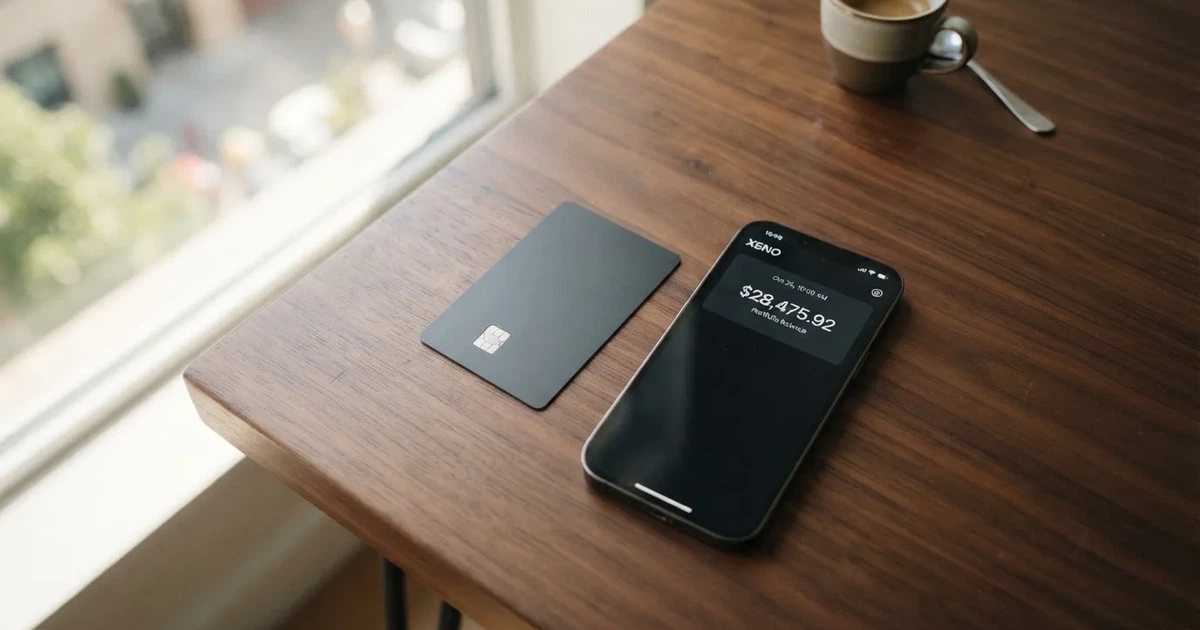
I have gone through the public pages, the help-centre material, the third-party profiles and the user reports I could find, and walked away with the same general impression that the published score reflects. The product has a clear appeal for a narrow audience, and clear weaknesses for almost everyone else. This review walks through what Trocador is, who can use it, what it costs in practice, how it behaves at a coffee shop, at an ATM and on a phone, where the complaints cluster, and which alternatives are worth a look if the gaps are deal-breakers for you.
The conditions described here are current as of October 28, 2026.
Verdict
Trocador earns a 5.4 out of 10 in this review. That is a middling score, and it sits in a place that is hard to summarise in a sentence. For a privacy-minded user who deliberately wants a prepaid card paid in crypto, who is comfortable with the rough edges, and who already favours Monero or a similar coin, the service does the job. For almost everyone else, the lack of a clearly disclosed cost structure, the dependence on third-party card programmes the operator does not control, and the absence of a mobile app, ongoing top-ups, or an ATM path all weigh against it.
Here is the score broken down by criterion.
| Criterion | Mark | Why it sits there |
|---|---|---|
| Who can get it | 8 / 10 | Country coverage is broad on paper; the rules depend on whichever card provider ends up fulfilling the order. |
| Cost | 3 / 10 | Fees are not published in a single clear schedule; the picture emerges only after you start the purchase. |
| Top-up options | 7 / 10 | Crypto on the way in is the point of the product, and the choice is wide; reloads on the card itself are not part of the model. |
| Reliability and complaints | 5 / 10 | The exchange service behind the card has a strong Trustpilot score, but the card side has its own track record of activation and decline complaints. |
| Everyday use | 4 / 10 | Mobile wallets usually work, but there is no ATM, no reload, and no plastic for the providers that matter here. |
| Total | 5.4 / 10 | A workable niche product with more friction than the marketing implies. |
The audience the product fits is small and specific. If you already know why you want a prepaid card paid in crypto, and you are willing to treat the card as a one-shot instrument rather than a primary payment method, Trocador is a reasonable option. If you want a card you can top up, withdraw cash from, and rely on for everyday spending with predictable fees, the answer is almost certainly no, and you will probably be happier with one of the alternatives covered at the end of this review.
Who will they give you the card
The honest answer is that it depends on who ends up issuing it. Trocador itself is a routing service, and the card programmes behind it set their own country rules. The third-party profile I read suggests the service is reachable from roughly 164 countries, with around 11 explicitly excluded, and that the Reward and MyPrepaidCenter products are United States only. None of that is published in a single, definitive place on the operator’s own pages, so the practical rule is that you find out whether you qualify when you try to buy.
A few things are worth understanding before you start. Eligibility, where it is stated, is tied to the residency and citizenship rules of the underlying card provider, not to the cryptocurrency side. The exchange that takes your coins and the bank or e-money institution that ultimately issues the card number are separate parties, and the latter is the one whose compliance programme decides whether your order goes through. That is also why country coverage tends to be a moving target: a single card programme can add or remove a jurisdiction without any announcement from the routing layer above it.
For the Reward and MyPrepaidCenter products, the user base is effectively limited to the United States. The Obsidian path is more permissive in unofficial accounts. None of this is signed off by the card programmes themselves in a way you can take to a regulator, so the safe assumption is that you will see the final answer at checkout, not before.
The single most useful thing to do, before you commit any crypto, is to start the order with a small amount, see whether the address you can supply matches the card programme’s rules, and only then top up the size of the purchase. Treat the absence of an upfront country list as part of the design, and plan around it.
How to get it
There is no application in the conventional sense. There is no account to open in advance, and there is no identity-verification step described on the public pages. The starting position is that you go to the operator’s site, pick a card product, choose the value you want, and pay in cryptocurrency. The exchange step happens at the moment of purchase, and the card is delivered by the relevant provider on the other side.
The product you can buy is a prepaid Mastercard or Visa, drawn from a small set of providers. In practice that means the card in your wallet will not be branded as a Trocador card at all. It will be a Reward card, a MyPrepaidCenter card or an Obsidian card, with the routing service acting as the front door and the funding mechanism.
Delivery timelines are not published. There is no statement I could find that says a virtual card is issued in X minutes, a physical card in Y business days, or that any specific region is excluded from physical shipping. The reward for going in with realistic expectations here is that you will not be surprised when nothing arrives in your inbox on a specific schedule.
What is also worth saying, because it shapes the experience, is that there are no published tiers. There is no Gold, Platinum or VIP version of the card, no spending-tier ladder, and no benefit structure that grows with use. Each card is a one-off purchase, and the relationship effectively ends when the balance is spent or expires.
The most useful preparation is to have a crypto wallet ready with the coin you want to spend, the network you want to send it on, and a small test transaction before committing the full amount. Blockchain transfers are irreversible, and sending the right coin to the wrong network, or to an address that has rotated, is a common and expensive mistake. The sections below cover the funding and the everyday use of the card in more detail.
What it really costs: fees and limits
The cost picture for Trocador is one of the harder parts of the product to pin down. The official pages do not publish a single, complete fee schedule the way mainstream card programmes do. What you find instead is a combination of the operator’s own charges, the charges of the underlying card programme, and the implicit cost of converting crypto at the moment of purchase.

Unofficial sources, and they should be read as such because they are not confirmed by the card itself, suggest a roughly 3% fee on the card’s nominal value, plus a flat $2 on top of that. The Obsidian path, where it is available, has been quoted at around $0.60 per purchase and a $5 monthly fee that kicks in after the second month. Payments that settle in anything other than US dollars have been reported to carry an additional 2.75% charge. None of these figures is published in a way that lets you verify them against a tariff document, and the difference between the unofficial accounts and the absence of an official schedule is itself a cost: it is the cost of going in without a hard number to plan against.
The cost table below sets out the lines you should expect to see. Treat them as indicative rather than as a contract.
| Fee or limit | Indicative value | Notes |
|---|---|---|
| Issuance | Around 3% + $2 on nominal value, per unofficial accounts | Obsidian path quoted at roughly $0.60 per purchase. |
| Monthly fee | $5 from the third month onwards on the Obsidian path | Not stated for the Reward or MyPrepaidCenter cards. |
| Conversion (crypto to fiat at purchase) | Built into the issuance fee on the unofficial accounts | Done once, at the moment of card purchase. |
| Foreign-exchange fee (non-USD payments) | Around 2.75% | Unofficial; applies when the card settles outside US dollars. |
| ATM withdrawal | Not supported in unofficial accounts | No reload and no cash access described. |
| Daily spending limit | Not stated officially | Limit is set by the card programme on the other side. |
| Monthly spending limit | Not stated officially | Same as above. |
To make the fees less abstract, three everyday payments are worth walking through. None of them is a perfect real-world case, because the official numbers are not published, but each one shows where the cost shows up.
A $50 grocery shop paid in US dollars with a US billing address is, on the unofficial figures, the cheapest everyday case. You pay the 3% plus $2 issuance fee at purchase, you top up the card in crypto, and you spend the balance at the till with no further conversion or foreign-exchange charge. The effective cost of the spend is whatever you lost to the exchange rate at the moment you bought the card plus the issuance fee, divided by $50.
A €40 dinner in a country outside the United States, paid from a US-dollar card, adds the 2.75% non-USD fee to the cost of converting your euros back into US dollars at the merchant’s rate. Because the card programme settles in US dollars, the merchant’s payment processor will apply a wholesale exchange rate, and the 2.75% surcharge on top is what you are quoted as paying for the privilege. The effective cost of the meal is again the crypto-to-fiat slippage at purchase plus the issuance fee plus 2.75% of $40-something.
A $20 digital subscription, paid in US dollars but to a merchant that requires 3-D Secure, will simply be declined on the unofficial accounts. That is not a cost in fees, but it is a cost in the form of a payment you cannot make with this card at all. The same is true of any merchant that filters out prepaid or foreign-issued BIN ranges. The section on everyday use below has more on this.
The practical effect of all of this is that you should not choose Trocador if the word “predictable” matters to you. Choose it if the word “possible” matters more.
Top up: how the card is funded
Funding is the part of the product that is most clearly described, and it is also the part that does the most work to make the rest of the product tolerable. The card is paid for in cryptocurrency, and the conversion happens once, at the moment of purchase, against a fixed-value card denomination. There is no ongoing reload step: when the balance runs out, the card is done, and a new card is a new purchase.
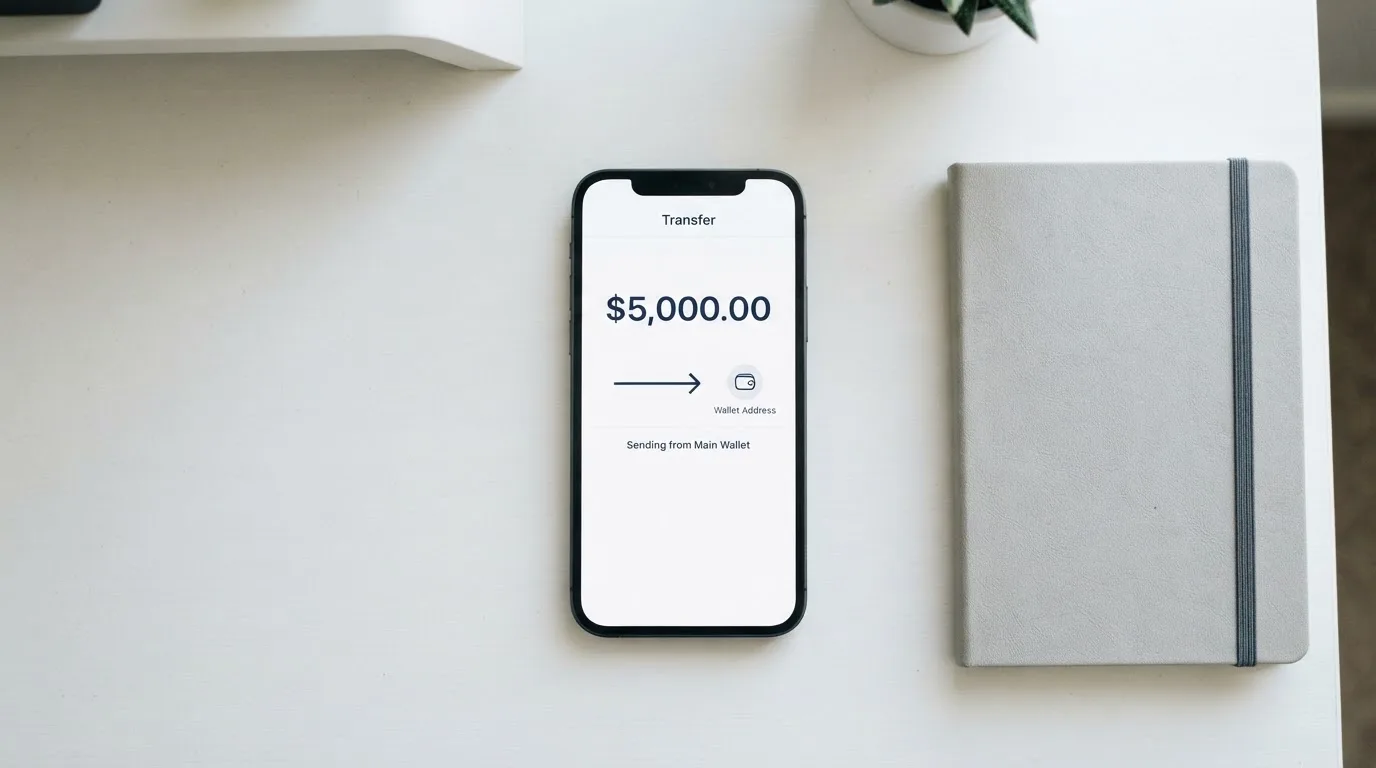
The coins the service accepts are described in unofficial accounts as including Bitcoin, Monero, Litecoin and a range of stablecoins, with additional coins available through a routing layer referred to as AnonPay. The exact list is not confirmed in a single place on the operator’s own pages, and the right way to think about it is that the coin set is broader than the headline names suggest, but the precise roster at any given moment depends on what the routing layer has live.
The choice of coin matters for two reasons. The first is that Monero, in particular, is part of the reason a privacy-minded user chooses this product over a more conventional crypto card, and the unofficial accounts suggest it is a first-class option rather than an afterthought. The second is that conversion fees can be a non-trivial part of the effective cost. If you hold Bitcoin and the service quotes you a price in Monero, the conversion between the two happens somewhere in the chain, and the spread on that conversion is a real cost that does not always appear in the headline fee.
Stablecoins, where they are accepted, remove that conversion-spread concern on the way in, but they do not remove the network fee. On-chain network fees for your deposit are charged by the blockchain, not by the card provider, and the size of those fees is a function of the network you choose to send on. USDT and USDC on Tron are typically cheaper to move than the same tokens on Ethereum, but you trade that for slightly different operational risk, and you should be careful which token you send on which network because a stablecoin sent to an address of the wrong chain can be lost permanently.
A few practical points that come up repeatedly in user reports are worth highlighting here, because they are not stated officially and they are easy to get wrong.
- The address you send to can rotate between purchases. Sending coins to an address from a previous order is a common way to lose funds, even if the address looks structurally valid.
- Sending the right token on the wrong network is a similarly common mistake, and recovery is at best a manual support process with no guarantee.
- Network fees for very small purchases can be a noticeable percentage of the total, and there is a de facto minimum purchase size below which the cost of the network fee dominates.
The funding model is, in short, a one-shot conversion. It is the cleanest part of the product, and it is also the part that is hardest to undo if you make a mistake. Plan around that.
Paying with it every day
The day-to-day experience with a Trocador card is, on the unofficial accounts, mostly a story of what does and does not work. Virtual cards are the default form factor for most users, and the mobile wallets — Apple Pay, Google Pay and Samsung Pay — “usually” work, in the language of the third-party profile. “Usually” is doing a lot of work in that sentence, and it is worth unpacking.
When a mobile wallet tokenisation works, the card behaves much like any other virtual prepaid card. You add it to the wallet of your choice, you tap to pay, and the merchant sees a transaction that comes from a card-issuer they do not necessarily know is a crypto-funded product. That is the best case, and it is the case that makes the product tolerable for everyday use.
When it does not work, the failure mode is almost always one of two things. The first is 3-D Secure. The unofficial accounts are explicit that the card is not accepted at merchants that require a 3-D Secure step in the checkout, and that is a long and growing list. Subscriptions, digital goods, airline tickets, and many larger online retailers fall into this category. The second is merchants that filter out prepaid or foreign-issued card numbers. Some merchants decline at the BIN level, before the wallet even gets to ask for 3-D Secure, because the card type and the issuer country are visible from the card number itself.
What the product does not offer is also part of the everyday picture. There is no ATM path in the unofficial accounts: the card is for spending, not for cash. There is no reload, which means each card lives and dies on its initial balance. There is no physical card for the providers that matter in most users’ hands, although a virtual card is usually all you get. There is no mobile app, which means checking your balance and your transactions is a web-only exercise, and the experience of doing that depends entirely on the underlying card programme.
There is no rewards programme described in the official material. There are no cashback percentages, no points for spending, and no tiered benefits. Each card is a one-off purchase, and what you get for your money is the ability to spend it, not the ability to spend it more cheaply next time.
Dispute handling is not described. There is no published process for chargebacks, fraud claims, or merchant disputes, and the absence is worth flagging on its own. Prepaid-card dispute coverage is, in general, less protective than debit- or credit-card coverage, and that asymmetry is something the US regulatory framework makes explicit. The card you buy through Trocador sits on the lighter end of that spectrum.
What can go wrong
The risk picture for Trocador is not dominated by a single dramatic failure. It is a sum of smaller risks that, taken together, are the reason the score sits in the middle of the scale rather than higher.
The user reports on the card side cluster around activation, billing-address validation, declines, locked access and slow support. These reports, dated August 2026 and drawn from a third-party profile rather than the card programme’s own pages, describe a pattern in which the card is delivered but cannot be used, or used briefly and then locked, and in which the support response is slow. Trustpilot for the exchange service is strong, at 4.8 out of 5 from 267 reviews read in October 2026, but the reviews are predominantly about the exchange side, not the card side, and a strong exchange rating does not translate automatically into a strong card rating.
The same third-party profile flags delayed swaps through partner exchanges in June and July 2026, long AML and KYC holds in March through May 2026, and a tone in support responses in September 2026 that several users described as unhelpful. None of this is a smoking gun, but together it is a clear signal that the experience of using the product, particularly when something goes wrong, is uneven.
The company behind the service is identified in unofficial sources as Reta Development Assets LLC. The cards are fulfilled by Reward, MyPrepaidCenter and Obsidian. The bank or e-money institution that actually issues the card numbers is not named, which means there is no single party you can point to and say “that is the regulated entity I have a relationship with.” That absence is a real risk for a payment product, because the regulatory protections that attach to card payments — dispute resolution, safeguarding of customer funds, complaint escalation — are tied to the issuer, not to the routing layer above it.
There are no licences published, no security disclosures, and no description of how customer data is handled. There is no incident history specific to the card, and there is no positive security story either. The product is opaque in the ways that matter, and that opacity is itself a risk.
The general risks of crypto-funded prepaid cards apply on top. Blockchain transfers are irreversible, and a mistake on the way in cannot be undone. Stablecoins are not stable in the mathematical sense, and a depeg event could leave the card’s funding worth less than you expected. Sanctions screening applies, and funds tied to sanctioned addresses can be frozen by the stablecoin issuer. Card programmes can be wound down by the network — Visa’s termination of its global agreements with FTX in November 2022 is the cleanest recent example — and a programme closure typically means a notice period, then a stop on loading, then a request to withdraw the remaining balance. None of these risks is unique to Trocador, but the absence of a clearly named issuer and the absence of a published incident-response process means there is no obvious backstop for any of them.
What to take instead
The alternatives below are not ranked. They are options that cover different parts of the gap the Trocador review describes, and the right one for you depends on which of the gaps matters most.
Cardex is a debit crypto card on the networks VERVE, Visa, Mastercard and UnionPay, with virtual and physical options. The card currency is Naira, the App Store listing is Naira-focused, and the published score is 5.6 out of 10. The interesting feature is real-time crypto-to-fiat conversion at the moment of payment, with the site claiming an AI-driven rate picker that scans global exchanges and chooses the best one when you spend. Funding is in USDT, USDC and BTC, with the specific networks not stated. There is no published fee percentage, no published rewards, and no published cost of issuance, which puts Cardex in a similar transparency hole to Trocador but with a more modern product on top.
TakeCard is a virtual card available immediately and a physical card that, in the version the help centre describes, is available only to Bolivian users for now. The starting data, which I could not fully verify, lists the virtual card for Argentina, Bolivia, Peru, Chile, Paraguay, Colombia, Ecuador, the United States, Spain and Italy. The card is prepaid, issued in the United States, denominated in US dollars, and runs on the Visa network. Issuance is around $5 for the virtual card and around $20 plus $20 shipping for the physical card in Bolivia, with one article in the same help centre quoting $10 for the physical card, which is an inconsistency worth noting. The published fee is 1% per purchase, US-dollar payments are 1:1 with no currency adjustment, and other currencies settle at the official Visa rate of the transaction day. The published score is 5.5 out of 10, and the product is a closer fit to a user who wants a predictable fee schedule than either Trocador or Cardex.
OkiCard is a virtual card programme, with a physical card mentioned but not detailed, on the Visa or Mastercard network (the page does not specify), and a card currency pegged to US dollars or euros. Country coverage is 150+ in some pages and 200+ in others, with the explicit statement that there is no geo-blocking based on passport, and a requirement that the user confirm they are not in a sanctioned jurisdiction. The pricing page lists $0 issuance, $0 monthly, and a starting price of $15 for the virtual card, with one FAQ mentioning a one-time issuance fee, which is another internal inconsistency. The initial deposit is 100 USDT. The load fee is 3%, the transaction fee in US dollars is 0%, and the site says there are “no hidden exchange spreads,” although the foreign-exchange fee is not stated explicitly. Funding is in USDT on BSC, Ethereum, Tron and Solana, with USDC “soon” and Bitcoin and other coins “coming soon.” The published score is 6.0 out of 10, and the product is the most modern of the three on the funding side, with the broadest stablecoin coverage and the cleanest fee disclosure, even if the disclosure still has gaps.
A short comparison table may help frame the choice.
| Feature | Trocador | Cardex | TakeCard | OkiCard |
|---|---|---|---|---|
| Score | 5.4 / 10 | 5.6 / 10 | 5.5 / 10 | 6.0 / 10 |
| Card form | Virtual, prepaid | Virtual and physical, debit | Virtual and physical (Bolivia), prepaid | Virtual, physical mentioned |
| Networks | Mastercard or Visa via providers | VERVE, Visa, Mastercard, UnionPay | Visa | Visa or Mastercard (not specified) |
| Currency | USD where stated | Naira | USD | USD or EUR pegged |
| Funding coins | BTC, XMR, LTC, stablecoins, others via AnonPay (unofficial) | USDT, USDC, BTC | From Takenos balance, USDC/USDT via Polygon, BNB, Tron or Ethereum (starting data) | USDT on BSC, Ethereum, Tron, Solana |
| Published fee | 3% + $2 (unofficial) | Not stated | 1% per purchase | 3% load, 0% transaction in USD |
| Country coverage | 164 unofficial, 11 excluded | 200+ | Virtual in 10 countries, physical Bolivia only | 150–200+ |
| Mobile wallet | Apple/Google/Samsung “usually” | Not stated | Not stated | Not stated |
If the most important thing is a card you can use in a tap-to-pay wallet for everyday spending and you are willing to live with a 1% fee and a Bolivian physical card, TakeCard is the most predictable. If you want the broadest stablecoin funding and a more modern product feel, OkiCard is the cleanest of the three, even with the inconsistencies in its own pages. Cardex is the most interesting on the conversion side and the most opaque on cost, which puts it in a similar place to Trocador but with a real-time conversion model on top. Trocador remains the right choice only if Monero, or a strong privacy position more generally, is the deciding factor.
Who I would recommend it to
I would recommend Trocador to a narrow reader. The reader I have in mind already knows what Monero is, already has a wallet set up, and already knows that the cost of a privacy-preserving payment is going to be higher than the cost of a vanilla one. They want a prepaid card paid in crypto, they are comfortable with a one-shot purchase and a balance that expires, and they are not going to lose sleep over the absence of a published fee schedule. They are also not going to lose sleep over a card that does not work at a 3-D Secure merchant, because they already know which merchants to avoid.
For that reader, Trocador is a reasonable option, and the 5.4 out of 10 reflects the friction rather than the failure. The product does the job, and the gaps are gaps the reader can plan around.
For everyone else, I would steer away. If you want a card you can top up, withdraw cash from, use at subscription services, and rely on for everyday spending, the published numbers for OkiCard, TakeCard and even the more established crypto-card programmes outside this review are a better fit. If the deciding factor is a US-dollar card with a 1% fee, TakeCard. If the deciding factor is the broadest stablecoin funding, OkiCard. If the deciding factor is real-time conversion, Cardex. If the deciding factor is Monero, and you have read the rest of this review and accept the trade-offs, then Trocador is the right answer.
What I would not do, in any of these cases, is send a large amount of crypto to a fresh order without first running a small test transaction through the same path. The irreversible nature of blockchain transfers makes a small mistake expensive, and the address-rotation and network-mismatch risks on this kind of product are real.
Frequently asked questions
What is the Trocador card?
The Trocador card is a prepaid Mastercard or Visa bought with cryptocurrency through a routing service. The cards themselves are issued by third-party programmes — Reward, MyPrepaidCenter or Obsidian in the unofficial accounts — and Trocador handles the purchase and the funding step. There is no banking relationship with Trocador itself, and the card you receive is branded by the underlying programme, not by the routing service.
How does the Trocador card work?
You pick a card value, pay in cryptocurrency at the current exchange rate, and the card is delivered by the relevant provider. The crypto is converted once, at the moment of purchase, against a fixed-value card denomination. There is no ongoing top-up step: when the balance is spent, the card is done, and a new card is a new purchase.
Is Trocador a bank?
No. Trocador is not a bank, not a card issuer, and not, in the usual sense, an e-money institution. The cards it sells are issued by third-party programmes, and the bank or e-money institution behind those programmes is not named. That means the regulatory protections that attach to bank-issued cards — dispute handling, safeguarding of customer funds, formal complaint escalation — are not anchored to a clearly identified party in this product.
Who owns Trocador?
The company behind the service is identified in unofficial sources as Reta Development Assets LLC. That identification is not stated on the operator’s own pages, and the underlying card programmes are separate companies with their own corporate structures. The lack of a clearly published ownership and licensing picture is one of the reasons the cost-of-risk score in this review sits where it does.
Does the Trocador card require KYC?
The official pages do not state a KYC requirement. The unofficial accounts describe the service as reachable from around 164 countries, with the country rules determined by whichever card programme ends up fulfilling the order. The Reward and MyPrepaidCenter products are reportedly United States only, and the Obsidian path is more permissive. The practical rule is that you find out whether you need to provide identification at checkout, not before.
How do I activate the Trocador card?
The activation process is handled by the underlying card programme — Reward, MyPrepaidCenter or Obsidian — and the steps are not described on the routing service’s own pages. User reports on the card side cluster around activation problems, billing-address validation issues, and declines, so it is worth treating the activation step as something that may need a support interaction rather than as a single click.
How do I add the Trocador card to Apple Wallet, Google Pay or Samsung Pay?
The unofficial accounts say the mobile wallets “usually” work, with the caveat that the underlying card programme has to support tokenisation. Adding the card follows the same flow as any other virtual prepaid card: open the wallet, choose to add a card, and enter the details provided by the card programme. When the wallet accepts the card, tap-to-pay works at any contactless terminal. When it does not, the failure is usually at the tokenisation step, not at the merchant.
Where can I use the Trocador card?
The card is accepted anywhere the underlying network — Mastercard or Visa — is accepted, with two important exceptions. The card is not accepted at merchants that require a 3-D Secure step in the checkout, which covers a long and growing list of online retailers, subscription services, and travel sites. The card is also declined by merchants that filter out prepaid or foreign-issued card numbers at the BIN level, before the wallet is even asked for a 3-D Secure challenge. There is no ATM path and no cash access on the unofficial accounts.
Is the Trocador card safe?
The product carries the usual risks of a crypto-funded prepaid card — irreversible blockchain transfers, exchange-rate slippage at purchase, sanctions screening by stablecoin issuers, and the risk that the card programme is wound down by the network — and it adds a few of its own. The most material of those is the absence of a clearly named issuer, the absence of a published dispute process, and the user reports of activation problems and slow support. None of that makes the product unsafe in a categorical sense, but it makes it harder to recover from a problem when one occurs.
How do I delete my Trocador account?
There is no published account-deletion process, which is consistent with the absence of an account-creation process in the conventional sense. The product is closer to a one-off purchase than to an ongoing relationship: each card is a separate transaction, there is no balance to withdraw, and there is no stored personal data in a user profile. If you have residual concerns, the right place to start is the support channel on the operator’s site.
Virtual cards: the entry point – cryptocardportal.com
Content created by the «cryptocardportal.com» team