
The virtual Visa card that spends your USDT — and the four things MPay still has not published
 Available in US
MPay is a virtual Visa card that you load with USDT and then spend like an ordinary payment card online, and on that promise alone it scores 5.5 out of 10. Not because the idea is wrong — plenty of people genuinely cannot get a normal bank card, and a card that works off a stablecoin balance is a real answer to that problem — but because almost every number a person needs in order to decide is missing from MPay’s own public pages. The monthly fee for the card is not stated. The conversion fee is not stated. The daily and monthly limits are not stated. What is stated is that it is “available in most regions worldwide”, that it is “Backed by VISA & Invested by Mason Labs”, and that four subscription plans exist. I read the site’s plan section carefully hoping to find the card priced inside it, and what I found was generic financial-app text about “better limits and purchase insurance” that never says what a limit is.
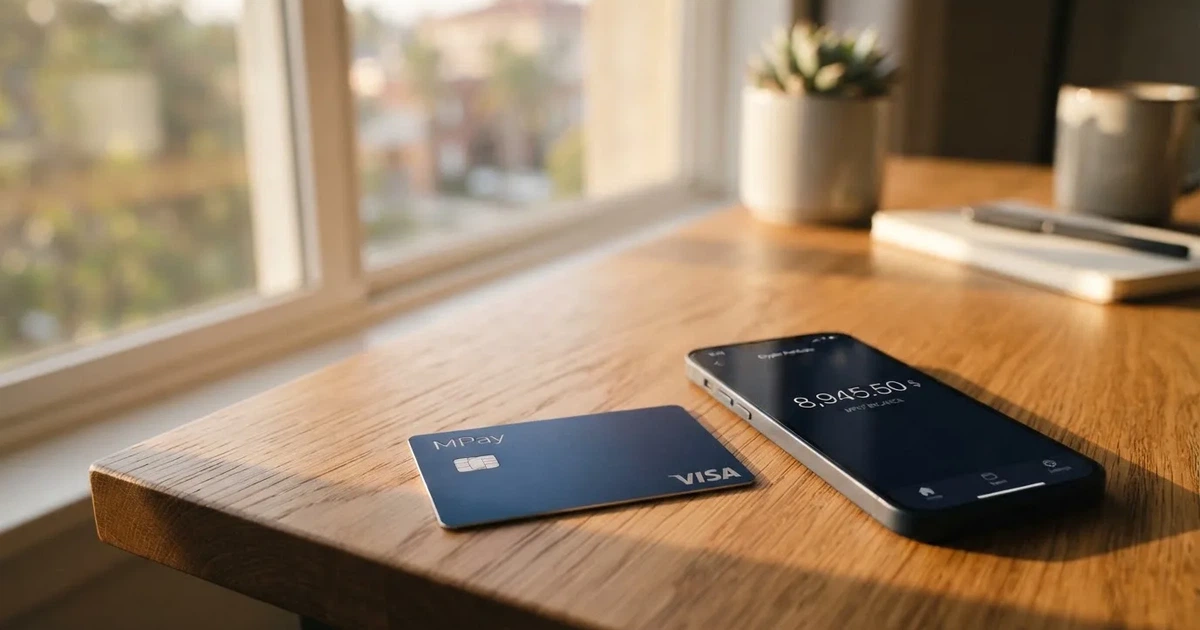
So this review has an unusual shape. I can tell you clearly how the product is meant to work, and I can tell you which questions MPay has not answered publicly. What I cannot do is quote you a fee percentage or a limit figure, because the card’s public pages don’t say. Where a fact is absent I will say it is absent rather than estimate it, and I will not fill the gap with numbers of my own.
The conditions described here are current as of October 28, 2026.
Who the card suits, and who it does not
Let me put the score on the table first, criterion by criterion, because that is the honest summary of where this card stands today.
| Criterion | Mark | Why |
|---|---|---|
| Who can get it | 7 / 10 | “Available in most regions worldwide”, with the details depending on your jurisdiction; no country list |
| Cost | 5 / 10 | Card issuance and servicing are not disclosed; plans Standard $0, Plus $3.99, Premium $7.99, Metal $14.99 per month are not tied to the card; fees not disclosed |
| Top-up options | 6 / 10 | USDT only (Ethereum, BNB Chain, Solana, TON); USDC and other coins are planned |
| Reliability and complaints | 5 / 10 | “Backed by VISA & Invested by Mason Labs”; legal entity, issuer and licences not named; no complaints found |
| Everyday use | 4 / 10 | Virtual Visa; physical card “Coming Soon”; Apple Pay, Google Pay and ATM not disclosed |
| Total | 5.5 / 10 | A working idea published as a preview rather than a finished product |
Now, who should read the rest of this and feel reassured?
The card suits you if you already hold USDT on a supported network, you need a Visa number for online payments rather than something you can tap in a shop, and you are comfortable with a young product whose operator has not yet published its pricing. If your existing banking is blocked or simply does not serve your country, an alternative route to pay for software, hosting, travel or digital services genuinely has value, and this is one of the cheaper ways to get one.
The card does not suit you if you need a physical card in your wallet, you need to withdraw cash, or you plan to rely on this for subscriptions you cannot afford to have fail mid-cycle. A virtual card is a number, not a piece of plastic — you cannot hand it to a waiter, and the site itself lists the physical card as coming soon. Cash machine access is not stated. Apple Pay and Google Pay are not stated either, which quietly rules out the single most convenient way people use a card on a phone.
There is one more honest caution. MPay is described as “Backed by VISA & Invested by Mason Labs”, and that sentence does a lot of work in a casual advert. Visa does not issue cards to consumers itself; it licenses issuers, and it can suspend a programme. So “backed by Visa” tells you a Visa network exists in the product’s structure, not that Visa stands behind your balance or your claim if something goes wrong. The operating legal entity, the actual card issuer and any licences are not named on the pages I read. That is a normal gap for a product in preview, and it is still a gap.
Will they give you the card?
The site’s own sentence is the whole answer: “The MPay Virtual Card is available in most regions worldwide.”
Read that carefully, because “most regions” is not a country list. There is no list to check your name against, and no stated exclusions. The site adds that the details depend on your jurisdiction, which is honest but also means the answer to “will they give me one” is not published anywhere I could find. If your country has its own rules on crypto, cards issued to residents, or currency control, those rules sit above anything MPay says — and no card operator can promise you an exemption from them.
The question behind your question — the one people actually type — is *is MPay a bank?* No. It presents itself as a card programme front-end, not a bank, and it says its transactions are processed through licensed payment partners. Those partners are not named. The distinction matters more than it sounds: a bank’s deposits have their own protection regime, and an e-money balance does not, even though it is safeguarded and is not the same as a bank deposit. Nobody is promising you deposit-guarantee cover here, and I am not going to imply it.
One practical thing worth knowing about how cards get looked at: the first six or eight digits of any card number identify the issuing institution and country, and merchants can read them. If a card is issued in a different country from your billing address, some shops apply extra scrutiny — or decline. This is a general feature of how card payments work, not an MPay quirk, but it becomes relevant to you the moment you use a virtual card issued outside your own country.
What to check first: search the MPay site and its support channels for a country list, and if there is none, ask the Telegram bot directly whether your country is served before you fund anything. If a country is not mentioned, the safest reading is that it is unconfirmed rather than allowed.
How to get it
The signup story is short, which is not necessarily a good sign. Here is everything the public pages tell me about the process.
- The card itself: a virtual Visa card is available now. The physical Visa card is listed as coming soon, with “global shipping in selected countries at launch”.
- The interface: a Telegram bot and a web app at app.mpay.cards. I could not find a store listing for this product, so do not go looking for it in the App Store expecting a native app to be there.
- Card currency: not stated.
- Identity verification: not stated on the site. Nor is any verification tier structure.
On identity checks, let me be clear about what I mean by “not stated”. It does not mean there is no KYC. It means the card’s public pages do not describe one. That distinction is not pedantic — it changes what you should expect at the moment you try to move real money. Any regulated card operation involves customer due diligence somewhere in the chain, and in the EU that means name, address, date of birth, nationality, identity documents, a sanctions check and a politically-exposed-person check. In the US the identification programme requires name, date of birth, address and an identification number, with electronic systems also validating proof-of-address documents against records.
There is a second reason to know that nationality is recorded separately from where you live: sanctions screening and issuer risk policy are often applied to citizenship and country of birth, not just to your address. So the answer to “can I use this card in my country” is not always the same as the answer to “can I hold it”.
I am not going to tell you how to get past an identity check, and I would be suspicious of anyone who did. If you are asked for documents, that is the process working. If you are being offered a way to skip it, that is the process failing, and the risk lands entirely on you.
What to check first: whether the platform asks for verification before your first top-up, and what happens to your balance if it does. Get a small amount in before you send a sum you would mind losing.
Fees: what it really costs
This is the weakest part of the picture, and I want to be plain about it rather than dress it up. Here is everything the public pages disclose about money, in one place.
| Fee or limit | What MPay publishes |
|---|---|
| Card issuance fee | Not stated |
| Monthly fee for the card | Not stated |
| Plan prices shown on the site | Standard Free ($0), Plus $3.99, Premium $7.99, Metal $14.99 (Month) |
| Conversion fee (crypto to fiat) | Not stated |
| Foreign-exchange fee | Not stated |
| ATM withdrawal fee | Not stated; physical card not yet launched |
| Daily limits | Not stated (hero text says “ZERO LIMITS”, no figures) |
| Monthly limits | Not stated |
| Card currency | Not stated |
Read that table twice. The second half is empty, and that is the honest headline of this section.
The four plan prices are real numbers from the site, and they are the sort of thing that can be mistaken for card pricing. They are not. The plan descriptions are generic financial-app copy — better limits and purchase insurance on Plus, travel insurance and enhanced limits on Metal — and they never say what those limits are or what the card costs. The concrete benefits are not specified. Nobody should tell you that MPay is “free” or that it costs $3.99 a month, because the site does not connect either figure to the card.
The hero text does say “ZERO LIMITS”, with no figures. That is a slogan, not a limit schedule, and I would not plan around it.
Now let me walk through three ordinary payments, because abstract fee structures mean nothing until you attach them to something you actually buy. The problem is that I cannot complete that walk with real numbers — MPay has not published a conversion fee or an FX fee, so what each of these costs is, right now, unknown. What I can do is tell you what to ask, and which part of the cost is not the card’s.
- A €20 subscription. The euro amount leaves your card balance. On a card where the currency is not stated, you do not know whether the shop sees dollars with a conversion layered on, or euros directly. Add to that the crypto-to-fiat conversion cost at the moment of payment, which is unpublished. This is the payment where the missing FX figure bites hardest.
- A $10 hosting bill. Small enough that a percentage fee would be negligible in absolute terms, which is exactly why this is the payment to learn with. Top up a little more than you need, spend it, and see what your balance does relative to what you sent. That single observation tells you more about the real cost than anything the site currently publishes.
- A $300 flight deposit. Here the missing limits become the real issue, not the fees. A decline on a large authorisation can also leave a hold on your funds that sticks around for several days — typically up to seven — so a card that is fine for small purchases can behave quite differently at this size.
One more cost that is not the card’s: on-chain network fees for your deposit are charged by the blockchain, not by MPay. If you top up USDT on Ethereum during a busy period, the gas you pay is Ethereum’s, and it can exceed the fee on the card itself.
What to check first: whether the plan you are on changes conversion or FX costs at all. If the answer is that plans only affect limits and insurance, then the cheapest tier is the cheapest tier, and the $0 Standard plan is the one to look at first.
How to top up
This is the part that is clear, and it is also the part with the sharpest edge.
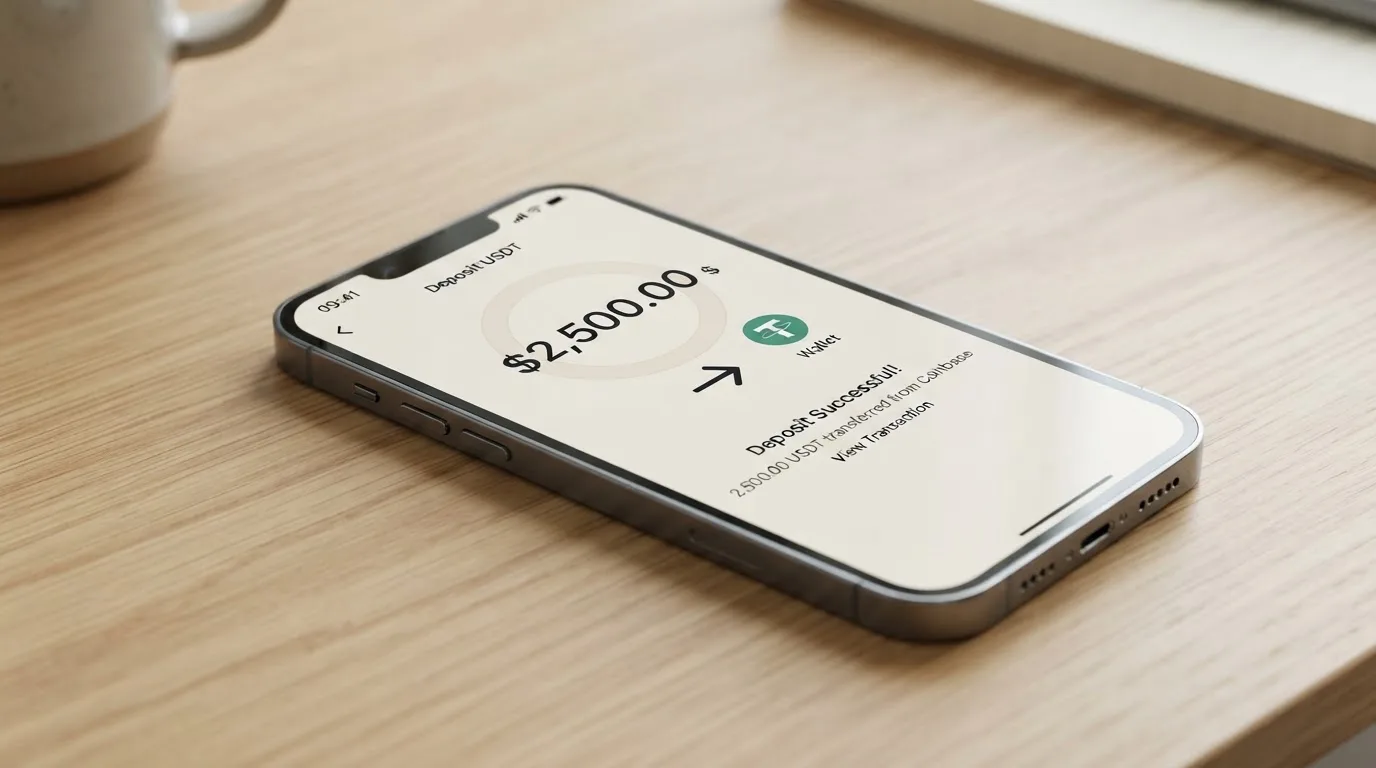
MPay supports USDT for card top-up. Support for other stablecoins such as USDC, and for native tokens, is planned. USDT can be sent over four networks: Ethereum, BNB Chain, Solana and TON. The wallets named are MetaMask, Trust Wallet, TON Wallet and Phantom.
One note on conflicting information you may hit: the site’s current text reads USDT only, while earlier starting data for this product also listed USDC on BEP20, ERC20 and Base. I am going with what the site says now, which is USDT only, and I would treat USDC as unconfirmed until you see it in the interface.
Neither the top-up fee nor the minimum top-up is stated. Neither is withdrawal — there is no published answer on whether and how you can take money back out, and that is a question I would ask before, not after, you fund it.
Now the sharp edge. Blockchain transfers are irreversible. If you send USDT on a network MPay does not support, or to an address belonging to a different network, the money can be gone or can require a manual support recovery with no guarantee of success. Four supported networks means four ways to get this wrong, and one of them — sending on Ethereum without holding ETH for gas — will simply fail, because on that network the fee is paid only in ETH and a wallet holding USDT but no ETH cannot send at all.
Two further wrinkles belong to stablecoins generally rather than to MPay. USDT and USDC are both dollar-pegged and both are meant to hold that value, but as the BIS put it in July 2025 these two account for about 90% of stablecoin market capitalisation, and “stable” is a description of intent, not a guarantee — TerraUSD collapsed in May 2022 and USDC temporarily lost its peg in March 2023. And Tether says it disables tokens in wallets on the OFAC sanctions list and has frozen funds tied to illicit activity, so stablecoin balances are not censorship-proof in either direction.
What to check first: which network your balance already sits on, and whether MPay’s supported list for your chosen wallet includes it. Getting this wrong is the single most expensive mistake available in this product, and it is entirely avoidable with ten seconds of reading.
Paying with it every day
Everyday use is where MPay scored lowest in my table, 4 out of 10, and the reason is not that the card fails at everyday use — it is that most of everyday use is undisclosed.
Here is what is stated:
- Where it works: any online platform that accepts Visa. The site names e-commerce, gaming, travel and SaaS subscriptions.
- What is blocked: not stated. This one deserves a second look. Gambling has its own four-digit merchant category code, and many issuers block it on specific cards by policy rather than by law — but the blocked list varies by issuer, and MPay does not publish one. Check your own situation rather than assuming either way.
- Rewards or cashback: not stated.
- Apple Pay, Google Pay: not stated.
- ATM withdrawal: not stated, and the physical card has not launched, so a virtual card cannot be used at a cash machine in any case.
- Disputes and chargebacks: not stated. This is a real gap. A chargeback is a refund ordered by your issuer, with reason codes such as fraud, duplicate billing or goods not received, and whether you can use that route depends on the issuer and on the card’s legal form. US reversal rights under Regulation E cover debit cards and Regulation Z covers credit cards; prepaid-card coverage varies and should not be assumed. Do not assume your protection matches an ordinary bank’s card.
- Wallet setup: not stated, so the common question “how do I add this to Apple Wallet” has no published answer.
There is a second layer of friction that hits foreign-issued cards specifically, and you should expect it. Address Verification Service compares the numeric parts of a billing address the buyer typed against issuer records; it is mainly offered in the US, Canada and the UK, and is generally unavailable for foreign-issued cards, which causes declines at checkout with no obvious cause. Some merchants decline prepaid or foreign-issued numbers outright, because a BIN lookup reveals the card type and issuer country. Neither is MPay’s fault, and neither is fixable from your side — but both are predictable, and you can avoid a wasted retry loop by knowing they exist.
On authorisations, a related point worth internalising: a declined payment is not always a clean no. A declined authorisation may leave a hold on your funds for several days, typically up to seven.
What to check first: one small subscription, paid twice, from a merchant you already buy from. If a repeat charge on the same merchant declines, the problem is the BIN or the billing address, not your balance.
What can go wrong
I looked for trouble and found less of it than the gaps might suggest — but what I found is mostly absence of evidence, which is different from evidence of absence.
- No complaints found. A search for reviews on Trustpilot and Reddit returned nothing about this service, and no official incidents surfaced. For a young product this is unremarkable. It also means you have no community read on how disputes are handled, because nobody has posted one yet.
- The entity behind it is not named. MPay describes itself as “Backed by VISA & Invested by Mason Labs”. The operating legal entity, the card issuer and any licences are not stated. A third-party business listing mentions backing by IsPay and a $3 million investment round in December 2025 — unofficial, not confirmed by the card, and useful as colour rather than as fact.
- Security model, as described. MPay says it is a non-custodial wallet integration and that it “never holds your crypto”. Transactions are processed through “licensed payment partners” with fraud detection, encryption and real-time monitoring. Whether 2FA or instant card freeze exists is not stated — and both are among the standard safeguards people expect, along with spending limits and tokenised mobile wallets.
- Support. A Telegram bot at @MpayCardBot and an X account at @MpayCard. Hours and languages are not stated; the site interface appears in several languages including English, German, Spanish, French, Polish and Filipino.
- Programme shutdown is the risk nobody prices. Card programmes close. Visa terminated its global agreements with FTX on 13 November 2022 and the FTX US debit card was wound down by its issuer. Visa also suspended WaveCrest in Europe in 2018, closing all WaveCrest-issued Visa programmes. A typical closure runs in stages: a notice period, then spending and loading stop, then users are asked to withdraw remaining balances. What happens to a balance that never converts to cash in time is the question I would want answered.
The comparison to make is with the risk you are already carrying. If your crypto sits in your own wallet, you bear sole responsibility for key loss, phishing, and clipboard-hijacking malware that swaps a copied address. A seed phrase — typically 12 to 24 words — is an unencrypted form of your private key, and anyone who obtains it can restore the wallet and spend it. Transfers are irreversible and a stolen key has no recovery path: the network cannot freeze or return funds. Custody is not a free choice either. Mt. Gox lost roughly $350 million as reported between 2011 and 2014, Coincheck about $400 million in 2018, and Ronin Network $625 million in 2022.
If MPay genuinely never holds your crypto, you have traded a custodial counterparty risk for an operational one: the card operator’s uptime, its fee schedule and its banking relationships become your dependency, and its terms are not published.
What to check first: whether you can withdraw a small balance end to end, before you have anything substantial on the card.
What to take instead
Three alternatives came up in the same review process, and comparing them on the same criteria is the fastest way to see what MPay’s missing numbers cost you. All scores are from the same ten-point scale.
| Card | Score | Card type | Cost published | Fees published | Funding |
|---|---|---|---|---|---|
| MPay | 5.5 / 10 | Virtual Visa; physical “Coming Soon” | Card fees not stated; plans $0 / $3.99 / $7.99 / $14.99 per month not tied to the card | Not stated | USDT on Ethereum, BNB Chain, Solana, TON |
| OkiCard | 6.0 / 10 | Virtual card, network given only as Visa/Mastercard | Issuance $0, monthly $0, starting price $15 for the virtual card; pages disagree on a one-time issuance fee; initial deposit 100 USDT | Load fee 3%, transaction fee (USD) 0%, “no hidden exchange spreads”; FX fee not stated | USDT on BSC (BEP-20), Ethereum (ERC-20), Tron (TRC-20), Solana (SPL); USDC “soon” |
| Cardex | 5.6 / 10 | Debit crypto card on VERVE, VISA, Mastercard and UnionPay; virtual and physical | Not stated | Real-time crypto-to-fiat conversion at the moment of payment, with an “AI-Powered Conversion Rate” that scans global rates; no percentage stated | USDT, USDC and BTC wallets; networks not stated |
| TakeCard | 5.5 / 10 | Virtual card immediately; physical card Bolivia only | Virtual USD 5; physical in Bolivia USD 20 issuance plus USD 20 shipping, though another article in the same help centre says USD 10 — conflicting; no monthly fee stated | 1% commission per purchase; USD payments 1:1; other currencies at the official Visa rate of the day; crypto conversion fee not stated | Top up from the Takenos account; coins not named in the article |
OkiCard is the one to look at if you want a published price list. It states a 3% load fee, a 0% transaction fee in USD, and says there are no hidden exchange spreads — and it asks for a 100 USDT initial deposit. It covers “150+ countries” (some pages say “200+”) with no geo-blocking based on your passport, though users must confirm they are not in a sanctioned jurisdiction. Its weaknesses: the network is written as “Visa/Mastercard” without a specific one, its own pages disagree about the issuance fee, and BTC and altcoins are “coming soon”.
Cardex is the broadest on paper — “One crypto card, 200+ countries”, running on four networks including Visa, Mastercard and UnionPay, with virtual and physical cards — but its App Store listing is Naira-focused and the cost is not stated at all. Its pitch is the conversion rate: crypto converts in real time at the moment of payment, scanning global exchange rates and picking the best one. No percentage is given.
TakeCard is the only one of the four with a per-purchase number: 1% commission, and USD payments at 1:1 with no currency adjustment. It is also the narrowest — the physical card is “available only to Bolivian users for now”, the card is issued in the United States as a prepaid Visa, and its help centre contains conflicting pricing for the Bolivia physical card. Country availability is not listed in the help articles at all, though the Takenos site says the wallet can receive payments from any country.
The pattern across all four is the same, and it is worth naming: nobody in this category publishes a clean, complete fee schedule. OkiCard comes closest. MPay is not unusual in being incomplete — it is unusual in not disclosing enough to let you estimate.
On regulatory footing, note that a card is a payment service regulated separately from the crypto side. MiCA, the EU’s markets-in-crypto-assets regulation, took legal effect in June 2023, with its rules on asset-referenced and e-money tokens applying from 30 June 2024 and the remaining provisions including crypto-asset service provider rules from 30 December 2024. Its transitional period lets providers already operating under national law continue only until 1 July 2026 or until they are authorised or refused, whichever comes first, and ESMA maintains a public register of authorised providers and white papers you can check. A crypto card often therefore depends on two licences rather than one, and in the US FinCEN guidance treats administrators and exchangers of convertible virtual currency as money transmitters.
Who I would recommend it to
I would recommend MPay to exactly one kind of person: someone who already holds USDT on Ethereum, BNB Chain, Solana or TON, needs a Visa number for online payments, has read the missing-fee sections above and accepted them, and can afford to find out the hard way with a small amount first.
I would not recommend it to anyone whose income depends on this card not failing, anyone who needs physical plastic, anyone who needs an ATM, anyone who needs Apple Pay or Google Pay, or anyone who cannot absorb a programme being wound down with money still on it.
If you fall in the second group, OkiCard’s published 3% load fee and 0% USD transaction fee give you something to plan against, and TakeCard’s 1% per-purchase commission is at least a number you can compare a purchase to. If what you need is a card you can hold, Cardex is the only one of the four listing physical cards without restricting them to one country. If what you need is stability rather than flexibility, the honest answer is that none of these is the thing — and that is worth saying out loud rather than settling.
The single strongest argument for MPay is not in the product at all. It is that for people who cannot get an ordinary bank card, a prepaid Visa funded from a stablecoin balance is a real and legitimate exit from a dead end, and in the “pre-loaded balance” model the card simply cannot overdraw, because it spends only what you put there. That is a genuine benefit no banking relationship is offering them.
What I would want before recommending it without reservation is on one page: the conversion fee, the FX fee, the daily and monthly limits with numbers, whether Apple Pay is coming, whether identity verification applies and at what point, which legal entity and which licensed issuer stand behind the card, and what happens to balances if the programme ends. Six lines. Their absence is why this lands at 5.5 out of 10 rather than higher.
Frequently asked questions
What is the MPay card?
MPay is a virtual Visa card funded with USDT rather than from a bank account. You load stablecoin balance into it and spend that balance online wherever Visa is accepted. It is presented as an online payment tool rather than a full banking product, with e-commerce, gaming, travel and software subscriptions named as typical use cases. A physical card is listed as coming soon, with shipping in selected countries at launch.
Is MPay a bank, and who owns it?
No, it does not present itself as a bank. MPay describes itself as “Backed by VISA & Invested by Mason Labs”, and says transactions are processed through licensed payment partners. The operating legal entity, the card issuer and any licences are not named on its public pages. A third-party listing mentions IsPay backing and a $3 million round in December 2025 — unofficial, and not confirmed by the card.
Does the MPay card require KYC?
The public pages do not say. That is not the same as there being no verification: a regulated card operation involves customer due diligence somewhere in the chain, and any platform may ask for identity documents before your first top-up. Expect that your nationality is recorded separately from your address, since sanctions screening is often applied to citizenship and country of birth.
Which countries can use the MPay card?
The stated answer is “most regions worldwide”, with details depending on your jurisdiction. No country list is published, and no exclusions are named, so the honest position is that availability in your country is unconfirmed rather than guaranteed. National rules on crypto and card issuance apply regardless of what any card operator says, and no operator can exempt you from them.
What does the MPay card cost?
Card issuance and the monthly fee are not stated on the public pages, and neither are conversion or foreign-exchange fees. The site lists plans at Standard Free ($0), Plus $3.99, Premium $7.99 and Metal $14.99 per month, but the descriptions are generic and never say what they cost for the card or what the limits are. Do not assume the free plan means the card is free.
How do I top up the MPay card?
With USDT, sent from a connected wallet to a generated address. Supported networks are Ethereum, BNB Chain, Solana and TON; named wallets are MetaMask, Trust Wallet, TON Wallet and Phantom. Support for USDC and native tokens is planned. Neither the top-up fee nor the minimum amount is stated, and blockchain transfers are irreversible — sending on the wrong network can mean losing the funds.
Can I add the MPay card to Apple Wallet or use an ATM?
Neither is stated on the public pages, so treat both as unavailable for now. You also cannot use a virtual card at a cash machine regardless, and the physical card has not launched. Apple Pay, Google Pay and ATM access are all part of the everyday-use picture the card’s public information does not yet describe.
Is the MPay card safe to use?
The security claims are reasonable and partial. MPay describes non-custodial wallet integration, says it never holds your crypto, and mentions fraud detection, encryption and real-time monitoring through licensed payment partners. What is not stated is whether 2FA or instant card freeze exist. The practical concerns are operational: no complaints have surfaced, but there is also no community history of how disputes are handled.
Is the MPay card worth it?
At 5.5 out of 10, the value is in access rather than economics. If a normal bank card is unavailable to you, a prepaid Visa funded from USDT is a genuine route to paying online, and the pre-loaded balance model means it cannot overdraw. If you already have working cards, the missing fee schedule, missing limits and unlaunched physical card make it hard to justify — and OkiCard publishes more of the numbers.
What happens to my balance if MPay shuts down?
Card programmes do close, and the pattern is usually a notice period, then spending and loading stop, then users are asked to withdraw remaining balances. Visa terminated its agreements with FTX in November 2022 and suspended WaveCrest in Europe in 2018, closing all WaveCrest-issued Visa programmes. Because MPay publishes no withdrawal terms, test a small withdrawal end to end before holding anything significant.
Virtual cards: the entry point – cryptocardportal.com
Content created by the «cryptocardportal.com» team