
Free to issue and free to hold, with a 0.4% conversion charge and a list of supported regions that does not exist in public
 Available in US
PayPilot is a Visa card you load with crypto or euros and then spend like an ordinary payment card, at shops and online, with the balance converted into euro. It costs nothing to issue and nothing to keep, converting crypto to euro at 0.4%, and paying directly out of that euro balance carries no commission at all. For someone who already holds bitcoin, ether or a dollar-pegged token and spends mainly in euro countries, that is a genuinely pleasant arrangement. What stops me recommending it more warmly is not the pricing. It is that the card’s own pages never say which countries are supported, never give a single number for exchange-rate spreads, ATM fees or spending limits, and name the licence only indirectly in the footer.
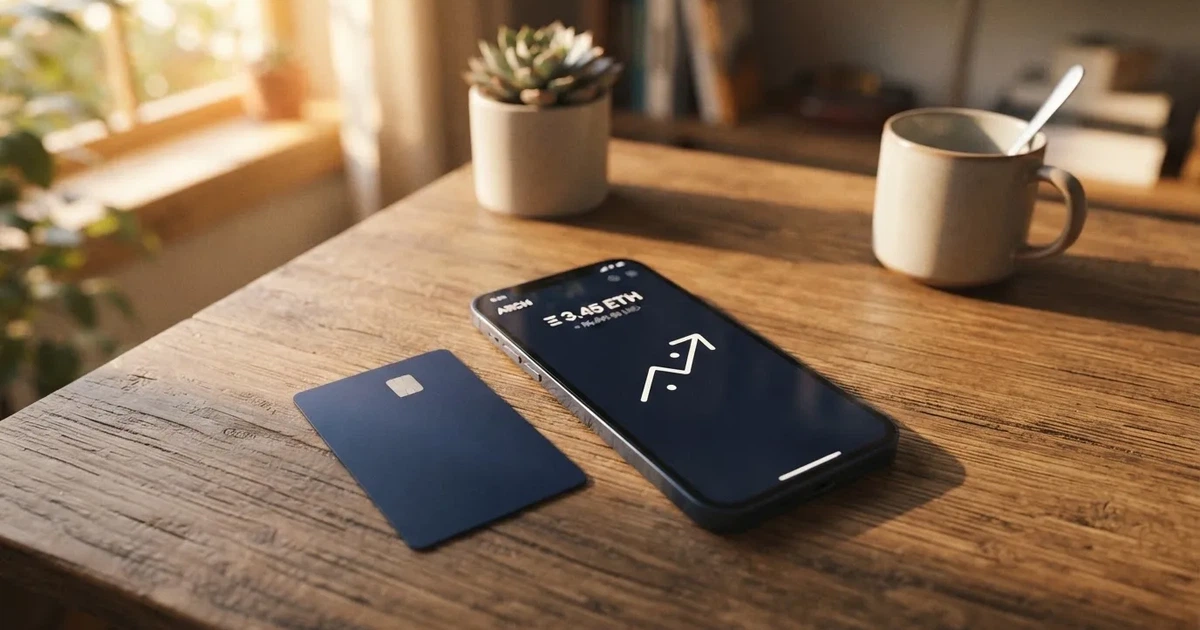
I came to this card as a reviewer. I read its terms, its support channels and its app listings, and I compared what is written down against what a person choosing a card actually needs to know. Below I tell you what is documented, what is not, and where the gaps are the kind that cost you money.
The conditions described here are current as of October 28, 2026.
Verdict: 7.4 out of 10
The card scores 7.4 / 10 overall. That number is not a marketing claim or a rounded average — it is the sum of six weighted criteria, each marked below, and you can see exactly where it comes from and where it is thin.
| Criterion | Mark | Why |
|---|---|---|
| Who can get it | 5 / 10 | Availability depends on your country of residence and local rules; the card never publishes the list of supported regions |
| Cost | 9 / 10 | Issuance 0 EUR, service 0 EUR, euro-balance payments with no commission, crypto-to-euro conversion 0.4%; the FX fee is not disclosed |
| Top-up options | 6 / 10 | BTC, ETH, USDT and EUR; you can fund with crypto or euros, but no network is named |
| Reliability and complaints | 8 / 10 | Emitter Walletto UAB, electronic money licence No 33 from the Bank of Lithuania dated 29 March 2018; no complaints found |
| Everyday use | 9 / 10 | Visa, a virtual card available immediately and a physical card by post, Apple Pay and Google Pay, and ATMs |
| Total | 7.4 / 10 | Strong on cost and daily use, held back by an unpublished country list and unnamed networks |
The audience this card genuinely fits is a euro spender who is comfortable topping up with crypto — someone for whom the 0.4% conversion is cheaper than what a mainstream exchange or a bank’s crypto route would charge on the same amount. It also fits anyone who wants a card that simply works at ordinary merchants without holding a bank account in their own name, as long as their residence falls inside whatever region list turns out to apply.
It does not fit several kinds of reader. It does not fit you if you live outside Europe and plan to spend your balance locally in dollars, pounds or anything else: you would be paying a conversion cost the card does not disclose, on top of the 0.4%. It does not fit you if you want to know the exact ceiling of what you may spend per day, per week or per month, because those numbers are not published. And it does not fit you if you intend to hold crypto on the card and treat it as a wallet, because the card spends a converted euro balance and the custody arrangements are not described.
Will they give you the card?
Availability “depends on your country of residence and local regulations”. That is the whole sentence on the card page, and the list of supported regions is not published. The rule is framed by residence; citizenship is not explicitly mentioned on the official site. That distinction matters more than it sounds. Residence decides whether you can open the account, but in most of this industry’s compliance practice, citizenship and country of birth get screened separately, on sanctions lists and issuer risk policy, whatever your address says.
So the honest answer to “will they give me the card” is: probably, if you live in one of the countries where the service is actually switched on, and you will find out by trying, because the card does not tell you in advance. That is a real friction point, not a technicality. A publisher in your country, a shop that will not take a foreign-issued card, and a card you need next week are all reasons to find out before you depend on it.
What I can tell you is who the counterparty is once you are in. The card terms name Walletto UAB, company code 304686884, based in Vilnius, Lithuania, as the card issuer and the electronic money provider, holding electronic money institution licence No 33 issued by the Bank of Lithuania on 29 March 2018. Those terms are dated May 2024. The footer credits platform development to Pilot Innovation Sp. z o.o. and financial services to Nexora Fintech Limited where applicable, and speaks only of “regulated partners” without listing licences.
That structure is normal for this category and worth understanding rather than worrying about. A crypto card is usually not issued by the company whose name is on the website. The card network, the licensed issuer and the brand that markets the card are usually three different parties. What you are really checking is whether the party holding your money and issuing your card is licensed and for what. Here it is a Lithuanian electronic money institution, which is a recognised category in Europe.
How to get it
The sequence is short: register, verify, create the card. Before the card can be created, you complete a one-time “quick identity verification”. The named verification partners are KycAid and Ondato. Your account is described as verified once.
What that verification demands of you is not stated. The documents required, whether proof of address is needed, and any minimum age are all “not stated” on the card’s public pages — I’ll say that once here and not repeat it: where the card does not publish something, I mark it, rather than filling the gap with a guess about how these checks usually work.
One thing you should know before you start, because it is a condition rather than a procedure: the issuer may re-verify your identity and ask for further documents at any time. Verification is not a one-off gate you pass and forget; it is an ongoing relationship the issuer can reopen.
On the card itself, the format is described as Visa, working online and in stores. Whether you receive a virtual card, a physical one, or both, is not stated on the card page. The card terms, however, allow for both: a virtual card usable immediately, and a physical card that needs activation and is sent by post. The terms note that the issuance fee includes postal costs according to the issuer’s pricing page by country — but the page states no delivery time and no cost for any country.
Fees: what it really costs
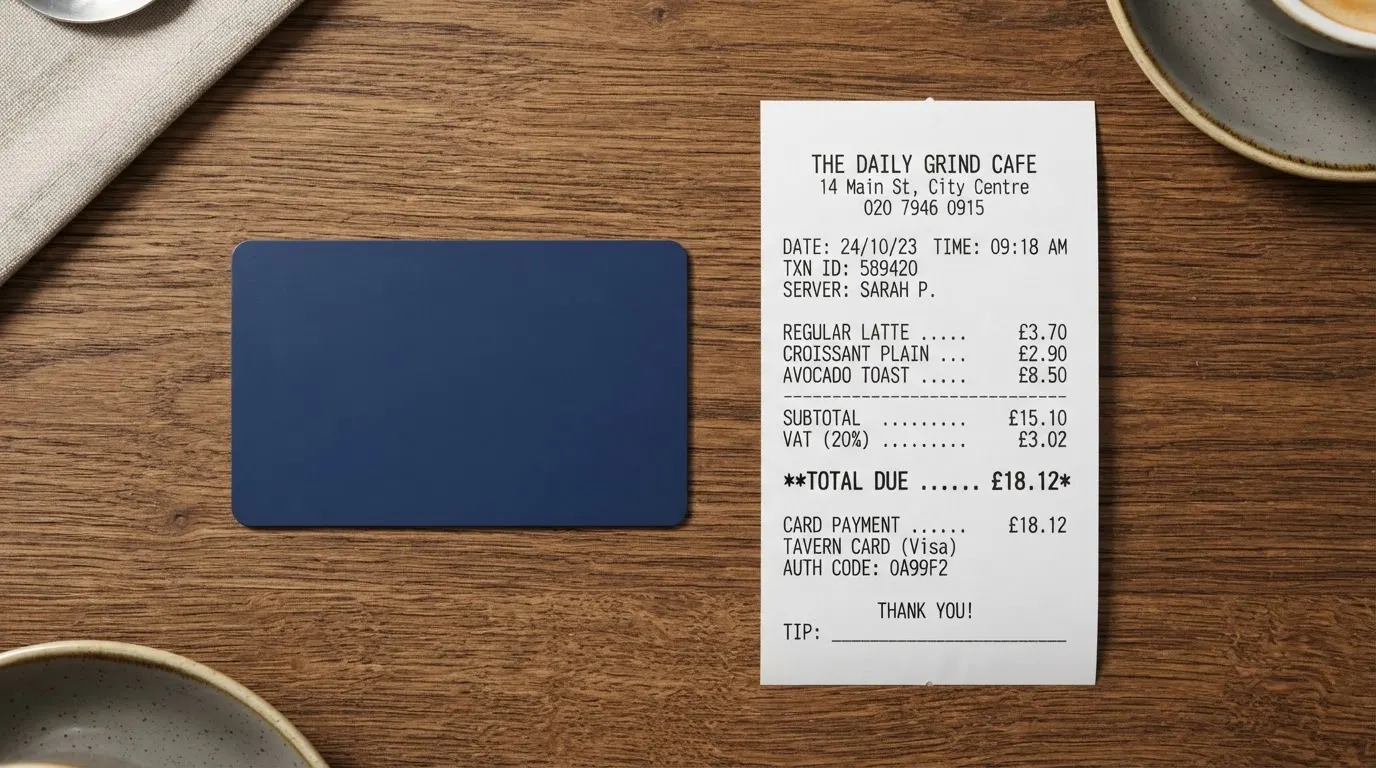
Here is the part of the review that most favours the card. Issuance is 0 EUR and service is 0 EUR. Paying out of your euro balance carries no commission. Converting crypto into euro costs 0.4%. No tiers are described: this is a single card with no paid upgrade path, and no fee schedule beyond these figures appears anywhere in the public pages.
| Fee or limit | What the card states |
|---|---|
| Issuance | 0 EUR |
| Monthly service fee | 0 EUR |
| Payment from euro balance | No commission |
| Crypto-to-euro conversion | 0.4% |
| Exchange-rate (FX) fee | “not stated” |
| ATM cash withdrawal | Withdrawals possible; fee and allowance “not stated” |
| Card tiers | “not stated” — single card, no tiers described |
| Currencies | Euro balance, converted to the merchant’s currency when needed; wallet holds BTC, ETH, USDT, EUR |
| Single, daily and monthly limits | Limits exist; values “not stated” |
Two of those rows are the ones to sit with. The FX fee is not published as a number anywhere. The card terms explain the mechanism — exchange fees are specified in the payment account and are based on Visa or Mastercard published rates at the time of exchange — which tells you the cost exists and where it comes from, but not how large it is. And ATM withdrawals are offered without a stated fee or annual allowance, so you should treat cash as a convenience to price later rather than plan around.
How to top up
You can top up with crypto or with euros. The FAQ lists BTC, ETH, USDT and EUR as the options. The card spends from your euro balance, and crypto you deposit is converted at 0.4% — that charge applies only when converting crypto into euros, not on a plain euro top-up. Minimum top-up amounts and any fee on an EUR top-up are not stated.
The detail I would most want confirmed before my first transfer is the network. The card does not name a single one. That is not a stylistic omission. Blockchain transfers are irreversible, and sending a deposit over a network the provider does not support, or to an address belonging to a different network, can mean the funds are lost or need manual support recovery with no guarantee. If you hold USDT, the choice of network matters even more, because USDT exists on Ethereum, Tron, Solana, Polygon, Avalanche and others, and not every provider supports all of them. Nothing in the card’s pages tells you which to use. Treat that as a question to ask support before you transfer anything, not as a detail.
On the other side, the card supports an off-ramp: you sell crypto for EUR and withdraw to an IBAN, subject to limits and compliance checks. If the payment account is closed, the card becomes invalid. What happens to a remaining balance on closure is not stated — a fair question to put to them directly, and one whose answer matters most to someone who is thinking of parking funds here.
Paying with it every day
Day-to-day use is the strongest part of this card, and it scores 9 out of 10. It is a Visa, so it works wherever Visa is accepted, online and in stores. You can add it to Apple Pay or Google Pay through the app. You can withdraw cash at ATMs. The card terms provide for both a virtual card you can use immediately and a physical card that needs activating, which is the sensible arrangement: you are not waiting for post to buy a train ticket.
The app is on the Apple App Store (id6751874532) and on Google Play under org.paypilot.app. I could not read the store ratings, so I will not tell you what users say about stability, crashes or support response times — that is missing evidence, not evidence of a problem.
Two features that would normally be asked about simply do not exist publicly. There are no rewards: no cashback rate, no points, no programme of any kind is described. And the list of blocked merchant categories is not stated, which means you do not know in advance whether gambling, adult content, fuel, or travel will be declined at the till. Merchants also classify businesses with a four-digit category code assigned when the business started taking cards, and different issuers block different codes as policy rather than law, so the blocked list here can differ from another card’s without anyone being at fault.
For online payments, expect the standard identity check: 3-D Secure, branded Visa Secure, which either approves silently or challenges you with a one-time code. One practical point about declined payments: an authorisation that fails can leave a hold on your funds for several days, typically up to 7. A hotel or a car hire deposit that is declined and then released is a common way an account looks short of money for no clear reason.
What can go wrong
No PayPilot-specific complaints surfaced in my search — not on Trustpilot, not on Reddit, and not in news coverage. I also found no official incident reports. That is genuinely reassuring, and I want to be precise about how much it is worth: an absence of complaints usually means a small user base or a young product, not a perfect record. Where a complaints procedure or a documented resolution process would be described, it is not stated, so you have no published recourse to point at if something goes wrong.
The security claims on the site are the usual strong set: AES-256 encryption, PCI-DSS, ISO 27001, cold wallet storage, two-factor authentication, and an audit reserve. These are claims of the company about itself, not independent findings, and the custody model is not stated — so you cannot tell from the public pages whether your crypto is held by a third party, in a wallet you control, or in some combination.
What the terms do grant is real control, and it cuts both ways. You can ask for a block at any time. A physical card is blocked after three wrong PIN entries. And the issuer may block the card where it suspects fraud. Those are sensible fraud controls; they also mean a transaction can be stopped without your involvement.
The sharpest legal point is one many readers never see stated plainly. Under the card terms, a payment made with your card credentials is deemed authorised, and there is no refund unless the payee agrees to refund. The chargeback procedure and its time frames are not stated. In practice this means a mistaken or fraudulent payment is harder to reverse than a purchase on a card from a bank with strong consumer protections, and prepaid-card coverage varies by jurisdiction and should not be assumed.
The company around the card is worth naming again: Pilot Innovation Sp. z o.o. develops the platform, Nexora Fintech Limited provides financial services where applicable, and Walletto UAB issues the card under its Lithuanian electronic money licence. Support is by email at [email protected] and a “Write to us” form, with accounts on X, Telegram, Instagram, Facebook and LinkedIn; opening hours are not stated. None of this is alarming. It is simply layered, and if you ever need to know who is responsible for what, that layering is where the answer lives.
What to take instead
None of these is a like-for-like substitute — they differ in who can use them, how they are funded, and what they cost. Here is the honest comparison.
| Alternative | Score | Who can get it | How it is funded | Stated cost |
|---|---|---|---|---|
| Whop Cards | 5.2 / 10 | 31 US states for consumers, 41 for businesses; listed unsupported countries include Belarus, China (Mainland), Russia, Turkey, Ukraine, Vietnam | A Whop balance; pending balance is usable as soon as a payment arrives, standard withdrawals use settled funds; backed by stablecoin collateral from a linked wallet, coins and networks not stated | Page says “No extra fees”; no issuance or monthly amounts listed |
| Stella | 6.5 / 10 | Countries not stated on the official site; terms bar users under economic sanctions programmes and route US and European users through affiliates | Deposit crypto into the account, which automatically tops up the card; in-app custodial wallet | Not stated; fees are “described under this User Agreement and/or on the App” |
| UniFi Card | 4.7 / 10 | Not confirmed from official pages; app listings show send-money routes to the Philippines, Mexico, the eurozone and mention Colombia, Brazil and the UK | Receive funds via ACH, wire, SEPA (IBAN) or SPEI (CLABE); get paid to a USDC wallet | Not stated; listing says “Fees may apply. See UniFi website for more details.” |
Read that table with the same scepticism I applied to PayPilot. Whop Cards states a far longer eligibility list than PayPilot does — which, ironically, makes it easier to know whether you qualify — but its scope is the US, not Europe, so it is not a route for a euro spayer. Stella is the closest in spirit to PayPilot: a custodial crypto balance that automatically tops a virtual or physical Visa, with no cashback stated on the card page. Its weakness is the same one PayPilot has and worse: no countries and no fees are published, and US and European users are routed through affiliates. UniFi is a US prepaid debit Visa with a USD balance and multi-rail funding; it carries a lower score here, and its eligibility is not confirmed on official pages.
The pattern across all three is worth stating plainly. In this category, published pricing and published eligibility are still rare. PayPilot’s advantage over these alternatives is not that it publishes more — it publishes more than some, less than the sector ideally should — but that its two headline numbers, 0 EUR to issue and 0 EUR to keep, are unambiguous.
Who I would recommend it to
I would recommend PayPilot to a person who spends in euros, already holds BTC, ETH or USDT, and wants a card with no monthly charge and no per-payment commission on the balance they have loaded. The economics of that use are genuinely good, and the everyday mechanics — Visa, virtual card straight away, Apple Pay and Google Pay, ATMs — are what you actually touch, and they are solid.
I would recommend it more warmly still to someone whose main worry is that a crypto product will be awkward at a shop. This card will not be, provided their residence falls inside the unpublished supported list. That is the test I would apply, and I would apply it before you move money rather than after.
I would not recommend it to someone planning to use it as a foreign spending card outside Europe, because the FX cost is undisclosed and the card’s balance is euro-denominated. Nor to someone who wants to know their limits before committing money, or who needs a documented chargeback route. And I would be cautious about anyone treating it as a place to keep a balance for a long period, since the treatment of a remaining balance on closure is not stated.
One last thing that is not about this card in particular. A payment card number begins with six or eight digits identifying the issuing institution, and any merchant can look those up to see which country issued it. If that country differs from the address you gave, some merchants will look at you more carefully or decline you. A card issued in Lithuania and used in another country is, to a shop’s systems, a foreign card — not illegal, not unusual, just worth knowing before it happens to you once.
Frequently asked questions
What is the PayPilot card?
PayPilot is a Visa payment card that spends from a euro balance you load yourself. You can fund that balance with BTC, ETH, USDT or EUR, and the card works both online and in stores wherever Visa is accepted. Issuing the card costs 0 EUR and keeping it costs 0 EUR each month. Paying directly from your euro balance carries no commission; converting crypto into euro costs 0.4%.
Is PayPilot a bank?
No, not as far as its public pages describe. The card is issued by Walletto UAB, a Lithuanian company with an electronic money institution licence No 33 from the Bank of Lithuania dated 29 March 2018 — an e-money licence, not a banking licence. Platform development is credited to Pilot Innovation Sp. z o.o. and financial services to Nexora Fintech Limited where applicable. An e-money institution can hold funds and issue payment cards but does not lend.
Who owns PayPilot?
The official pages do not state who owns PayPilot. Walletto UAB (company code 304686884, Vilnius) is the card issuer and electronic money provider. Pilot Innovation Sp. z o.o. develops the platform, and Nexora Fintech Limited provides financial services where applicable. If ownership matters to you, ask them directly.
Is the PayPilot card free?
Yes for the two numbers you will meet most: issuance is 0 EUR and the monthly service fee is 0 EUR. Payments made from your euro balance have no commission, and crypto-to-euro conversion is 0.4%. What is not published: the exchange-rate fee when you spend in a currency other than the euro, ATM fees, and any limits. There are also no tiers described.
Does PayPilot require KYC?
Yes — a one-time “quick identity verification” before the card can be created, using named partners KycAid and Ondato. The specific documents required, whether proof of address is needed, and any minimum age are not stated on the public pages. Note also that the issuer may re-verify your identity and request further documents at any time, so being verified once is not the end of it.
Can I use the PayPilot card in my country?
Possibly, but you cannot tell from the card’s own pages. Availability “depends on your country of residence and local regulations” and the supported regions are not listed; citizenship is not mentioned. For US and European users of comparable services, citizenship screening often applies separately from residence, so both can matter. If your country matters to you, confirm before you rely on the card.
How do I top up the PayPilot card?
You can top up with crypto or with euros. The FAQ lists BTC, ETH, USDT and EUR. The 0.4% fee applies only when crypto is converted into euros; the terms say nothing about a minimum top-up or a fee on a euro top-up. Critically, no blockchain network is named — so ask support which network to use before transferring, since an unsupported network can mean lost funds.
Is the PayPilot card safe?
There is no published custody model, so nobody can tell you from the site exactly who holds your crypto. The site claims AES-256 encryption, PCI-DSS, ISO 27001, cold wallet storage, two-factor authentication and an audit reserve — company claims, not independent findings. The terms do give real controls: you can block the card any time, a physical card locks after three wrong PINs, and the issuer can block it on fraud suspicion.
What happens if someone charges my card?
It can be difficult to get back, and that is worth planning for. Under the card terms, a payment made with your card credentials is deemed authorised, and there is no refund unless the payee agrees. The chargeback procedure and its time frames are not stated. A declined online payment can also leave a hold on your funds for several days, typically up to 7, which is a common reason a balance looks short.
Is the PayPilot card worth it?
For a euro spender who already holds crypto, the price is the best part: nothing to issue, nothing monthly, no commission on euro-balance payments, and 0.4% to convert. I rate it 7.4 / 10. The judgment depends on what you cannot learn yet — the supported countries, the FX fee, the spending limits and the network to send crypto over. Ask those four questions before you commit money, and the answer will tell you whether it is worth it to you.
App and neobank cards: the entry point – cryptocardportal.com
Content created by the «cryptocardportal.com» team