
No-KYC crypto card with cheap fees and an unnamed issuer
 Available in US
OkiCard is a crypto payment card aimed squarely at people who cannot get an ordinary bank card, or who do not want to hand over identity documents to get one. It advertises access from “150+ countries”, no verification below the $10,000 limits tier, and a virtual card that arrives in under a minute. The fees are genuinely low at the headline level. The problem is everything the card’s own pages do not say: no named legal entity, an unfilled jurisdiction placeholder in the terms, no named issuer, and no independent reviews anywhere to check.
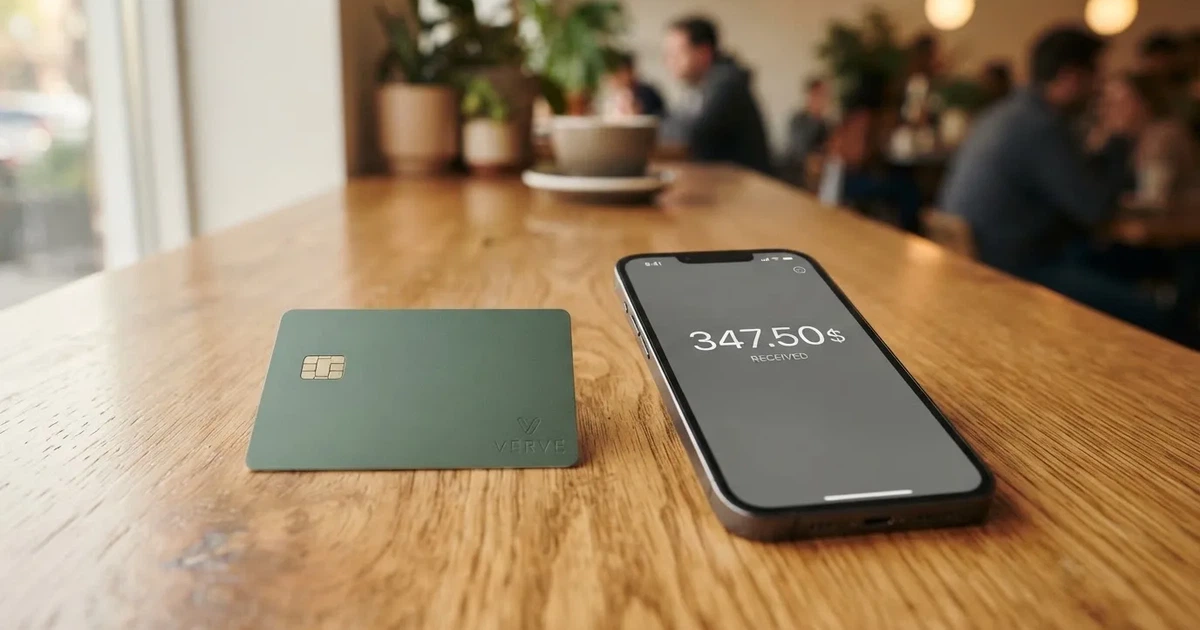
This is not a recommendation and not a warning, either. It is a description of what I could and could not confirm, so you can decide whether this card fits your situation.
These conditions are current as of October 28, 2026.
Verdict: 6.0 out of 10
The score is not about whether crypto cards are good. It is about how well this particular card does its job against what it claims, weighted toward the things people actually need: getting the card, paying with it, and trusting the counterparty.
| Criterion | Mark | Why |
|---|---|---|
| Who can get it | 8 / 10 | “150+ countries” (some pages say “200+”), no geo-blocking based on passport, sanctioned jurisdictions closed |
| Cost | 5 / 10 | Issuance $0, monthly $0, starting $15 for virtual; 3% load fee, first deposit 100 USDT |
| Top-up options | 8 / 10 | USDT on BSC, Ethereum, Tron, Solana; USDC, BTC and other coins “soon” |
| Reliability and complaints | 3 / 10 | Legal entity unnamed, terms say an unspecified jurisdiction, issuer unnamed, no reviews found |
| Everyday use | 6 / 10 | Virtual card in 60 seconds, Apple Pay and Google Pay; physical mentioned without conditions, ATM undisclosed |
Total: 6.0 / 10.
Who this suits: you hold USDT, you want to spend it without a bank account that requires papers, and you are comfortable that the balance is prepaid and therefore yours to lose if the operator disappears. Who it does not suit: anyone who needs a named counterparty in a dispute, anyone planning to hold a large balance on it, or anyone who wants the card to work everywhere without surprises.
Who will they give you the card
The card states “150+ countries”, with some pages saying “200+” instead. That is the answer on the surface, and it is broad. There is “no geo-blocking based on your passport”, which is unusual. Most cards tie themselves to a country list; this one explicitly says the passport is not the gate. The one restriction it does name is that you must confirm you are not in a sanctioned jurisdiction. That is the correct answer to give and it is the answer the card gives.
There is a practical caveat. A country count is not an eligibility list. The card’s pages say who is broadly allowed but not which specific countries are refused at the point of issue, and sanctions screening in this industry is applied to citizenship and country of birth as well as to your address. You should assume that if you hold a passport from a sanctioned country, the answer is no regardless of where you live. The card does not publish the underlying list.
So who gets it, in plain terms: most adults, most places, with a self-declaration about sanctions. Age is 18 or the legal age where you live. That is the whole gate, and it is deliberately low. Whether a given merchant or country will accept the card once you have it is a different question, and the card does not promise it either.
How to get it
There is no KYC within the allowed tier. The FAQ says there is no verification below $10,000 limits. You order through a Telegram bot, @okicard_bot. There is no e-mail address and no password. So the entire journey is: open the bot, order, get a card.
The card you get is virtual. The page also mentions a physical card but gives no details about it. The network is described as “Visa/Mastercard” without specifying which one. The card currency is USD or EUR, pegged, meaning the balance tracks that currency rather than floating with a crypto price at the moment of purchase.
Delivery is fast for the virtual card: instant, under 60 seconds. For the physical card the card states “150+ countries” again but does not state a delivery time or a delivery cost.
Only one tier is described in public: a sub-$10,000 no-KYC tier. Higher tiers exist and are shown in the bot, but they are not described on the pages. The card also does not state the reasons it might refuse an application, which means you cannot predict a rejection before it happens. That is a real difference from a bank, where a refusal usually comes with a reason category.
This is the part of the card that is most unusual and, for the right person, most useful. If you have ever had a bank account application declined, you know what the friction feels like. This route has none of it. The trade is that you are trusting an unnamed operator with your money instead of a named one.
What it really costs: Fees, limits and what a coffee costs
The headline numbers are good. The details that decide your actual cost are partly missing, so I have separated what the card states from what it does not.

| Fee or limit | What the card says |
|---|---|
| Issuance | $0 on the pricing page; starting price $15 for the virtual card; the FAQ mentions a one-time issuance fee, and the pages disagree |
| Monthly fee | $0 |
| Initial deposit | 100 USDT minimum |
| Load fee | 3% |
| Transaction fee (USD) | 0% |
| Exchange spread | “no hidden exchange spreads” |
| FX fee | not stated |
| ATM | not stated |
| Daily spending limit | $10,000 |
| Monthly spending limit | monthly limits exist, are not given in public |
| Higher tier limits | shown in the Telegram bot, not described |
Now the part that matters more than the table. The card describes a single paid card, with “tier limits” that live in the bot and are not explained publicly. So the $10,000 daily figure is a ceiling for the public tier, not a promise about what you personally get.
Three everyday payments, and which fees apply to each:
- Buying coffee for $4 in a shop that accepts your card. The transaction fee is 0% and the USD spend fee is 0%, so the cost is the $4. The exchange-spread claim means the conversion is meant not to add a hidden margin. Address verification is not the issue offline.
- Paying $30 for something online in euros while your balance is in USD. Here the picture breaks down. The balance is pegged, but the FX fee is not stated. If you spend in a currency other than your balance currency, you do not know from the public pages what the conversion costs you or whether the merchant’s side applies its own rate. This is the single biggest unknown in the cost picture.
- Withdrawing at an ATM. The card says nothing about ATM fees, so I cannot tell you what an ATM withdrawal costs, or whether the network fee is passed to you. Treat this as unknown rather than free.
The “pages disagree” note on issuance is worth sitting with. The pricing page says issuance is $0 and the starting price is $15 for the virtual card; the FAQ mentions a one-time issuance fee. Which one applies to you is not clear from the pages. Ask in the bot before you order, and keep the answer.
How to Top up the card
Top-up is the part of this card that is done most cleanly. You send USDT to a generated deposit address. The networks supported are BSC (BEP-20), Ethereum (ERC-20), Tron (TRC-20) and Solana (SPL). USDC is marked “soon”. BTC and other altcoins are marked “coming soon”, meaning you cannot use them yet. When you spend, the amount is converted to fiat at the moment of spending.
The load fee is 3%. The minimum first deposit is 100 USDT. Network fees depend on the network you choose and are separate from the card’s 3%: BSC and Solana have zero network fee, ERC-20 is low but congestion-dependent, and TRC-20 carries a standard network fee. The card suggests topping up $300 to $1000 per week, which is a hint about the intended usage pattern rather than a rule.
Two things to know before you send anything. First, blockchain transfers are irreversible. If you send on a network the card does not support, or to an address belonging to a different network, the funds can be lost or need manual support recovery with no guarantee. Getting the network right is not a formality here; it is the difference between a working top-up and a lost balance. Second, on the Ethereum network there is a trap worth naming: ERC-20 gas is paid in ETH, so a wallet holding USDT but no ETH cannot send. On Tron the fee is handled through the network’s own bandwidth and energy resources and often burns TRX.
The card also states that loaded funds are non-refundable except where the law requires otherwise. That is a normal prepaid-card term, but it means the balance is working capital, not a place to park money. Withdrawal limits exist but the process is not described, and what happens to a remaining balance if you close the account is not addressed.
Paying with it every day
Day to day, this is a prepaid card. You load a balance, and the card spends that balance; it cannot overdraw, because there is nothing behind it to overdraw from. That is the model, and it is the model most people are actually signing up for when they pick a crypto card.
Apple Pay and Google Pay are supported: the virtual card can be tokenised and added for contactless payments from your phone. Blocked merchant categories are not stated, which means you do not know whether gambling, adult content, or certain online services will be declined. Merchant category codes are how these blocks work in this industry, and different issuers keep different lists.
There is no app. The Telegram bot is the interface, described as “no heavy apps”. Ratings are therefore not applicable, which means you cannot read a store score to get a feel for it.
On disputes, the card says merchant disputes follow the card network rules and there is no separate chargeback process. Issuance fees are non-refundable once the card is generated. That last point connects back to the pricing confusion: if you are charged something and then decide you do not want the card, you are told the fee is not coming back.
There are no rewards stated. No cashback is mentioned. If you are comparing this against a bank card with cashback, this is not that card; the value proposition here is access, not rewards.
What can go wrong
This is the section where the score is lowest, and the reason is not a scandal. It is silence. I found no official incidents and no user reports, but I also found no Trustpilot page for OkiCard and, more importantly, no track record either way. A brand with no reviews has not necessarily done well; it often means nobody has written about it yet.
The corporate picture is the part that stays with me. The legal entity is not named. The governing law in the terms is an unfilled placeholder, an unspecified jurisdiction, which is the text of a document that was never finished. The issuer is described only as an unnamed regulated issuing entity. For a card that holds your prepaid balance, this means the counterparty you would have a claim against is not identifiable from the public pages. The terms carry an effective date of 2 March 2026, but I found no other dated events, no announcements, no status history.
On security, the marketing claims “AES-256 Encrypted”, “No Database Logs”, and calls itself “Non-Custodial”, prepaid only. I am not able to verify these claims and I will not pass them on as reassurance. The term “non-custodial” in particular is doing a lot of work, and how a balance is held is exactly the kind of thing that requires a named entity and an audit to establish. Freeze and account controls are not stated, which is notable: most cards let you freeze your own card instantly, and this one does not say whether that exists.
Support is a “Support” link in the footer, with no channel or contact given. Languages and hours are not stated. The Telegram bot handles ordering. If your card is declined, your deposit does not arrive, or you are locked out, the public pages do not tell you who to contact or what response to expect. That is a practical risk, separate from the legal one.
What to take instead
If the no-KYC access point is what you need, these are the alternatives I looked at, with the same questions I asked OkiCard.
| Card | Score | Card type | Cost picture |
|---|---|---|---|
| OkiCard | 6.0 / 10 | Virtual (physical mentioned), Visa/Mastercard unspecified | Issuance $0 / $15, monthly $0, 3% load, first deposit 100 USDT |
| Cardex | 5.6 / 10 | Debit crypto card on VERVE, VISA, Mastercard, UnionPay; virtual and physical | not stated; real-time conversion with no fee percentage published |
| TakeCard | 5.5 / 10 | Virtual immediate, physical Bolivia only; Visa; issued in the US; USD 1:1 | Virtual $5; physical (Bolivia) $20 issuance + $20 shipping; 1% per purchase; no monthly fee |
| NEXA Cards | 4.7 / 10 | Reloadable stored-value: virtual Silver, plastic Black, metal Platinum; Visa and Mastercard | Silver $49.95 enrollment + $3.99 monthly + $5.95 activation (shown total $114.93); Black and Platinum higher |
The quick read on each:
- Cardex says “200+ countries” and runs on four networks including UnionPay, which is unusual and could matter where other cards fail. But it states no cost and no fee percentage, only an “AI-Powered Conversion Rate” that it says scans exchanges and picks the best at the moment of spend. Its App Store listing is Naira-focused. Card currency is Naira per the listing.
- TakeCard is the most transparent of the three on price: $5 for the virtual card, 1% per purchase, USD payments 1:1. But the physical card is “available only to Bolivian users for now”, which narrows it sharply. It also has an internal conflict: one article says $20 physical in Bolivia, another says $10.
- NEXA Cards publishes the most detailed pricing and it is the most expensive: enrollment, a monthly hosting fee, and an activation fee, with totals that do not equal the sum of their line items and no explanation on the page. It claims “190+ countries” and 33 million merchant locations. Its fee-schedule link is a placeholder.
None of these is a clean win. OkiCard has the best stated top-up network coverage of the four and the lowest load fee. TakeCard has the clearest pricing. Cardex has the widest network list. NEXA has the most published detail and the highest cost. If your problem is specifically that no bank will open for you, the access criteria matter more than the fee schedule, and on access OkiCard and TakeCard’s virtual cards are the ones with the fewest stated restrictions.
One note on the wider category, because it bears on all four. In November 2022 Visa said it had “terminated our global agreements with FTX” and the FTX US debit card programme was wound down. In 2018 Visa suspended WaveCrest in Europe, closing all WaveCrest-issued Visa programmes. These are not exotic events. A card programme can be closed by the network, and when that happens spending stops, loading stops, and you are asked to withdraw what is left. That is the shape of the risk you are taking with any of these cards, and it is why I would not hold more on one than I can afford to have delayed access to.
Who I would recommend it to
I would recommend OkiCard to someone who has USDT on BSC, Tron or Solana, cannot get an ordinary card, and treats the balance as spending money rather than savings. The virtual card arriving in under a minute, the 3% load with no network fee on BSC or Solana, and the lack of identity paperwork are all real advantages for exactly that person.
I would not recommend it to someone building a spending habit on it. A prepaid balance with no named operator behind it, an unfilled jurisdiction in the terms, an unnamed issuer, no reviews to check and no support contact is fine as a tool and poor as infrastructure. If your plan involves keeping meaningful money on the card, or relying on it for a salary or a dispute you might need to win, the missing legal and support details are not a footnote. They are the reason the reliability mark is 3.
And I would not rely on it for spending in currencies other than your balance currency, because the FX fee is not stated. The cost table looks excellent right up to the row that says “not stated”.
The honest summary: OkiCard does what it says it does on access, price and speed, and says very little about the things that decide whether a card is safe to depend on. That is a reasonable trade for someone who needs it today. It is a poor one for anyone who needs it to still be there in a year.
Frequently asked questions
What is the OkiCard card?
OkiCard is a prepaid crypto payment card. You load it with USDT, the balance converts to fiat, and you spend that balance like any other card, in shops and online. It is aimed at people who cannot easily open an ordinary bank account. It is not a bank, and it is not a debit card linked to your bank balance. The card currency is USD or EUR, pegged, and the network is described as “Visa/Mastercard” without stating which.
Does OkiCard require KYC?
No, not within the tier it advertises. The FAQ says there is no verification below $10,000 limits. You must be 18 or the legal age where you live, and you confirm you are not in a sanctioned jurisdiction. Only the sub-$10,000 no-KYC tier is described publicly; higher tiers exist in the Telegram bot but their requirements are not explained on the card’s pages.
How do I get an OkiCard card?
You order through the Telegram bot @okicard_bot. There is no e-mail and no password. The virtual card is issued instantly, in under 60 seconds. A physical card is also mentioned on the site, but no delivery time, delivery cost, or eligibility conditions for it are stated. The card itself does not publish the reasons it might refuse an application.
Is OkiCard a bank, and who owns it?
No, it is not a bank, and that is part of what you are accepting. The legal entity behind the card is not named on the public pages. The governing law in the terms is an unfilled placeholder, an unspecified jurisdiction, and the issuer is described only as an unnamed regulated issuing entity. I could not confirm an owner, an issuer, or a regulatory registration from the card’s own pages.
What does OkiCard cost to open and use?
The pricing page says issuance is $0 and the starting price is $15 for the virtual card, but the FAQ also mentions a one-time issuance fee, so the pages disagree on this point. The monthly fee is $0, the USD transaction fee is 0%, and the load fee is 3%. The minimum first deposit is 100 USDT. The FX fee and ATM fees are not stated, and the daily spending limit is $10,000 with monthly limits unpublished.
How do I top up the OkiCard card?
You send USDT to a generated deposit address on one of four supported networks: BSC (BEP-20), Ethereum (ERC-20), Tron (TRC-20) or Solana (SPL). The load fee is 3%. BSC and Solana carry zero network fee, ERC-20 is low but congestion-dependent, and TRC-20 has a standard network fee. USDC is marked “soon” and BTC is “coming soon”, so you cannot use them yet. Get the network right, because transfers are irreversible.
Is OkiCard safe to use?
I cannot tell you that it is, and I want to be straight about why. The site claims AES-256 encryption, no database logs, and describes itself as non-custodial, but I found no audit, no named legal entity, and no independent reviews to check any of it. The terms carry an unfilled jurisdiction placeholder. The balance is prepaid, so it is yours to lose if the operator or the card programme stops. Use it for spending money you can afford to have delayed, not savings.
Can I use OkiCard with Apple Pay and Google Pay?
Yes. The virtual card can be tokenised and added to Apple Pay and Google Pay for contactless payments from your phone. What is not stated is the blocked merchant categories, so you do not know in advance whether gambling, adult, or certain online merchants will be declined. If a payment is declined, a hold on the funds can remain for several days.
What happens if I need support or a refund?
This is the weakest part of the picture. Support is a “Support” link in the footer with no channel, contact, languages, or hours given; ordering runs through the Telegram bot. Disputes follow card network rules with no separate chargeback process, and loaded funds are stated as non-refundable except where the law requires otherwise. Issuance fees are non-refundable once the card is generated. If you need a dispute won, this is not the card to rely on.
Is OkiCard worth it?
For someone who holds USDT and cannot get a normal card, yes: the access is genuinely open, the card arrives in under a minute, and the fees are low. For someone who wants a card to depend on, no: the missing issuer, missing jurisdiction, missing FX fee and absent support details mean you are trusting an unnamed operator with whatever you load. Treat it as a tool with a budget, not as infrastructure.
Virtual cards: the entry point – cryptocardportal.com
Content created by the «cryptocardportal.com» team