
The card promises no bank account and a metal tier, but the price list and fee schedule are where the detail stops
 Available in US
If you have spent any time trying to get an ordinary bank card — a card that works abroad, that a shop will accept, that doesn’t need a salary account behind it — then the pitch here is immediately understandable. NEXA’s own home page leads with “NO Bank Account Required” and says there is no credit check. That is the reason a card like this gets looked at in the first place. What follows is my own assessment of what the card’s public pages actually support, where the numbers stop making sense, and what you should ask before you put money in.
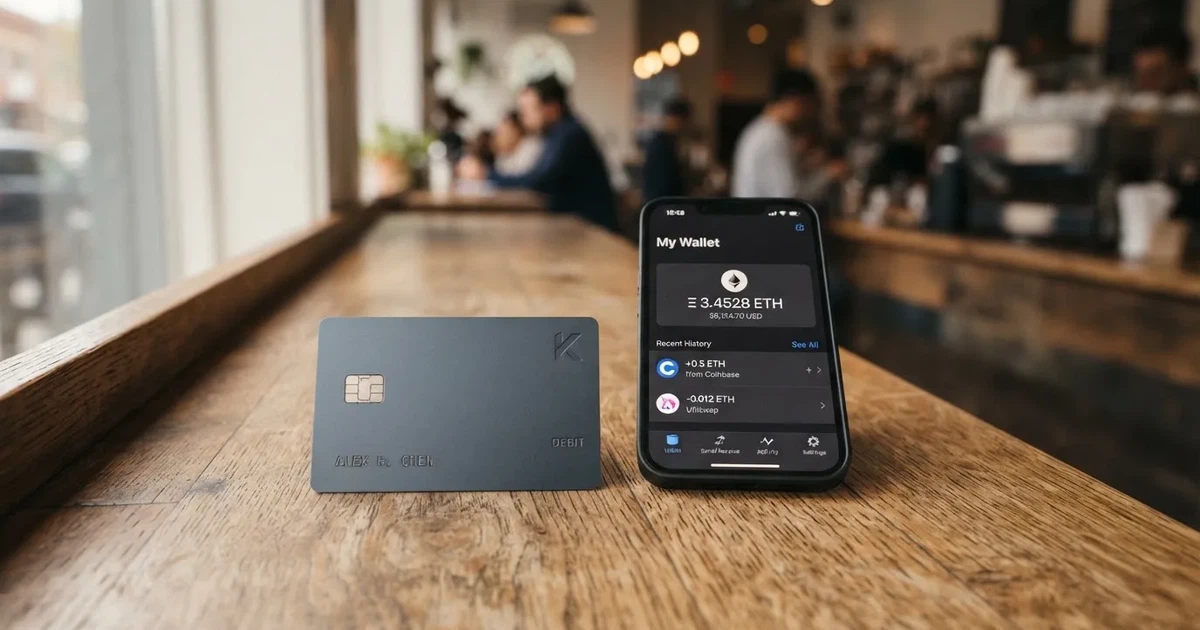
The conditions described on this page are current as of October 28, 2026.
I am going to be blunt about the tone of this review: NEXA is not a bad idea so much as an underspecified one. The marketing is clear. The pricing page has figures. The fee schedule — the document that tells you what a payment costs, what a bank teller costs, what a declined payment costs — is a placeholder link with nothing behind it. Those are different situations, and they deserve different reactions.
Verdict: 4.7 out of 10
NEXA scores 4.7 out of 10 overall. That is not a rounding error away from a recommendation, and I want to explain the number rather than just show it to you. The card scores well on one axis and badly on the one that matters most to the person actually holding it.
| Criterion | Mark | Why |
|---|---|---|
| Who can get it | 8 / 10 | “190+ countries” for sending money and acceptance at “over 33 million merchant locations”; no eligibility or restricted-country list |
| Cost | 1 / 10 | Silver: enrollment $49.95, monthly hosting $3.99, activation $5.95, displayed total $114.93; Black $133.85, Platinum $281.85; fee table not disclosed |
| Top-up options | 6 / 10 | Cash, transfer or cryptocurrency through the dashboard, coins not named; unofficial: more than 65 coins |
| Reliability and complaints | 3 / 10 | Issuer not named, token presale advertised on the site; unofficial: 3.2/10 rating on a third-party site; frozen-funds complaints relate to a similarly named domain |
| Everyday use | 6 / 10 | Virtual Silver, plastic Black, metal Platinum; Apple Pay and Google Pay not confirmed; ATM mentioned without conditions |
| Total | 4.7 / 10 |
Who this suits: someone who needs a card number they can use online quickly, who is not going to run the account through a heavy month of spending, and who is comfortable with an ecosystem where the paperwork is thin. The virtual tier exists, the number arrives fast, and there is no bank-account precondition on the home page.
Who this does not suit: anyone whose budget is tight — the cost score of 1 out of 10 is the most decisive number on this page. It also does not suit anyone who needs to know, in advance and in writing, what a foreign transaction or an ATM withdrawal will cost them. And it does not suit anyone who plans to hold a serious balance on it. A card from an unnamed issuer, advertised alongside a token presale, with no disclosed fee schedule, is not where you park money you cannot lose.
Will they give you the card?
This is where NEXA looks best, and it is worth understanding why the mark is 8 out of 10 — but also why I would not treat it as a promise about your country.
The card’s own pages say “190+ countries” for sending money, and acceptance at “over 33 million merchant locations”. What is striking is what is absent alongside it: there is no eligibility list and no restricted-country list. For a card aimed at people who cannot get a normal card, that silence is the selling point. It reads as “we are not going to turn you away.”
But read it precisely. A claim about countries is not the same as a statement about eligibility. Anyone whose country is under sanctions will find that sanctions apply regardless of what a card’s marketing says — that is law, not policy. Anyone in a region where the issuer’s risk team is nervous may pass verification and still have an account reviewed later. The card’s own site records no country list, so I cannot tell you that your country is included, only that the card does not publish a list that excludes it.
What this means for you: the openness of the “190+ countries” line is real as a description of ambition, and useless as a guarantee for one person. If your country is one where banking access is difficult, this is genuinely more approachable than a bank. If your country is one under sanctions, nothing on this card’s site changes the position, and no marketing line should be read as though it might.
How to get it
The application story is short, which is either the appeal or the warning sign. The home page says “NO Bank Account Required” and no credit check. Identity verification is described only in unofficial material: a third-party site reports that email, phone and an identity document are required, and that proof of address and a selfie are not. That is not confirmed by the card itself, and I am flagging it as such.
Then there are three tiers of stored-value card, all reloadable: Nexa Silver, which is virtual; Nexa Black, which is plastic; and Nexa Platinum, which is metal. The FAQ names Visa and Mastercard as the networks. The card currency is not stated on the public pages, though a load limit is quoted in US dollars — I’ll come back to what that implies.
Delivery is stated in business terms, and it is the one part of the sign-up process with concrete numbers attached. A virtual card number arrives within 24 hours. A plastic card takes up to 5 business days. A metal card takes up to 7 business days. If a card is lost or stolen, you contact support; the cost of a replacement is not stated.
Two things are simply not stated, and I would not want you to discover them late. Verification levels are not described: how much you must prove, in what order, what happens if a check fails. And the currency of the card itself is not stated. Both matter, and both are things a prospective cardholder can reasonably expect to find.
My read: signing up looks easy on paper. Easy sign-up with thin disclosure is a common pattern in this category, and it means the friction moves later — to funding, to a declined payment, to a support call. Nobody gets past it for free; they just get past it somewhere other than where the website describes.
Fees: what it really costs
This is the section I would put first for anyone considering NEXA, because it is where the card’s numbers stop adding up and where the most important document is missing.

| Fee or limit | Silver (virtual) | Black (plastic) | Platinum (metal) |
|---|---|---|---|
| Enrollment | $49.95 | $99.95 | $99.95 |
| Monthly hosting | $3.99 | $11.95 | $11.95 |
| Activation | $5.95 | $10.00 | $10.00 |
| Displayed total | $114.93 | $133.85 | $281.85 |
| ATM withdrawal | May be charged; no allowance or value stated | Same | Same |
| International transaction | May be charged; no value stated | Same | Same |
| Card replacement | May be charged; no value stated | Same | Same |
| FX / conversion fee | Not disclosed | Not disclosed | Not disclosed |
| Max load amount | Virtual described as unlimited loading | “$150,000 U.S. Dollars or equivalent in cryptocurrency” | Same as Black |
| Currency | USD stated; others not stated | USD stated; others not stated | USD stated; others not stated |
Before I go further: the displayed totals do not equal the line items, and the page does not explain the difference. Silver’s three figures come to $59.89 and the page says $114.93. Black’s three figures come to $121.90 and the page says $133.85. Platinum’s line items are identical to Black’s, and the page says $281.85. Black and Platinum are labelled “Pre-Paid Annually”. The most natural reading — that the monthly fee repeats for a year — gets you close on two of the three, and still leaves Silver wrong and Platinum wrong. I am not going to reconstruct the arithmetic for you and present it as fact. The card does not.
The FAQ says fees may apply to ATM withdrawals, international transactions and card replacement. The fee-schedule link is a placeholder. No values are published. That means the one document you would need in order to know what a coffee costs is not there. A third-party site lists ATM, FX, top-up and decline fees as free, while the same page calls the fee schedule “opaque” — unofficial, and self-contradictory to boot.
Let me make this concrete, because abstract fees are easy to nod along to. Three everyday payments, and what applies to each:
A coffee in your own city. You tap the card. What is charged is the price on the receipt, and any conversion that happens between your balance and your local currency — but the conversion fee is not disclosed, so I cannot tell you what share of it the provider takes.
A meal on holiday abroad. Now two possible costs stack. The international transaction fee may apply, and the FX rate you get may differ from the mid-market rate the card’s provider gets. Both are undisclosed. This is the payment where the missing fee schedule bites hardest, because the spread can be larger than any flat fee and nobody has published it.
Cash from a bank machine. The FAQ lists ATM withdrawals as fee-bearing and the allowance is not stated. Whether there is a per-withdrawal charge, a monthly cap, or a free number is unknown. The only thing you can say with confidence is that the card’s own documentation describes it as a place fees can appear.
Here is the honest summary: NEXA’s *stated* cost of entry is high, and its *running* cost is unknown. Both facts point the same way. A card with a $114.93 displayed entry on the basic virtual tier is expensive before you have spent anything, and you still cannot tell me what a month of use will cost. If you are choosing on price alone, this is an easy card to rule out.
How to Top up
Funding runs through the dashboard, and the card describes four routes: cash, wire, transfer, or cryptocurrency. Coins are not named on the official pages — the FAQ leaves the count as a placeholder. A third-party site shows BTC, ETH and BNB icons and says “over 65 different cryptocurrencies” (per cryptocards.so, October 2026); treat that as unofficial and unconfirmed by the card.
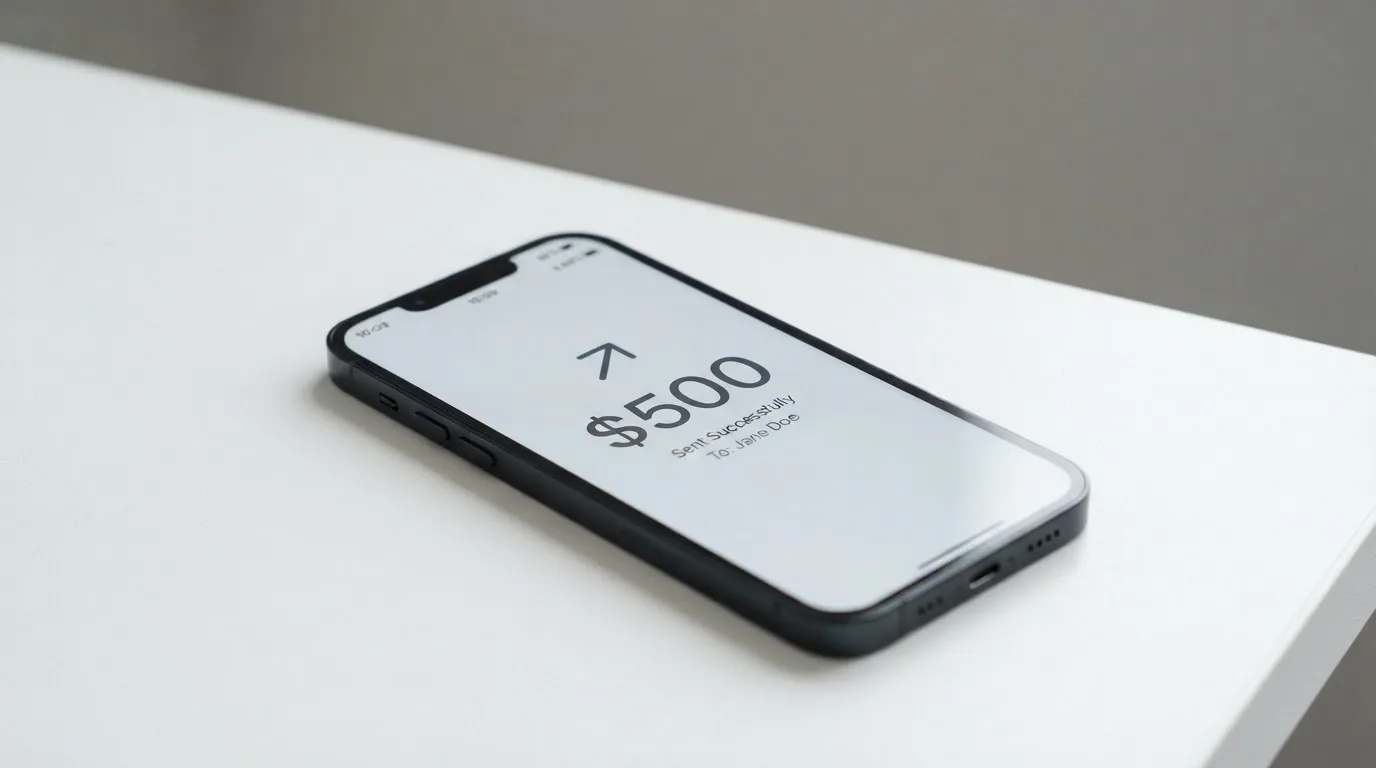
Deposit fees and minimum deposits are not stated. Neither is what withdrawal looks like beyond the phrase “instant transfers”.
Two practical things follow. First, the route that matters most for the intended user — sending crypto — is also the route with the most ways to go wrong, and the card does not say which networks it accepts. If you send on a network the provider does not support, or to an address belonging to a different network, the transfer can be lost or need manual recovery with no guarantee, because blockchain transfers are irreversible. Second, the network fee for your deposit is charged by the blockchain itself, not by the card, so it comes out of your wallet whatever the card’s terms say.
For most people the practical question is not “can I top up” but “which network, and what does it cost me to get the money there”. Ask support that question directly before you send anything, and get the answer in writing. It is the single question whose answer most changes the economics of the card for you.
Paying with it every day
The shape of daily use is fine in outline. Three tiers: virtual for immediate online use, plastic for something in the wallet, metal for the same with a different feel. The app is referred to in the FAQ alongside an online dashboard at dashboard.nexacards.com. That is a workable setup — many people live entirely in the dashboard.
What is not confirmed is the part that would make daily life easier. Apple Pay and Google Pay are not mentioned on the official pages at all. A third-party source contradicts itself on this: one part of the same site marks Apple and Google Pay as supported, its own cons list says there is no support. So you should assume nothing. Without a mobile wallet, every in-person payment is a physical card tap or insert, and the virtual tier’s main advantage — being usable before any plastic arrives — becomes largely theoretical, because the virtual number is a number, not a wallet entry.
Two further gaps. Rewards are not stated officially: no cashback, no points, no rebate is described anywhere I can point you to. And the dispute process is not stated: if a charge goes through that you did not authorise, the card’s pages do not say what you do, who you argue with, or within what window. On any card, that absence matters; on a card with a thin disclosure record generally, it matters more.
The load limit, meanwhile, is generous in the way that suggests it was written for a different use case. The physical tiers state a maximum load of “$150,000 U.S. Dollars or equivalent in cryptocurrency”, and the virtual card is described as having unlimited loading. The FAQ says load limits depend on account type. Nobody with a $114.93 entry fee is loading a hundred and fifty thousand dollars, which makes me think the limit is boilerplate rather than a real description of who this is for.
What can go wrong
Nothing catastrophic is documented against NEXA’s own operations — no confirmed official incidents were found. But the shape of the risk here is not about theft from the card. It is about who you are trusting.
The issuer is not named. The footer reads “Powered by NEXA” with a 2023 copyright, and no issuing institution is identified. This matters more than it sounds. When your money sits on a card, what protects it is the licence of the institution holding it. Without a named issuer, you are trusting a front end whose legal counterparty you cannot identify from its own pages.
The site advertises a token presale. There is a presale page at presale.nexacards.com. A card company that is simultaneously selling you a token has a second source of revenue and a second set of pressures. It is not disqualifying, but it is not nothing, and no dated licence or issuer news was found to sit against it.
The Terms page looks like it was copied from somewhere else. It names “Natural Intelligence Ltd.” as site operator, says NEXA is “not a lending institution, insurance provider, or other Partner”, and sets governing law as Israel with Tel Aviv-Jaffa courts. That reads as comparison-site boilerplate rather than card terms. A third-party site gives yet another company name, “Nexa Cards Solutions Ltd”. Three names, one of them clearly not about this card. That is the state of the legal identity as published.
There are frozen-funds complaints — but check which domain. A Trustpilot page for a similarly named domain, nexascard.com, shows reports of frozen funds and a company reply about sanctions screening. That is a *different domain*. It is not confirmed as the same operator, and no Trustpilot page was confirmed for nexacards.com. A third-party rating site scores the Silver card 3.2 out of 10 in October 2026, citing opaque fees and high upfront costs. I include the frozen-funds reports because the pattern is one every crypto card buyer should recognise — screening can stop a balance and the process can be slow — but I will not let you believe they are established against this particular card.
On safeguarding, the card is silent. The FAQ cites encryption, secure payment processing and fraud protection, and says a lost or stolen card can be blocked through support. How customer funds are safeguarded is not stated. That is the sentence to look for on any card in this category, and its absence here is more informative than its presence would have been.
Support is thin. A phone number, +1 (877) 770-0550, open 9 AM to 9 PM Monday to Friday, and an email address. The hero text claims 24/7; the FAQ says weekdays. When your money is stopped and the fee schedule is a placeholder, support hours are not a footnote.
One thing this category has taught people the hard way: card programmes do close. Visa terminated its agreements with FTX on 13 November 2022 and the US debit card was wound down. WaveCrest, a Visa issuer that supplied crypto card brands, was suspended by Visa in Europe in 2018. Closures typically mean a notice period, then loading stops, then spending stops, then you are asked to withdraw what is left. A provider with no named issuer is a provider where you cannot easily see who would be winding it down.
What to take instead
None of these is a recommendation, and each scores higher than NEXA’s 4.7 — but each solves a different problem, so pick by your problem, not by the number.
| NEXA | Cardex | TakeCard | OkiCard | |
|---|---|---|---|---|
| Score | 4.7 / 10 | 5.6 / 10 | 5.5 / 10 | 6.0 / 10 |
| Card type | Virtual, plastic, metal | Debit crypto card on VERVE, Visa, Mastercard, UnionPay | Virtual; physical Bolivia only | Virtual (physical mentioned) |
| Cost stated | Silver displayed total $114.93 | Not stated | Virtual USD 5; physical USD 20 issuance + USD 20 shipping | Issuance $0, monthly $0, starting price $15 for virtual |
| Fees disclosed | No — placeholder only | No percentage stated | 1% commission per purchase; USD 1:1, other currencies at the official Visa rate of the day | Load fee 3%, transaction fee (USD) 0% |
| Funding named | Coins not named | USDT, USDC, BTC wallets | USDC/USDT via Polygon, BNB Chain, Tron or Ethereum into the Takenos account (starting data, unverified) | USDT on BSC, Ethereum, Tron, Solana; USDC “soon”; BTC “coming soon” |
| Coins not named | Yes | USDT, USDC, BTC | Stated in the article: top up from the Takenos balance | USDT, USDC, BTC |
Three observations, all of which matter for your choice.
OkiCard is the most transparent on price, and the caveat is verification. Its pricing page shows issuance $0, monthly $0, a starting price of $15 for the virtual card, a 3% load fee, and a 0% transaction fee in USD, with “no hidden exchange spreads” claimed. Its own FAQ mentions a one-time issuance fee that the pricing page does not show, so the pages disagree — but a known 3% is worth more than an unknown percentage. It covers “150+ countries” (some pages say “200+”), says there is no geo-blocking based on your passport, and requires you to confirm you are not in a sanctioned jurisdiction. Initial deposit is 100 USDT.
TakeCard is the cheapest to enter and the most restricted. A virtual card costs USD 5, and there is no stated monthly fee. It charges 1% per purchase, with USD paid 1:1 and other currencies converted at the official Visa rate of the transaction day — that is a published rate rule, which is more than NEXA offers. But the physical card is “available only to Bolivian users for now”, and even the physical price conflicts between two articles in the same help centre ($20 issuance + $20 shipping versus $10). Starting data lists virtual-card availability for Argentina, Bolivia, Peru, Chile, Paraguay, Colombia, Ecuador, US, Spain and Italy, but I could not confirm that on a page I could read.
Cardex is the least disclosed and the most geographically angled. It covers “200+ countries” with no list or exclusions, runs on VERVE, Visa, Mastercard and UnionPay, and offers virtual and physical cards. It converts in real time at the moment of payment, and the site describes an “AI-Powered Conversion Rate” that scans global exchange rates and picks the best one — no fee percentage is stated. Its App Store listing is Naira-focused, paying in Naira, which tells you something about where it actually aims.
The pattern across all four: every one of these cards has gaps, and in every case the gaps are in the same places — the conversion spread, the ATM terms, and the list of countries you will actually be accepted in. Your decision should be made on which of those three gaps you can live with, not on the entry price.
Who I would recommend it to
I would recommend NEXA to someone in a specific and fairly narrow place: a person who needs a card number today, who is spending modestly, who already understands what a stablecoin transfer is and which network they are sending on, and who is treating this as a convenience rather than as infrastructure. For that person, a virtual tier, a fast number, and no bank-account precondition is a real answer to a real problem.
I would not recommend it to you if any of these are true. You are on a tight budget and $114.93 is money you can spend elsewhere. You need to know what a foreign transaction costs before you book one. You intend to hold a balance across months. You need to answer to an employer, a landlord, a bank or an immigration authority with a card that has a named, traceable issuer. Or you are the kind of person who reads a Terms and Conditions page and finds the same words as a comparison site — if that bothers you, it should.
Before you commit, put four questions in writing to support. What is the issuer, and under whose licence? What are the ATM, international and decline fees, in numbers? Which blockchain networks do you accept for deposits? What currency is the card denominated in? Any card that answers all four clearly has earned your trust more than one that does not. NEXA currently answers the last one only by implication and leaves the first three open.
And keep the sequence in mind, because it is the practical heart of this review: a card is a front end, the issuer holds the licence and the money, and the crypto brand is often only the programme manager. When you cannot name the issuer, you are trusting the layer that is easiest to replace and hardest to sue.
Frequently asked questions
What is the NEXA card?
NEXA is a reloadable stored-value card offered in three versions: Nexa Silver, which is virtual, Nexa Black, which is plastic, and Nexa Platinum, which is metal. The FAQ names Visa and Mastercard as the networks, though the card currency is not stated on the public pages. Unlike a bank card, it draws on a balance you load rather than an account, so it cannot overdraw. Its own home page advertises that no bank account is required and no credit check is performed.
Is NEXA a bank?
Not on the evidence its own pages publish. No issuer is named anywhere: the footer reads only “Powered by NEXA”. The Terms and Conditions page names “Natural Intelligence Ltd.” as site operator and says NEXA is “not a lending institution, insurance provider, or other Partner”, with Israeli governing law — wording that reads as comparison-site boilerplate rather than card terms. Treat NEXA as a card front end until it tells you which licensed institution actually holds your balance.
How much does the NEXA card cost?
The displayed totals are Silver $114.93, Black $133.85 and Platinum $281.85. These do not equal the sum of the line items, and the page does not explain the difference: Silver lists $49.95 enrollment, $3.99 monthly hosting and $5.95 activation, which come to $59.89. Black and Platinum are labelled “Pre-Paid Annually”. Running costs — ATM, international and replacement fees — may apply, but the fee schedule link is a placeholder with no values.
Does the NEXA card require KYC?
The official pages say nothing about identity verification. The home page says only that no bank account is required and there is no credit check. Unofficial material from a third-party site reports that email, phone and an identity document are required while proof of address and a selfie are not. Verification levels are not stated by the card. Expect to hand over identity documents and expect the specifics to be less clear than the sign-up flow implies.
Is NEXA card free?
No, and it is not close to free. Even the entry-level virtual Silver tier carries a displayed total of $114.93, alongside $49.95 enrollment, $3.99 monthly hosting and $5.95 activation fees. The plastic and metal tiers are higher. A third-party site lists top-up and decline fees as free while simultaneously describing the fee schedule as opaque, which is a good illustration of why unofficial fee claims should not be relied on.
How do I top up the NEXA card?
Through the dashboard, by cash, wire, transfer or cryptocurrency — though the card does not name which coins it accepts, leaving the count as a placeholder in the FAQ. A third-party site shows BTC, ETH and BNB and claims over 65 supported cryptocurrencies, but that is unofficial and unconfirmed. Deposit fees and minimums are not stated. Send only on a network the provider confirms it supports: blockchain transfers are irreversible.
Can I add the NEXA card to Apple Wallet?
Do not plan around it. Apple Pay and Google Pay are not mentioned on any official NEXA page. Unofficial material contradicts itself — one part of a third-party site marks both as supported while its own cons list says there is no support. If a mobile wallet matters to you, ask support and get a yes in writing before you buy. Otherwise every in-person payment means the physical card, which takes up to 5 business days for Black or 7 for Platinum.
Where can I use the NEXA card?
The card claims “190+ countries” for sending money and acceptance at “over 33 million merchant locations”, with no eligibility or restricted-country list published. In practice, where a card works depends on more than that: merchants can decline prepaid or foreign-issued cards, and online address verification is generally unavailable for foreign-issued cards, which causes declines. Sanctioned jurisdictions are excluded by law regardless of any marketing line, and no country list exists to check against.
Is the NEXA card safe?
It depends on a question the card does not answer: how your funds are safeguarded. The FAQ cites encryption, secure payment processing and fraud protection, and says a lost card can be blocked through support, but custody and safeguarding are not stated. No issuer is named and no licence news was found. There are frozen-funds reports on a Trustpilot page for a similarly named domain — a different domain, not confirmed as the same operator.
Is NEXA worth it?
For light use, possibly: if you need a card number quickly, spend modestly, and already understand stablecoin transfers, the virtual tier with no bank-account precondition solves a genuine problem. For anything else, no — the cost score is 1 out of 10, running fees are undisclosed, rewards and the dispute process are not stated, and you cannot name the issuer. Compare against OkiCard, which at least publishes a 3% load fee and 0% USD transaction fee, before deciding.
Virtual cards: the entry point – cryptocardportal.com
Content created by the «cryptocardportal.com» team