
A practical look at the Relopay card, from who can get one to what it costs in everyday use
 Available in US
Relopay is a crypto-to-fiat payment card built around USDT on the Tron network, run through a Telegram mini app, with a virtual card you can add to Apple Pay or Google Pay. It is a useful option for people in supported Southeast Asian countries who want to spend a stablecoin balance like cash, and it is not a useful option for almost everyone else: country support is narrow, the physical card is not here yet, and the conversion rate is not published. I went through Relopay’s public pages and supporting material to set out what is actually known, what is not, and what that means in practice.
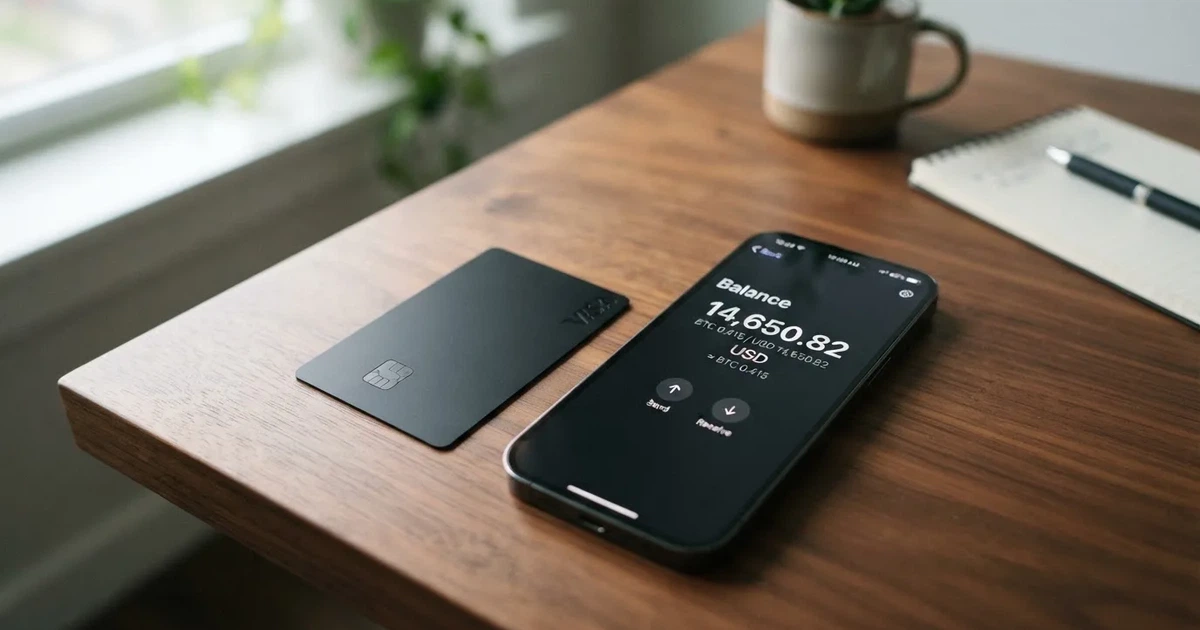
The conditions described below are current as of October 28, 2026.
Verdict
Relopay scores 6.0 out of 10. The product is coherent for a small audience: people in Vietnam, Thailand or Indonesia (the early supported countries) who already keep USDT on Tron and want to pay at the till without first selling to a bank. The card is virtual today, it is prepaid and held in USD, and it is run through a Telegram bot rather than a regular app. Outside that audience the card has little to offer.
| Criterion | Mark | Why it scored that way |
|---|---|---|
| Who can get it | 3 / 10 | Accounts are only opened in the “Supported Countries” shown inside the app. Earlier checks listed Vietnam, Thailand and Indonesia with a waitlist for others. The card can be used in 170+ countries, but the United States, Canada, Hong Kong and a long list of others are barred at the restriction page. |
| Cost | 7 / 10 | Issuance is 3 USD, no annual, inactivity or closure fee, and a 0% top-up fee on the virtual plan. The published fees are small, but the crypto-to-fiat conversion rate is not published, and the only published transaction fees are a $0.2 charge on a successful payment and $0.5 on a decline. |
| Top-up options | 8 / 10 | USDT on TRC20 with a $5 minimum, the cards page also lists Bitcoin, USDT and “other cryptocurrencies”, and an earlier check mentioned USDC, ETH, BTC, TON and BNB. Conversion happens at the moment of payment, so the cardholder does not have to time a sale. |
| Reliability and complaints | 7 / 10 | Cards are issued by Xfers Pte. Ltd., which holds a Major Payment Institution licence from the Monetary Authority of Singapore per a third-party profile. Operating companies are 1507613 B.C. LTD in Canada and RELOPAY PTE. LTD in Singapore. I found no user complaints, but the usage terms also say all transactions are final. |
| Everyday use | 6 / 10 | The virtual card supports Apple Pay and Google Pay, works with 3-D Secure and is reloadable. The physical card is “launching soon”, and ATM access is tied to that card, so cash withdrawals are not available today. |
The card suits Southeast Asian residents who pay with USDT through Telegram. It does not suit people in the United States, Canada or Hong Kong, anyone who needs a physical card in hand today, anyone who needs to draw cash from an ATM today, and anyone who needs the conversion rate to be published up front.
Who Relopay will give the card to
The headline rule is narrow. Relopay only opens accounts for residents of the “Supported Countries” listed in the website or app. Vietnam, Thailand and Indonesia have historically been supported, with a waitlist for others. Citizenship is checked separately from residence: a Russian-born resident of a supported country, for example, would still be screened against the restriction list.
The restriction list is the part that catches most readers. The page bars citizens and residents of American Samoa, Albania, Belarus, Bosnia and Herzegovina, Burundi, Canada, the Central African Republic, the Republic of Congo, the Democratic Republic of the Congo, Cuba, Guam, Hong Kong, Afghanistan, Iran, Iraq, Kosovo, Lebanon, Liberia, Libya, Montenegro, Myanmar, Nicaragua, the Northern Mariana Islands, North Korea, Puerto Rico, North Macedonia, the Russian Federation, Serbia, Somalia, South Sudan, Sudan, Syria, Ukraine, the United States, the US Virgin Islands, Venezuela, Yemen and Zimbabwe. Belarus and Russia are explicitly named. The rule is applied to both citizenship and residence, which is stricter than many crypto cards.
The practical reach is wider than the sign-up rule suggests. The docs say the card itself can be used in 170+ countries, and a virtual card added to a mobile wallet does not need a foreign merchant to know where it was issued. That said, the sign-up list is the binding constraint, and it is worth checking the in-app “Supported Countries” page before doing anything else. The support list inside the app is the only place the full current list is shown.
A second point that matters: the restriction list is the issuer’s own policy layered on top of any law. Sanctions and anti-money-laundering rules force much of it, but not all of it. Relopay does not say which entries are legal and which are commercial decisions, and that ambiguity is itself something to factor in.
How to get the card
Sign-up is centred on a Telegram mini app, not a regular mobile app. The brand does not currently appear in the Apple App Store or Google Play, so the entry point is the @RelopayBot inside Telegram. The flow itself is standard.
You need to be 18 or older with full legal capacity, and standard verification is required. Relopay uses Sumsub for KYC: the flow asks you to choose “All countries except USA” as the region, pick your country, upload the relevant identity document, then complete a selfie or camera check. The result is described as coming through “in a few seconds”. Proof of address is not mentioned, which is consistent with a single standard tier rather than the tiered KYC used by some banks.
There is one card you can get today and two that are not here yet. The currently available product is a virtual card, valid for 24 months, reloadable, held in USD, and protected by 3-D Secure. There is also a short-lived prepaid virtual card on the cards page, valid 60 days with a $1,000 balance cap, and a physical card that the docs describe as “launching soon” and that would run for three years. The card network is not explicitly published.
The verification flow has a small detail worth knowing. Adding the virtual card to Apple Pay or Google Pay triggers a $0 verification transaction that may carry a small fee and that can leave the balance slightly negative for a short while. That is normal in the industry, but it can look like an error to a first-time user.
No shipping information is published because the physical card is not yet shipping. There is no time line in the docs, and the brand only says “launching soon”. Anyone who needs a physical card in hand today should not rely on this product.
The KYC model on the page is single-tier: one standard Sumsub verification, no published higher tiers, no published turnaround beyond “a few seconds”, and no published rejection reasons. If you have had problems with verification on other platforms, it is worth asking support before you load funds.
Fees: what the card really costs
Relopay publishes some numbers and leaves others unstated, and the gap matters. The published prices are friendly; the unstated ones are where the real cost can hide.

| Item | Amount |
|---|---|
| Card issuance | 3 USD |
| Annual fee | Free |
| Inactivity fee | Free |
| Cancellation fee | Free |
| Successful transaction | 0.2 USD |
| Declined transaction | 0.5 USD |
| Crypto-to-fiat conversion | Not published |
| Foreign-currency conversion | Not published |
| ATM withdrawal (future physical card) | “May include small charges” — not stated |
| Virtual card monthly spending cap | 4,000 USD (usage terms) or 50,000 USD (cards page) — sources disagree |
| Prepaid card maximum balance | 1,000 USD |
The three everyday situations that show where the cost actually lands are these. A successful in-store payment in USD on the virtual plan: you pay the 0.2 USD transaction fee, you do not pay an FX fee because the merchant settles in USD, and you do not see the conversion rate because the rate is set when the payment is made. A successful online payment in EUR from a USD balance: you pay the 0.2 USD transaction fee, the merchant’s currency is converted to USD automatically, and the conversion rate used at that moment is not published in the public material, which means the spread is not visible to the user in advance. A declined transaction: you pay 0.5 USD even though no money moved, which is the cost of a typo in a card number, a soft decline, or a merchant category that Relopay blocks.
A few finer points. Top-up fees are calculated in USDT: 0% on the virtual plan and 1% USDT on the physical plan. Funds are held in USD and the docs recommend paying in USD to avoid the FX layer. Limits are set by Relopay and the issuer and can be changed, so the caps in the table are today’s caps, not a guarantee. The cards page and the usage terms disagree on the virtual card’s monthly cap, with the terms saying 4,000 USD and the cards page saying 50,000 USD; I would plan around the lower number until the issuer confirms otherwise.
The unspoken part is the spread between the published market rate for USDT and the rate Relopay uses to convert to USD. The platform says conversion happens “at the moment of purchase”, but the rate itself is not on the public pages, which is a real disadvantage compared to cards that publish a fixed conversion fee. Stablecoins are normally close to one-for-one with the dollar, but the spread can be wider at times of stress and is the place most “free” crypto cards earn their margin.
Top up: how to fund the card
Top-up is the cleanest part of the product. The usage terms describe a single primary route: USDT on the TRC20 network (Tron), with a 5 USD minimum. The cards page broadens the language to “Bitcoin, USDT and other cryptocurrencies”, and an earlier check named USDC, ETH, BTC, TON and BNB. In every case the coins are converted to local currency at the moment of payment, not at the moment of top-up, so the cardholder does not have to time a sale.
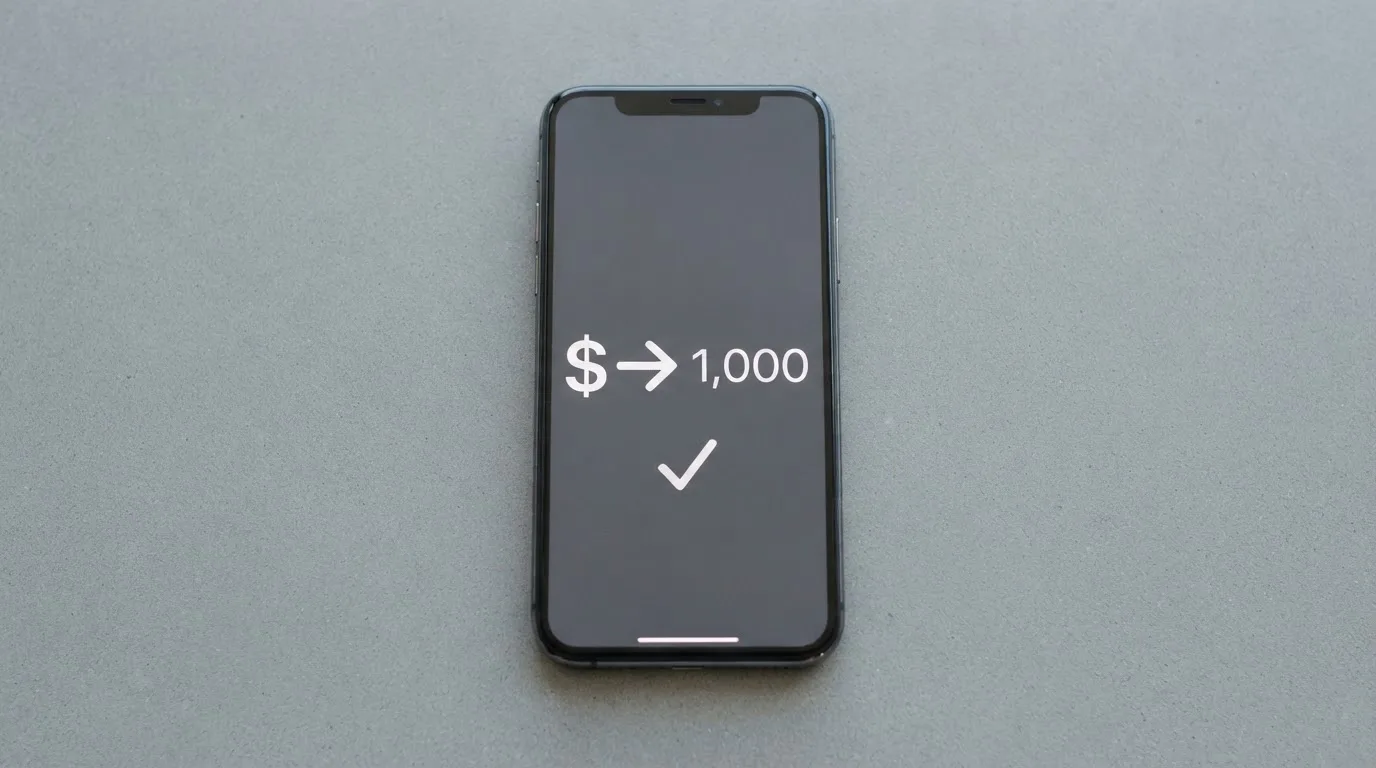
The Tron network matters more than it sounds. Tron uses bandwidth and energy as its internal resource pricing, with fees often burning TRX, which keeps the on-chain cost low for small transfers. Circle stopped supporting USDC on Tron in February 2024, so “USDC over TRC20” is not a native option and a cardholder who tries it will not get funds delivered. Sending USDT on the wrong network, or to an address belonging to a different network, can lose the funds outright, because blockchain transfers are not reversible, and recovery is up to support with no guarantee.
A few practical rules. Match the network exactly: TRC20 only, not ERC-20 (Ethereum), not Polygon, not Solana. Hold a small amount of TRX in the same wallet so the transfer can pay its own gas. Send a test transfer first if the amount is large. The brand says minimum top-up is 5 USD, with no published maximum beyond the card’s spending caps.
The terms also draw a clear line on withdrawals. Virtual-plan deposits are non-refundable, and unused balances cannot be sent back to the wallet. The card expires 24 months after issue with any remaining balance still on it. On account closure, funds are withdrawn within a “reasonable period” minus fees, and unclaimed funds are kept for three years. None of this is unusual for a prepaid product, but it is worth knowing before loading a large amount.
A note on stablecoins in general, since this is where readers get caught. Stablecoins aim to hold a stable value against a fiat currency, but the name is not a promise: TerraUSD collapsed in May 2022 and USDC briefly lost its peg in March 2023 during the US banking crisis. The two largest by market share, USDT and USDC, are both US-dollar-pegged. USDT is issued on multiple chains including Ethereum, Tron, Solana, Polygon and Avalanche; Relopay’s primary route is the Tron one. Reserves and backing vary by issuer and are not a subject of this review.
Paying with the card every day
In day-to-day use the virtual card behaves like a prepaid card held in USD. You add it to Apple Pay or Google Pay, you pay at the till or online, and 3-D Secure protects the online payment. The product feels familiar if you have used a multi-currency wallet, and feels limited if you have used a full bank card.
The restriction list on the cards page is longer than I expected. Relopay blocks several merchant categories outright: gambling, dating, money transfers, quasi-cash, fuel and EV charging, telecoms, gift cards, brokerage and charity. Charity transactions are not just blocked: the docs describe a 30% penalty of the transaction value, with a $5 minimum, which is one of the more unusual terms I have read. This is a programme policy, not a legal rule, and the list is set by the issuer.
There is no cashback or rewards programme on the public pages. The “everyday value” of the card is therefore the convenience of paying in USDT, not a rebate.
The disputes position is worth being clear about before you spend. The usage terms say all Relopay card transactions are final and may not be disputed, reversed or cancelled, except where the issuer or the law requires it. A second clause says disputes about goods are between the customer and the merchant, not Relopay. That is meaningfully weaker than the protection on a regulated debit or credit card: in the United States, debit card reversal rights come from Regulation E and credit card rights from Regulation Z, with chargebacks following reason codes such as fraud, duplicate billing or goods not received. Relopay’s own terms are closer to “all sales final” than to “we will help you reverse a bad purchase”.
A declined transaction leaves a 0.5 USD charge even though no money moved. Declines are common with prepaid and foreign-issued BINs because the merchant can see the card type and the issuer country from the BIN, and some merchants apply extra scrutiny when those do not match the billing address. Address Verification Service is mainly offered in the US, Canada and the UK, and is generally unavailable for foreign-issued cards, which can also cause declines. A pre-authorisation hold can stay on the balance for up to seven days even if the merchant later releases it, so a string of declined attempts can temporarily reduce what looks like your available balance.
Risks: what can go wrong
Most of the risks fall into four buckets: country risk, custody risk, dispute risk, and the usual product-stage risk of a small programme with no track record.
Country risk is the simplest. If you are a citizen or resident of any of the barred jurisdictions listed in the earlier section, you are not eligible, and the brand has the right to close the account. The restriction list includes Belarus and Russia explicitly, and the conflict-related list in Europe (Ukraine, parts of the Balkans) is also explicit. The list is the issuer’s policy layered on top of the law, and it is not negotiable from the user side.
Custody risk is the one that comes with the product type. Relopay is custodial: the fiat balance is held by the issuer, and access is through the Telegram bot. The good side is that you do not have to manage private keys or seed phrases to use the card. The bad side is that you rely on the issuer to safeguard the funds, and the platform does not publish whether those funds are segregated, insured or covered by any deposit guarantee. In the EU an e-money institution must safeguard customer funds, but those funds are not the same as bank deposits and may not be covered by a deposit guarantee scheme. Relopay’s issuer is in Singapore, not the EU, so the EU safeguard regime does not apply. Custodial platforms have a record of failure: Mt. Gox (around 350 million USD reported stolen 2011-2014), Coincheck (around 400 million USD in 2018), Ronin Network (625 million USD in 2022). Holding funds with any custodian carries counterparty and hack risk.
Dispute risk is structural rather than operational. The terms say transactions are final and the issuer does not mediate purchase disputes. If you buy something that does not arrive, or arrives broken, your recourse is the merchant, not Relopay. That is a weaker position than on a regulated debit or credit card.
Product-stage risk is the rest. The physical card is “launching soon” with no published date; the conversion rate is not published; the monthly limit has two different numbers in two different parts of the docs; and there is no App Store or Google Play app, so all of the user experience is inside a Telegram bot. The company behind the card is split across two entities: 1507613 B.C. LTD in Canada (a FINTRAC-authorised payment services business) and RELOPAY PTE. LTD in Singapore (UEN 202514348M). The cards are issued by Xfers Pte. Ltd., and a third-party profile describes Xfers as holding a Major Payment Institution licence from the Monetary Authority of Singapore. That information is not stated on Relopay’s own public pages.
What I do not have to weigh is a record of complaints. A search for “Relopay card reviews trustpilot reddit” returns unrelated companies (RelayPay, Relay Payments, Lopay), and there is no Relopay Trustpilot page. That is not the same as a clean record, since the product is small and new enough that there are few reviews to find, but it is the picture as of this check.
The support channels are a Telegram support bot (@RelopaySupportBot), a Telegram channel, an X account and an Instagram account. There is no published email, no published phone line and no published response-time target. The brand also does not state a 2FA option, an instant freeze toggle, or a spending-cap control inside the app. Those features are common on regulated wallets and their absence is a small but real concern.
What to take instead
Relopay is not the only crypto card aimed at the same audience, and the differences are worth seeing side by side. The three alternatives below are taken from the same kind of public material and are presented in the same spirit: each has its own audience, and each has gaps the reader should know before signing up.
Ape Wallet scores 5.5 out of 10. The site says the card works wherever Visa is accepted and is built around Telegram, with a Russian-language focus (SBP payments, passport KYC with a Russian passport). It offers a “service card” for subscriptions and an Apple Pay or Google Pay card, both virtual, with no published issuance price because promo codes change the price. The wallet balance is held in USDT, and transfers to other users by Telegram username are free. There is no cashback; the rewards programme is a two-level referral that pays a share of invited users’ card purchases without published percentages. Official country support is not stated.
MaxSwap scores 5.2 out of 10. The site claims “no geographical restrictions” without naming countries, and the product is a virtual Mastercard only. Issuance is 50 USD with a 25 USD first deposit required (the cards page lists a total of 77.125 USD for the bundle). The fees are higher than Relopay’s: 4.5% plus 1 USD on top-up and 0.25 USD plus 0.4% per transaction, with no separate FX rate published. Funding is from a long list of cryptocurrencies, including ADA, ALGO, AVAX, BCH, BNB, BTC, DOT, ETH, HBAR, HT, KRRX, LINK, LTC, MATIC, NEAR, SHIB, SUSHI, TON, TRX, UNI, USDC, USDT, XLM and XRP. No cashback is mentioned.
AnoCard scores 5.9 out of 10. The product is virtual cards (VCC), with reloadable and one-time products drawn from several BINs and chosen with filters in the SORN web dashboard (sorn.anoncult.com). Network and currency depend on the BIN, and creation fees vary by BIN; some products carry a maintenance fee and all are shown in SORN before payment. The top-up percentage and minimum depend on the asset route and are shown in SORN before payment. The page I read did not publish which countries are supported, and the brand site was down at the time of the check, so I would not treat any of the product detail as confirmed.
A short comparison helps frame the choice. Relopay has the lowest published top-up fee (0% on the virtual plan), the smallest published issuance price (3 USD) and the clearest focus on a single stablecoin (USDT on TRC20). Ape Wallet is the closest substitute for the Telegram-USDT audience, with a stronger Russian focus and a different KYC. MaxSwap is the most generalist in funding and the most expensive in fees. AnoCard is the most flexible in product type, but its public information is thin right now.
| Card | Score | Best for | Country support | Published fees | Top-up |
|---|---|---|---|---|---|
| Relopay | 6.0 / 10 | Southeast Asian USDT users in supported countries | Narrow (Vietnam, Thailand, Indonesia + waitlist) | Issuance 3 USD, transaction 0.2 USD, conversion not published | USDT (TRC20), Bitcoin and others |
| Ape Wallet | 5.5 / 10 | Telegram users in the CIS with USDT | Not stated | Issuance not stated, fee shown at confirmation | USDT wallet balance |
| MaxSwap | 5.2 / 10 | Holders of many coins willing to pay more | “No geographical restrictions” | 4.5% + 1 USD top-up, 0.25 USD + 0.4% per transaction | 25 cryptocurrencies |
| AnoCard | 5.9 / 10 | Buyers who need multiple BINs | Not stated | Shown in dashboard before payment | Shown in dashboard before payment |
Final word: who I would recommend Relopay to
I would recommend Relopay to a narrow audience and I would steer the rest of my readers away from it, for different reasons.
The narrow audience is people who live in Vietnam, Thailand or Indonesia, who already hold USDT on Tron, who are comfortable with a Telegram-only interface, and who want a virtual card to add to Apple Pay or Google Pay for everyday online and in-store payments in USD. For that person, the 3 USD issuance, 0.2 USD per transaction and 0% top-up fee are competitive, the underlying issuer (Xfers) carries a real payments licence per a third-party profile, and the conversion at the moment of payment removes the need to time a sale. The downsides that remain — no published conversion rate, “all sales final” disputes, no cashback — are real but are the right trade for that audience.
I would not recommend it to people in the United States, Canada, Hong Kong or any of the other barred jurisdictions, who have to look at a different product. I would not recommend it to people who need a physical card in hand today, who need ATM access today, who need a published conversion rate, who need a regulated dispute path, who are not in the Telegram ecosystem, or who need a published record of user reviews. For those readers, the Ape Wallet product is closer to the Telegram-USDT use case, the MaxSwap product is closer to the multi-coin use case, and a regulated bank card with a stablecoin on-ramp is closer to the “I want consumer protection” use case.
The honest summary is this. Relopay is a small, focused product for a small, focused audience, and the product’s quality in that lane is reasonable. Outside that lane, the gaps are too large to ignore.
Frequently asked questions
What is the Relopay card?
A virtual prepaid card held in USD, funded from cryptocurrency (USDT on TRC20 is the primary route, with Bitcoin and others also listed) and issued by Xfers Pte. Ltd. It runs through a Telegram mini app rather than a regular mobile app, and a physical card is described as “launching soon”.
How does the Relopay card work?
You complete Sumsub KYC inside the Telegram mini app, top up the card with USDT on TRC20, and spend at merchants online or via Apple Pay or Google Pay. The crypto is converted to fiat at the moment of payment rather than at top-up, so the balance you hold is a USD balance, not a USDT balance.
Is Relopay a bank?
No. Relopay is a card programme manager; cards are issued by Xfers Pte. Ltd., which holds a Major Payment Institution licence from the Monetary Authority of Singapore per a third-party profile. The fiat balance is held by the issuer, and the docs do not describe deposit insurance or a guarantee scheme.
Who owns Relopay?
Two operating entities are listed in the public material: 1507613 B.C. LTD in Canada (a FINTRAC-authorised payment services business) and RELOPAY PTE. LTD in Singapore (UEN 202514348M). The cards themselves are issued by Xfers Pte. Ltd., and the brand itself is not a regulated bank.
Is the Relopay card available in my country?
Only if your country is on the “Supported Countries” list inside the app. Earlier checks found Vietnam, Thailand and Indonesia as supported, with a waitlist for others. The card is also barred for citizens and residents of a long list of jurisdictions, including the United States, Canada, Hong Kong, Belarus, Russia, Ukraine and others. The in-app list is the only place the full current list is published.
How do I get the Relopay card?
Open the @RelopayBot in Telegram, choose “All countries except USA” as the region, pick your country, upload the requested document, complete the selfie or camera check, and wait “a few seconds” for the result. Once verified, you can request the virtual card from the cards page and add it to Apple Pay or Google Pay.
Does the Relopay card require KYC?
Yes, and the flow is a single standard Sumsub verification, not a tiered one. You need to be 18 or older with full legal capacity. Proof of address is not mentioned, and rejection reasons are not published, so the brand’s own support channel is the only place to ask about a specific case.
How do I top up the Relopay card?
Send USDT on the TRC20 (Tron) network to the address shown in the app, with a 5 USD minimum. The cards page also lists Bitcoin, USDT and “other cryptocurrencies”. Make sure the network is exactly TRC20, and keep a small amount of TRX in the sending wallet to pay the network fee. Funds are converted to fiat at the moment of payment, not at top-up.
Can I use the Relopay card at an ATM?
Not today. ATM access is tied to the physical card, which the docs describe as “launching soon”. The virtual card is online and contactless only, and the FAQ says ATM withdrawals “may include small charges” without naming an amount.
How do I delete my Relopay account?
The public pages do not describe a self-service account deletion. The terms say funds will be withdrawn within a “reasonable period” minus fees on account closure, and that unclaimed funds are kept for three years. The Telegram support bot is the right place to start the process.
Virtual cards: the entry point – cryptocardportal.com
Content created by the «cryptocardportal.com» team