
The Thera Wallet card is a payroll perk, not an everyday bank card
 Available in US
The Thera Wallet card is not a general-purpose crypto card you can apply for on your own. It is issued to people who are already paid through Thera’s payroll platform, and the company says availability depends on local banking and regulatory conditions. That single fact shapes almost everything else. If your salary arrives through Thera, this card is a reasonable way to spend what you were paid. If you are looking for a normal Visa to load with your own money and use anywhere, you will finish this review with more questions than answers — because the card’s own public pages do not answer them either.
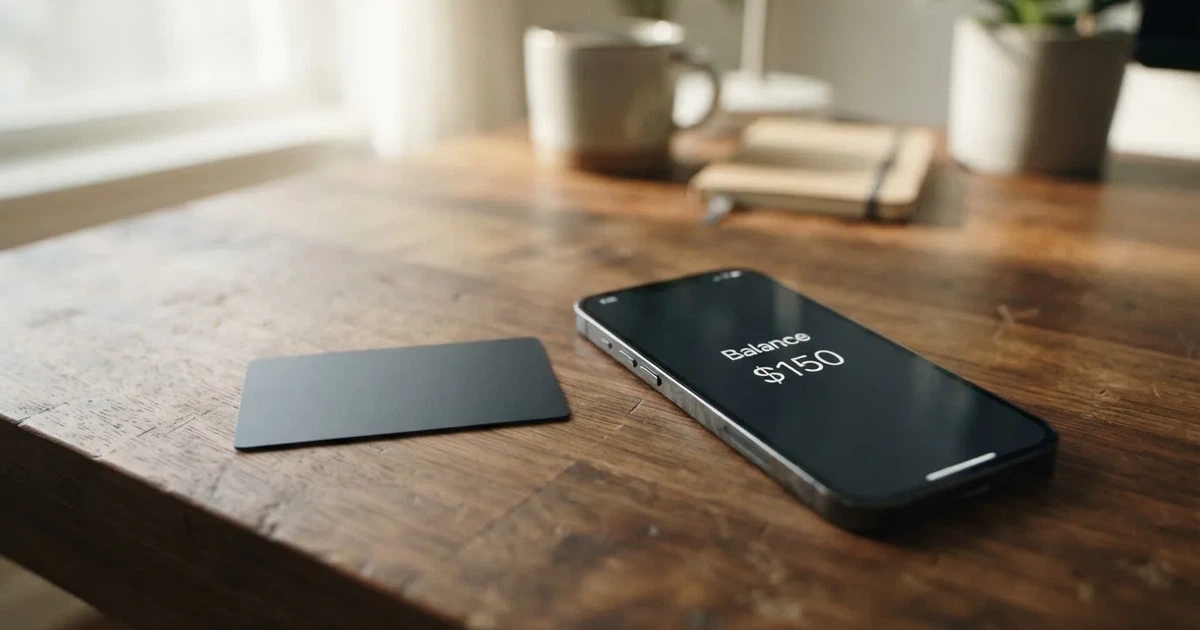
I gave it 4.9 out of 10. That is not a verdict on the payroll product; it is a verdict on this card as a card. It is a virtual Visa for online purchases, built on top of an employer relationship, with fees the public pages do not itemise and an issuer the pages do not name. Those conditions are current as of October 28, 2026.
| Criterion | Mark | Why |
|---|---|---|
| Who can get it | 3 / 10 | Available in 10 countries, but only to people paid through Thera payroll |
| Cost | 5 / 10 | Issuance cost and fees are not disclosed; overseas transactions “may incur FX fees” with no figure |
| Top-up options | 6 / 10 | Transfer from a Thera account to the wallet, then “Add Funds” to the card in 5–10 minutes; wallet payouts in USDC and USDT on Ethereum and Tron only |
| Reliability and complaints | 6 / 10 | Issuer and legal entity not named, KYC via partner AiPrise; Trustpilot 4.7 from 100 reviews, one complaint about a completed withdrawal that never arrived and slow support |
| Everyday use | 5 / 10 | Virtual Visa, Apple Pay and Google Pay through card settings; online purchases only, no in-store use and no ATM, physical card planned |
| Total | 4.9 / 10 | A payroll accessory with more questions than answers |
Who will they give you the card
The card is supported in ten countries: Argentina, Bolivia, Brazil, Colombia, Dominican Republic, Ecuador, Guatemala, Mexico, Peru and the United States. The company frames availability as being “based on local banking and regulatory availability”, which is the kind of sentence that means the list can change.
The more important gate is not geography. This is for people paid through Thera payroll — employees and contractors — not a general retail product. If you do not already have Thera paying you, the card is not something you can walk in and request. That single design decision is why I mark “who can get it” at 3 out of 10: the addressable population is the intersection of ten payroll jurisdictions and one employment channel.
Two further points about who you need to be. Prepaid and debit cards in this category generally go to adults aged 18 and over, and some issuers set higher limits for some customers. And where an employer requires it, withdrawals stay blocked until your identity verification is approved — so your ability to move money can lag your ability to spend it. Neither point is Thera-specific, but both shape whether the card works for you in week one.
If your situation is “I want a card that spends my own money anywhere Visa is accepted,” read the rest of this review anyway, but start from the conclusion: this is not that card.
How to get it
You cannot apply for it directly. The route runs through your employer and through Thera’s payroll product. In practice the sequence is: you are set up on payroll, you create a wallet under Payroll > Wallet, and that wallet leads to a card.
Wallet creation sits under Payroll > Wallet, and approval “typically takes a few business days”. That is the only timing the pages give, and it is the timing that matters most — not the card order, but getting access to the wallet in the first place.
Identity verification. KYC is handled through the partner AiPrise, on mobile only, via a QR code. The flow is: document type and issuing country, a photo of the front and back of the document, then a selfie. Accepted documents are a driver’s licence, resident ID, voter ID, national ID and passport. The result is either “Verified” or “Declined”. Standard review takes a few minutes; if extra verification is needed, 24–48 hours. Note what the pages do not say: the reasons a check is rejected are not listed, and proof of address and age are not stated as part of this flow. The rejection-reasons gap is worth asking about before you need it.
Tax forms. Non-US residents fill out W-8BEN or W-8BEN-E; US tax residents file W-9. These are required before withdrawals.
The card itself. You get a virtual Visa, usable for online purchases “where Visa is accepted” — and only online. No in-store use. A physical card is planned but not part of what the pages describe today. The card currency is not stated.
You will not find anywhere in these pages a stated route from “I want this card” to “I have this card”, because there isn’t one outside the payroll relationship.
Fees: what it really costs
This is the weakest part of the picture, and I want to be precise about why rather than dramatic. The public pages simply do not itemise the cost. Issuance cost: not stated. Monthly fee: not stated. Crypto conversion fee: not stated. ATM: not stated — and the card cannot be used in-store, so cash is not addressed at all. Card spending limits: not stated. What the pages do say is that foreign transactions “may incur foreign exchange (FX) fees”, with no number attached.

The single figure that is stated anywhere near money is a limit, not a fee: a maximum of 10 withdrawals in any rolling 30-day period.
| Fee or limit | What the card’s pages say |
|---|---|
| Issuance | not stated |
| Monthly fee | not stated |
| Crypto conversion | not stated |
| Foreign exchange (FX) | “Foreign transactions may incur foreign exchange (FX) fees” — no figure |
| ATM / cash withdrawal | not stated (card cannot be used in-store) |
| Card spending limits | not stated |
| Withdrawals | maximum 10 in any rolling 30-day period |
| Tiers | single virtual card; no tiers stated |
| Card currency | not stated; the wallet holds USDC/USDT and the payroll balance is in USD |
Not stated means the card’s public pages don’t say. I am not filling that gap with a guess, because a guess here would be worse than the gap.
Three everyday payments, and what applies. Take a freelancer in Mexico paid monthly through Thera, a contractor in Colombia, and a US-based remote worker — the three shapes this card most plausibly serves.
*A subscription you pay online.* You are spending virtual Visa online, so the only fees that could apply are any not-stated crypto conversion fee if the balance is being converted, and any FX fee if the merchant charges in a currency other than the card’s — and the card currency is not stated. What you actually pay is unknown until you try it, because the fee schedule is unknown.
*A meal out or a taxi.* Not possible. The card is online-purchases-only, no in-store use. If you need to pay a physical merchant, this card does nothing for you today.
*Paying a supplier abroad, or getting money out.* If you withdraw from the wallet rather than spend on the card, you are in the “may incur FX fees” and unstated-fee territory, and you run into the 10-withdrawals-in-30-days ceiling. Where FX fees apply, the card’s own pages give you no way to estimate them.
Top up: how the money gets onto the card
The path is internal and specific, which is a double-edged fact. It is easy, because you do not have to think about networks; and it is limiting, because you are not choosing from options.
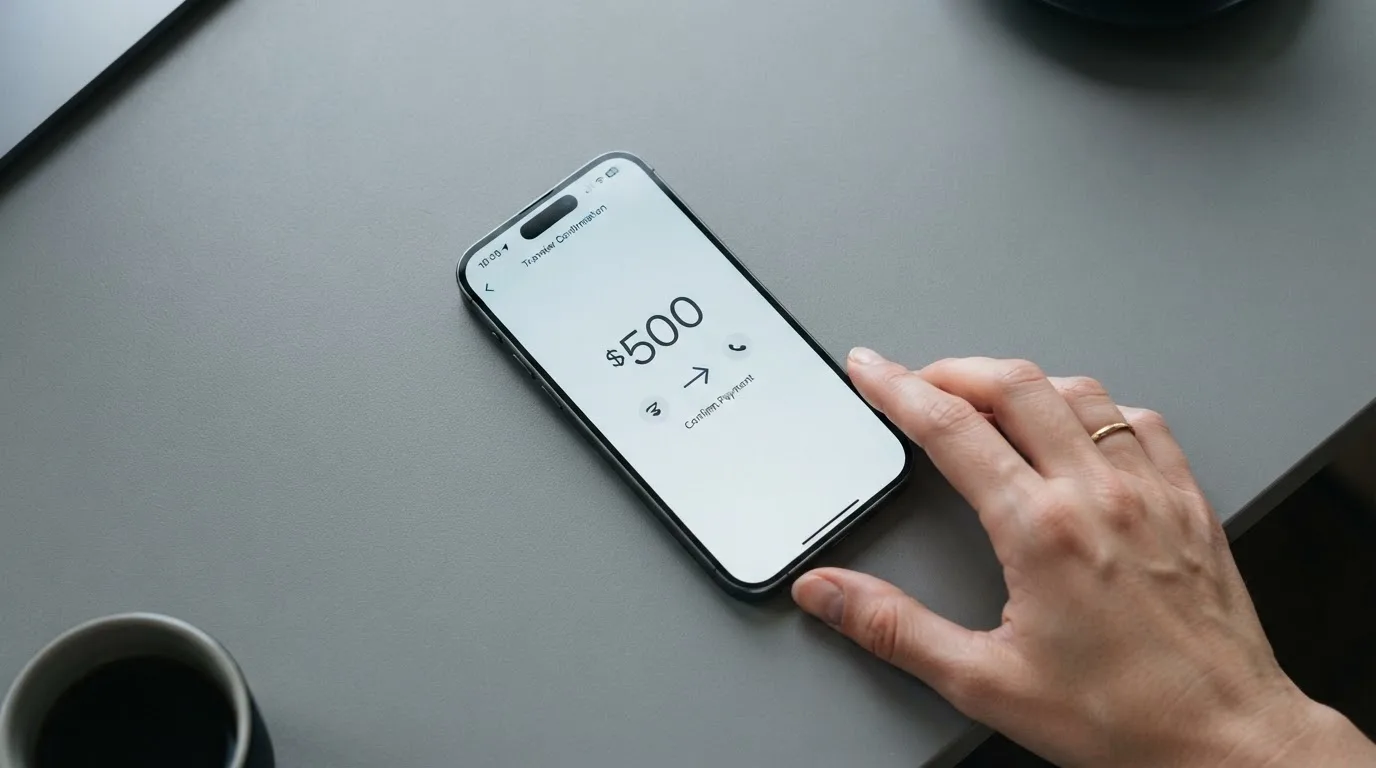
The mechanism: transfer from your Thera account to Thera Wallet using “Transfer to Wallet”, then from the wallet to the card using “Add Funds”. The balance reflects in 5–10 minutes. Fees, minimums and fiat top-up options are not stated. So the 5–10 minutes is the one number in this section you can plan around; the cost of getting money in is something you cannot plan around.
Payouts out of the wallet are a different door with a narrower frame. The wallet supports payouts in USDC and USDT on the Ethereum and Tron networks only. That is two networks, not a menu of them. Before sending, you add the destination through “Add Method” — a payout to an external crypto address in USDC or USDT on Ethereum or Tron.
That section has a warning attached, and it is the most consequential line in the whole funding story: a wrong address can cause permanent loss. Blockchain transfers are irreversible, so there is no support desk that can undo a transfer to an address you pasted incorrectly. The card’s pages do not state payout fees, and they do not state what happens to the balance if you close the account. So if you are withdrawing to your own wallet, treat the address as the thing you triple-check, because the failure mode is total and silent.
One more practical detail about the networks themselves, because it bites people: on Ethereum, fees are paid only in ETH, so a wallet holding USDT with no ETH cannot send. Tron prices its transactions differently, through bandwidth and energy resources. And Circle stopped supporting USDC on Tron in February 2024, so “USDC over TRC20” is not a native option — on Tron, USDC there is not the same thing as a native USDC.
Paying with it every day
You add the card to Apple Pay and Google Pay through the card settings. That is the useful part, and it is the whole of the mobile-wallet story.
What you cannot do today: pay in a shop, take cash out. What is planned: a physical card. What is not stated: whether any merchant categories are blocked, whether there are rewards or cashback of any kind, and what the app itself is like — there is a web dashboard, but I did not read ratings for it. Also worth knowing: the card cannot be used for peer-to-peer transfers via payment links.
A day in the life, then, looks like this. You get paid through payroll, you move the money from your Thera account to the wallet, you add it to the card, and you spend it on websites and apps — including through Apple Pay or Google Pay on your phone. If your spending is mostly subscriptions, online services and app purchases, that covers you well. If your spending involves cash, a market stall, a garage or a restaurant, the card does not come into it.
One structural point about how any such card works, which explains a lot of friction you may hit later. A payment card number begins with an issuer identification number — 6 or 8 digits — that tells merchants which institution and country issued it. Merchants can look that up, and may apply extra scrutiny when the issuer country differs from the billing address. That is why a card issued in one country can look “foreign” in another, and why online payments with a cross-border card sometimes get declined at checkout for reasons that have nothing to do with you.
What can go wrong
The issuer is not named. The pages I read describe Thera as a payroll and payments platform. They do not name the legal entity, the card issuer, or any licence. That matters because a card programme runs through several parties: the network (Visa) routes the messages and sets the rules, the issuer — a bank or e-money institution licensed to issue under the network’s licence — holds the programme, and the brand is often only a programme manager sitting at the front. If you ever have a problem that needs a regulated party behind it, you want to know which one you are dealing with.
Withdrawal that completes and never arrives. On Trustpilot, Thera sits at 4.7 from 100 reviews, all in the last twelve months, read on 2026-10-21. The single visible complaint is dated 6 August 2026: a withdrawal marked completed that never arrived, with slow, repetitive support. The company has not replied to negative reviews. I did not find any official incident record. One complaint out of a hundred is not a pattern — but it is exactly the failure mode a person reading this before signing up would want to know about, because it touches your money leaving the system.
Custody is not stated. The pages do not say who holds your funds or how. Control of crypto belongs to whoever holds the private key; with a custodial wallet the provider holds the credentials, so you trust them completely, and a seed phrase of 12 to 24 words in the wrong hands restores the wallet and spends everything. Crypto transfers are typically irreversible and a stolen key has no built-in recovery — the network cannot freeze or return funds. This is not a claim that Thera loses money; it is a note that the card’s pages do not tell you which side of this line it sits on.
What you are not told, in one place. The support channel for the card specifically: the card article names none, while the KYC guide points to email. Disputes: not stated — no chargeback process is described, and coverage for prepaid cards varies and should not be assumed. Recent news: not stated. Identity verification is required, and the card number, expiry and CVV are shown in the Wallet section and auto-hide when you leave the page, which is a reasonable default.
The category risks, which are real but not specific to Thera. Programme closures happen: Visa terminated its global agreements with FTX on 13 November 2022 and the FTX US debit card was wound down; WaveCrest, a Visa issuer that supplied crypto card brands, was suspended in Europe in 2018 and all its Visa programmes closed. Custodial platforms have failed before — Mt. Gox (about US$350 million reported stolen, 2011–2014), Coincheck (about US$400 million, 2018), Ronin Network (US$625 million, 2022). Stablecoins can depeg: TerraUSD collapsed in May 2022, and USDC briefly lost its peg in March 2023. And a declined online authorisation can leave a hold on your balance for several days, typically up to seven. None of this is a prediction about Thera. It is the weather in this category.
A note on sanctions. Tether says it disables tokens in wallets on the OFAC sanctions list and has frozen funds tied to illicit activity. Where a provider applies such screening, nationality and country of birth are often screened separately from residence. I am not going to explain how to get around any of that, and you shouldn’t look for it — the legitimate route through a payroll employer is the only one that will still work for you in a year.
What to take instead
If Thera does not pay you, or you want a card that works in the physical world, the honest comparison is with the other cards I looked at. All three alternatives have the same gap in a different place: none of them fully itemises its costs.
| Card | Score | Who can get it | Where it works | Cost and fees |
|---|---|---|---|---|
| Thera Wallet | 4.9 / 10 | Only people paid through Thera payroll; 10 countries | Online only, virtual Visa | Not stated; FX fees possible, no figure |
| Whop Cards | 5.2 / 10 | Consumers in 31 US states; businesses in 41 | Visa, online and in stores | Page says “No extra fees”; no amounts listed |
| Stella | 6.5 / 10 | Countries not stated; bars sanctioned users, routes US and EU users through affiliates | Virtual and physical Visa, “over 40 million VISA merchants globally” | Fees “described under this User Agreement and/or on the App”; no amounts given |
| UniFi Card | 4.7 / 10 | Not confirmed from official pages; app lists routes to Philippines, Mexico, eurozone, and mentions Colombia, Brazil, UK | “Prepaid Debit Visa Card” issued by Lead Bank, spends from a USD balance | “Fees may apply. See UniFi website for more details.” |
Whop Cards score 5.2. The Visa works anywhere Visa is accepted, online and in stores — the physical-world gap that Thera has. Availability is broad but oddly shaped: consumers in 31 US states, businesses in 41, and a published unsupported-country list that includes Belarus, China (Mainland), Cuba, Hong Kong, India, Iran, Iraq, Israel, Myanmar, Nepal, Nicaragua, North Korea, Russia, Syria, Turkey, Ukraine, Venezuela and Vietnam. Whether the basis is citizenship or residence is not stated. It spends from a Whop balance, and a pending balance becomes usable as soon as a payment arrives. Rewards: 5% cashback at select merchants, currently Uber, with payout currency and conditions not stated. The card type and currency are not stated.
Stella scores highest of the four at 6.5, and the reason is breadth rather than price: virtual and physical, on a Visa said to work at over 40 million merchants globally. It is a custodial model — you deposit crypto into the account and it automatically tops up the card. Its terms bar users under economic sanctions programmes and route US and European users through affiliates, which is a detail worth reading properly if you are in either region. The official card page states no cashback; an Earn product exists separately and is a yield product, not a reward. Fees are described only by reference to the User Agreement or the app.
UniFi Card scores 4.7, the lowest of the four. It is a prepaid debit Visa issued by Lead Bank, spends from a USD balance, and supports Apple Pay. Its eligibility is the least clear: not confirmed from official pages, though the app store listing shows send-money routes to the Philippines, Mexico and the eurozone, with recent release notes mentioning Colombia, Brazil (PIX) and the UK. Funding comes in through ACH, wire, SEPA or SPEI. The listing claims “3% rewards on balances”, with card cashback not stated — that is a balance reward, not a card reward, and the distinction matters.
The pattern across all four: physical cards and in-store spending are common; clear, itemised fee schedules are not. Whop’s “no extra fees” is a claim without numbers. So if your deciding factor is knowing exactly what a payment costs, you will find the same fog here that you find at Thera.
Who I would recommend it to
I would recommend the Thera Wallet card to a freelancer or employee in Argentina, Bolivia, Brazil, Colombia, Dominican Republic, Ecuador, Guatemala, Mexico, Peru or the United States who is already paid through Thera payroll and whose spending is mostly online — subscriptions, services, apps — and who is comfortable with a virtual card, a 5–10 minute internal top-up, and a support channel the pages only partly name.
I would not recommend it as your primary card, and I would not recommend it to anyone whose income does not come through Thera payroll. The reasons are specific, not vibes: it is online-only with no in-store use and no ATM; a physical card is planned but not here; the cost of a payment is not stated anywhere; the issuer and legal entity behind the card are not named; and the withdrawal path is limited to two networks with a permanent-loss warning attached.
Before you decide, four checks in order. First: is your money arriving through Thera payroll at all — if not, stop here. Second: ask support, in writing, what the card currency is, whether issuance and monthly fees exist, what the crypto conversion fee is, and what the FX fee is; get the answers before you rely on the card. Third: read the payout section properly, because a wrong address is a total loss and the only warning is one line long. Fourth: keep a backup payment method, because the one visible complaint in a hundred reviews is about money that completed and never arrived.
If you want to know who stands behind any of these cards, or how the licence and custody questions work in general, I have written about that separately.
Frequently asked questions
What is the Thera Wallet card?
It is a virtual Visa card tied to a crypto wallet, offered by Thera, a payroll and payments platform. The card is for online purchases only, is not usable in stores or at ATMs, and comes with Apple Pay and Google Pay support through card settings. It is not a general retail product: the company says it is for people paid through Thera payroll.
How does the Thera Wallet card work?
You are paid through Thera payroll, you create a wallet under Payroll > Wallet, and approval typically takes a few business days. You move money from your Thera account to the wallet with “Transfer to Wallet”, then to the card with “Add Funds”, which takes 5–10 minutes to reflect. The card then spends that balance online wherever Visa is accepted.
Is Thera Wallet a bank?
The pages describe Thera as a payroll and payments platform, and they do not name the legal entity, the card issuer, or any licence. A card programme usually involves a network routing payments and a licensed issuer holding the programme, with the brand as a front end. Until you know which regulated entity stands behind it, treat it as a payments platform rather than a bank.
Who owns Thera Wallet?
Thera operates from Thera as a payroll and payments platform, with identity verification handled by the partner AiPrise. The ownership structure and the card issuer are not named in the public pages I read. If the ownership question matters to you, ask support directly and judge the answer.
Can I use the Thera Wallet card in my country?
The card is supported in ten countries: Argentina, Bolivia, Brazil, Colombia, Dominican Republic, Ecuador, Guatemala, Mexico, Peru and the United States. The company says availability is based on local banking and regulatory availability. Outside those, the card is not supported at all, and support in a foreign country may be treated differently by merchants.
How do I get the Thera Wallet card?
You cannot apply for it directly. It is issued to employees and contractors paid through Thera payroll. You create your wallet under Payroll > Wallet, complete identity verification through the AiPrise partner on mobile via QR code, and approval typically takes a few business days.
Does the Thera Wallet card require KYC?
Yes. Identity verification is done through the partner AiPrise on mobile only, using a QR code: document type and issuing country, photos of the front and back of the document, then a selfie. Accepted documents include a driver’s licence, resident ID, voter ID, national ID and passport. A tax form is also required before withdrawals.
How do I top up the Thera Wallet card?
Transfer from your Thera account to Thera Wallet with “Transfer to Wallet”, then from the wallet to the card with “Add Funds”. It takes 5–10 minutes to reflect. Fees, minimums and any fiat top-up options are not stated on the pages, so only the timing is something you can plan around.
Is the Thera Wallet card safe?
It is safe to say what is done: identity verification is required, and the card number, expiry and CVV auto-hide when you leave the Wallet section. It is not stated who holds custody of the funds, which is the question that matters most, since crypto transfers are irreversible and a wrong withdrawal address can cause permanent loss.
Is the Thera Wallet card free, and worth it?
The card’s public pages do not state an issuance cost or a monthly fee, and they say foreign transactions “may incur foreign exchange (FX) fees” without a figure. Whether it is worth it depends almost entirely on whether you are paid through Thera payroll and spend online. If you want a card you can use in shops, this is not the one.
App and neobank cards: the entry point – cryptocardportal.com
Content created by the «cryptocardportal.com» team