
The Avici crypto card looks generous on fees and strict on limits
 Available in US
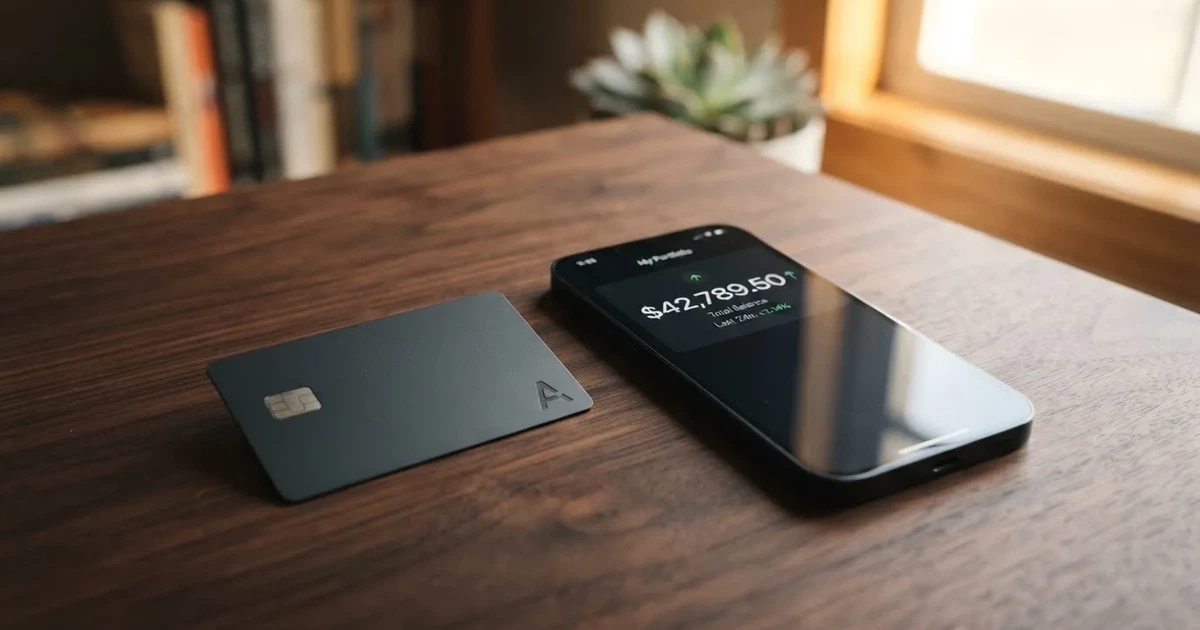
Avici is a crypto card that turns stablecoin holdings into an ordinary Visa you can spend in shops, and on the surface it is one of the more generous cards in this category: no transaction fee, no foreign-exchange markup of its own, Apple Pay and Google Pay, both virtual and physical versions, and a name that appears on plenty of lists. Then you read the terms and the picture tightens. Residents of 49 listed regions only, seventeen countries blocked outright, USDC only through a smart contract, and per-transaction limits low enough to rule out a used car. I scored it 6.1 out of 10. That is not a bad card. It is a card with real strengths pointed at one specific person, and real gaps that anyone else will feel within a week.
The conditions described here are current as of October 28, 2026.
The verdict: 6.1 out of 10, aimed at one region and one coin
Six point one. If you hold USDC, live somewhere on the allowed list, and want a card that spends that balance without taking a cut on every payment, this is a card worth a look. If you need a card that works everywhere, that handles many coins, that lets you spend thousands in one go, or that comes with a large banking licence and a support desk you can actually reach, this is not it.
| Criterion | Mark | Why |
|---|---|---|
| Who can get it | 7 / 10 | Issued to residents of 49 regions including Argentina, Australia, Brazil, Japan, the UAE and the USA; 17 countries closed outright |
| Cost | 5 / 10 | Virtual Platinum $15 for the first card, physical Platinum $50, Signature $30 in the first year and $20 a year after; transaction fee $0, FX markup 0% |
| Top-up options | 5 / 10 | Top up with USDC through a Loan Escrow smart contract, and officially nothing else; unofficial reports describe any token via an auto-swap on EVM L2 or Solana |
| Reliability and complaints | 5 / 10 | Avici Inc. in San Francisco, partner Third National, licences not disclosed; Trustpilot 3.5 out of 5 from 5 reviews, one about a blocked €20,000 payment |
| Everyday use | 9 / 10 | Virtual and physical Visa, Apple Pay and Google Pay, ATM: Platinum $1 plus 0.65%, Signature $0 |
The audience this card is built for is narrower than its marketing suggests: residents of Latin America and the UAE who already hold USDC. That single sentence explains most of what follows, including the parts that would otherwise look like oversights.
Who will they give you the card
They will give it to residents of 49 listed regions, and they will refuse it to residents of seventeen named countries. The list is long and generous in places you would not expect: Argentina, Australia, Brazil, Colombia, Hong Kong, Japan, Malaysia, Mexico, Singapore, Thailand, the United Arab Emirates, South Africa and the United States are all on it, with the USA subject to a supported-states list of its own. Not on the list: no EU countries, and no Georgia, Serbia, Armenia or Kazakhstan.
If you are in Europe, this is the first fact that ends the evaluation, so check it before anything else. Residents of the following countries are prohibited from holding the card at all: Belarus, China (Mainland), Cuba, India, Iran, Iraq, Israel, Myanmar, Nepal, Nicaragua, North Korea, Russia, Syria, Turkey, Ukraine, Venezuela and Vietnam.
There is a second list, and it is the one that surprises people. Spending is prohibited — even if you somehow hold the card — in Cuba, Iran, North Korea, Russia, Syria, Ukraine and Venezuela. So a resident of, say, Turkey may be issued a card that will not work at home. That is a strange arrangement, and it is worth a support email before you commit money to it.
One thing the public pages do not say: whether the card checks citizenship as well as residence, and whether the rules differ for a dual national. I could not find that stated anywhere, so treat it as unknown rather than assume the lenient reading.
How to get it
Sign up in the app, verify once, and the card is advertised as ready in 2 minutes. Verification is done by Sumsub after you register with an email address, and it covers personal details, ID documents and a liveness check. The card pages put this at “about 2 minutes” or “no more than a few minutes”. I would not plan around that number — identity checks are exactly the step that gets retried.
The document types accepted and the reasons a verification gets rejected are not listed. Proof of address is not mentioned at all, which may mean it is not required or may simply mean nobody wrote it down. If your address is unusual in any way, ask support before you upload.
The card itself is a Visa, described with secured credit-card wording, available in virtual form by category — subscriptions, groceries, travel — with a physical card delivered as well. The currency of the card is not stated; the balance works in USD, and I would not assume the card converts it for you at the network rate.
Delivery for physical cards: standard shipping is free and untracked at 3–4 weeks. Priority tracked delivery is $50 internationally (1–2 weeks) or $15 in the US, with the US timing not stated. The countries shipped to are not stated, and neither is the replacement cost for a lost or stolen card. Both of those matter more than they sound; they are the first two things to ask before you order a metal-free plastic card you may be living with for years.
Business accounts go through a separate verification process. What differs is not stated.
Fees and limits: what it really costs
The headline is genuinely good and the limits are genuinely tight. Avici advertises “No Hidden Fee”, “No Gas Fee, No Interchange Fee”, a $0 transaction fee and a 0% foreign-exchange markup of its own. Those are the numbers that put this card at the top of its category on paper. But the table below is where your week actually happens.
| Fee or limit | Platinum | Signature |
|---|---|---|
| Virtual card, first | $15 | $30 first year, then $20 a year |
| Virtual card, later | $10 one-time each | included above |
| Physical card | $50 one-time | $75 plus $20 a year from year two |
| Transaction fee | $0 | $0 |
| Foreign-exchange markup | 0% | 0% |
| ATM | $1 + 0.65% | $0 |
| Declined transaction | $0.60 | $0 |
| Balance inquiry | $0.60 | $0 |
| Per transaction | $1,000 | $1,000 |
| Per day | $3,000 | $3,000 |
| Transactions per day | 3 | 3 |
The two tiers are not a status ladder, they are a fee choice: Signature costs more and its running fees are zero, so it pays for itself quickly if you use ATMs, if your payments get declined often, or if you check your balance on the card rather than in the app. Platinum is the cheaper way in and fine if you barely touch an ATM.
Two things the table does not show. First, the native currency is USD and the markup is 0%, but Visa may add its own cross-border fee of 0.4–1% on non-USD transactions — that one is Visa’s, not Avici’s, and it comes out of your balance anyway. Second, multi-currency balances are not stated, so if you want to hold euros or pounds rather than dollars, ask before you fund.
On limits, Avici’s claim is “No transaction limits”, and the specific figures are $1,000 per transaction, $3,000 a day, three transactions a day, with per-card limits settable in your settings. Those two statements sit together oddly, and the specific numbers are the ones to plan around. Three transactions a day is not a hobby. One unofficial source (kkinvesting.io, 20 Oct 2026) gives an ATM limit of $250 daily with a maximum of three transactions, which contradicts the official figures; treat the official numbers as correct and the $250 as unconfirmed.
No top-up fee, no fee for withdrawing to your wallet, no minimum top-up stated, and no low-authentication fee. Network gas on the deposit is paid to the blockchain, not to Avici.
How to Top up the card
You top up in USDC, through a smart contract, and the card spends the balance that contract creates. The mechanism matters here more than the fee list, so let me walk through it. You deposit USDC into a Loan Escrow smart contract; that deposit creates a USD credit balance, which is what the card actually spends. Spent USDC is liquidated from the contract every one to two days, sometimes weekly.
Two consequences follow directly. The first is speed: your funds are tied up in a position that is liquidated on a schedule, not settled at the moment of payment, so a dispute or a reversal can take days to settle rather than seconds. The second is control — and this is the genuinely interesting part. The escrow is self-custodial. Your wallet owns the contract. You can withdraw the remaining funds after spends are deducted, and the wallet withdrawal fee is $0. Avici’s provider can only withdraw funds tied to spend charges. That is a meaningfully better custody position than the custodial crypto cards, where a provider failure means you queue with everyone else.
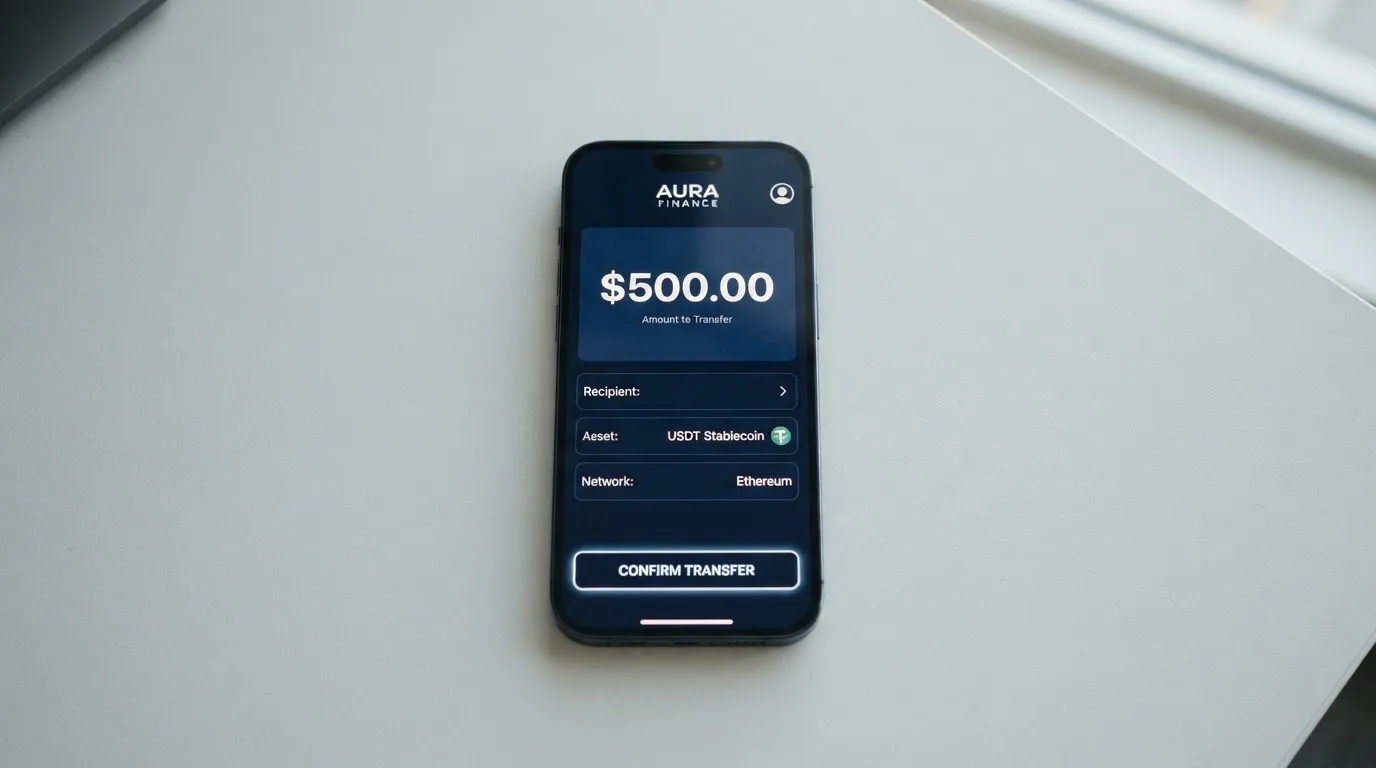
The card pages also say you can withdraw funds anytime and that there is no fee for withdrawal to your wallet. What they do not say is which coins and networks are accepted beyond USDC, what a minimum top-up is, or what the fiat top-up options are. Unofficial summaries (kkinvesting.io, 20 Oct 2026) put the minimum top-up at $1 with arrival in 2–7 minutes, and describe topping up in USDC or any token through a Relay auto-swap on EVM L2 or Solana. Both are third-party claims, not confirmed by the card.
Given the irreversibility of blockchain transfers, the network matters enormously: a deposit sent on a network Avici does not support, or to an address belonging to a different network, can be lost or need manual support recovery with no guarantee. Confirm the network and address in the app before you send, and start with a small amount.
Paying with it every day
This is where the card is at its best, and it earns the 9 out of 10. Apple Pay and Google Pay tap-to-pay both work, which means in practice you use your phone and rarely handle the plastic. The app gives you a freeze that temporarily stops spending, permanent cancel, per-card spending limits, a PIN, and show/hide for card details. Self-custody runs on passkeys and account abstraction.
The virtual cards are split by category — subscriptions, groceries, travel — which is a quiet but real security feature: a card number leaked by one subscription service cannot reach your other spending.
Perks are listed rather than quantified: airline miles, rental car insurance, travel and restaurant perks, trip protection, and a mention of “Avenue to TradeFI rewards”. No cashback rate is stated, so if the cashback is what you are after, this is not evidenced.
Where you can spend is not limited by category on the official pages — blocked categories are not stated. Unofficial reporting (kkinvesting.io, 20 Oct 2026) says spending is blocked in restricted categories including gambling, illegal drugs and financial institutions, the last needing extra approval. Unconfirmed, but worth assuming if any part of your spending falls there.
The app is linked from the homepage through a shortlink. The platforms it supports and its App Store or Google Play ratings are not stated, so I cannot tell you what the software is actually like to use day to day — you would be reading this blind on that point, and I would rather say so than invent it.
One practical note for anyone who gets declined: a declined authorisation can leave a hold on your funds for up to several days. On a balance-based card that means your own money sitting unavailable, which is a different experience from a credit card decline.
What can go wrong
The worst-case scenario is a large payment credited and then frozen, with support going quiet. The facts I could confirm are thin: official incidents are not stated, and what exists is a single unverified user report dated 31 March 2026 describing a business-account user whose incoming payment of EUR 20,000 was credited and then blocked, whose account was restricted, and who heard nothing back from support. A January 2026 review describes repeated login errors at email and authenticator verification. The sample is tiny and unverified — I am telling you what exists, not establishing a pattern.
The structural reason this worries me more than it would with an ordinary card is the custody question. Avici Inc. is at 300 4th St, San Francisco, CA 94107. The docs name Third National as a party to the loan contract structure, though its role is not detailed. The issuer, BIN sponsor and licences are not stated. A card that works by holding your USDC in a contract and settling spends against it depends on a company whose regulatory standing you cannot see from the public pages.
What the docs do say about security is reassuring in the right places: the escrow is self-custodial, and the documentation states that neither Third National, Avici nor Visa controls the loan contract. The homepage mentions passkeys; 2FA and insurance are not stated on the security page. Support channels are not stated beyond in-app support for verification refunds — no languages, no hours. And if you pay for a card and then fail or do not complete verification, the stated remedy is to contact in-app support for a refund; the chargeback and disputed-payment process is not covered on the security page at all.
That last point deserves emphasis for anyone whose balance is their savings. A card with no published dispute route is a card where a frozen payment has no stated path to resolution.
What to take instead
If any of the four things below is a dealbreaker for you, one of these fits better. I have not tested these cards, so this is a comparison of published terms, not a recommendation from use.
BloFin Wallet Card, scored 6.9 / 10 here. Charges nothing to activate, nothing annually, nothing for issuance or dormancy, and no fee to cancel. Its spend fee is 1% or lower by VIP tier, from 1.00% down to 0.00% at the top. It tops up with USDT and USDC on Arbitrum and Base — two coins rather than one. The catch: no country list is published on the card page, you just select your region in the app, and the starting data lists 35 countries; the card currency and virtual-versus-physical details are not stated. No cashback or rebates at all; you get a reduced spend rate instead.
| Avici | BloFin | Decaf | SafePal | |
|---|---|---|---|---|
| Score here | 6.1 | 6.9 | 6.2 | 6.2 |
| Network | Visa | Visa Platinum | Visa | Mastercard debit |
| Entry cost | $15 virtual / $50 physical | $0 activation | $5 virtual, $10 physical US, $90 rest of world | Issuance fee not stated |
| Running fee | $0 Signature, $20/yr from year 2 | $0 | None | None stated |
| Spend fee | $0 | 1.00% down to 0.00% by tier | FX at Visa’s rate, conversion fee not stated | Not stated |
| Top up | USDC via Loan Escrow contract | USDT/USDC on Arbitrum, Base | USDC via link, card or transfer; which coins fund the card not stated | Crypto from 40+ chains, converted to USDC |
| Cashback | Not stated | None | Not stated | None |
Decaf, scored 6.2 / 10. Its restriction list is the strictest of the four here: not issued in Belarus, China, North Korea, India, Iran, Iraq, Israel, Myanmar, Nepal, Russia, Syria, Turkey, Cuba, Ukraine, Venezuela, Vietnam, Nicaragua, Puerto Rico or Nigeria, with eleven US states restricted too — Arizona, Delaware, Georgia, Idaho, Louisiana, Maryland, Montana, Ohio, Oregon, Rhode Island, Washington and Wisconsin, twelve in fact. Whether it applies by citizenship or residence is not stated. It charges $5 for a virtual card worldwide, $10 for physical in the US or $90 elsewhere, with no annual fee, and adds no FX fee of its own — “the FX is the one Visa offers”. The app runs on Solana and Stellar. Which coins top up the card itself is not stated.
SafePal, scored 6.2 / 10. A virtual Mastercard debit, no physical card mentioned, with limits given in EUR through a Swiss Fiat24 account. No account creation or management fees; the card issuance fee is not stated. Top-up fee 0% standard, but Mastercard adds 1% on non-USD settlement, refunds cost 1 USD/EUR/CHF/7 CNH, and swaps include an unquantified spread — though its bank page advertises crypto top-up “as low as 0.4%” on the top tier. It accepts crypto from 40+ blockchains, converted to USDC by default or to fiat, on Arbitrum. No cashback; the reward side is referral commissions up to 40% of referred top-up fees plus tier privileges tied to deposits, referrals and staking. Its regions page was empty when checked, so I genuinely cannot tell you where it operates.
The honest summary: Avici wins on what it charges you at the moment of payment, and loses on how many coins, how much you can spend at once, and how little the public pages say about who stands behind it.
Who I would recommend it to
If you live in Argentina, Brazil, Mexico, Colombia, Singapore, Malaysia, Thailand, Japan, Australia, South Africa, Hong Kong or the UAE; you are a resident, not a visitor; you already hold USDC and are comfortable with the contract mechanics; you want to be paid by someone from abroad without losing a percentage on every purchase; and you can live with $1,000 a transaction — then yes, and the fee structure is the best part of the deal.
If you are in Europe, or in Belarus, China, India, Iran, Iraq, Israel, Myanmar, Nepal, Nicaragua, North Korea, Russia, Syria, Turkey, Ukraine, Venezuela or Vietnam, stop here; the card is not for you. If you need to spend more than $3,000 a day or make more than three payments a day, it will not do it. If you are trying to hold several coins rather than one, it will not do that either. And if you are putting your savings into it, the absence of a published dispute process and a disclosed licence is the reason I would hesitate.
Before you fund anything, I would ask support four questions in writing: which networks are accepted for USDC deposits, what the licence and issuing partner arrangement actually is, how a disputed payment gets resolved, and whether citizenship affects eligibility as well as residence. Keep the answers. If the answers are vague, the fee table is the least of your concerns.
Frequently asked questions
What is the Avici card?
Avici is a Visa payment card you fund with cryptocurrency, mainly USDC, and spend like an ordinary debit card. You deposit USDC into a self-custodial Loan Escrow smart contract, which creates a USD balance for the card to spend. It comes in virtual and physical versions, in two tiers called Platinum and Signature. It is not a bank account, and it is not a credit card in the usual sense.
How does the Avici card work?
You deposit USDC into a Loan Escrow smart contract your wallet owns, and that deposit becomes a USD credit balance. When you pay, the balance is spent and the USDC is liquidated from the contract every one to two days, sometimes weekly. Because the contract is self-custodial, your wallet can withdraw what remains after spends are deducted, at a $0 fee. The provider itself can only withdraw funds tied to spend charges.
Is Avici a bank?
No, and it does not present itself as one. Avici Inc. is a company at 300 4th St, San Francisco, CA 94107, and the docs name Third National as a party to the loan contract structure without detailing its role. The issuer, BIN sponsor and licences are not stated on the public pages. Treat Avici as a card programme manager rather than a bank, and do not assume deposit protection.
Who can get the Avici card?
Residents of 49 listed regions, including Argentina, Australia, Brazil, Colombia, Hong Kong, Japan, Malaysia, Mexico, Singapore, Thailand, the UAE, South Africa and the USA, subject to a supported-states list there. No EU countries, and no Georgia, Serbia, Armenia or Kazakhstan. Residents of seventeen countries including Belarus, China (Mainland), India, Iran, Israel, Russia, Turkey and Ukraine are prohibited. Whether citizenship is also checked is not stated.
What does the Avici card cost?
Virtual Platinum is $15 for the first card and $10 for each later one; physical Platinum is $50 one-time. Virtual Signature is $30 in the first year then $20 a year; physical Signature is $75 plus $20 a year from year two. The transaction fee is $0 and the foreign-exchange markup is 0%, though Visa may add 0.4–1% cross-border on non-USD payments. Platinum charges $1 plus 0.65% per ATM withdrawal; Signature charges $0.
How much can I spend per day?
$1,000 per transaction, $3,000 per day, and three transactions per day, on both tiers. Avici also advertises “no transaction limits by default” and lets you set per-card limits in settings, which sits oddly beside those figures — plan on the specific numbers. One unofficial source gives an ATM limit of $250 daily, which contradicts the official figures; I would not rely on it.
Does the Avici card require KYC?
Yes. After signing up with an email address you go through a single Sumsub verification covering personal details, ID documents and a liveness check, advertised as taking 2 minutes. Your KYC data is shared with the card partners, and Sumsub performs anti-money-laundering monitoring of both users and on-chain funds. The accepted document types and the rejection reasons are not listed. Business accounts verify separately.
Is the Avici card safe?
It depends on what you mean. The escrow contract is self-custodial, and the docs state that neither Third National, Avici nor Visa controls it, which is a real strength. But the issuer’s licence is not disclosed, Trustpilot shows 3.5 out of 5 from only five reviews, and one unverified March 2026 report describes a €20,000 payment credited then blocked with support silent. No chargeback process is published.
Can I use the Avici card in my country?
Only if your country is on the allowed list and not on the prohibited list. Spending is separately prohibited in Cuba, Iran, North Korea, Russia, Syria, Ukraine and Venezuela even for people who hold the card, which means some issued cards do not work in their holder’s own country. If your country appears on either list, or on neither, get a written answer from support before you deposit anything.
How do I add the Avici card to Apple Wallet?
Through the app: the card supports Apple Pay and Google Pay tap-to-pay, and the homepage links to a download through a shortlink. Which platforms the app runs on is not stated, and neither are its store ratings. Once added, payments use a device-specific token rather than your card number. You can also freeze the card instantly in the app, set per-card limits, or cancel it permanently.
Wallet cards: the entry point – cryptocardportal.com
Content created by the «cryptocardportal.com» team