
The Gemini card is a US credit card, not a crypto wallet — read it that way
 Available in US
If you have been circling crypto cards because your ordinary bank card is hard to get, the Gemini card is worth reading carefully — but not for the reason most people arrive with it. This is not a card that converts your bitcoin and spends it. It is a Mastercard World Elite credit card issued by WebBank, you pay it back in US dollars, and the crypto part is the reward you get back in spend. That single distinction explains almost everything else on this page: the eligibility, the interest, the application, the fees you will never pay, and the complaints.
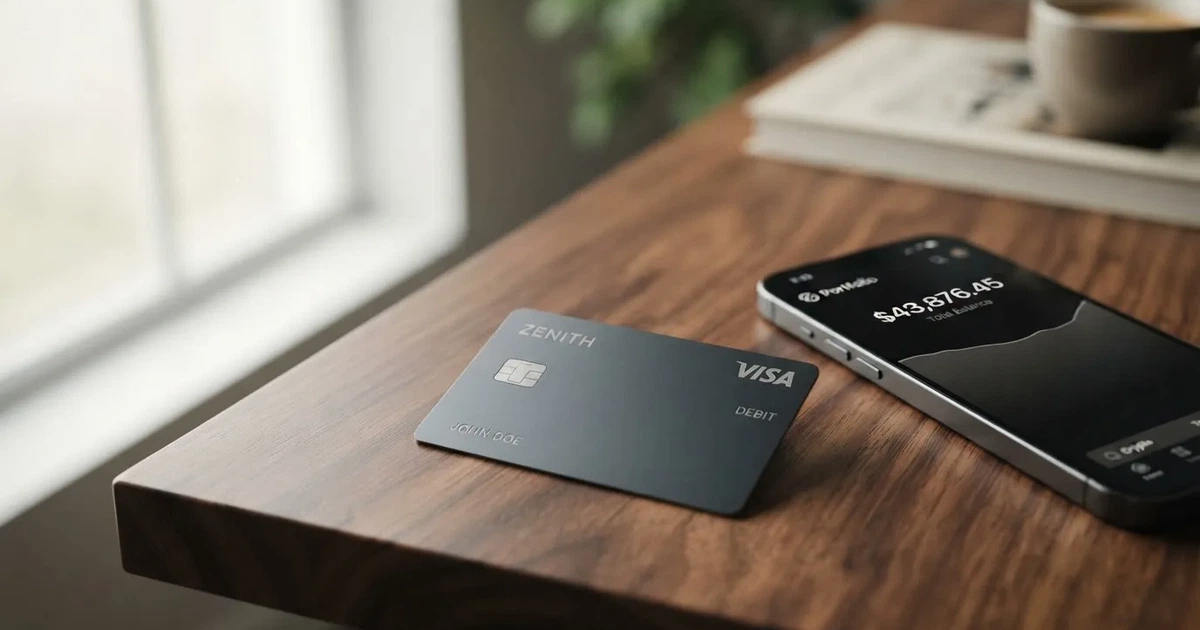
My score for it is 4.9 out of 10. That is not a rounding of “average” — the card is genuinely good at everyday spending and genuinely poor at the thing most people searching for it want, which is spending crypto that already exists in your wallet. Read on if you are in the United States and can pass a credit check; if you are anywhere else, this card is not for you, and the last third of this page explains what to look at instead.
*Conditions described are current as of October 28, 2026.*
The short verdict: 4.9 / 10
The Gemini card suits one person well: a US resident who wants an ordinary, well-behaved credit card with no annual fee, no foreign transaction fee, and crypto back on what they spend. For that person it is a good product, and the rewards structure is more generous than most US credit cards. It does not suit anyone who wanted to load coins onto a card, spend them abroad without conversion friction, or get a card issued from a country that will not refuse them at the door. It does not suit non-US residents at all: Gemini’s own support says residents of all 50 US states can apply, and no other country is named anywhere on the public pages.
Here is how the score breaks down, criterion by criterion, so you can see exactly where the marks come from rather than taking my word for the total.
| Criterion | Mark | Why |
|---|---|---|
| Who can get it | 4 / 10 | Credit card for residents of all 50 US states; no other country named |
| Cost | 7 / 10 | No annual fee and no foreign transaction fees; purchase APR 16.49% to 34.49%, cash advance $10 or 3%, card replacement $50 after one free in 12 months |
| Top-up options | 2 / 10 | Credit card repaid in fiat; crypto only as a reward — 4% gas/EV/transit (up to $300 a month), 3% dining, 2% groceries, 1% everything else |
| Reliability and complaints | 3 / 10 | Issued by WebBank, Mastercard World Elite; Trustpilot 1.3 out of 1,513 reviews: frozen accounts, withdrawal delays up to 35 days, disputes refused, no phone line |
| Everyday use | 8 / 10 | Apple Pay, Google Pay and Samsung Pay, cash advance available in the ATM; unofficial: a metal physical card and a virtual card |
| Total | 4.9 / 10 | A strong everyday credit card that is not the crypto card its name suggests |
The lowest single mark, top-up options at 2 out of 10, is the one that decides the whole verdict. Everything above it is competent-to-good; that one is a category error. A card that cannot be loaded with crypto has nothing to top up.
Will they give you the card?
Yes, if you live in the United States and your creditworthiness supports a limit. No, if you live anywhere else.
Gemini’s support materials state that residents in all 50 US states are eligible to apply, and that terms and restrictions apply. That is the whole of the official eligibility statement on the card page — the page itself does not spell out who can get the card.
What the application actually involves is a credit application with a creditworthiness check. The purchase APR is set by that creditworthiness at the opening: 16.49% to 34.49%. The cash advance rate is 29.49% and the penalty rate 33.49%, all variable and moving with the Prime Rate.
Two things I want to be straight with you about, because card pages are usually vague here:
- The card page does not state the KYC process, the identity tiers, the processing time, or the reasons a application can be refused. It does not state them, so I am not going to guess at them for you.
- Third-party reviews (a CryptoSlate review and a Gerald article, both undated, neither confirmed by Gemini) describe the process as a hard credit pull and list a valid Social Security Number among the requirements. Treat that as unofficial. The Social Security Number requirement is not in the Gemini text I could find.
If you have no US credit history, expect the low end of that range to be the relevant number rather than the bottom of it. Unofficial reports through Gerald and Reddit in 2026 put starting limits as low as $1,000, with users discussing limits of $1,000–3,000; one review site puts the general range at $2,500 to $25,000. Again: not confirmed by the card, and worth treating as a shape rather than a promise. A hard credit pull also means an application refusal is visible to other lenders, which is a real cost in itself if your file is thin.
How to get it
You apply for credit through Gemini, and the approval decision is a credit decision, not a crypto one.
The card page does not describe the application steps, so I will stick to what is actually published: it is a credit application with a creditworthiness check, for US residents, and the terms and restrictions apply. There is no separate “no credit check” route described anywhere in the public material.
What you get once approved is a Mastercard World Elite credit card. Gemini’s page names the physical and virtual options and a metal form as choices in the application form, though the form’s exact contents and the currency are not stated. Unofficially, third-party sources describe a metal physical card arriving about 5–7 days after approval, and a virtual card issued after verification. Again: unofficial, not confirmed by the card, and I would not reorder your life around a 5–7 day estimate.
One term is clear and worth reading before you click anything. The cardholder agreement gives one free card replacement per 12 months; each additional replacement costs $50. Delivery countries, delivery time and shipping cost are not stated. If you are someone who loses cards, that $50 is the number to remember — not the reward rate.
Fees and what you actually pay
No annual fee, no foreign transaction fee, and no crypto conversion — because there is no crypto to convert. That last point is the whole cost story in one sentence, and it is either the best thing about this card or the reason to skip it, depending on where your money already sits.
Here is the fee and limit picture, item by item, with everything the card actually publishes.

| Fee or limit | What the card says |
|---|---|
| Annual fee | None |
| Issuance fee | Not stated |
| Foreign transaction fee | None |
| Crypto conversion | Not applicable — credit card, rewards paid in crypto |
| Cash advance | $10 or 3% of each cash advance, whichever is greater |
| Late payment fee | Up to $35; first late fee up to $25 |
| Returned payment fee | Up to $35 |
| Purchase APR | 16.49% to 34.49%, variable, set by creditworthiness at opening |
| Cash advance APR | 29.49%, variable |
| Penalty APR | 33.49%, variable |
| Card replacement | One free per 12 months, then $50 each |
| ATM fee and ATM limit | Not stated |
| Credit limit | Not stated |
Source for the late fee, returned fee and cash advance terms: the cardholder agreement version dated 1 April 2026.
Now let me run three ordinary payments through that table, because “no fees” means different things in different situations.
Coffee, in New York, on the card’s own network. You tap and pay. Nothing in the fee column applies: no annual fee to amortise, no foreign transaction fee, no conversion. The only thing that touches this purchase is the reward — 1% on “other”, paid instantly in Bitcoin or in 50+ cryptos on Gemini.
A flight booked in euros, from a US account. No foreign transaction fee, which is the genuine headline advantage here and a real saving against most US-issued credit cards that charge 2–3%. But the account is in US dollars, and foreign-currency transactions are converted to USD by the card network at its own exchange rate. That is not a Gemini fee and it is not a Gemini choice, but it is a spread you do pay, and on a large booking it can be more significant than the fee you saved. Budget for it.
A cash advance at an ATM abroad. This is where the card turns expensive. A cash advance carries the $10-or-3% fee (whichever is greater), plus 29.49% APR from the day of the withdrawal, with no interest-free grace period. Cash advances allowed at those terms are set out in the cardholder agreement. The ATM fee and the ATM limit are not published. If your reason for wanting a crypto-hyped card is “I need money while travelling”, this is not the instrument for it — a plain debit card does that job for a fraction of the cost.
Top up: there is nothing to top up
You cannot fund this card with crypto, stablecoins, or fiat transfers into a stored balance. It is a credit card, and you pay it back in dollars.
This is the section I would ask you to read twice, because the search questions around this card assume the opposite. “How do I top up the Gemini card” has a simple answer: you do not. Coins and networks are not applicable. There is no stored balance to load, which means there is also no deposit fee, because there is no deposit.
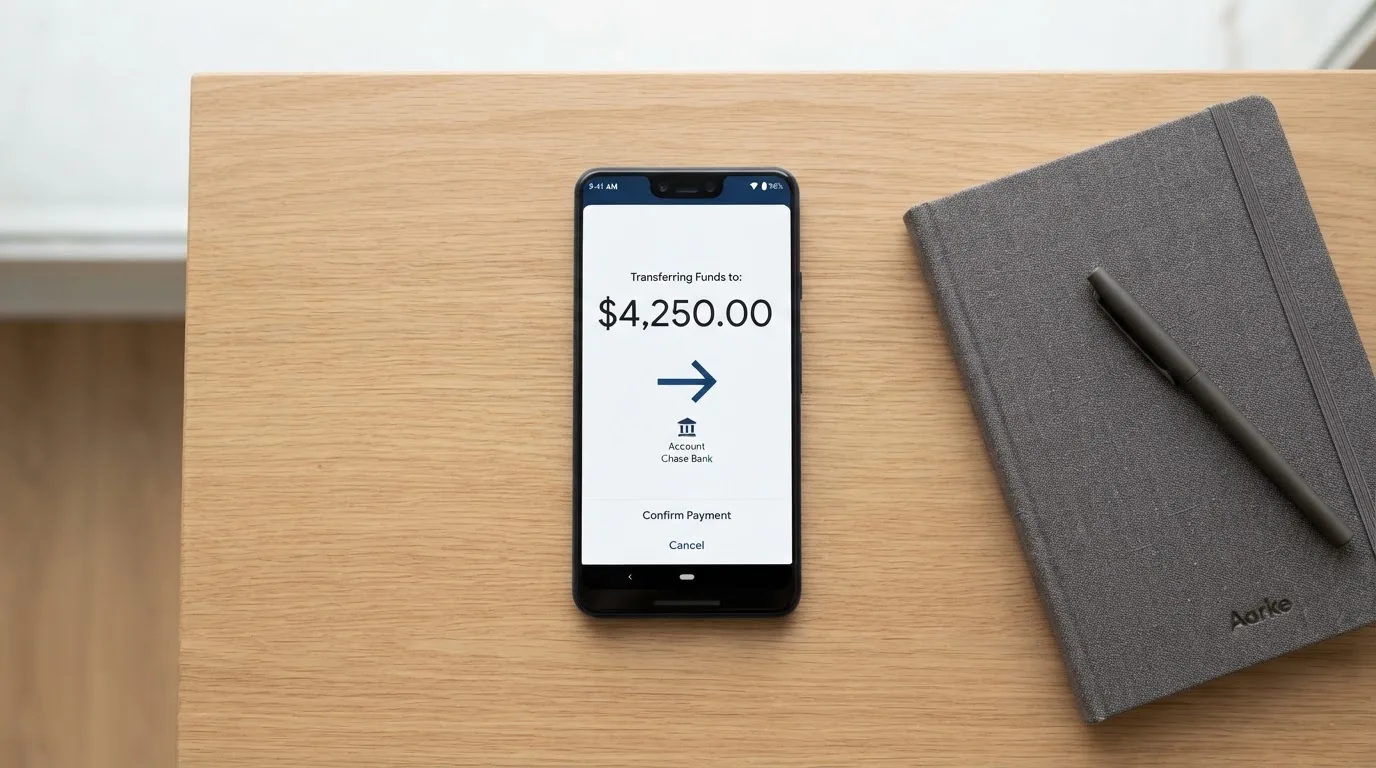
What exists instead is a repayment relationship. You owe money on a revolving balance, you pay it back in fiat, and the card’s terms in the cardholder agreement govern closure and payoff. There is no “withdraw money from Gemini” flow in the sense the question implies, because there is no balance held on the card to withdraw. If you want to convert crypto to spendable dollars, that is a separate action on the Gemini exchange, separate from this card, with its own fees and its own confirmation steps — the card does not do it for you and does not wrap around it.
The fees you do have to watch live at the other end of the cycle: the cash advance fee described above, late payment up to $35 with a first late fee up to $25, and returned payment up to $35. The rewards are the reward, not the funding — 4% on gas, EV and transit up to $300 a month, 3% dining, 2% groceries, 1% everything else, with the 4% tier capped at $300 of spend per month and resetting on the 1st, dropping to 1% above that.
Paying with it every day
Everyday spending is this card’s strongest suit, and it is the reason it still earns 8 out of 10 for daily use.
Gemini’s support states that the card works with Apple Pay, Google Pay and Samsung Pay. That single fact does most of the work — if you pay by phone, you are tapping with a tokenised number rather than handing over plastic, and neither the shop nor anyone watching sees your card. The card page itself does not describe Apple Pay or Google Pay support directly; that comes from Gemini support. Blocked merchant categories are not stated, though some instant-reward exclusions apply.
The rewards are the part that will keep you reaching for it. On first $300 a month of gas, EV or transit spend you get 4%; dining 3%; groceries 2%; everything else 1%. It is paid instantly in Bitcoin or in 50+ other cryptos on Gemini, and you can change which one at any time. At some merchants there are 10% Vault Rewards, capped and varying by merchant. The referral scheme is $50 in crypto for each referral and $250 per five referrals, up to 50 a year. None of that requires you to hold anything beforehand — the reward arrives after the spend.
There is also a cash advance in the ATM, which as I noted above is available at 29.49% APR and $10 or 3%. Unofficially, there is a metal physical card and a virtual card; neither is confirmed in Gemini’s own text.
The app is the Gemini iOS app: 4.8 out of 5 from 110K ratings in the US App Store listing as read on 2026-10-20, requiring iPhone iOS 17.2 or later, with Apple Watch and Apple Vision support, in English, French, German, Italian, Portuguese and Spanish. There is no Russian. The Google Play listing was not read.
Disputes sit in the cardholder agreement under a “Billing Rights” section. I have not extracted the detail of that section, and the statutory 60-day window is not confirmed in the text I read — so if you need to dispute something, read the agreement itself rather than trusting a summary, including mine.
What can go wrong
The complaints are the story here, and they cluster around these common themes: accounts frozen, support that does not answer, and a card that stops working.
On Trustpilot, read 2026-10-20, the Gemini card sits at 1.3 out of 5 from 1,513 reviews, 212 of them in the last 12 months. Gemini replied to 3% of negative reviews. An earlier reading in this same pass showed roughly 1.5 out of 5 across about 1,475 reviews, so treat the exact figure as a moving target rather than a permanent score. Recurring user-reported themes:
- Frozen accounts and holds. Accounts locked after a third-party fraud email, withdrawal holds running up to 35 days in August and September 2026, a fraud freeze from January 2026 still unresolved two months later.
- Support that is slow or absent. Slow, email-only support and no phone line, reported July to September 2026.
- Card and app failures. A dispute denied after card data was compromised (October 2026), repeated declines over three months (October 2026), a card closed without explanation (September 2026), an app that stopped showing balance and payment history after a July payment (July 2026), and late fees charged after app glitches (July 2026).
Now, one important distinction as you read all that. Almost every one of these complaints concerns the Gemini exchange account, not the WebBank credit card account — freezes and withdrawal holds are exchange-side phenomena, and a credit card has no withdrawal to hold. If your use case is “spend the crypto I already hold”, then the party whose reliability worries me is the exchange, not the card issuer. That is a reason to keep your Gemini balance small, and it is not a reason to dismiss the card.
On the issuer side: the card is issued by WebBank, and Gemini’s corporate and licence details are not on the card page. That separation is normal for this category — the crypto brand is usually a programme manager or front-end, and a licensed bank actually holds the programme — but it means your credit relationship is with a bank you did not choose and whose regulatory status the card page does not describe. Security features I would expect to find documented, and did not: app-based freeze, two-factor authentication, spending controls. None of those are stated on the card page.
The cardholder agreement is dated 1 April 2026. I found no news of licence changes or programme changes in this pass, but that is an absence of findings in one reading, not a clean bill of health.
What to take instead
If the Gemini card’s problem is that it is a credit card and not a crypto card, then the honest comparison is against cards that actually do what you were probably looking for. Here are three, with their own scores, side by side. All conditions below are as published by each provider.
| Card | Score | Who can get it | Cost and fees | How you fund it | Rewards |
|---|---|---|---|---|---|
| Gemini | 4.9 / 10 | Residents of all 50 US states | No annual fee, no FX fee; APR 16.49%–34.49% | Credit card, repaid in fiat | 4% gas/EV/transit to $300/mo, 3% dining, 2% groceries, 1% other, paid in crypto |
| Lava | 7.1 / 10 | Not stated | No annual fees, no FX fees and no FX spread; no exchange fees or spread on Bitcoin buy/sell | Deposits in local currency or stablecoins; networks not stated | Up to 5% back in bitcoin on every purchase, conditions not stated |
| Trastra | 4.1 / 10 | 31 listed countries including Germany, France and the UK; “all residents of the EEA”; non-European residents: “Not at the moment” | Not stated | Topped up using cryptocurrencies in your Mover wallet; coins and networks not named | Not stated on the page |
| Based Visa Card | 6.9 / 10 | Worldwide except a published list effective 1 August 2026 including the Russian Federation, Belarus, the United States, Canada, Australia, China, India, Singapore, Ukraine, Iran, Turkey and others — about 74 countries | No signup or annual fees; FX markup on non-USD spend 2.5% (Orange), 1.5% (HYPE), 0% (Gold); physical shipping $50 for HYPE, free for Gold | USDT, USDC, XSGD, SOL, HYPE or BASED; docs list Solana, Arbitrum, Polygon and Hyperliquid; auto-converts at point of sale | Cashback in $BASED monthly: 2% cap $20 (HYPE), 4% cap $100 (Gold); AI and entertainment rebates; benefits are promotional and may change, and all benefits end when unstaking begins |
Three contrasts worth sitting with. Lava is the one that behaves the way people assume Gemini does: you deposit local currency or stablecoins, there are no FX fees and no FX spread, and you earn up to 5% back in bitcoin — though the conditions on that rate are not published, and eligibility is not stated anywhere I could find. Trastra is the one with the clearest map of who can use it — 31 listed countries plus a stated intention to cover the EEA — but it publishes the least: no fees, no rewards, and no named coins or networks on the page. Based opens the widest door geographically, but it explicitly excludes the United States among about 74 countries on a list effective 1 August 2026, and it is the most complicated of the four to read: three tiers, tiered FX markups that differ by 2.5 percentage points across them, a paid shipping tier, and rewards that end when unstaking begins.
If you are outside the United States and not in one of Based’s excluded countries, the Gemini card is not a candidate at all and you should not spend more time on it. If you are in the US and simply want the best no-fee credit card with crypto back, Gemini is a reasonable pick. If you are in the US *and* want to spend crypto you already hold, you are in an awkward spot that none of these four solves cleanly.
Who I would recommend it to
I would recommend the Gemini card to a US resident who: already has a working credit history and expects to pay the balance in full; travels or buys in foreign currencies and is tired of foreign transaction fees; pays by phone through Apple Pay, Google Pay or Samsung Pay anyway; and is comfortable receiving rewards in crypto as a bonus rather than as a funding source.
I would not recommend it to anyone whose main reason is to spend crypto they already own — for that, look at Lava or Based, and read their eligibility before their rewards. I would not recommend it to residents of any country other than the United States. And I would think hard before recommending it to anyone who travels on cash advances, because 29.49% APR plus a $10-or-3% fee is not a sensible way to carry money abroad.
And I would hold this one lightly in the hand. A card that scores 4.9 out of 10 is not a failure, but a 1.3-out-of-5 Trustpilot score with frozen accounts, thirty-five-day holds and a 3% response rate to negative reviews is a real operational risk to plan around. Keep what you need on it small, keep your Gemini exchange balance smaller, and read the cardholder agreement yourself — particularly the Billing Rights section, which is where your recourse actually lives.
Frequently asked questions
What is the Gemini card?
It is a Mastercard World Elite credit card issued by WebBank and marketed by Gemini, available to residents of all 50 US states. It is not a crypto wallet card: you spend on credit and repay in US dollars, and you receive your rewards in Bitcoin or 50+ other cryptos on Gemini. There is no stored crypto balance to load.
How does the Gemini card work?
You apply, the lender checks your creditworthiness and sets your limit and an APR between 16.49% and 34.49%, variable with the Prime Rate. You spend normally in stores, online and through Apple Pay, Google Pay or Samsung Pay, then pay the statement down. Spending categories earn between 1% and 4% back, credited instantly in crypto of your choosing, which you can change at any time.
Is Gemini a bank?
No — and this matters more than it sounds. Gemini is a crypto exchange and card programme manager; the card is issued by WebBank, a bank. Your credit agreement is with WebBank, while your exchange account is with Gemini. Gemini’s corporate and licence details are not stated on the card page, so read both agreements rather than assuming one company stands behind both.
Can I get the Gemini card outside the United States?
On the published information, no. Gemini’s support states that residents in all 50 US states are eligible to apply, and no other country is named. A US Social Security Number is listed as a requirement by third-party reviewers, though Gemini’s own text does not confirm it. If you are elsewhere, Based is the geographically wider option, excluding about 74 listed countries including the United States.
Does the Gemini card require KYC?
Yes, in substance: it is a credit application with a creditworthiness check, which in practice means identity verification, though Gemini’s card page does not state the KYC steps, tiers, processing time or refusal reasons. Note also that Trustpilot complaints include accounts frozen pending review — so have documents ready, and understand that a freeze on the Gemini exchange side is a separate thing from anything happening to your credit card.
Is the Gemini card free?
There is no annual fee and no foreign transaction fee, and no issuance fee is stated. You pay for borrowing: 16.49% to 34.49% APR on purchases, 29.49% on cash advances plus a $10-or-3% fee, a replacement card $50 after one free in 12 months, and late or returned payment fees of up to $35.
How do I top up the Gemini card?
You cannot — it is a credit card, not a prepaid one. Coins and networks are not applicable, there is no deposit fee because there is no deposit, and there is no stored balance to withdraw from. Converting crypto into spendable dollars happens on the Gemini exchange as a separate transaction with its own fees, and it is not something this card does for you.
Is the Gemini card safe?
Mixed, and it depends which Gemini you mean. The credit card is issued by a bank, which is the normal structure for this category. The Gemini exchange side carries the visible risk: 1.3 out of 5 on Trustpilot from 1,513 reviews, with reports of frozen accounts, withdrawal holds up to 35 days, card activation failures and a 3% reply rate to negative reviews. Practical habits: keep balances small and treat rewards as a bonus.
Can I use the Gemini card in Apple Wallet?
Gemini’s support states the card works with Apple Pay, Google Pay and Samsung Pay, so yes for Apple Wallet through Apple Pay. Note that the card page itself does not spell this out, and details such as issuing the card to Apple Wallet immediately after approval are not stated. Your phone or device also matters — the Gemini iOS app needs iOS 17.2 or later, and there is no Russian-language version.
Is the Gemini card worth it?
If you are a US resident who will pay the balance in full, you value zero foreign transaction fees, and you spend on gas, transit, dining and groceries, the rewards are strong enough to be worth having. If you are outside the US, or you want to spend crypto you already hold, or you need cash abroad, it is not worth your time — the card cannot do those things.
Credit and cashback cards: the entry point – cryptocardportal.com
Content created by the «cryptocardportal.com» team