
A crypto card for Europeans who want virtual and plastic, priced on trust
 Available in US
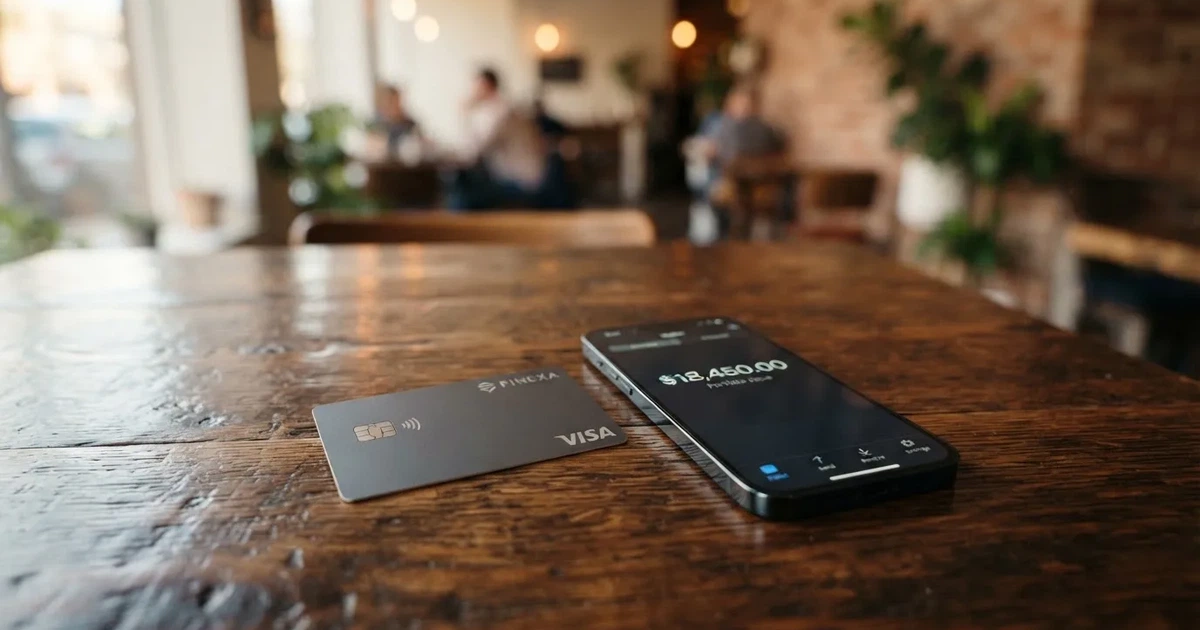
The Mobilum Pay card is a payment card you load with crypto, issued through a crypto wallet app and usable as both a virtual card and a plastic one. On the everyday-use side of the ledger it is as good as this category gets: virtual and physical, Apple Pay and Google Pay, ATM withdrawals, three currencies. On cost, eligibility and reliability it gives away more than it should. My score for it is 6.3 out of 10. Read on if you are weighing one of these cards against a plain prepaid card or a bank card, especially if you are in Europe and want an app that issues both card types without a branch.
The conditions described on the card’s public pages were current as of October 28, 2026.
Verdict: 6.3 out of 10
Here is the score broken down by criterion, with the numbers exactly as they stand and my reason in plain words.
| Criterion | Mark | Why |
|---|---|---|
| Who can get it | 8 / 10 | 27 EEA-area countries are listed, and the page adds “Accessible worldwide, excluding sanctioned nations” |
| Cost | 5 / 10 | Only “Competitive transaction fees” is published, with no amounts; several cards can be issued without additional fees |
| Top-up options | 6 / 10 | BTC, ETH and many ERC-20 tokens directly, plus a bank account; stablecoins and networks are not named |
| Reliability and complaints | 3 / 10 | Mobilum Inc, an MSB registered with FinCEN, issuing bank unnamed; Trustpilot 2.4 out of 5 from 11 reviews, 82% one-star |
| Everyday use | 10 / 10 | Virtual and plastic cards, Apple Pay and Google Pay via external wallets, ATM withdrawals |
Total: 6.3 / 10.
Who this suits: Europeans who want an app that hands you both a virtual and a plastic card, who are comfortable holding crypto with a provider rather than in their own wallet, and who can tolerate costs that are not published in advance. Who it does not suit: anyone whose first question is “what will this cost me per transaction and per month?”, anyone who needs a named issuing bank and deposit protection, and anyone who cannot absorb a wait when a withdrawal or refund goes wrong.
The category itself is worth understanding before you commit, and one piece of background explains a lot of the design. A card number starts with a six- or eight-digit issuer identification number that says which institution and country issued it. Merchants can look that up, and if the issuer country does not match the billing address they may apply extra scrutiny. That is why a card issued in one country can look “foreign” in a shop in another. Also worth knowing: Visa and Mastercard do not issue crypto cards to consumers themselves; they license issuers, and they can suspend a programme. In November 2022 Visa said it had “terminated our global agreements with FTX”, and the FTX US debit card programme was wound down by its issuer.
Will they give you the card?
The page lists 27 EEA-area countries: Austria, Belgium, Bulgaria, Croatia, Cyprus, Czech Republic, Denmark, Estonia, Finland, France, Germany, Hungary, Iceland, Ireland, Latvia, Liechtenstein, Lithuania, Luxembourg, Malta, Norway, Poland, Portugal, Romania, Slovakia, Slovenia, Spain and Sweden. It also states “Accessible worldwide, excluding sanctioned nations”. That sentence is broad enough to cover a lot of ground, but it is also broad enough to mean nothing at a specific checkout, so treat it as a starting point rather than a promise.
What is not stated on the page is important enough to name plainly, because it is the same word on every item in this paragraph: the KYC level required, the identity documents needed, and whether verification differs by country. The public pages do not say. If you are somewhere outside the EEA, expect to be asked for documents and expect the possibility of a refusal; if you are inside it, the usual European customer due diligence applies to any regulated provider, covering name, address, date of birth, nationality, identity documentation, a sanctions check, the purpose of the relationship, and whether you are a politically exposed person. Under EU rules, if due diligence cannot be completed, the institution must refrain from the transaction or the relationship and, where necessary, end an existing one. That is why accounts get closed or frozen pending papers, and it applies to every card in this category, not just this one.
One more piece of background for anyone outside the US: in the US the customer identification programme requires name, date of birth, address and an identification number, and electronic KYC also validates proof-of-address documents. Nationality is recorded and screened separately from residence, because sanctions screening and issuer risk policy are often applied to citizenship and country of birth as well as to country of address. Prepaid and debit cards are generally available to adults of 18 and over, and some issuers set higher limits.
How to get it
The card comes in two forms: virtual and plastic. Both are multi-currency debit and credit cards, and the brand is Mastercard. The App Store listing for ATM withdrawals says “in MasterCard-supported countries”. Currencies listed are EUR, USD and PLN. The app is on iOS and Android, the Android package being com.mobilum.wallet. On the App Store in Canada it showed 5.0 from a single rating at version 2.8.7, dated Apr 1, read on 2026-10-21. The Google Play rating was not read because the page did not load.
What is not stated: delivery times for the plastic card, and any tier structure of verification levels. So you cannot learn from the public pages how long the plastic card takes to arrive, and you cannot learn in advance which tier of checks applies to you. Both are things to ask the support team before you start.
To be clear about what you are signing up for, the sequence in general terms is: choose the app, complete whatever identity checks are required, get the virtual card into your wallet, order plastic if you want one. The card’s own pages do not spell out the steps, so I am describing the standard flow rather than quoting a published procedure.
Fees and costs: what it really costs
This is where the card is weakest on paper. Issuance and monthly fees are not stated; the page says “Unlimited Cards: Flexibility to issue multiple cards without additional fees”, which tells you extra cards are not surcharged but not what the first card or the account costs. The only published description of transaction costs is “Competitive transaction fees and transparent costs”, with no amounts attached. Limits, ATM fees and allowances, and any tier structure are not stated either; the app offers card management with limits, meaning you can set them, but the ceiling itself is not published. Currency exchange happens in the app between USD, EUR and PLN.
| Fee or limit | What is published |
|---|---|
| Issuance fee | Not stated |
| Monthly fee | Not stated |
| Transaction fee | “Competitive transaction fees” — no amount given |
| Conversion / exchange fee | Not stated; exchange between USD, EUR and PLN happens in the app |
| ATM fee | Not stated; ATM withdrawals available with virtual and plastic cards |
| ATM allowance | Not stated |
| Daily limits | Not stated; app allows card management with limits |
| Monthly limits | Not stated |
Three everyday payments, and which fees apply:
- A coffee bought in Warsaw. The amount converts from whichever balance you hold into the currency of the merchant, so the app-level conversion rate applies and the card’s transaction fee applies. If you are short of PLN, the app converts from EUR or USD first.
- A subscription priced in USD while you mostly hold EUR. The currency conversion between EUR and USD happens in the app, and the transaction fee applies on top. The card’s own FX fee, if there is one, is not published, so you cannot total this in advance.
- A cash withdrawal at an ATM. Withdrawals are available using both the virtual and the plastic card. The fee and the allowance are not stated, and the App Store listing narrows the geography to “in MasterCard-supported countries”.
The point that matters: every one of these three costs something you cannot calculate from the public pages. If your decision depends on the number, treat that as a question to ask support and get an answer to before you commit, not after.
A category note on why the numbers can bite you: network fees for your own deposit are charged by the blockchain, not by the card provider, so a top-up cost you in crypto on top of whatever the provider charges. And a declined authorisation may leave a hold on funds that can stay for several days, typically up to seven.
How to Top up the card
Topping up starts with crypto. The page says “Load crypto directly”, and the FAQ names BTC, ETH and “many ERC-20 tokens”. The wallet is described as custodial. A bank account can be linked for deposits and withdrawals. What is not stated: the deposit fee, the minimum top-up, and which stablecoins and networks are accepted. Crypto can be loaded from any wallet; fiat moves through the linked bank account. Withdrawal fees are also not stated.
The reason the unnamed networks matter so much is category-wide, not card-specific. A stablecoin aims to hold a stable value against a fiat currency, but as the BIS put it in July 2025, stablecoins are not necessarily stable; about 90% of stablecoin market capitalisation sits in Tether’s USDT and Circle’s USDC. Circle lists USDC as natively supported on 38 networks as of 16 September 2026, including Ethereum, Solana, Base, Polygon PoS, Avalanche, Arbitrum and Stellar, and stopped supporting USDC on Tron in February 2024, so “USDC over TRC20” is not a native option anywhere. Tether has issued USDT on Ethereum, Tron, Solana, Polygon, Avalanche and others. Blockchain transfers are irreversible, so a deposit sent on a network the provider does not support, or to an address belonging to another network, can be lost or need manual support recovery with no guarantee. Stablecoins can depeg too: TerraUSD collapsed in May 2022 and USDC briefly lost its peg in March 2023.
So the honest version of this section is: you can send BTC, ETH or many ERC-20 tokens from any wallet, but the page does not tell you which network your particular token should go over, and getting that wrong is the single most expensive mistake available to you here.
Paying with it every day
Day to day, this is the strong half of the score. The cards can be added to any external wallet, such as Apple Pay or Google Pay, so phone payments are the normal case rather than an extra. You can hold several cards. ATM withdrawals work on both card types. Currencies are EUR, USD and PLN, with exchange between them in the app. And because this is a prepaid-style balance, the card cannot overdraw: crypto is converted and loaded as fiat balance, and the card spends only that balance.
Nothing is stated about rewards, or about blocked merchant categories, so do not assume either way. On the mechanics, one thing is worth knowing because it affects acceptance rather than the card: Apple Pay replaces the card number with a device-specific Device Account Number stored in the Secure Element, never on Apple servers, and each payment uses a one-time dynamic security code. Separately, 3-D Secure adds an identity check to online payments, where the issuer assesses risk and either approves frictionlessly or challenges you with a one-time code or biometric. Visa’s brand is Visa Secure, Mastercard’s is Identity Check. Some merchants decline prepaid or foreign BINs because the lookup reveals the card type and issuer country, and address verification is generally unavailable for foreign-issued cards, which can cause declines.
What can go wrong
The company is Mobilum Inc, at 228 Park Avenue South, New York, NY 10003. It is a Money Services Business registered with FinCEN, number #31000258001314. The starting data name is Mobilum Pay Sp. z o.o. in Poland. “Licensed partners” are referred to without being named, and the issuing bank is not stated. That last point is the one to sit with: the card is a Mastercard, but the bank behind it is not identified on the public pages, and in this category the brand is often only a programme manager or front-end. The network routes the messages and sets the rules; the issuer holds the programme; the crypto brand markets it.
No official incident has been found. What exists is user reporting. Trustpilot, read on 2026-10-21, shows a 2.4 TrustScore from 11 reviews, of which only 2 fall in the last 12 months; 18% are five-star and 82% one-star. Every one of those themes is user report, not verified fact, and there is no official incident to set against them. The themes: withdrawals and refunds not processed, from October 2022 to October 2026; support unresponsive, from 2022 to April 2025; unauthorised or disputed card payments, in October 2025 and October 2026, some of them tied to gambling merchants; and verification problems in April 2025. One reviewer, in October 2025, says Mobilum refused a refund and advises asking the bank for a chargeback. Nothing official is stated about how disputes are handled.
Three risks deserve separate emphasis.
Counterparty and custody risk. The wallet is custodial, so the provider holds the credentials and you must trust it completely. Custodial platforms have a record: Mt. Gox (about US$350 million reported stolen, 2011–2014), Coincheck (about US$400 million, 2018) and Ronin Network (US$625 million, 2022). A seed phrase, typically 12 to 24 words, is the unencrypted form of the private key; anyone who obtains it can restore the wallet and spend the funds, and because transfers are typically irreversible there is no built-in recovery. Recovery here is described as via a backup phrase, “the only way to restore your wallet”. Card freeze and two-factor authentication are not stated. Whether funds are safeguarded in a way comparable to a bank is not stated either; under EU rules e-money institutions must safeguard customer funds by segregating them in dedicated accounts or insuring them, but such funds are not the same as bank deposits and may not be covered by deposit guarantee schemes.
Regulation shifting underneath you. MiCA, the EU’s markets-in-crypto-assets regulation, took legal effect in June 2023. Its rules on asset-referenced tokens and e-money tokens applied from 30 June 2024, and the remaining provisions, including the crypto-asset service provider rules, from 30 December 2024. Under MiCA, e-money tokens may be issued only by a credit institution or an electronic money institution. The transitional period lets providers already operating under national law continue only until 1 July 2026 or until they receive or are refused a MiCA authorisation, whichever comes first. ESMA keeps an interim register of authorised providers that you can check, and a card itself is regulated separately as a payment service, so a crypto card often rests on two licences. In November 2022 Visa terminated its agreements with FTX; WaveCrest, a Visa issuer that supplied crypto card brands, was suspended in Europe in 2018, closing all its Visa programmes; and programme closures typically give notice, then stop spending and loading, then ask users to withdraw remaining balances.
Your own recourse. A chargeback is a refund ordered by the issuer to settle a dispute. In the US, debit card reversal rights come from Regulation E and credit card rights from Regulation Z; prepaid-card coverage varies and should not be assumed. And a tax point to raise with your own accountant, not me: the IRS treats digital assets as property, so exchanging them for goods, services or dollars generally produces a taxable gain or loss, measured in local fiat currency at fair market value on the date of the transaction, which can make each card payment funded from crypto a separate disposal.
What to take instead
Three other crypto cards, on the same scale. Scores are theirs: Whop Cards 5.2, Stella 6.5, UniFi Card 4.7. Mobilum scores 6.3.
| Mobilum | Whop Cards | Stella | UniFi Card | |
|---|---|---|---|---|
| Score | 6.3 | 5.2 | 6.5 | 4.7 |
| Network | Mastercard | Visa | VISA | Visa, issued by Lead Bank |
| Card type | Virtual and plastic, debit and credit | Virtual/physical not stated | Virtual and physical | Prepaid debit |
| Currencies | EUR, USD, PLN | Not stated | Not stated | USD |
| Where | 27 EEA countries listed; “worldwide, excluding sanctioned nations” | 31 US states for consumers, 41 for businesses; unsupported consumer countries | Not stated on the official site; US and European users routed through affiliates | Not confirmed from official pages |
| Funding | BTC, ETH, many ERC-20 tokens; bank account | Whop balance, stablecoin collateral from a linked wallet | Crypto deposit tops up the card | ACH, wire, SEPA, SPEI; USDC wallet |
| Fees | “Competitive transaction fees” | “No extra fees” | Not stated | “Fees may apply” |
| Rewards | Not stated | 5% cashback at select merchants, currently Uber | None stated on the card page | “3% rewards on balances” claimed |
Read across the row that matters most for you: fees. Whop says “No extra fees” and names none, which is still not a number. Stella states no fee amounts officially, describing fees as set out in the user agreement or the app. UniFi says only that “Fees may apply”. On published information about cost, these three are no clearer than Mobilum. If a published price is what decides it, none of the four gives you one, and you should treat “ask support” as a required step rather than an optional one.
On eligibility, Whop is the narrowest for consumers: 31 US states, with consumer countries unsupported including Belarus, China (Mainland), Cuba, Hong Kong, India, Iran, Iraq, Israel, Myanmar, Nepal, Nicaragua, North Korea, Russia, Syria, Turkey, Ukraine, Venezuela and Vietnam. On everyday use, Stella is the closest competitor, with virtual and physical VISA cards working at over 40 million merchants, funded by a crypto deposit that automatically tops up the card, but no cashback on the card page and no country list on its official site. UniFi is the least crypto-native in practice: a prepaid debit Visa spending from a USD balance, funded by ACH, wire, SEPA or SPEI and a USDC wallet, with app-store release notes pointing to send-money routes to the Philippines, Mexico and the eurozone and recent mentions of Colombia, Brazil and the UK.
Who I would recommend it to
I would recommend this card to someone in Europe who wants virtual and plastic from one app, who is comfortable with crypto sitting with a provider rather than in their own wallet, and who treats the card as a spending convenience rather than a place to hold a balance. Ten out of ten on everyday use is real, and for a person whose problem is “no ordinary bank card”, having Apple Pay and Google Pay and an ATM card working from a mobile balance is a genuine answer.
I would not recommend it to someone who needs to know the cost of a transaction before making it, who wants a named issuing bank and deposit protection, or who has a thin margin for error on withdrawals. A 3 out of 10 on reliability with 82% one-star reviews is not a rounding error. The 82% figure rests on eleven reviews, only two of them from the last year, which makes it a warning rather than a verdict, but the themes are consistent and they all point at the same thing: money in, money not out, nobody answering. If your plan depends on moving money out of this card on a specific date, that is the plan to think twice about.
The balance of the two is 6.3. It is a capable app with a weak transparency record, and you should hold it accordingly.
Frequently asked questions
What is the Mobilum Pay card?
The Mobilum Pay card is a payment card you load with crypto and spend as ordinary currency. It exists as a virtual card and a plastic one, described as multi-currency debit and credit cards on the Mastercard network. Currencies listed are EUR, USD and PLN, and both card types can be added to Apple Pay or Google Pay. In practice it behaves like a prepaid card: crypto is converted and loaded as a fiat balance that the card then spends.
How does the Mobilum Pay card work?
You load crypto into the custodial wallet in the app, and the resulting fiat balance funds the card. The card cannot overdraw, because it only ever spends what is loaded. You can hold EUR, USD or PLN and exchange between them in the app. ATM withdrawals work with both the virtual and the plastic card, in MasterCard-supported countries according to the App Store listing.
Who owns Mobilum Pay?
The company is Mobilum Inc, at 228 Park Avenue South, New York, NY 10003. It is a Money Services Business registered with FinCEN, number #31000258001314. The starting data name is Mobilum Pay Sp. z o.o. in Poland. The page refers to licensed partners without naming them, and the issuing bank behind the Mastercard programme is not stated.
Does the Mobilum Pay card require KYC?
The card’s public pages do not state the KYC level required or which documents you need. In general, regulated providers must verify customers under anti-money-laundering rules, and in the EU that covers name, address, date of birth, nationality, identity documents, a sanctions check, the purpose of the relationship, and politically exposed person status. If due diligence cannot be completed, EU rules require the institution to hold back or end the relationship.
How much does the Mobilum Pay card cost?
The public pages do not give numbers. They say “Competitive transaction fees and transparent costs” and note that multiple cards can be issued without additional fees. Issuance fee, monthly fee, conversion fee, ATM fee, and daily and monthly limits are all not stated. That is why I score cost at 5 out of 10, and why you should ask support for the figures before you commit.
How do I top up the Mobilum Pay card?
Top up with crypto or with fiat. The page says “Load crypto directly” and the FAQ names BTC, ETH and many ERC-20 tokens, loadable from any wallet, with the wallet described as custodial. Fiat moves through a linked bank account, which also handles withdrawals. Deposit fees, minimum amounts, and which stablecoins and networks are accepted are not stated.
Is the Mobilum Pay card safe?
There is no official incident on record, but user reports on Trustpilot are poor: 2.4 out of 5 from 11 reviews, 82% one-star, read on 2026-10-21. Reported themes include unprocessed withdrawals and refunds, unresponsive support, and unauthorised card transactions. The wallet is custodial, so the provider holds your keys, and recovery depends on a backup phrase described as the only way to restore the wallet.
Can I add the Mobilum Pay card to Apple Wallet?
Yes, in principle. The card states that cards can be added to any external wallet, such as Apple Pay or Google Pay. Apple Pay replaces the card number with a device-specific number stored in the Secure Element, never on Apple’s servers, and each payment uses a one-time code. No blocked merchant categories are stated for Mobilum, though many issuers block gambling categories by policy.
Which countries can use the Mobilum Pay card?
The page lists 27 EEA-area countries, from Austria and Belgium through to Sweden, including Iceland, Liechtenstein and Norway, and it also states “Accessible worldwide, excluding sanctioned nations”. For most other countries you would be relying on that second sentence, so treat it as a starting point and confirm before you commit. What basis is used, citizenship or residence, is not stated.
Is the Mobilum Pay card worth it?
Worth it if you want virtual and plastic cards from one app and can accept costs that are not published and a provider that holds your crypto. Not worth it if you need a named issuing bank, deposit protection, or certainty that a withdrawal will clear on a particular day. My score of 6.3 out of 10 splits exactly along that line: 10 out of 10 on everyday use, 3 out of 10 on reliability.
App and neobank cards: the entry point – cryptocardportal.com
Content created by the «cryptocardportal.com» team