
A Telegram crypto card with cheap crypto funding, thin public information
 Available in US
If you have ever wanted an ordinary payment card and could not get one — no local bank willing to open an account, a country that makes that hard, or a simple preference for holding crypto rather than a bank balance — a Telegram-based crypto card is aimed squarely at you. ZARUB is one of them. You fund it, usually in rubles or USDT, and spend from that balance like a normal Visa. The idea is simple. The information around it is not. When I went through what ZARUB’s own public pages say and what other people report, the picture that emerged was a card with genuinely attractive top-up costs and a striking absence of the basics you are supposed to be able to check before you hand over money. That tension is what this review is about.
The conditions described here are current as of October 28, 2026.
My score for ZARUB is 5.0 out of 10. Not a scathing number and not a recommendation. It is the number I would give a product that clearly does one thing well — getting crypto onto a card cheaply — while leaving the reader to guess at almost everything else.
| Criterion | Mark | Why |
|---|---|---|
| Who can get it | 5 / 10 | No country list published; unofficial sources say cards work abroad without currency restrictions |
| Cost | 2 / 10 | Unofficial: issuance 19 USD (virtual) and 30 USD (Apple Pay), 0.35 USD per operation, SBP top-up 7% plus 1.5%, crypto 3% plus network plus 1.5% |
| Top-up options | 9 / 10 | Unofficial: USDT TRC-20 and others, TRX, BTC, TON; rubles from bank cards or SBP |
| Reliability and complaints | 4 / 10 | Issuer, company and card country not disclosed; no complaints found for ZARUB; typical Telegram-card risks noted |
| Everyday use | 7 / 10 | Unofficial: virtual Visa in USD, separate Apple Pay card, plastic 149 USD; Google Pay sources disagree; ATM not disclosed |
| Total | 5.0 / 10 | Strong on funding, thin on disclosure |
A few words on who this suits. ZARUB is built for someone who already has crypto or rubles to move and wants a card that spends them, and who is comfortable with a product run through a Telegram bot rather than a regulated bank’s app. If you want to know exactly who issued your card, in which country, under which licence, with what dispute process — and you are the kind of person who reads those things before signing up — this is the wrong card, and the section on risks below will explain why. If you mainly want a cheap way to get USDT onto a card in a Telegram wallet and you understand the category’s risks, ZARUB is one of the more interesting options in it.
Who will give you the card
Here is the honest answer: I could not find ZARUB stating, on its public pages, who is eligible. The site’s official pages do not list eligible countries, and I want to be plain about what that means rather than dress it up. Where the plan for this review says a fact is “not stated,” it means precisely this — ZARUB’s own public pages do not say it. I am not going to fill that gap with a guess.
What unofficial sources add is this: no country list is given anywhere I could find, and the travel section says the cards work abroad without currency restrictions. The article is written in Russian and is aimed at Russian users (per dtf.ru, February 2026). So the picture is a card with, at minimum on paper, no published geographic restriction, marketed principally at users of the ZARUB bot. Whether “aimed at” equals “open to” is exactly the kind of question a published country list would answer and, here, does not.
This matters more than it first appears. As I explain under “What can go wrong,” a card’s country of issuance is not a formality — it is the first thing a merchant’s system sees and the thing that most often decides whether a payment goes through. When the issuing country is not disclosed, you cannot know in advance how your card will look to the shop you are trying to pay. That is the single largest gap in ZARUB’s public presentation, and I would want it closed before I put meaningful money on it.
How to get it
ZARUB does not state, on its public pages, what its onboarding looks like — whether there is a mandatory identity check, what card you receive, how it is delivered, or whether there are verification tiers. So again, I will tell you plainly that the official record is silent and then give you what unofficial sources describe, clearly marked as such.
Per Profinvestment (October 2026), there is no mandatory KYC at the start. That is a description of the experience, not a promise from the card, and it is the kind of thing that can change without notice.
Per the same source, what you get is a virtual Visa denominated in USD, plus a separate card for Apple Pay. A physical plastic card is quoted at 149 USD. The issuer and the country of the BIN are not disclosed. So the product, as described by people who have used it, is a small stack of virtual cards and an optional expensive plastic one, reached through Telegram rather than a bank app.
There is a thread here worth pulling, because it explains why the disclosure is thin. KYC in this category is not optional decoration. Under anti-money-laundering law, regulated businesses are required to verify customers and assess risk, and in the EU that due diligence normally covers your name, address, date of birth, nationality and identity documents, a sanctions check, the purpose of the relationship, and whether you are a politically exposed person. If due diligence cannot be completed, EU rules require the institution to stop the transaction or, where needed, end the relationship — which is why accounts get frozen pending documents. Nationality is also screened separately from residence, because sanctions screening is often applied to citizenship and country of birth as well as to your address.
A product that markets itself around “no mandatory KYC at the start” is, almost by definition, not operating inside that EU framework, or is operating outside it. That is not a moral judgment — it is an observation about where the regulatory floor is, and it tells you a great deal about why the issuer is unnamed. If you are in a situation where a later identity check *would* be unwelcome or costly for you, that cuts both ways: the card is open to you now, but you should understand you are relying on an intermediary whose own regulatory exposure is uncertain.
Fees: what it really costs
The cost section is where ZARUB both wins and loses, so let me give you the numbers first and then interpret them.
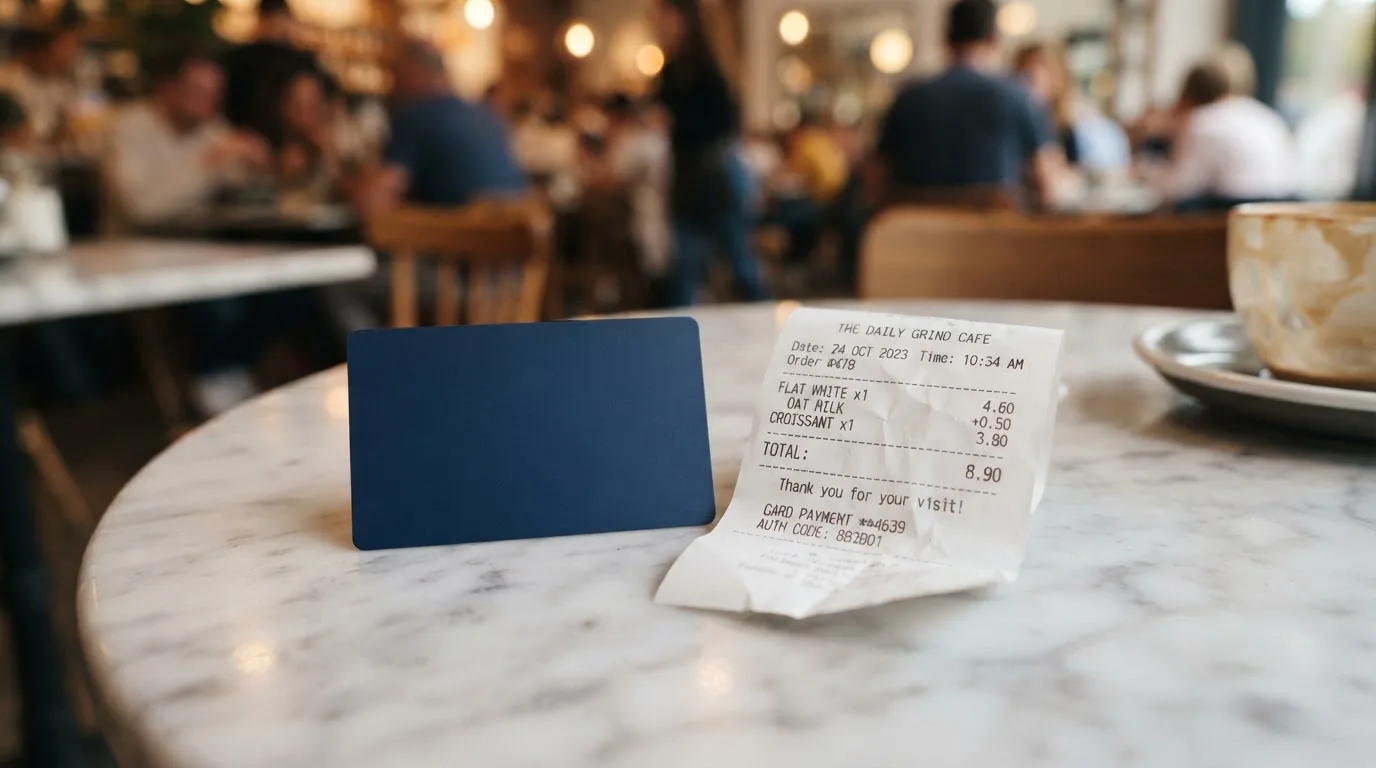
None of these fees are published on ZARUB’s official public pages. They come from unofficial sources — chiefly Profinvestment (October 2026) — and you should treat them as reported, not contractual. Prices and tariffs in this category change; I set out the typical risks of that under “What can go wrong.”
| Fee or limit | Reported value |
|---|---|
| Issuance, virtual card | 19 USD |
| Issuance, Apple Pay card | 30 USD |
| Monthly maintenance | Free |
| Account closure | Free |
| Per operation (including declined ones, when balance is sufficient) | 0.35 USD |
| Non-USD payment | Interbank rate plus 0.3–0.35 USD |
| Top-up via SBP / Card2Card | 7% + 1.5% crediting fee |
| Top-up in crypto | 3% + network fee + 1.5% |
| Minimum first top-up | 10 USD (Profinvestment, Oct 2026); dtf.ru (Feb 2026) gives 100 ₽ for ruble top-up |
| Daily top-up and spending limit | Up to 50,000 USD |
| Monthly top-up and spending limit | Up to 1,000,000 USD |
| Physical card | 149 USD |
| ATM withdrawal | Not disclosed |
Now, what does that mean when you actually pay for something? Let me walk through three everyday situations, because the flat “0.35 USD per operation” is the number that will sell this card to you, and it is the number that needs the most context.
Paying 30 USD of groceries in rubles at a local shop. You are spending from a USD balance in a non-USD country. The payment goes at the interbank rate, plus 0.3–0.35 USD. On a 30 USD purchase, 0.35 USD is a bit over one percent, on top of whatever the interbank spread costs you in the conversion. This is the everyday case for a card like this, and here the per-operation fee is doing exactly what it is meant to do — it is small enough to ignore.
Paying 3 USD for a coffee or an app subscription. The same 0.35 USD operation fee applies. That is over ten percent of a 3 USD purchase, and for a small subscription it is the fee that decides whether the card is worth using for that at all. The other thing to know is that a declined operation still carries the 0.35 USD, as long as your balance is sufficient to cover it. So a card that gets refused at a shop is not a free retry.
Paying 100 USD or more in a currency other than USD. The interbank rate plus 0.3–0.35 USD is, on larger sums, a reasonable way to buy a Visa card’s convenience. It is not free, and it is not obviously cheaper than a plain multi-currency bank card’s own conversion charge. The honest comparison is not “crypto card, no fees” — it is “crypto card, roughly 0.35 USD plus an interbank spread per payment, versus a bank card’s own percentage-plus-fixed conversion fee.”
The cost score is low — 2 out of 10 — and I want to be careful about why, because it looks inconsistent with the fees above. The low mark is not about the per-payment fee, which is genuinely competitive. It is about the whole picture: 19 or 30 USD to open, a plastic card at 149 USD, ATM withdrawals not disclosed, no published monthly fee, and top-up costs of 7% plus 1.5% in rubles or 3% plus network plus 1.5% in crypto. That is the number that hurts, and it belongs at the top of your mental arithmetic, not the 0.35 USD.
How to Top up the card
This is ZARUB’s strongest suit, and it deserves to be said plainly: 9 out of 10, the highest single mark in the whole assessment. Whatever ZARUB is unclear about, it is not unclear about how you get money into it.
Per dtf.ru (February 2026) and Profinvestment (October 2026), you can fund the card in crypto — USDT TRC-20 and other networks, plus TRX, BTC and TON — or in rubles straight from Russian bank cards or via SBP (the domestic transfer system). ZARUB’s own public pages do not describe the funding routes, so all of that is reported rather than published. But reported is what we have, and it is a genuinely wide menu.
Why this matters so much: it gives you two doors into the same card. If you are already holding USDT, you move it on-chain and pay 3% plus the network fee plus 1.5%. If you are holding rubles in a bank account, you transfer via SBP or Card2Card and pay 7% plus 1.5%. The crypto route is the cheaper of the two and is, in a stablecoin, effectively a dollar transfer dressed up as a top-up.
A word of caution that belongs here rather than in a how-to box. Blockchain transfers are essentially irreversible. If you send on a network the card does not support, or to an address belonging to a different network, the money can be lost or need manual support recovery with no guarantee it comes back. This is not a ZARUB quirk; it is a property of the rails. And it is worth remembering what “TRC-20” actually means: USDC over TRC20 is not a native option, because Circle stopped supporting USDC on Tron in February 2024. USDT is the asset to look at on Tron, not USDC. Get the network right before you send, because getting it wrong is the expensive mistake.
Paying with it every day
Per Profinvestment (October 2026), you get a virtual Visa in USD and a separate card for Apple Pay. Per dtf.ru (February 2026), the cards link to Apple Pay and Google Pay — but the sources differ on Google Pay, and I am not going to pick a winner. Treat Google Pay support as unconfirmed.
On Apple Pay, one source is specific and the other is not. Apple Pay, when you use it, replaces the card number with a device-specific number kept in the phone’s Secure Element, never on Apple’s servers, and each payment uses a one-time dynamic code. That is a real, meaningful protection: a merchant who sees your Apple Pay token does not see a reusable card number. If ZARUB’s Apple Pay card does this as any normal tokenised wallet does, it is the safer way to spend from the card day to day.
Where you spend it, and how the payment is treated, comes down to things the merchant’s system can see. A merchant category code is a four-digit number classifying the business — set when the shop starts accepting cards — and gambling (MCC 7995: casinos, betting, lotteries) is one of the categories issuers commonly block, by policy rather than by law, with the blocked list differing by issuer. Address verification, which compares the numeric parts of the billing address you type against the issuer’s records, is mostly a US, Canada and UK thing and is generally unavailable for foreign-issued cards, which is a common cause of declines. This is all general category background, but it is exactly the machinery that a ZARUB card, with its undisclosed issuer and BIN country, is running through. That is why I keep coming back to the missing country: it is the input to every one of these checks.
What ZARUB’s public pages do not describe: any cashback or rewards (none is mentioned), any app beyond access through a Telegram bot at @zarub_robot (no store app is mentioned), and any dispute or chargeback process. That last omission is the one to sit with. A chargeback — a refund ordered by the issuer to settle a dispute, with reason codes for fraud, duplicate billing or goods not received — is how you get money back when a shop takes it and does not deliver. Whether prepaid cards like this are covered varies by jurisdiction, and in the US, debit-card reversal rights come from Regulation E, credit-card rights from Regulation Z, and prepaid-card coverage varies and should not be assumed. ZARUB does not tell you what, if anything, stands behind a disputed payment. Treat that as unknown, and size your spending accordingly.
What can go wrong
This is the section where I am least comfortable, and I want to give you the specific reasons rather than a mood.
First, the disclosure gaps, which I have already flagged but will collect in one place: the issuer, the company behind ZARUB, and the country of the card are not disclosed. No country list, no KYC policy, no card-delivery terms, no ATM terms, no dispute process, no published fee schedule, none of it on the public pages. When you are trusting a company with money, the absence of these is not a stylistic gap; it is the substance missing.
Second, the category’s track record. ZARUB itself has no complaints that I could find — no Trustpilot page, no complaints surfacing anywhere I looked. That is genuinely a point in its favour, and I want to credit it rather than bury it. But the absence of complaints on a young product with an undisclosed issuer is weak evidence: it can just as easily mean people have not been using it long, or have not been able to reach anyone to complain to. Compare the field: custodial platforms have a real history of failure — Mt. Gox (about US$350 million reported stolen, 2011–2014), Coincheck (about US$400 million, 2018), Ronin Network (US$625 million, 2022). And the Visa programmes themselves have been terminated from the top: Visa ended its global agreements with FTX in November 2022 and the FTX US debit card was wound down by its issuer; WaveCrest, a Visa issuer that supplied crypto card brands, was suspended by Visa in Europe in 2018, closing all its Visa programmes. What a closure looks like for the holder: a notice period, then spending and loading stop, then you are asked to withdraw what is left. One 2026 closure, reported by a secondary source, ended new loads on 8 July 2026 and spending on 8 August 2026 — a single, unconfirmed source, but the shape of it is the shape to expect.
Third, the risks specific to Telegram cards generally, which apply here: declines based on BIN or region, a fee charged on declined operations, sudden changes to tariffs, an offer from a foreign jurisdiction, and no balance insurance. That last point deserves a sentence of its own. An e-money institution in the EU must safeguard customer funds by segregating them in dedicated accounts or insuring them — but those funds are not the same as bank deposits and may not be covered by a deposit guarantee scheme. ZARUB does not tell you that your balance is safeguarded, because ZARUB does not tell you who holds your balance.
Fourth, the mechanics that can cost you without anyone acting badly. 3-D Secure is declared on the card (per Profinvestment, October 2026): the issuer assesses risk on online payments and either approves frictionlessly or challenges you with a one-time code or biometric. That is good for fraud, and it is another thing that can fail at a checkout. Declined authorisations can leave a hold on funds for several days, typically up to seven. And card payments route through several parties — the network (Visa/Mastercard) sets the rules, the issuer holds the programme, and the crypto brand is often only a programme manager or front-end. When something goes wrong with a ZARUB payment, “who do I complain to” is not a question the public information lets me answer for you.
Finally, the regulatory direction of travel. MiCA, the EU’s markets-in-crypto regulation, took legal effect in June 2023; its rules on stablecoins applied from 30 June 2024 and the remaining provisions, including the crypto-asset service provider rules, from 30 December 2024. Under MiCA, e-money tokens may be issued only by a credit institution or an electronic money institution, and the transitional “grandfathering” period lets providers operating under national law continue only until 1 July 2026 or until they are authorised or refused authorisation, whichever comes first. A card is regulated separately again as a payment service, so a crypto card often rests on two licences. ZARUB’s silence about which, if any, of these it holds is, in the current moment, the most load-bearing thing it does not tell you.
What to take instead
If ZARUB’s funding options are what drew you — and honestly, that is the strongest reason to want it — then it is fair to ask what else in the category does the same job. Here are the three I would put beside it, all Telegram-adjacent crypto cards, all with their own disclosure habits. You will notice they have their own problems; the point is comparison, not endorsement.
| Alternative | Score | Card | Issuance | Fees |
|---|---|---|---|---|
| Ape Wallet | 5.5 / 10 | Virtual Visa: “service card” plus Apple Pay / Google Pay card; currency not stated | Not stated; promo codes change it, discount for active Apple/Google Pay holders | No amounts; fee and total shown before confirming; free transfers to other users by Telegram username |
| MaxSwap | 5.2 / 10 | Virtual only, Mastercard; currency not stated on home page | Card 50 USD with 25 USD first deposit required (total listed 77.125 USD); monthly fee not stated | Top-up 4.5% + $1; transaction 0.25 USD + 0.4%; no separate FX rate stated |
| AnoCard | 5.9 / 10 | Virtual cards (VCC), reloadable and one-time, several BINs, network and currency depend on the BIN; ano.cards was down when checked | Not published; creation fee varies by BIN, some products carry maintenance, all shown in SORN dashboard | Not published; top-up percentage and minimum depend on the asset route, shown in SORN |
| ZARUB | 5.0 / 10 | Virtual Visa in USD plus separate Apple Pay card; plastic 149 USD | 19 USD virtual, 30 USD Apple Pay | 0.35 USD per operation; non-USD at interbank + 0.3–0.35 USD; SBP 7% + 1.5%, crypto 3% + network + 1.5% |
On Ape Wallet (5.5): it has one thing ZARUB does not — a stated position on reach, saying the card works “wherever Visa is accepted,” alongside a Russian focus (SBP payments, and passport KYC that uses a Russian passport). Nothing is stated about citizenship versus residence or any restrictions. Its fees are shown before you confirm an operation, and transfers to other users by Telegram username carry no fee. It has no stated cashback, but it does run a two-level referral programme paying a share of invited users’ card purchases, at undisclosed percentages.
On MaxSwap (5.2): virtual Mastercard only. The card costs 50 USD and requires a 25 USD first deposit, with the total issuance listed as 77.125 USD. Fees are top-up 4.5% plus $1 and transaction 0.25 USD plus 0.4%, with no separate FX rate stated — you are told to take possible conversion fees into account. Its funding menu is very wide: ADA, ALGO, AVAX, BCH, BNB, BTC, DOT, ETH, HBAR, HT, KRRX, LINK, LTC, MATIC, NEAR, SHIB, SUSHI, TON, TRX, UNI, USDC, USDT, XLM, XRP. No cashback is mentioned.
On AnoCard (5.9, the highest of the four): the most different product. It deals in virtual cards (VCC) — reloadable and one-time products from several BINs, chosen with filters in a SORN web dashboard — rather than one everyday card. Network and currency depend on which BIN you pick. Creation fees, maintenance fees and top-up percentages vary by route and are shown in the dashboard before you pay, not published on the page; the site itself, ano.cards, was down when checked on 22 October 2026. Its reported starting assets include SOL, BTC, USDT, USDC and ETH. No cashback; a referral programme pays $5 per referred card creation and 0.25% of referred top-ups.
The pattern across all four is worth naming: none of these cards is forthcoming about who issues it. That is the category’s condition, not ZARUB’s alone, which is a small comfort and not much of one. What differs is the price and the model. If your priority is cheap crypto funding, ZARUB’s 9 out of 10 on top-up is the best of the four. If your priority is a stated somewhere-you-can-use-it policy, Ape Wallet at least attempts one. If you want a wide multi-asset funding menu stated up front, MaxSwap lists its assets openly. If you want a toolkit rather than a single card, AnoCard is a different thing entirely. None of them is a bank, and none of them tells you what stands behind your balance.
Who I would recommend it to
I would recommend ZARUB to a person who already has USDT and wants to spend it, is comfortable running the card through a Telegram bot rather than a bank app, treats the balance as money at risk rather than money in a safeguarded account, and has a specific reason not to be able to open an ordinary bank card. For that person, ZARUB is a genuinely good option — the crypto top-up route is among the cheapest in the category and it does two currencies of funding in one place. Set a mental cap on what you keep on the card, check the network before every transfer, and pay small amounts with the Apple Pay card rather than the virtual one where you can.
I would not recommend it to someone whose main concern is safety of funds, to someone who needs their dispute or chargeback rights to be clear, or to anyone who intends to hold a large balance on it for long. The reason is not a specific accusation; it is that the information needed to make those judgements is not published. You cannot assess a provider’s solvency, licensing or complaint handling when the provider does not name the entity, the issuing bank, or the card’s country. I would also not recommend it to a reader in the EU who expects euro consumer protections, since a card that does not present a clear EU licensing and safeguarding picture is not the same thing as an e-money account with the guarantees that come with it.
My honest summary is this: ZARUB scores 5.0 out of 10 because it does the thing it advertises — cheap, wide, flexible funding onto a usable Visa — better than most, and because everything else you would need in order to trust it with real money is missing. That is a fair trade for some people and a bad one for others. Which kind of person you are is the whole decision.
Frequently asked questions
What is the ZARUB card?
ZARUB is a Telegram-based crypto card. You fund it — usually in USDT or in rubles from a Russian bank card or via SBP — and spend from the stored balance like a normal Visa. As described by unofficial sources, it comes as a virtual Visa in USD plus a separate Apple Pay card, with an optional physical card quoted at 149 USD. Access is through a Telegram bot at @zarub_robot. ZARUB’s own public pages do not publish most of these details.
How does the ZARUB card work?
It works like a prepaid card. You top up a balance first, and the card spends only that balance, so it cannot overdraw. Crypto is converted and loaded as that balance. Under the hood, a payment routes through the card network, the issuer, and ZARUB itself as programme manager — three parties, and ZARUB does not say which institution is the issuer or which country the card belongs to.
Is ZARUB a bank?
No — and this is the important thing to understand. ZARUB is a crypto card programme, not a bank. It does not publish the issuing institution, the company behind it, or the card’s country. A card and a crypto service are regulated separately in most frameworks, so a crypto card often depends on two licences; ZARUB does not tell you which, if any, it holds. Treat the balance as money at risk, not a bank deposit.
Do I need to pass KYC to get a ZARUB card?
Per unofficial sources (Profinvestment, October 2026), there is no mandatory KYC at the start. ZARUB’s own public pages do not state a KYC policy, so treat that as reported rather than promised, and know that the situation can change. A later check is not ruled out by anything the card has published.
How much does a ZARUB card cost to issue?
Reported figures, not published ones: 19 USD for the virtual card and 30 USD for the Apple Pay card. Maintenance and closure are reported as free. The physical plastic card is quoted at 149 USD. The cost that catches people out is not issuance but top-up: 7% plus a 1.5% crediting fee via SBP or Card2Card, or 3% plus network fee plus 1.5% in crypto.
What does it cost to pay with a ZARUB card?
0.35 USD per operation, according to unofficial sources — including declined operations, as long as your balance is sufficient to cover the charge. Payments in a currency other than USD go at the interbank rate plus 0.3–0.35 USD. So a 3 USD coffee carries the same 0.35 USD fee as a 300 USD purchase. That is why the card works well for larger payments and poorly for small ones.
How do I top up a ZARUB card?
Unofficial sources list crypto — USDT TRC-20 and other networks, plus TRX, BTC and TON — and rubles from Russian bank cards or via SBP. Crypto top-up costs 3% plus the network fee plus 1.5%; SBP and Card2Card cost 7% plus 1.5%. Minimum first top-up is reported as 10 USD, or 100 ₽ for ruble top-ups. Blockchain transfers are irreversible, so get the network right — and note USDC is not native on Tron.
Can I use ZARUB card abroad?
Unofficial sources say the cards work abroad without currency restrictions, and no country list is published either way. In practice the answer is yes, but with a caveat I cannot resolve for you: because the issuing country is not disclosed, some merchants’ systems may treat the card as foreign, which can trigger declines or extra scrutiny. This is a normal category problem, not a ZARUB-specific one, but undisclosed issuer country makes it harder to predict.
Is ZARUB safe, and can I trust it with my money?
I found no complaints about ZARUB and no Trustpilot page — a point in its favour, though a weak one for a product with an undisclosed issuer and no complaint history to review. The real answer is that you cannot fully assess it, because the entity, issuer and safeguarding arrangements are not published. Category history includes failed custodial platforms and terminated card programmes. Hold only what you are willing to lose, and check for 3-D Secure, which is declared.
Is ZARUB worth it?
For someone already holding USDT who needs a card and cannot get an ordinary one, the cheap crypto funding makes it worth considering — the top-up route is the best in its category in my assessment. For someone who wants their funds safeguarded, their dispute rights clear, or their card’s issuing country known, it is not worth it, because that information is not published. Five out of ten is the honest middle: strong at one thing, silent on the rest.
Virtual cards: the entry point – cryptocardportal.com
Content created by the «cryptocardportal.com» team