
A virtual Visa that spends your CASH balance, restricted to US residents outside New York
 Available in US
The Phantom Cash card is a virtual prepaid Visa debit card that spends the balance of a CASH stablecoin account held inside the Phantom wallet. There is no physical card. You top the Cash account up from Apple Pay, Google Pay, a debit card or a bank account, add the card to Apple Wallet or Google Wallet, and it behaves like an ordinary card wherever Visa is accepted. It is not a bank account, and it is not available outside the United States — the state of New York is excluded.
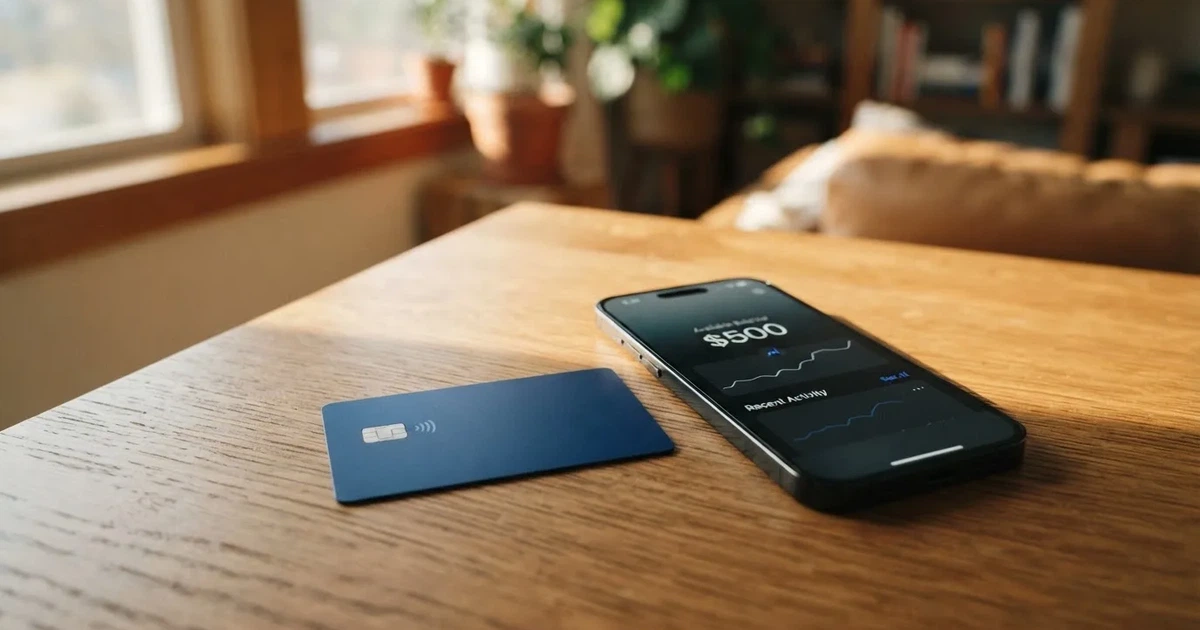
That is the whole pitch, and in my estimation it is a narrow one. My score is 5.3 out of 10. The card is a tidy way to spend dollar stablecoins you already hold in Phantom, if you live in the US outside New York. For almost everyone else the eligibility line ends the conversation before the features begin. And even for those who do qualify, the single most useful document the company publishes — the list of fees — is not on the pages I read. The card’s own page says only that “fees may apply” and points to the Cardholder Agreement.
The conditions described here are current as of October 28, 2026.
Verdict: 5.3 out of 10, and the eligible group is much narrower than the marketing suggests
Let me take the score apart first, criterion by criterion, because the average hides more than it shows. This is not a card with a uniformly mediocre profile. It is a card with two genuinely good marks — cost and, to a degree, everyday use — sitting next to two marks that cap the ceiling, because eligibility and top-up breadth are not negotiable facts about your life but fixed statements about where you live and what you hold.
| Criterion | Score | Why |
|---|---|---|
| Who can get it | 4 / 10 | United States only, excluding New York, by place of residence |
| Cost | 7 / 10 | Fees officially not disclosed; unofficial sources say issuance, replacement and inactivity are free, top-ups are free, and an international transaction costs 1% plus $0.30 |
| Top-up options | 4 / 10 | The card spends a CASH balance, funded by Apple Pay, Google Pay, a debit card or a bank; withdrawals go to a bank or a Solana wallet. Direct crypto top-up is not named |
| Reliability and complaints | 6 / 10 | Issued by Lead Bank, programme manager Bridge Ventures LLC, processing by Stripe. The virtual card is being replaced as the issuer changes, with no dates given. No complaints found |
| Everyday use | 5 / 10 | Virtual Visa only, for Apple Wallet and Google Wallet; unofficial sources say no ATM |
| Total | 5.3 / 10 |
The audience this card is actually built for, to be plain about it: US residents who already hold dollar stablecoins inside Phantom and want to spend them at an ordinary shop without touching an exchange. If that is you, the card does one thing and does it inside an app you presumably already use. If you are reading this because you have trouble getting an ordinary bank card, or because you are outside the US, or because you hold your crypto somewhere other than Phantom, this is the wrong tool — and the reasons are structural rather than fixable.
What holds the score down is not the card’s behaviour but its perimeter. A virtual-only card is a real limitation if you want to pay in a shop where you cannot hand over a phone, or at a terminal that wants a physical card. And a card that is being migrated to a new issuer at the time of writing carries more than the usual early-adopter risk: the replacement notice in the help centre gives no dates, and when the change lands you re-add the card to your wallet and some things may not transfer cleanly.
Will they give you the card?
United States only, excluding New York, and the test is residence — where you live, not what you hold. That is the entire eligibility rule the card states. There is no invitation, no waitlist tier, no invitation code I could find; this is not one of the crypto cards that gates access behind a social campaign.
So before anything else: if you read this from outside the United States, stop here. There is no version of this product for you. If you read it from New York state, the same applies. If you are a US resident elsewhere, the questions that remain are the ones about identity and about what the card actually is.
A note on what “by residence” means in practice, since the card states residence and not citizenship. It means your address in the United States is the qualifying fact. It also means that rules which screen on citizenship or country of birth — sanctions screening and issuer risk policy frequently do — still run separately from where you live. A card can be offered to residents of a state where the screening rules for your nationality are tighter, and the outcome is not something a marketing page will predict for you. I am not going to guess at outcomes, and neither should you: if the decision matters to you, ask the company directly before you fund anything.
How to get it
Identity verification is required for the virtual card. The card’s own marketing page says that verification is handled by Stripe for bank transfers, direct deposit and debit card use; the help material points to Link as the route for the verification step. Applicants must be 18 or over. Whether proof of address is required is not stated anywhere in the pages I read, so treat that as an open question rather than assume either way.
The stated sequence is short:
- Fund the Cash balance.
- Complete identity verification.
- Receive the virtual card.
- Add it to Apple Wallet or Google Wallet.
That is the whole journey. What is worth pausing on is the order: money goes in before the card exists, which means the verification step sits between your funds and your ability to spend them. If verification is delayed, questioned or refused, your balance is already loaded and your card is not yet usable. Nobody states how long verification takes, what the rejection reasons might be, or how many attempts you get. On a card where the whole purpose is convenience, that is the first thing I would want an answer to.
One clarification that saves confusion later: KYC is not required for Phantom or Phantom Cash in general. What requires verification is the set of money-touching features — bank transfers, direct deposit, and the debit card. Levels of verification, timing, and grounds for rejection are not stated.
And what you get at the end is a virtual prepaid Visa debit card that works wherever Visa is accepted. There is no physical card; whether one exists in any form is not stated. The card currency is not stated either — dollars are implied by the CASH stablecoin the account is denominated in, but the pages do not say so explicitly.
Fees: the number you most need is the one the card does not print
I want to be direct about this, because it shapes everything below. The official position is: “Fees may apply”, with amounts not stated, referring you to the Cardholder Agreement. Stablecoin trades are described as fee-free. The Cardholder Agreement is the place where the answer lives, and I did not find a summary of it on the card pages.

What follows therefore splits into two columns: what the card states, and what third-party listings report. The second column is unofficial and is not confirmed by Phantom. Treat it as a strong hint about what to look for in the agreement, not as a price list you can rely on.
| Fee or limit | What the card states | What unofficial listings report |
|---|---|---|
| Issuance | Not stated | No card issuance fee |
| Replacement | Not stated | No replacement fee |
| Inactivity | Not stated | No inactivity fee |
| Monthly or annual fee | Not stated | Nothing reported |
| Top-up | Not stated; stablecoin trades described as fee-free | Free cash loads; US purchases free |
| Conversion | Not stated | Nothing specific reported |
| FX | Not stated | 1% plus $0.30 per international transaction |
| ATM | Not stated | ATM withdrawals: No. ATM fee not disclosed |
| Spending limits | Not stated | $2,000 daily by default, up to $5,000 on request; monthly limit not disclosed |
| Tiers | Single card and Cash account; no tiers mentioned | Nothing reported |
The unofficial column comes from a DeFiLlama card-details page, data last verified 28 September 2026 and partly carried forward from an older dataset, so it may already lag. That caveat matters more than usual here, because the card is mid-migration to a new issuer and fee structures in this category do change when the issuer does.
Three everyday payments
Walk with me through three ordinary situations and see which lines on that table actually touch you.
Buying coffee in your own city. If the unofficial reporting is right — no top-up fee, no fee on US purchases — this is the cheapest version of the card’s promise: load once, tap repeatedly. But note what is doing the quiet work. There is no conversion line to worry about because the balance is already a dollar stablecoin. That is the design’s real advantage, and it is also the reason there is nothing to hide a bad rate inside. The risk is not a fee here; it is that “US purchases free” comes from a page whose data is partly stale.
Buying something online from a US store. Same fee profile, different friction. Online payments may run through 3-D Secure, which adds an identity check the issuer decides whether to wave through or challenge with a code or a biometric step. Address verification also matters: the billing address you type is compared against issuer records, and that check is mainly a US, Canada and UK thing, generally unavailable for foreign-issued cards. A card issued in the United States for a US billing address is in the comfortable case here — this is where the card is genuinely low-friction.
Buying something from a foreign seller while you are at home. This is the payment that costs you, on the unofficial numbers: 1% plus $0.30 per international transaction. Now add the thing nobody in this category can control. When a card issued in one country is used with a billing address in another, the merchant can look up the issuer country from the card number and apply extra scrutiny. The currency conversion itself is not the card’s rate to choose — it is the rate Visa’s scheme delivers — and on the unofficial reading the card’s own FX fee sits on top of it. Expect a small, clean percentage charge, not a cheap trip abroad.
If you want the one answer that would change my score most, it is the Cardholder Agreement fee table. A card that publishes “fees may apply” is asking you to do its work for it.
Top up: the shape of the funding routes, and the one that is missing
The card spends the Cash account balance, which is denominated in the CASH stablecoin. The Cash account is funded through Apple Pay, Google Pay, a debit card, or a bank account, depending on region. Fees and minimums are not stated. Stablecoin trades are described as fee-free.
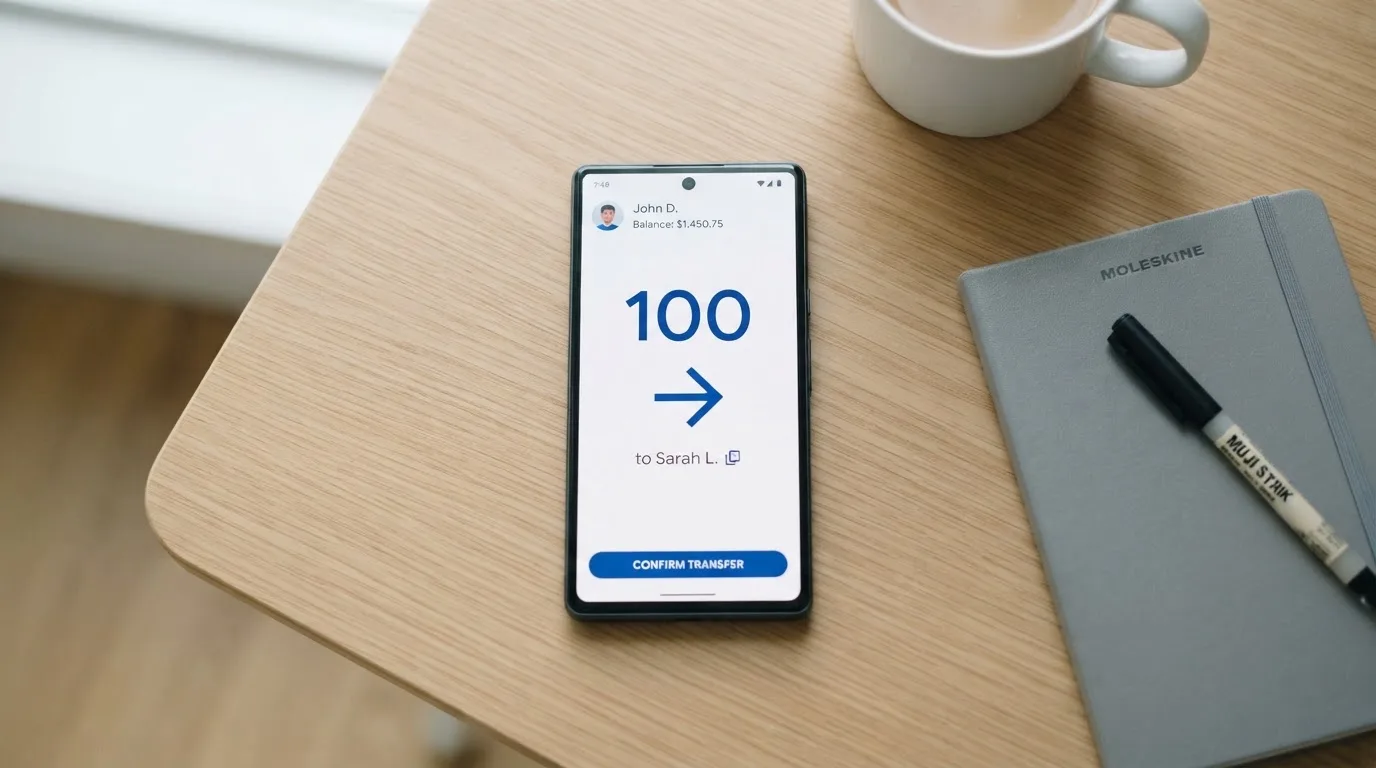
Read that list carefully, because its composition is the whole story. Every named route is a route *from* ordinary fiat *into* the Cash balance. None of them is a route from a crypto exchange balance into the card. Direct crypto top-up is not named anywhere in what I read. In other words, to hold dollars on this card you move dollars — from a wallet, from Apple Pay, from Google Pay, or from a bank — and then spend them. The CASH denomination describes how the balance is represented, not how you fund it.
That is fine if you want a spend card funded by your salary-side money. It is a strange fit if the reason you went looking at a crypto card in the first place was that you have crypto and cannot get a normal card. For you, this card inverts the problem: you would first have to convert the crypto to dollars somewhere else, then reload, and you would have done twice the work for a card that gives you no physical option and no ATM.
The other direction is withdrawals. Cash can be withdrawn to a bank account (US) or to a Solana wallet. Fees and timing are not stated on the pages I read, and neither is what happens to the balance if you close the account. Both gaps are the kind you discover at the moment you need the money.
Top-up mechanics also have a category-wide trap worth naming here, even though this card’s routes are mostly card and bank rails. When the funding route *is* a blockchain transfer, the network you pick has to be one the provider supports, and a transfer to an address belonging to another network can be lost or need manual support recovery with no guarantee, because blockchain transfers are irreversible. On-chain network fees for a deposit are charged by the blockchain, not by the card provider. If you ever see a crypto deposit option for this card appear, check the supported network and the address before you send, every time.
Paying with it every day
The card is added to Apple Wallet or Google Wallet, and that is the intended way to use it — a virtual card in a mobile wallet, tapped at the terminal. Restricted merchant categories are not stated, which is worth knowing because card issuers in this category commonly block categories by policy rather than by law, and gambling (MCC 7995) is the classic example; whether this card does is not something I could confirm.
Apple Pay works by replacing the card number with a device-specific number stored in the phone’s Secure Element, not on Apple’s servers, with a fresh one-time security code for each payment. The issuer can also restrict the tokenised number — for instance blocking it on magnetic-stripe, phone or website use. None of that is unusual, and none of it is a defect; it is just the mechanics of a virtual card.
Two things about this form factor deserve a straight sentence. First, no physical card means any situation that demands plastic — a shop that will not take a phone, a terminal without contactless, a place that takes a card imprint — is simply out of reach. Second, if you take the unofficial reporting that ATM withdrawals are unavailable at face value, then cash is out too. Combined, a card that exists only in your phone and cannot reach an ATM is a spending instrument for shops and websites, not a general-purpose replacement for a bank card.
There are no tiers. It is one card and one Cash account, and nothing on the pages describes a paid upgrade path.
On rewards, the honest answer is that there is no cashback. Holding CASH is described as earning passive income without lock-ups, but no rates are given, and I would treat a yield with no stated rate as a number you have not been told yet. If your reason for holding stablecoins is yield, this card is not where you find it.
Disputes go through Stripe for debit card transactions. The process and the time frames are not stated. This matters more than usual because a virtual card with a migrating issuer is exactly the situation in which you would need to know how a chargeback works. In the United States, debit card reversal rights come from Regulation E and credit card rights from Regulation Z, and prepaid-card coverage varies and should not be assumed — so treat the dispute route as unconfirmed until you have read the agreement.
The app itself is the Phantom mobile app. Platforms and store ratings are not stated on the pages I read, so I will not pretend to have a view on how well it runs.
What can go wrong
Start with the thing that is already happening. Phantom’s help centre carries a notice that your virtual Phantom debit card is being replaced as Phantom moves to a new card issuer. Users are told to add the replacement card to Apple Wallet or Google Wallet. No dates are given. So the current arrangement — Lead Bank as issuer under a Visa licence, Bridge Ventures LLC as programme manager, Stripe processing transactions and disputes — is described as changing, and the disputes routing in particular is tied to Stripe and therefore in play.
What does a migration like this mean for you in practice? The mechanical part is annoying but manageable: a new card to add to your wallet, and any stored card details or recurring payments that point at the old number needing attention. The part I cannot reassure you about is the timing and the terms around it. Nobody has published dates, so you do not know when the switchover lands or what changes in the fee schedule at that moment. Every unofficial fee figure in this review predates or straddles that change and could be replaced without much notice.
The wider structural risks are the ones this whole category carries, and they are worth knowing even if they never materialise.
Counterparty risk, three parties deep. A card payment involves the network routing messages, the issuer actually holding the card programme, and the crypto brand often being only a programme manager or front end. Here the brand is Phantom, the issuer is Lead Bank, and the processor is Stripe. Each can change. And the failure mode is familiar: in November 2022 Visa said it had terminated its global agreements with FTX and the FTX US debit card programme was wound down; Visa suspended WaveCrest in Europe in 2018, closing all WaveCrest-issued Visa programmes. Programme closures typically run in a predictable order — notice, then loading and spending stop, then users are asked to withdraw remaining balances. One 2026 closure reported by a secondary source ended new loads on 8 July 2026 and spending on 8 August 2026; that is a single unconfirmed source, but the shape of it is the part that matters.
Holding, not holding, keys. Your balance is secured on-chain as CASH. Phantom says it does not store KYC information and that identity verification is handled by Stripe, and it states plainly that it is not a bank. If you hold crypto through a custodial platform, you are trusting that platform with the credentials: transfers are typically irreversible, a stolen key has no recovery path, and the record of custodial failures is long — roughly US$350 million at Mt. Gox, US$400 million at Coincheck, US$625 million at the Ronin Network. Phantom’s positioning is closer to the non-custodial side, which moves the risk rather than removing it: with a self-custody-linked arrangement you bear sole responsibility for key loss, for phishing, and for malware that silently swaps a copied address.
What is not stated. Card freeze, two-factor authentication and insurance are not stated. Support is a help centre with a “Start a chat” option; languages and hours are not stated. Proof of address for verification is not stated. ATM availability, spending limits and FX fees are not stated officially. I say this once here, plainly, and then stop repeating it: for a list of things that are simply absent from the public pages, the honest answer is that the card’s public pages do not say.
No complaints is not a clean bill. I searched for Phantom Cash complaints on Trustpilot and Reddit and found nothing card-specific. On a product that is new, US-only and virtual-only, that is weak evidence rather than reassuring evidence. It tells you the failure has not become public; it does not tell you it will not.
One small operational note for your own records: a declined authorisation can leave a hold on your funds that stays for several days, typically up to seven. If a payment is refused at a shop and you try to spend the same balance elsewhere, that is often why.
What to take instead
The honest framing: I am not going to rank these against Phantom Cash as a winner, because they are not the same product aimed at the same person. Three of them are materially broader on eligibility, and one of them is broader on how you fund it. Here is what each one does differently, so you can see which problem you actually have.
| Card | Score | Eligibility | Fees that are published | Funding |
|---|---|---|---|---|
| Phantom Cash | 5.3 / 10 | US only, excluding New York, by residence | None published; unofficial: no issuance, replacement or inactivity fee; free loads; FX 1% + $0.30 international; no ATM; $2,000 daily default, up to $5,000 on request | Apple Pay, Google Pay, debit card or bank account, depending on region; withdraw to bank or Solana wallet |
| BloFin Wallet Card | 6.9 / 10 | Country list not published on the card page; starting data lists 35 countries including US, Australia, Japan, UAE, Brazil, Mexico, Malaysia, New Zealand. Citizenship vs residence not stated | Activation, annual, issuance and dormancy $0.00 each, cancellation free; spend fee 1% or lower by VIP tier (1.00% down to 0.00%), charged at payment; FX not stated | USDT and USDC on Arbitrum and Base |
| Decaf | 6.2 / 10 | Not issued in a long restricted list of countries (including Russia, Belarus, China, India, Turkey, Ukraine, Vietnam and others); restricted US states include Arizona, Delaware, Georgia, Idaho, Louisiana, Maryland, Montana, Ohio, Oregon, Rhode Island, Washington, Wisconsin. Citizenship vs residence not stated | Activation $5 virtual, $10 physical (US only) or $90 (rest of the world); no annual or monthly fee; no added FX fee — the rate is Visa’s | Pay a Decaf link or account details by card, bank transfer or USDC; app on Solana and Stellar |
| SafePal | 6.2 / 10 | “Citizens of supported regions who live in supported areas”; the regions list was empty when fetched | No account creation or management fees; issuance fee not stated; top-up fee 0%; 1% FX on Mastercard non-USD settlement; refund processing 1 USD/EUR/CHF/7 CNH; swaps include an unquantified spread; a bank page elsewhere says crypto top-up “as low as 0.4%” on top tier | Crypto from 40+ blockchains converted to USDC (default) or fiat, transactions on Arbitrum |
Read that table for the thing it actually tells you. BloFin funds straight from USDT and USDC on two networks — that is the direct crypto top-up Phantom Cash does not name. Decaf is the only one of the four that describes a physical card with tracked delivery, and the only one that says explicitly it adds no FX fee of its own. SafePal is the broadest on chains, but its eligibility list was not actually published when I looked, which is its own problem.
All four trade something for that breadth. BloFin charges a percentage at every payment unless you climb its VIP tiers. Decaf charges to activate and names a $90 physical card outside the US. SafePal adds a spread on swaps that nobody has quantified. And none of them is a bank: cards in this category are payment instruments issued under a network licence, with the crypto brand frequently only a programme manager.
Who I would recommend it to
I would recommend this card to a US resident outside New York who already holds dollar stablecoins in Phantom, spends most of their money in US shops and websites, is comfortable managing everything from one phone app, and has read the Cardholder Agreement fee table themselves. For that person it is a tidy instrument: free at the point of use on the unofficial numbers, no physical-card compromises, and one less place for money to sit.
I would not recommend it to someone outside the United States, or in New York, because the answer is structural. I would not recommend it as a way to get spending power from crypto you already hold, because you cannot fund it directly with crypto as far as the pages say. I would not recommend it to someone who needs a physical card, cash at an ATM, or published limits and fees, because those three are either absent or unofficial. And I would be cautious about anyone moving a meaningful balance onto it while the issuer migration is unfinished and undated — not because anything suggests it is unsafe, but because you are buying a product mid-renovation, on incomplete terms.
If you are in the eligible group and reading this to decide, do one thing before you decide: open the Cardholder Agreement and find the fee table and the limits. That one document resolves every question this review could not, and it is the only source on this card that can settle them.
Frequently asked questions
What is the Phantom Cash card?
Phantom Cash is a virtual prepaid Visa debit card that spends the balance of a Cash account held in the Phantom wallet, denominated in the CASH stablecoin. There is no physical card. You add it to Apple Wallet or Google Wallet and pay by tapping your phone wherever Visa is accepted. It is a payment tool, not a bank account, and Phantom states plainly that it is not a bank.
Is Phantom Cash a bank, and who actually issues the card?
No, it is not a bank. Lead Bank issues the card under a Visa licence, Bridge Ventures LLC acts as programme manager, and Stripe processes the transactions and handles disputes. That is a three-party structure behind one app. Phantom describes itself as the platform provider and states that it is not a bank. All of this is currently in transition to a new issuer, which is covered below.
Who can get the Phantom Cash card?
United States residents, excluding the state of New York. The test is residence rather than citizenship, which is worth keeping straight: your US address is what qualifies you, while nationality and country of birth are still screened separately by rules the company does not publish. Applicants must be 18 or over.
Does the Phantom Cash card require KYC?
Not for Phantom or Phantom Cash in general. Identity verification is required for the specific money-moving features: bank transfers, direct deposit and the debit card, handled through Stripe with Link as the stated route. The order of operations means you fund the Cash balance before the card exists, so verification sits between your money and your ability to spend it.
How do I top up the Phantom Cash card?
The Cash account is funded through Apple Pay, Google Pay, a debit card, or a bank account, depending on region. Fees and minimums are not stated, though stablecoin trades are described as fee-free. Note what is missing: direct crypto top-up is not named anywhere in what I read. You can withdraw Cash to a US bank account or to a Solana wallet.
How much does the Phantom Cash card cost?
Officially, only “fees may apply” — the amounts are not stated and you are referred to the Cardholder Agreement. Unofficial third-party listings report no issuance, replacement or inactivity fee, free cash loads, free US purchases, an FX fee of 1% plus $0.30 per international transaction, no ATM withdrawals, and a $2,000 daily spending limit by default, raisable to $5,000.
Can I use the card at an ATM or pay with a physical card?
Probably not, and this is the biggest practical limitation. It is a virtual card only, and unofficial listings say ATM withdrawals are not supported, with any ATM fee undisclosed. That means it works at contactless terminals and online, but not at a shop that demands plastic or a machine that dispenses cash. No physical card is stated to exist in any form.
Is the Phantom Cash card safe?
There is no scandal to report: I found no Trustpilot or Reddit complaints specific to Phantom Cash. But on a new, US-only, virtual-only product that is weak reassurance rather than a clean bill. The real questions are structural — an unpublished fee schedule, an issuer migration with no dates, a custodial-and-non-custodial mix, and a support centre whose hours and languages are not stated.
Why is my virtual card being replaced?
Because Phantom is moving to a new card issuer, and the help centre carries a notice saying so. You will need to add the replacement card to Apple Wallet or Google Wallet. No dates are given, and Stripe currently handles disputes, so that arrangement is in play too. Treat the unofficial fee figures as provisional until the new terms are published.
Is the Phantom Cash card worth it?
Worth it for a narrow group: US residents outside New York who already hold dollar stablecoins in Phantom and spend mainly in US shops and online. For everyone else the eligibility line or the missing direct crypto funding is decisive on its own. Before you commit, read the Cardholder Agreement — it is the only document on this card that can settle the fee and limit questions this review could only report as unstated.
Wallet cards: the entry point – cryptocardportal.com
Content created by the «cryptocardportal.com» team