
IMBA Wallet card: a Singapore-issued virtual card aimed at Russian-speaking crypto users
 Available in US
IMBA Wallet is a virtual Visa and Mastercard service aimed at users in the CIS region who hold USDT and want a payment card they can spend like an ordinary bank card. The whole product sits inside a Telegram-friendly app: you sign up, pass a short check, send USDT or rubles, and the app issues a card number you can paste into Apple Pay, Google Pay or any online checkout. There is no physical card, no bank account, and no banking licence behind it. That is the trade-off the rest of this review keeps coming back to.
This page is a reader-to-reader review based on the card’s own pages (checked October 28, 2026) and several comparable alternatives. The conditions are current as of 2026-10-20.
Verdict
IMBA Wallet earns 4.8 out of 10 in our scoring, and that is a fair reflection of what it is: a workable virtual card for someone who already lives in USDT and wants a quick way to spend it, but a thin product in every other respect. There is no banking licence, no list of supported countries, no published FX rate, no plastic card and no ATM access. If you just need to convert USDT into something you can pay with online, and you are comfortable with a custodial setup, it does the job. If you want a card you can hand to a cashier abroad, a card with strong consumer protections, or a card issued by a regulated bank, this is not it.
The score breaks down as follows.
| Criterion | Mark | Why it lands there |
|---|---|---|
| Who can get it | 5/10 | The card says it is built for “users in Russia and the CIS” but does not list supported countries or exclusions. Cards are issued in Singapore. |
| Cost | 3/10 | Five products, each with its own issue, monthly and top-up fees. The cheapest top-up fee is 3% (Black tier); the most expensive is 12% (VISA micro). USDT to RUB conversion is on top, around 1–2%. |
| Top-up options | 7/10 | USDT on TRC-20 or TON goes to one shared balance, and rubles can come in via SBP and turn into USDT. Other networks are not accepted. |
| Reliability and complaints | 5/10 | No banking licence; the provider is Asha Wallet LLC. There are no Trustpilot or Reddit results for the brand, which is unusual for a financial product and makes it hard to gauge how it actually behaves. |
| Everyday use | 5/10 | Virtual only, issued instantly, works with Apple Pay and Google Pay on the compatible products. There is no plastic card, no ATM, and no transfers to or from the card including PayPal and MoneySend. |
| Total | 4.8/10 |
For a reader who holds USDT and wants a virtual ruble-friendly card, IMBA Wallet solves a real problem: getting a card at all. For a reader anywhere else, the absence of country rules, FX disclosure and any clear legal entity behind the card is hard to look past. We will come back to who it suits at the end of the review.
Will they give you the card
IMBA Wallet does not publish a list of supported countries. Its own pages describe the target audience as “users in Russia and the CIS”, and the cards are issued in Singapore, but the company does not say who is excluded. That absence matters: you only find out you cannot get a card by trying, and you may find out only when a top-up fails to land. Anyone outside the implied region is taking a chance.
The product is built for one person per account who can pass two stages of identity checks. The first stage, used to issue the card, is described as “simplified”: you provide an email and a phone number on the order form, and the card is issued without passport biometrics. The second stage is triggered the first time you want to buy or sell USDT for rubles. You submit a passport and a selfie, and the check takes about 1–2 minutes. USDT deposits, USDT withdrawals, peer-to-peer transfers inside IMBA, and the referral programme are described as needing no further checks at all.
There is no published age rule, no address verification step, and no stated reason list for rejections. The product pages say you can hold up to five cards on one account, and the wallet itself runs in a Telegram bot, a Google Play app, a RuStore app, a direct APK, the MAX messenger, and a web interface, with the site itself in Russian.
If your situation is straightforward and your country is not on a sanctions list, you should expect to get a virtual card. The catch is that the rules are not written down, so you only discover the limit when something fails.
How to get it
The signup flow is built around speed rather than paperwork. You start with a Telegram bot or one of the IMBA Wallet apps and create an account. To issue a card, the order form asks for an email and a phone number only. There is no passport upload, no selfie, no proof of address. The card is virtual, so the moment you confirm, the app shows a card number, an expiry date and a CVV. The five products you can choose between are VISA micro, IMBA Light, IMBA Classic, IMBA Apple Pay and IMBA Black. Each has its own price (see the next section) and each is purely digital.
If you only want a card to spend from a USDT balance you already have, that is the entire process: you are done. If you want to top up with rubles from a Russian bank card, or sell USDT back to rubles, the app prompts you to go through the full check once. You upload a passport and a selfie, the review finishes in about 1–2 minutes, and from then on your account can move between USDT and rubles. The simplified stage covers card issuance; the full stage covers the fiat on-ramp and off-ramp.
In short, getting a card is the easy part. What you can do with it depends on whether you go through the full check, and the cost depends on which of the five products you pick. That choice is the subject of the next section.
What it really costs: Fees
The fee structure is the main thing to understand about IMBA Wallet before you put any money in. There are five products, and each one sets its own issue fee, monthly fee and top-up fee. The costs below come from IMBA Wallet’s own published prices (checked 2026-10-20). They are presented in US dollars, which is the currency the card prices in.
| Fee or limit | Amount | Notes |
|---|---|---|
| VISA micro: issue / monthly | $10 / $0 | Cheapest to issue, no monthly fee, but the most expensive top-up. |
| IMBA Light: issue / monthly | $20 / $3 | A middle step. |
| IMBA Classic: issue / monthly | $30 / $5 | Standard product. |
| IMBA Apple Pay: issue / monthly | $30 / $4 | Built for the Apple Pay flow. |
| IMBA Black: issue / monthly | $60 / $10 | Top of the line, lowest top-up fee. |
| Top-up fee by product | 12% / 8% / 4% / 4.2% / 3% | Same order as the products above. |
| USDT to RUB exchange | about 1–2% | Charged on top of the top-up fee. |
| FX fee | not stated | IMBA Wallet does not publish an FX mark-up. |
| ATM withdrawal | not stated | Cards are described as “payment only”; there is no ATM. |
| Spending limits | not stated | The app shows a “Limits & fees” screen before you confirm a top-up. |
| Bank-payment top-up maximum | 100,000 RUB per operation | Set on the SBP top-up. |
| Bank-payment top-up minimum | about 1,050 RUB | Includes gateway fee. |
| Card-to-card transfers | unavailable | Including PayPal and MoneySend. |
Three concrete examples help turn those numbers into a sense of what you actually pay.
Buying a $50 subscription with a VISA micro card funded by USDT. You start by topping up; the top-up fee on the micro card is 12%. On top of that, if you bought the USDT with rubles through the IMBA on-ramp, the USDT to RUB conversion takes another 1–2%. If you already hold USDT, you only pay the 12% top-up fee.
Buying a $200 item with an IMBA Black card. The top-up fee is 3%, so a $200 balance costs about $206.19 in USDT. With the 1–2% USDT to RUB conversion, paying in rubles for the underlying USDT adds another $2 to $4. The total is around $208 to $210, which is still meaningfully cheaper than the VISA micro on the same transaction.
Holding a card you do not use. The free tier is VISA micro: it has no monthly fee. Every other product charges $3, $4, $5 or $10 a month whether you use the card or not, and that is before any top-up. If you only need a card occasionally, the IMBA Apple Pay product at $4 a month is the cheapest of the paid tiers.
A few fees are not in this table because IMBA Wallet does not publish them: the FX mark-up on payments in non-USD currencies, the ATM fee (there is no ATM), and the chargeback fee (there is no published chargeback process). You only see the actual rate when you confirm a top-up in the app, which is one of the bigger reasons the cost score sits at 3 out of 10.
How to top it up: Top up
Topping up the IMBA Wallet card starts with one of two routes, and the choice between them decides a lot about how the card behaves day to day.
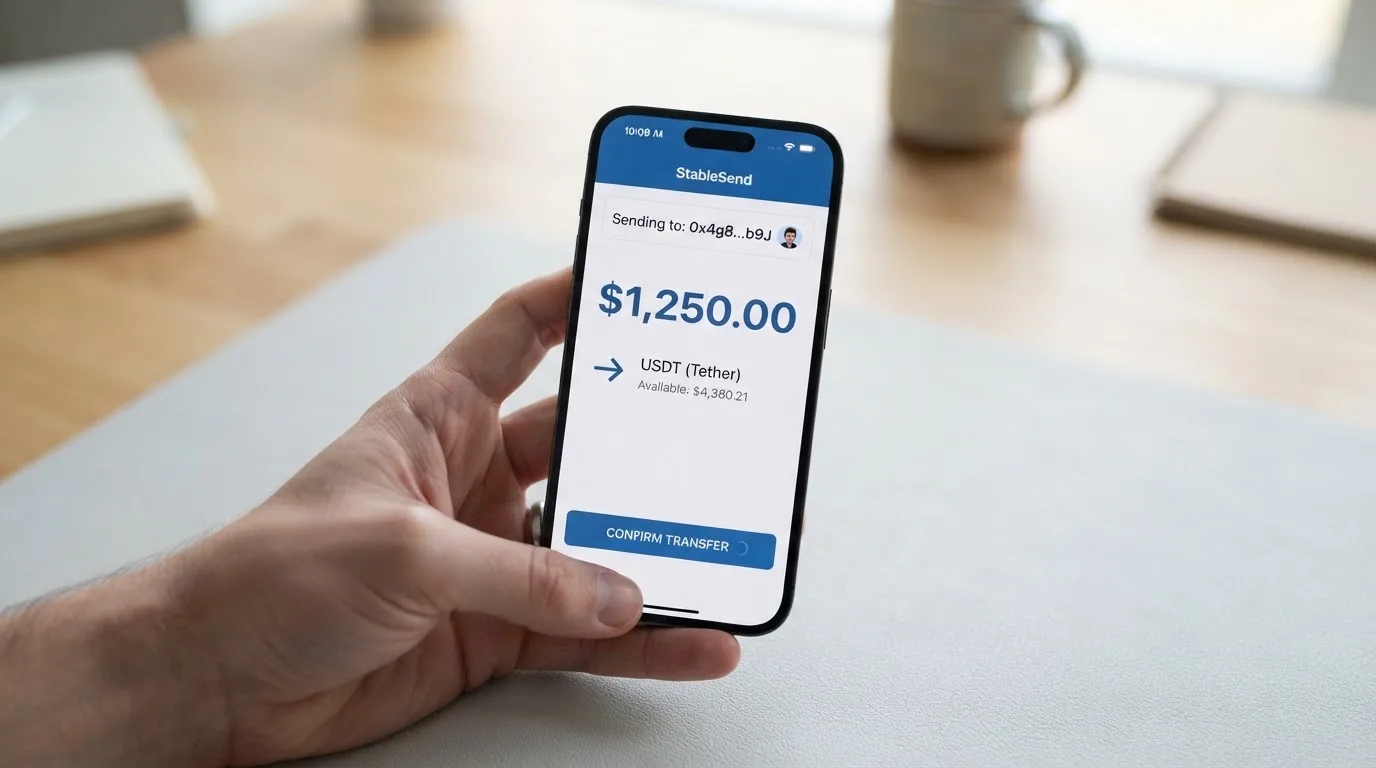
The first route is USDT from your own wallet. IMBA Wallet accepts USDT on two networks: TRC-20 (Tron) and TON (Telegram’s network). One shared balance holds the funds, and you then load the card from that balance. The deposit usually credits in 1 to 30 minutes, and there is no on-ramp markup from IMBA on top of the network fee, although the card top-up itself carries the product fee shown in the previous section. Crucially, USDT sent on Ethereum (ERC-20) or BNB Chain (BEP-20) is not accepted. If you send on the wrong network, the funds can be lost or stuck in manual recovery with no guarantee.
The second route is rubles from a Russian bank card. IMBA Wallet uses SBP, the Russian fast payment system. You pay in rubles from a bank card, the gateway converts them into USDT, and the USDT lands on the card balance. The minimum top-up is about 1,050 rubles once gateway fees are included, the maximum is 100,000 rubles per operation, and the cost is the top-up fee of the product you hold plus the 1–2% USDT to RUB conversion the platform charges.
A few practical points to keep in mind.
- One shared balance, not per-card balances. All five cards draw from the same USDT holding, so the choice of product really only sets the fee you pay on each top-up, not a separate pot of money.
- C2C transfers inside IMBA are free. The 0% applies to peer-to-peer transfers between IMBA users, not to card-to-card transfers, which the platform says are not available.
- USDT withdrawals to an external wallet cost $0 to $1.5, depending on the network. This is one of the few prices that is actually competitive.
- Selling USDT for rubles back to a Russian bank card or via bank payment is described as completing “in seconds to minutes” once initiated.
The two-network rule is the single most important thing to internalise. If your USDT lives on ERC-20 or BEP-20, you cannot use it on IMBA Wallet without first bridging or withdrawing to TRC-20 or TON, and that bridging step is your problem, not IMBA’s.
Paying with it every day
A IMBA Wallet card is a payment-only virtual card. There is no plastic, no ATM, and no card-to-card transfer, so the only way to use the balance is to spend it through the card networks, through Apple Pay, or through Google Pay.
Apple Pay works with the products that are listed as compatible, which on IMBA Wallet means the dedicated IMBA Apple Pay product and other cards marked as compatible in the app. Google Pay works similarly, with the IMBA Classic explicitly named as compatible. When you pay in a shop or online, the merchant sees a Singapore-issued Visa or Mastercard. That is a foreign BIN in most countries, and some merchants automatically apply extra scrutiny or outright decline foreign-issued prepaid cards; this is a feature of the card networks, not a quirk of IMBA Wallet.
There is no cashback. The platform’s only published reward is a referral programme paid in USDT, with three levels of payouts. The rates are not stated on the public pages. If you care about getting a percentage back on what you spend, this is not the card to choose.
The mobile wallet support is the one part of everyday use that is genuinely good. Adding a card to Apple Wallet or Google Wallet works in the usual way, and the standard protections of tokenised payments apply on top. Within the app, you can freeze a card instantly, set a PIN, and turn on optional two-factor authentication. Transfers to and from the card, including PayPal and MoneySend, are described as unavailable; the merchant category code 6537 is the one the platform blocks, which in practice means a lot of wallet-to-wallet transfers will simply be declined.
A few operational points also matter in daily use.
- The app shows a “Limits & fees” screen before you confirm a top-up, which is the moment you actually see the rate that will apply.
- Digital gift card codes bought with the card usually cannot be refunded, so treat them like cash.
- Bank payments made from unverified devices or accounts can be reversed by the platform after the fact.
What can go wrong
The risks below are the ones specific to IMBA Wallet. The general category risks of any crypto card are covered later in this section.
The provider says it is not a bank. The FAQ states that the service is not a bank and holds no banking licence, and an earlier check identified the provider as Asha Wallet LLC. The card itself is issued in Singapore. None of that is illegal or unusual in the crypto card space, but it does mean you do not have a bank standing behind the card. If the platform stops operating, the card programme is suspended, or the issuer goes under, your balance lives or dies with the platform’s ability to pay it back.
The wallet is custodial. The platform holds the credentials, so you do not see a seed phrase, you cannot export your private key, and you cannot move your USDT to another wallet without using the platform’s withdrawal flow. That is convenient, and it is also the classic pattern that has failed in this industry. Mt. Gox, Coincheck and Ronin are past examples; the broader lesson is that handing your funds to a custodian means you trust that custodian with everything. IMBA Wallet does not publish details of how customer funds are safeguarded.
There is no published dispute or chargeback process. The card pages do not describe a general chargeback or refund mechanism. If a merchant debits your card in error or fails to deliver what you paid for, the path back to your money is not laid out. The platform does flag that digital gift card codes are usually non-refundable and that bank payments from unverified devices can be reversed, which means the platform itself is willing to claw back funds it has already credited.
Independent review presence is thin. A search for “IMBA Wallet card reviews” on Trustpilot and Reddit (2026-10-21) returned no IMBA-specific results. That is not evidence of bad behaviour, but it does mean there is no large body of independent user experience to lean on. For a financial product, that absence is itself a flag.
The security tools on offer are reasonable. PIN, email login, optional two-factor authentication, and the ability to freeze a card in the app are all there. But “safeguarding”, in the sense of segregated customer funds or insurance, is not stated, and support channels are not listed on the FAQ; access recovery is described as going through Telegram, MAX, or email.
A few category-level risks are worth flagging in the same breath, because they apply to every card in this review and to IMBA Wallet in particular.
- A crypto card is only as stable as the stablecoin it spends. USDT has depegged in the past; if it depegs while your balance is on the card, you bear the loss.
- Sending USDT on the wrong network is a common and expensive mistake. ERC-20 and BEP-20 deposits to IMBA Wallet are not supported and can be lost.
- Programme closures happen. Card networks can pull the licence of an issuer, and issuers can wind programmes down. When that happens, the notice period is short and any balance left on the card becomes a problem to recover.
What to take instead
IMBA Wallet is not the only virtual crypto card out there. The three alternatives below were chosen because they cover similar ground: virtual issuance, broad country lists or ruble/USDT-friendly flows, and a custodial experience. None of them is a perfect swap, and the score for each is from our own analysis.
| Card | Score | Best for | Issue / monthly | Top-up fee | Notable limits |
|---|---|---|---|---|---|
| IMBA Wallet | 4.8/10 | Russian/CIS users with USDT | $10–$60 / $0–$10 | 3%–12% | Virtual only, Singapore-issued, no country list |
| Cardex | 5.6/10 | Broad country coverage | not stated | not stated; “AI-Powered Conversion Rate” at point of spend | Card currency Naira per App Store listing; networks Verve/Visa/Mastercard/UnionPay |
| TakeCard | 5.5/10 | Latin American users with a Takenos balance | $5 virtual; $20 physical + $20 shipping (Bolivia) | 1% per purchase | USD payments 1:1; physical card Bolivia-only |
| OkiCard | 6.0/10 | Users who want explicit fee disclosures | $0 issuance, $0 monthly stated (pricing page); FAQ mentions a one-time fee | 3% load fee, 0% transaction fee (USD) | Initial deposit 100 USDT; USDT on BSC, ETH, TRC-20 or SOL |
Cardex is a single-crypto-card product advertised for 200+ countries. The card sits on Verve, Visa, Mastercard and UnionPay rails, and the site describes an “AI-Powered Conversion Rate” that picks the best rate at the moment of payment. Fees are not stated as percentages, and the App Store listing presents the card as Naira-denominated, which can matter if your spending is mostly in other currencies.
TakeCard is a virtual and physical crypto card from the Takenos wallet, sold in Latin America. The virtual card costs $5 to issue and has no monthly fee, and the physical card is sold to Bolivian users for $20 plus $20 shipping. There is a 1% commission per purchase, USD payments are processed 1:1, and the wallet can receive payments from many countries. Other coins and networks are listed in starting data that I could not verify on a page I could read.
OkiCard is a virtual card aimed at 150+ to 200+ countries. The pricing page lists $0 issuance, $0 monthly and a starting price of $15 for a virtual card, with a 3% load fee, 0% transaction fee in USD, and an initial deposit of 100 USDT. Funding is USDT on BSC, Ethereum, Tron or Solana, and the platform states it does not apply hidden exchange spreads. The pages do not give a cashback programme, and physical card details are not stated.
The honest comparison is that all three alternatives publish more about their fees and country rules than IMBA Wallet does, and they have either lower load fees or clearer published structures. None of them is a regulated bank, and none of them is a free lunch. If the thing you care about most is the lowest top-up fee, IMBA Black at 3% is competitive with OkiCard’s 3% load fee. If the thing you care about most is regulatory clarity and country coverage, OkiCard and Cardex are ahead on the page.
Who I would recommend it to
The short version is that IMBA Wallet is a sensible choice for a narrow reader and a poor one for almost anyone else. The longer version is below.
It is a sensible choice if you are a user who already holds USDT, you want a virtual card to spend online, you are happy to use Apple Pay or Google Pay, and you do not need an ATM or a physical card. Within that group, the IMBA Black product has the lowest top-up fee and is the right pick once you have decided to commit; the VISA micro is the right pick if you only need a card once in a while, because it has no monthly fee. The full identity check is a one-time step, the ruble on-ramp is straightforward, and the experience is built around apps already familiar to users.
It is a poor choice if you are outside the implied Russia and CIS audience and the absence of a country list bothers you. It is a poor choice if you want a card with a clear dispute process, a published FX mark-up, or a regulated bank standing behind it. It is a poor choice if you need to pay in many currencies, because the FX rate is hidden in the app. It is a poor choice if you want cashback or a rewards programme, because there is none. It is a poor choice if you do not already hold USDT, because the 1–2% conversion on top of the top-up fee will quickly eat into small purchases.
If you are not in the narrow “I have USDT and I need a virtual card” group, the alternatives above are better fits. OkiCard for low fees and country coverage, TakeCard for Latin American users with a Takenos balance, and Cardex for anyone who wants a single product with a broad country list and is comfortable with a Naira-denominated card.
In the end, IMBA Wallet is a workable product for the audience it was designed for, and a thin one for everyone else. The 4.8 out of 10 reflects that balance.
Frequently asked questions
What is IMBA Wallet card?
IMBA Wallet card is a virtual Visa and Mastercard service that lets you spend a USDT balance like an ordinary bank card. The cards are issued in Singapore and there are five products (VISA micro, IMBA Light, IMBA Classic, IMBA Apple Pay and IMBA Black) with different issue, monthly and top-up fees. There is no physical card and no bank account behind it.
How does IMBA Wallet card work?
You sign up in the Telegram bot or one of the IMBA Wallet apps, pass a short email-and-phone check, and the app issues a card number, expiry and CVV. You fund the card by sending USDT on TRC-20 or TON to your IMBA balance, or by paying in rubles through SBP, and then you spend the balance online or through Apple Pay and Google Pay on the compatible products.
Is IMBA Wallet a bank?
No. The platform’s own FAQ states that the service is not a bank and does not hold a banking licence. An earlier check identified the provider as Asha Wallet LLC. The cards are issued in Singapore, which means your card is regulated under Singaporean rules, but you are not dealing with a bank.
Who owns IMBA Wallet?
The platform’s public pages do not state the legal entity behind the service. Earlier reporting attributes the product to Asha Wallet LLC. The cards themselves are issued in Singapore, which is consistent with that attribution but is not confirmed by the platform.
Is IMBA Wallet card available in my country?
IMBA Wallet does not publish a list of supported countries. The pages describe the target audience as “users in Russia and the CIS” and the cards are issued in Singapore. The only way to know if your country is supported is to try to sign up, and the answer may not be clear until a top-up fails.
How do I get an IMBA Wallet card?
Open the Telegram bot or one of the IMBA Wallet apps and create an account. The card order form asks for an email and a phone number only. You pick one of the five products, pay the issue fee, and the card is issued instantly with a number, expiry and CVV in the app. The full identity check (passport and selfie) is only required the first time you want to buy or sell USDT for rubles.
Does IMBA Wallet card require KYC?
There are two stages. The first, used to issue the card, is described as simplified and asks only for an email and a phone number. The second is a one-time full check with a passport and a selfie, which you complete the first time you want to buy or sell USDT for rubles. USDT deposits, USDT withdrawals, peer-to-peer transfers inside IMBA, and the referral programme are described as needing no further checks.
How do I top up my IMBA Wallet card?
Send USDT on TRC-20 or TON to the address shown in the app, or pay in rubles from a Russian bank card through SBP. The ruble route is converted into USDT before it lands on the card. USDT on Ethereum (ERC-20) or BNB Chain (BEP-20) is not supported, and any deposit sent on the wrong network can be lost or stuck in manual recovery.
Is IMBA Wallet card free?
The VISA micro product has no monthly fee, but every other product has one ($3, $4, $5 or $10 a month depending on the product), and all top-ups charge a fee ranging from 3% to 12% depending on the product. On top of that, the USDT to RUB conversion takes another 1–2%. Free to hold the VISA micro, but not free to use.
Is IMBA Wallet card safe?
The platform offers PIN, email login, optional two-factor authentication, and the ability to freeze a card in the app. It is custodial, which means you do not hold your own private key, and the FAQ does not describe segregated safeguarding or insurance for customer funds. There is no banking licence, no published chargeback process, and no independent review presence on Trustpilot or Reddit, which is a flag in itself rather than a verdict.
Virtual cards: the entry point – cryptocardportal.com
Content created by the «cryptocardportal.com» team