
A crypto Visa with a 0% stablecoin top-up and few public complaints — but unnamed issuers and an unpublished FX fee
 Available in US
Winity Exclusive is a Visa crypto card that turns a stablecoin balance into everyday spending money: you load USDT or USDC, the card treats it as dollars, and you pay with a virtual card in your phone or a physical card in your wallet. That core proposition is simple, well priced on the deposit side, and covered by the kind of apps and controls you would expect in 2026. What gives me pause is not the product but the paper around it: the card’s own pages never name the bank that issues the card, never publish the FX fee, and give two different country counts. That is why this card scores 7.6 out of 10 rather than higher — not because anything bad has happened, but because there is not yet much you can verify.
The conditions described below are current as of October 28, 2026.
Verdict: 7.6 out of 10
I scored Winity Exclusive 7.6 / 10. In plain terms: this is a competent crypto card with a genuinely attractive top-up price, aimed at people who want to spend stablecoins day to day without opening a bank account in the country they actually live in. It suits you if your income already arrives as USDT or USDC, if you are comfortable with an issuer you cannot name, and if you mostly spend in dollars or in countries where a foreign-issued prepaid card still works. It does not suit you if you need a documented FX rate before you pay, if you want to hold several currencies, or if a named, regulated bank on the back of the card is part of your peace of mind.
| Criterion | Mark | Why |
|---|---|---|
| Who can get it | 9 / 10 | “187+ countries” in the FAQ, “180+” in the footer; restricted countries are excluded but the list is not published, and citizenship is not mentioned at all |
| Cost | 7 / 10 | Physical card USD 20 a year, first 6 months free on new activations; USDT/USDC top-up 0 %, other assets 5 %; a payment under USD 25 costs USD 0.10; virtual issuance price and the FX fee are not disclosed |
| Top-up options | 9 / 10 | USDT and USDC at 0 %; ETH, SOL, POL, TRX, WCO and BNB at 5 %, over Ethereum, Solana, Tron, Polygon, BNB Chain and W Chain; USD 25 minimum balance |
| Reliability and complaints | 5 / 10 | Winity Life and WTY Technology Hong Kong Limited describe themselves as “not a bank”; cards come from unnamed partners; Trustpilot shows 3.7 from a single review, and no complaints to speak of |
| Everyday use | 8 / 10 | Exclusive Virtual and Exclusive Physical on Visa, Google Pay ready, ATM withdrawals USD 3 on the physical card; Apple Pay is not mentioned anywhere |
The number I would watch most is reliability, because everything else about this card is a feature and this is a question of trust infrastructure. Two marks of 5 out of 10 is not a criticism of a failure — I found no official incidents and no user reports — it is a penalty for thinness. A single five-star Trustpilot review dated 26 December 2025 is not a track record; it is a data point. Card programmes do fail, sometimes without warning, and the people caught out are always the ones who could not check the issuer’s name in advance.
Will they give you the card?
Mostly yes, and this is the strongest thing about it. The card’s FAQ says “187+ countries”; the footer of the same site says “180+”. Restricted countries are excluded, but the list of them is not published anywhere I could read. The terms talk about residence in a supported, non-restricted country — and say nothing about citizenship, which is a real gap, because sanctions screening and issuer risk policy are usually applied to citizenship and country of birth as well as to your address.
So the honest answer to “will they give me the card” is: probably, unless you live somewhere on a list they have not printed. Before you spend an afternoon on an application, work out which of those two numbers you are relying on and accept that neither is a guarantee. If your country matters to you — if you have been declined by ordinary banks, or if you travel — the practical test is not the marketing number but whether a support agent will tell you directly. The address they list is [email protected], and there is an in-app Support tab.
One thing worth knowing about the wider category: prepaid and debit cards are generally available to adults aged 18 and over, and some issuers set higher limits of their own. Nationality is recorded and screened separately from residence in almost every regime I know of, which is exactly why the silence in the terms is a bit unsettling.
How to get it
The process is ordinary. You need to be 18 or older, and you need one of three documents: a passport, a driving licence, or a national ID card. Verification usually takes minutes; if a person has to look at it, the card’s own estimate is 1–2 business days. The card is issued only after that check succeeds, so an application that looks instant in the app can still end in a rejection — the card does not publish the reasons it might reject one, which is worth remembering if you have a name that trips automated systems.
You end up with a choice of two products, both Visa: Exclusive Virtual and Exclusive Physical. The virtual card is the one you would start with; the physical one is for ATMs and for places that want to see plastic. There is also an Executive Metal tier in the same family, with a faster earn rate, a concierge, and a 24/7 relationship manager — I will come back to tiers, but it is not the card this review is about.
Three details that will bite you if nobody tells you:
- There are no tiers to climb in the onboarding sense. There is no simplified or a “tier 2” verification ladder; the same checks apply to everyone.
- A physical card costs money. Shipping charges may apply, and the countries, the delivery time and the replacement cost are all unstated.
- Proof of address is not stated as a requirement. Do not count on that going one way or the other when you gather your paperwork.
Fees: what it really costs
This is where the card is genuinely good on one side and frustratingly vague on the other. The headline — 0 % to load USDT or USDC — is real and it is rare. But the fee you will actually pay depends on two things the card does not publish, and both of them can be larger than the top-up fee you were saving on.

| Fee or limit | What the card says |
|---|---|
| Physical card | USD 20 a year; the first 6 months are waived on new activations; free physical issuance is described as “limited” |
| Buying the physical card | Requires USD 25 of spend on the virtual card first |
| Virtual card issuance | Not stated |
| Deposit conversion | 0 % for USDT and USDC; 5 % for WCO and other non-stable assets |
| Small-payment fee | USD 0.10 for transactions under USD 25; the other spend fee is shown in the app |
| FX fee | Not stated |
| ATM | Physical card only, Visa ATMs in 180+ countries; USD 3 per withdrawal; PIN change USD 5; no free allowance stated |
| Limits | Amounts not published; daily and monthly caps vary by user, tier and jurisdiction |
| Minimum balance | USD 25 needed for card transactions |
| Chargeback | USD 100 |
| Statement | USD 5 |
Let me put three ordinary days through that table, because that is the only way to see which of these numbers you will actually meet.
A coffee and a taxi. Both are small payments. The card charges USD 0.10 for any transaction under USD 25, and it says other spend fees appear in the app rather than on this page. On small payments, that flat fee is not nothing; on a card you use for everything, the small payments are the majority of your count, not your value. Nothing about the small-payment rule is hidden — it is right there — but it is the kind of line that only registers once you have been charged it.
A weekend away in a country that is not the United States. Here the fee you cannot see is the FX one, because the card’s transactions are in USD and the FX fee is not stated. A foreign-issued card can also simply be declined by the terminal: address verification compares the billing address a buyer types with the issuer’s records, and it is mainly offered in the US, Canada and the UK, so it is generally unavailable for foreign-issued cards. Some merchants decline prepaid or foreign card numbers outright because the BIN lookup reveals the issuer and country. Visa ATMs are available in 180+ countries for the physical card at USD 3 a withdrawal, and no free allowance is stated — so a traveller who withdraws small amounts repeatedly pays USD 3 for each one.
Buying something online. 3-D Secure is there, in the form of OTP-free checks via biometrics, which is a smoother experience than a one-time code. Note that a declined authorisation can still leave a hold on your funds for several days, sometimes as long as seven, even though the money never left.
The 5 % on non-stable assets is the other line to internalise. Sending ETH, SOL, POL, TRX, WCO or BNB costs you five percent of the amount at the moment it is converted, and it also means you are exposed to whatever that token does between the moment you send it and the moment it lands. Loading USDT or USDC costs nothing and skips that exposure entirely, and for anyone whose money is already in a dollar-pegged token there is no obvious reason to use the 5 % route at all.
How to Top up the card
Topping up is the strongest part of the whole offer, and it starts with a transfer to the right network. The card accepts USDT and USDC at 0 %, and ETH, SOL, POL, TRX, WCO and BNB at 5 %, over Ethereum, Solana, Tron, Polygon, BNB Chain and W Chain. Whatever arrives is converted to USD in a partner custody wallet before the card can spend it.
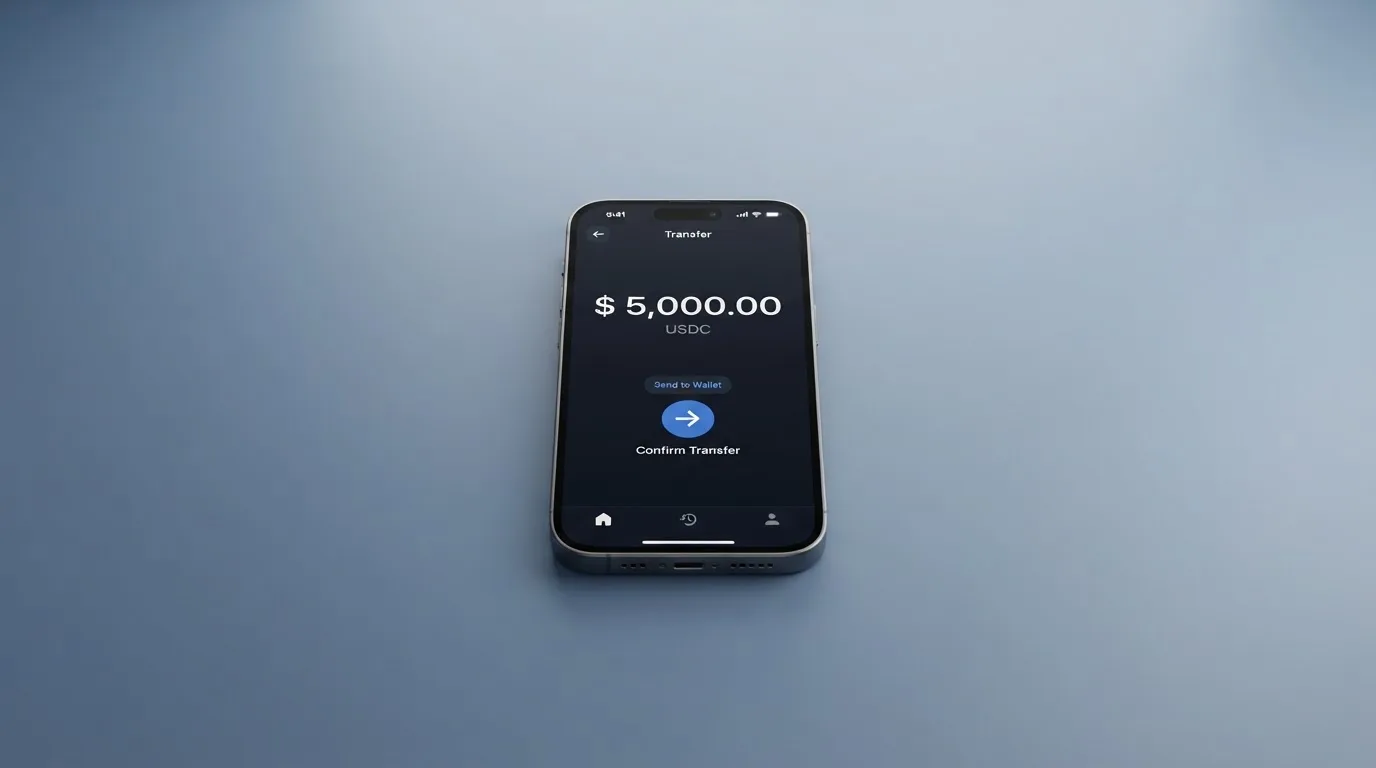
Four rules that decide whether your deposit works:
- Network fees are yours. Gas, or the equivalent resource cost on the chain you use, is paid by you and is charged by the blockchain rather than by the card.
- USD 25 is the floor. You need a USD 25 minimum balance for card transactions.
- There is a clock on new accounts. If you receive less than USD 25 within 14 days of activation, the virtual card is deactivated.
- No fiat top-up is stated. The described route is crypto to the card, not bank transfer to the card.
The network choice is the one place where a small mistake is genuinely expensive, and the reason is worth understanding. A blockchain transfer is irreversible: send on a network the provider does not support, or to an address belonging to a different network, and the funds can be lost, or need manual support recovery with no guarantee of the outcome. So match the network to the token exactly, copy the address character by character, and keep a little of the native token in the sending wallet. That last point catches people constantly: on Ethereum, fees are paid only in ETH, so a wallet holding USDT and no ETH cannot send anything at all. Tron prices fees through bandwidth and energy, often burning TRX. And a note on USDC specifically — Circle stopped supporting USDC on Tron in February 2024, so “USDC over TRC20” is not a native option here.
If you want cash out rather than in: withdrawals to crypto are not supported in the app. You take cash at Visa ATMs with the physical card. A refund is reviewed only for your most recent deposit, has to be requested immediately, and works only if no card transaction followed it; a statement request costs USD 5.
Paying with it every day
Day to day this behaves like a normal prepaid card, which is the point. Both the Exclusive Virtual and Exclusive Physical are Visa, and Google Pay is ready on the virtual card. Apple Pay is not supported. Apps exist for both iOS and Android, though I found no ratings to compare them on.
One rule about money is worth memorising, because it is the difference between this card and a bank card: this one can only spend what is already on it. That is the “pre-loaded balance” model — you convert or top up first, the card spends only that balance, and it cannot overdraw. For someone who has spent years with an overdraft line or a credit limit, that is a genuine change in behaviour, and for someone who has been declined by banks it is a relief.
There are three card tiers in the family, and knowing them helps because the fees above move with them:
- Exclusive Virtual — the entry product, the one this review prices.
- Exclusive Physical — adds the ATM function and the USD 20 a year charge.
- Executive Metal — faster earn rate, concierge, 24/7 relationship manager. Third-party data puts it at 3 GB a year of mobile data against 1 GB for Exclusive after USD 5,000 of spend. Treat that figure as unofficial: it comes from a third-party listing, not from the card.
Loyalty levels run Silver, Gold and Platinum, with Platinum at USD 5,000+ of spend. There is no cashback. Instead there are Winity Points, at one point per USD 10 spent on eligible purchases for Exclusive cards, and a redemption portal that is described as “coming soon” — which is to say, the points are not yet spendable. The Executive earn rate is not specified. Balances are in USD; whether you can hold other currencies is not stated, so treat this as a dollar card, not a multi-currency one.
Blocked merchant categories are not stated either. That matters more than it sounds: gambling sits under MCC 7995, and many issuers block it on specific cards by policy rather than by law, with the list differing by issuer. If gambling is something you do, ask. Otherwise, expect a card that mostly works and occasionally fails for reasons nobody will explain — and remember that a decline can still hold your money for days.
What can go wrong
Here is the uncomfortable part, and I would rather you read it before you load money than after.
Who is actually behind the card. Winity Life and WTY Technology Hong Kong Limited are named; no registration number is given. They describe themselves as a technology provider and programme manager and say plainly that they are “not a bank”. The cards are issued by unnamed licensed partners, with services issued in Hong Kong, Hong Kong law, and HKIAC arbitration. An unnamed issuer is not automatically a bad issuer — the Visa network itself does not issue crypto cards to consumers, it licenses issuers, and it can suspend a programme — but you are asked to rely on a partner the card’s own pages will not name. And the precedent for that going wrong is not hypothetical: WaveCrest, a Visa issuer that supplied several crypto card brands, was suspended by Visa in Europe in 2018, closing all its programmes, and in November 2022 Visa said it had “terminated our global agreements with FTX” as the FTX US debit card was wound down. Programme closures typically mean a notice period, then loading and spending stop, then you are asked to withdraw what is left.
Where your money sits on the way. A partner custody wallet holds your assets temporarily, converted to USD before you spend. Custody means the provider holds the credentials, so you must trust them completely, and transfers are irreversible with no built-in recovery: nobody can freeze or return a lost transfer. The historical record is not reassuring — Mt. Gox (about US$350 million reported stolen, 2011–2014), Coincheck (about US$400 million, 2018) and the Ronin Network (US$625 million, 2022) are the standard examples. Safeguarding of your balance is not stated, and in the EU at least, e-money institutions must segregate customer funds in dedicated accounts or insure them — funds that are not the same as bank deposits and may not sit under a deposit guarantee scheme.
Nobody is watching the reviews. I found no official incidents and no user reports, which sounds reassuring until you look at the sample size. The Trustpilot profile was claimed in October 2025. The score is 3.7 — with stars labelled 3.5 — from exactly one review, a five-star review of 26 December 2025. There are no complaint themes because there is not enough material to have themes. Too few reviews to judge, in either direction. I also found no licence, issuer or programme news, which for a young product is neutral and for a young product you are lending money to is not.
If money goes missing. Report unauthorised transactions to support and block the card; Winity reviews and raises the matter with Visa. The chargeback fee is USD 100, so a small disputed payment is not worth the cost of pursuing. There is no guaranteed recovery, decisions are described as “final and binding”, and anything unresolved after 60 days goes to arbitration. Your other protections are thinner than with a US debit card: US reversal rights come from Regulation E, prepaid-card coverage varies and should not be assumed, and under 3-D Secure liability for fraudulent online payments can shift toward you rather than toward the shop.
The support line itself. Email replies typically arrive within 24 hours; 24/7 member service is claimed for members rather than for everyone, which is the kind of distinction worth checking against your own needs.
Regulation is moving under all of this. In the EU, MiCA took legal effect in June 2023; its rules on stablecoins applied from 30 June 2024 and the remaining provisions from 30 December 2024. Under MiCA, e-money tokens may be issued only by a credit institution or an electronic money institution. The transitional period lets providers operating under national law continue only until 1 July 2026 or until they receive or are refused a MiCA authorisation, whichever comes first — and ESMA keeps an interim register of authorised providers and white papers that you can search. A card is regulated separately from the crypto side, so a crypto card like this one often rests on two licences. In the US, FinCEN guidance treats administrators and exchangers of convertible virtual currency as money transmitters; simply buying things with crypto is not that.
And a tax line, without advice. The IRS treats digital assets as property, so exchanging them for goods, services or dollars generally produces a taxable gain or loss, measured in local currency at fair market value on the date of the transaction. For personal holdings held a year or less it is short-term. Treat it as a rule of thumb to check with a professional in your own country, not as an answer about your situation.
What to take instead
None of these is a bank, and none of them fixes the unnamed-issuer problem. They are here because a 7.6 is a comparison, and because in some countries one of these is simply available to you while Winity is not.
| Winity Exclusive | Cardex | TakeCard | OkiCard | |
|---|---|---|---|---|
| My score | 7.6 / 10 | 5.6 / 10 | 5.5 / 10 | 6.0 / 10 |
| Who can get it | “187+ countries” in FAQ, “180+” in footer; restricted countries excluded but not listed | “One crypto card, 200+ countries”; no country list or exclusions | Physical card “available only to Bolivian users for now”; the site says the wallet can receive payments from any country | “150+ countries” (some pages say “200+”); no geo-blocking based on your passport, but users must confirm they are not in a sanctioned jurisdiction |
| Card | Virtual and Physical, Visa, USD | Debit crypto card on VERVE, Visa, Mastercard and UnionPay; virtual and physical; App Store listing is Naira-focused | Virtual immediately, physical Bolivia only; Visa; issued in the US; prepaid; USD 1:1 | Virtual card, with a physical card mentioned without detail; network given as “Visa/Mastercard” unspecified; USD/EUR pegged |
| What it costs | Physical USD 20 a year, first 6 months free; 0 % USDT/USDC top-up; USD 0.10 under USD 25; FX fee not stated | Not stated | Virtual USD 5; physical USD 20 issuance + USD 20 shipping — though another article in the same help centre says USD 10 for Bolivia, so the figures conflict | Pricing page: issuance $0, monthly $0, starting price $15 for virtual; the FAQ mentions a one-time issuance fee — the pages disagree; initial deposit 100 USDT |
| Per-payment fees | Small-payment fee USD 0.10; other spend fee in the app | Real-time crypto-to-fiat conversion at the moment of payment; the site describes an “AI-Powered Conversion Rate” that scans global exchange rates and picks the best one; no percentage stated | 1 % commission per purchase; USD payments 1:1 with no currency adjustment, other currencies at the official Visa rate of the day; crypto conversion fee not stated | Load fee 3 %; transaction fee in USD 0 %; “no hidden exchange spreads”; FX fee not stated |
| Top-up | USDT and USDC at 0 %; ETH, SOL, POL, TRX, WCO, BNB at 5 % over six networks | USDT, USDC and BTC wallets; networks not stated | Top up from the Takenos balance; coins not named in the article | USDT on BSC, Ethereum, Tron and Solana; USDC “soon”; BTC and altcoins “coming soon” |
| Rewards | No cashback; Winity Points at 1 per USD 10 on eligible purchases; redemption “coming soon” | Not stated | Not stated | Not stated |
Three contrasts stand out. Cardex is the only one of the four with a real network story — VERVE alongside Visa, Mastercard and UnionPay — and it is also the one whose App Store listing is Naira-focused, so its “200+ countries” and its day-to-day reality may not be the same thing. TakeCard is the most transparent about its price: 1 % per purchase, stated plainly, even though its physical card is Bolivia-only and its own help centre contradicts itself on the fee. OkiCard publishes a load fee and a zero transaction fee and claims no hidden exchange spreads, but its own pages disagree about whether issuance costs anything.
On rewards, all three say nothing, which makes Winity’s points scheme the only programme in the group — and it is one you cannot spend yet.
If your requirement is a specific country rather than a good deal, the honest first step is not a comparison table. It is finding out which of these is actually offered where you are, because every one of them declines to publish an exclusion list.
Who I would recommend it to
I would recommend this card to someone who earns in stablecoins and spends in dollars. If your money already arrives as USDT or USDC, a 0 % load with no spread to argue about is the best price in this group, the virtual-plus-physical Visa pair covers both online and face-to-face, and the pre-loaded balance model means you are spending only what you actually hold. Add Google Pay, 3-D Secure by biometrics, and instant freeze in the app, and the day-to-day picture is good.
I would not recommend it as your only card. Three reasons, in order of weight: the issuer is unnamed on the card’s own pages, so there is nothing to hold accountable; the FX fee is not stated, and undisclosed conversion cost is exactly the thing that hurts people who travel or buy in a foreign currency; and the payout for a successful chargeback is USD 100, which is a bad ratio for everyday disputes.
I would steer you elsewhere if any of these are true:
- You need a card with a named, verifiable issuing bank on the back of it.
- You spend regularly outside the United States and want a published conversion rate before you pay.
- You want to hold more than one currency.
- You are in a country you suspect is on a restricted list, since the card does not print it.
- You intend to run this at a scale where a 5 % conversion fee on non-stable assets is a real line in your budget.
My honest position on trust. Nothing bad has surfaced: no incidents, no complaints, no enforcement action. That is genuinely better than most of what I review. But there is almost nothing to verify either, and the section above explains why that is a risk in this category rather than a comfort. Load what you are willing to see exposed, keep the physical card’s USD 20 a year in mind as the price of the ATM function rather than a subscription, and use the virtual card until you know how the rest behaves in your country. If someone has handled this card for a year where you live, their answer about the FX fee will be worth more than anything on the card’s own pages — because that is the one number nobody has published.
Frequently asked questions
What is the Winity Exclusive card?
It is a Visa payment card you fund with crypto. You load USDT, USDC or several other tokens, they are converted to dollars in a partner custody wallet, and the balance then works like a prepaid card through the Exclusive Virtual and Exclusive Physical versions. It is aimed at people who hold stablecoins and want to spend them without a traditional bank account in the country they live in.
How does the Winity Exclusive card work in practice?
You load funds, then pay. USDT and USDC top up at 0 %; ETH, SOL, POL, TRX, WCO and BNB at 5 %, over Ethereum, Solana, Tron, Polygon, BNB Chain and W Chain. The card spends only what is on the balance, so it cannot overdraw. Withdrawals to crypto are not supported in the app, so money comes back out as cash at Visa ATMs with the physical card, at USD 3 a withdrawal.
Is Winity Exclusive a bank?
No, and the card’s own material says so. Winity Life and WTY Technology Hong Kong Limited describe themselves as a technology provider and programme manager and state they are “not a bank”. Cards are issued by unnamed licensed partners, with services issued in Hong Kong under Hong Kong law. No registration number is given for either company, so treat the card as an issued payment instrument rather than a bank account.
Who owns Winity, and who issues the card?
The card’s public pages name Winity Life and WTY Technology Hong Kong Limited as the providers, but they do not name the partner that issues the card — they refer only to licensed partners. That is the single most important thing to understand about this product: you hold a Visa card whose issuing institution the card’s own pages do not identify, so if you need to know who stands behind it, ask support before you load money.
Does the Winity Exclusive card require KYC, and what do I need?
Yes. You must be 18 or over, and you need a passport, a driving licence or a national ID card. Verification usually takes minutes, or 1–2 business days if reviewed manually, and the card is issued only after it succeeds. There are no verification tiers and no simplified path, and the card does not publish the reasons an application might be rejected.
Is the Winity Exclusive card available in my country?
Probably, but you cannot be sure from the card’s pages. The FAQ says “187+ countries” and the footer says “180+”, and restricted countries are excluded without being listed. The terms refer to residence in a supported non-restricted country and say nothing about citizenship, which matters because screening is often applied to nationality as well as address. Ask support directly before applying.
What does it cost to get and use the card?
The physical card is USD 20 a year, with the first 6 months free on new activations, and buying it requires USD 25 of spend on the virtual card first. Loading USDT or USDC costs nothing, other assets cost 5 %, and any transaction under USD 25 costs USD 0.10. The virtual issuance price and the FX fee are not stated, and ATM withdrawals are USD 3 with no free allowance published.
Is the Winity Exclusive card safe to use?
There is no evidence of problems: no official incidents, no user reports, and the single Trustpilot review is a five-star one from 26 December 2025, giving a 3.7 score from a sample of one. The safeguards are real — biometric 3-D Secure, instant freeze, PIN — but assets sit in a partner custody wallet, safeguarding is not stated, and blockchain transfers cannot be reversed. Treat it as a convenient card, not a place to hold a large balance.
Can I add the Winity Exclusive card to Apple Wallet or Google Pay?
Google Pay is ready, on the Exclusive Virtual card. Apple Pay is not supported. If a phone wallet is essential to how you pay, check inside the app first. The virtual card is also the one that has to reach USD 25 before a physical card can be ordered.
Why was my payment declined, and what happens if I see fraud?
Declines are common on foreign-issued and prepaid cards: some shops refuse them because the card number reveals the issuer and country, and address verification is mostly a US, Canada and UK service. A decline can also leave a hold on your funds for up to several days. For anything unauthorised, report it to support and block the card immediately; Winity raises it with Visa, but the chargeback fee is USD 100, recovery is not guaranteed, and unresolved cases go to arbitration after 60 days.
Virtual cards: the entry point – cryptocardportal.com
Content created by the «cryptocardportal.com» team