
The EMCD card works, but it is virtual-only, USDT-only, and its own pages contradict each other
 Available in US
The EMCD card is a virtual card you load with USDT from the Coinhold Wallet and then spend like an ordinary payment card, wherever cards are accepted. That is the whole idea, and the idea works. But the version I found is virtual-only, denominated in US dollars, priced in tiers that run from free to $25, and carrying fees that eat into every purchase. EMCD’s own pages also disagree with each other about basic things: which card network the card runs on, whether mobile wallets work today, and what the fees actually are. I scored it 4.9 out of 10, and most of that number comes from those contradictions rather than from anything being outright bad.

Conditions stated here are current as of October 28, 2026.
Who this fits, in one line: someone who already holds USDT in the Coinhold Wallet, already has a working identity verification with EMCD, and wants to turn that balance into everyday spending without waiting for a physical card. Who it does not fit: anyone who needs cash from an ATM, anyone who wants a metal or plastic card in their hand, anyone who spends in a country where the balance and the fee schedule will not make sense, and anyone who cannot clear identity verification.
That is the short version. Below I go through who issues it, how you sign up, what it really costs at the till, how to top it up, what daily use looks like, what can go wrong, and what I would look at instead.
The score
| Criterion | Mark | Why |
|---|---|---|
| Who can get it | 9 / 10 | Works anywhere cards are accepted except 13 named countries: Afghanistan, Belarus, Cuba, Iran, North Korea, Syria, Venezuela, Russia, Myanmar, Somalia, Ukraine, Yemen, China |
| Cost | 2 / 10 | Plus $19, Premium $25 issuance; $5 per month servicing; 1.5% top-up; 1.5% + $0.50 per purchase; 3% conversion when the purchase is not in USD |
| Top-up options | 4 / 10 | Only USDT from the main wallet account, network not disclosed; minimum top-up from $20 |
| Reliability and complaints | 4 / 10 | Issuer and legal entity not named; network described inconsistently (Visa and Mastercard both appear); Trustpilot reports account blocks after KYC and slow support |
| Everyday use | 5 / 10 | Virtual only; Apple Pay and Google Pay listed but also marked as coming soon; no ATM; no 3D Secure |
| Total | 4.9 / 10 | A card that works, with too many unanswered questions around price, issuer and everyday practicality |
Will they give you the card?
Yes, to almost everyone — and that is the strongest thing about it. EMCD’s card page says the card works “worldwide” wherever cards are accepted. The help centre is more precise: the card works wherever Mastercard is accepted, with the exception of places where payments are not available. It names them: Afghanistan, Belarus, Cuba, Iran, North Korea, Syria, Venezuela, Russia, Myanmar, Somalia, Ukraine, Yemen, China.
Read that list as the first thing to check against your own situation, because it is a list of countries where payments do not work — not merely where you cannot open an account. If you live in, or are travelling through, any of those thirteen, the card is not a tool for you.
Two caveats sit underneath that. First, the card page carries a notice that some EMCD services are unavailable in certain jurisdictions, and the notice does not name them. Second, and more awkwardly for the reader: the card page describes the product as a virtual Visa Platinum, while the help centre says the card runs on Mastercard, virtual, USD. A third-party listing also names Mastercard, the Coinhold platform, and EMCD as the offer, and still does not name an issuer. So the network you would be spending on is genuinely unclear from public sources, and if that matters to you — for example because of how your bank treats foreign-issued card numbers — it is worth asking support before you load money.
There is a background reason a card can look “foreign” to a shop, and it is worth knowing before you are surprised at a till. A card number starts with a 6- or 8-digit issuer identification number that identifies the issuing institution and country. Merchants can look it up, and some apply extra scrutiny when the issuer country differs from the billing address. That is not a quirk of EMCD; it is how card acceptance works everywhere.
How to get it
The route is short. EMCD describes standard identity verification as needing “an ID and about 5 minutes”. The order requires $15 of funding that stays in the balance — that is not a refundable deposit as far as the public pages say, it simply sits there.
There is a second identity check after your first top-up: mandatory, requiring a valid government ID, and it “usually takes a few minutes”. The card then activates automatically. If it fails, the advice is to retry with a different document. What the card’s own pages do not say is what proof of address is accepted, or what the minimum age is. Those are gaps, not answers — the public pages simply do not cover them.
What you receive is a virtual Visa Platinum card. The card currency is not stated on the page that describes it. A virtual card only is available: “Currently, we only offer virtual cards” — so there is no delivery step, no courier, no waiting. Cards are valid for 2 years, after which a new card with a new number is opened for you.
For someone deciding whether this is usable at all, two practical consequences of “virtual only” dominate everything else in this review:
- You cannot withdraw cash. ATM withdrawals are not supported — the help centre says the card “does not currently support cash withdrawals”, and the FAQ frames it as withdrawals that “will be” available once a physical card launches. That is a promise of a future feature, not a feature.
- You cannot rely on 3D Secure. The card does not support it, so merchants that require an extra identity check at checkout will decline the payment. This is a real limit on what the card can pay for online, and no workaround is offered.
You can hold up to 2 active cards at once. The card is managed in the EMCD app, where you can freeze and unfreeze it and set your own limits.
Fees: what it really costs at the till
This is where the card loses points, and the reason is not the issuance price but the recurring stack underneath it. There are three tiers:

| Item | Active | Plus | Premium |
|---|---|---|---|
| Issuance | free to issue | $19 | $25 |
| Monthly maintenance | — | $5 | $5 |
| Purchase fee | — | 1.5% + $0.50 | 1.5% + $0.50 |
| Per-transaction limit | not stated | $1,000 | $10,000 |
| Daily limit | not stated | $3,000 | $50,000 |
| Monthly limit | not stated | $10,000 | $400,000 |
Whether the Plus and Premium issuance prices are one-off or periodic is not stated anywhere on the pages I read. That single missing word matters more than it sounds: a $19 one-off and a $19 annual charge are very different products.
A few more fees from the published schedule, because these are the ones that bite in awkward situations:
- Declined payment: $1.50
- Refund: $0.50
- Reversal: $2.00
- Chargeback: $35
- Closing the card: $15
- Top-up: 1.5%
- Purchase: 1.5% + $0.50 per transaction
- Non-USD purchase: a possible 3% conversion fee applied by the issuing bank
There is a direct contradiction here worth pausing on. The Active tier page advertises “0% fees” on standard purchases. The help-centre fee schedule lists 1.5% plus $0.50 per purchase, 1.5% on top-ups, and $5 a month — without naming which tier the schedule applies to. An unofficial third-party source lists a different picture again: a 2.5% top-up and conversion fee, no monthly or annual fee, and no FX fees. I could not confirm that version with EMCD, so treat it as unofficial and not settled.
Now the arithmetic a person actually cares about. Three everyday payments:
A $30 purchase in dollars, on Plus. The purchase fee of 1.5% + $0.50 comes to $0.95. Plus $5 for the month if you have not paid it yet. So roughly $5.95 of charges attached to $30 of spending — about a fifth of the amount, once monthly servicing is counted.
The same $30 purchase in euros. Now add the possible 3% conversion fee from the issuing bank: $0.90 more. The balance is held in US dollars, and there is no multi-currency balance, so every non-USD purchase passes through a conversion whose cost the card page does not fully describe.
A purchase declined at the till — wrong PIN, or a shop that refuses a foreign-issued prepaid card. That is $1.50 for a coffee you did not buy, plus the merchant’s own time.
None of these figures are invented; each one is from the card’s own fee schedule or the tier table. But the honest conclusion is that the “0% fees” line and the $19-and-5%-a-month reality are both on the same website, and the reader has to guess which applies to them. If you spend mostly in dollars, in modest amounts, and pay a $5 monthly fee, the card costs you roughly 20% of your spend. If you spend in another currency, more.
It is also worth knowing that many shops simply decline prepaid or foreign BINs, because the issuer lookup reveals the card type and country. That is not EMCD-specific — but with no 3D Secure and a prepaid structure, this card will hit that category of decline more often than a normal debit card would.
Top up: how money gets in, and how it comes back out
Top-up is narrow. You fund the card with USDT from the Coinhold Wallet’s Main account. That is the only route described: manual top-up from USDT in the Main account, and explicitly no top-up by card number. The network is not stated — which, if you have moved stablecoins before, is the detail you will want first, because USDT exists on several chains and a transfer on the wrong one can be lost or need manual recovery with no guarantee.
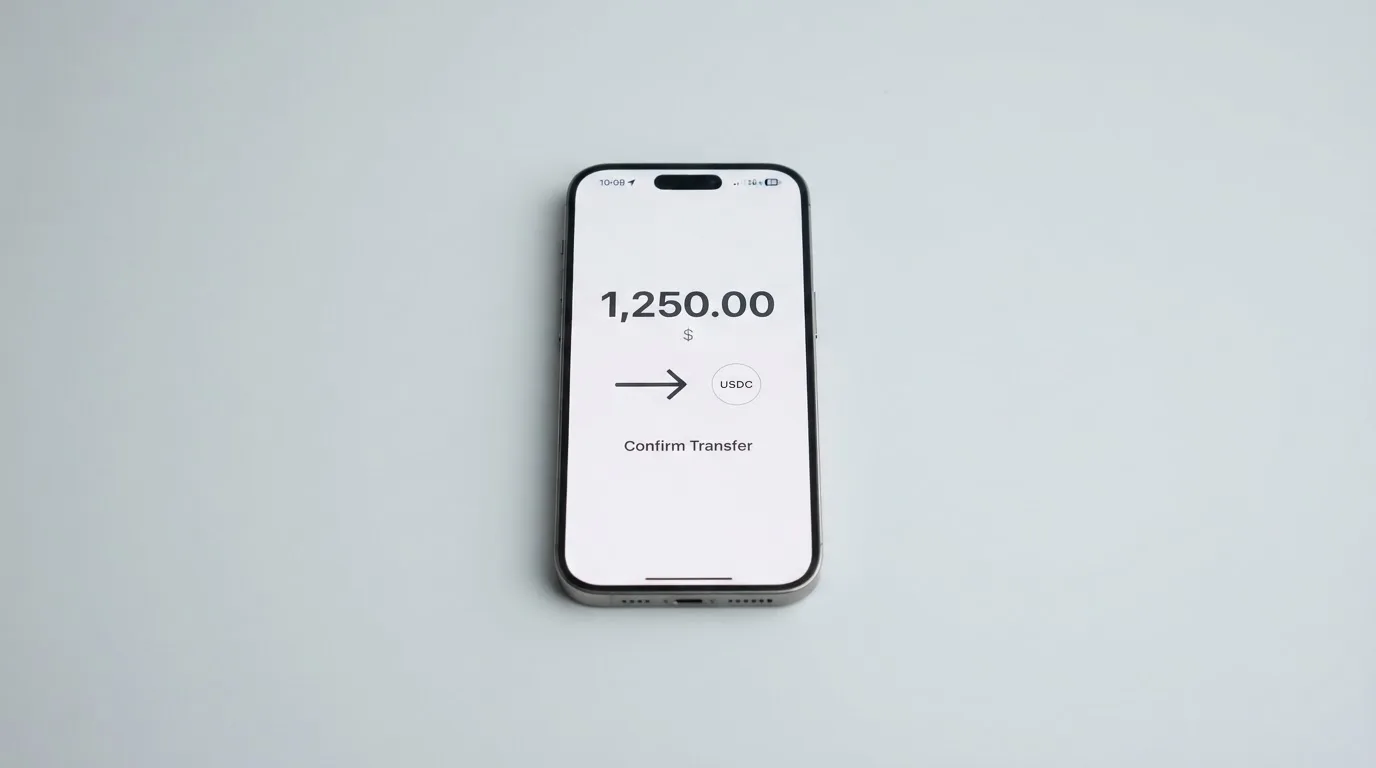
The mechanics:
- Minimum first top-up: $20
- Top-up fee: 1.5%
- $15 of the first top-up is held as a reserve until your total card spending exceeds $2,500
- Transfers come from USDT in the Main account, typically 3-5 minutes
- Terms depend on your card plan and may change
- Who pays the blockchain network fee: not stated
The reserve is the detail to plan around. If you top up $20 to start, $15 of it is held back and your spendable balance is $5 until you have spent $2,500 in total. That is a meaningful cold-start constraint, and it applies at exactly the moment a new user is most likely to be confused by a declined payment.
On the way out, the card is one-directional. “A free transfer from the card balance back to the Main account is not supported.” If you close the card, the remaining USD balance is converted to USDT and credited to your main EMCD account. And the issuing bank may close the card if the balance is $20 or less, or if there is no activity for 30 days — which, combined with the $15 reserve and the $20 minimum top-up, means an idle card can close itself around the money you thought was in it.
One thing to check for yourself: whether EMCD’s network fee for the USDT transfer is on top of the 1.5%. The pages do not say.
Paying with it every day
The everyday experience is narrow in a specific way: everything happens through the app and through online or contactless acceptance of a virtual card number.
Apple Pay and Google Pay are the interesting contradiction. The FAQ says the card works with both. The feature list marks both as “Coming soon”. Both statements are on EMCD’s own pages. If adding the card to your phone is decisive for you, this is the first thing to confirm with support — and I would confirm it by getting the answer in writing, not by reading the site.
The help centre also lists blocked merchant categories: fuel, ride-hailing, AI subscriptions, money transfers, crypto exchanges, gambling, brokerage, and most entertainment except cinemas and theatres. That is a long list of things you might reasonably expect a card to pay for. Whether blocked categories can be unblocked per user is not stated.
Cashback is not mentioned anywhere on the card pages. So there is no rewards layer to offset the fees — every dollar of value the card gives you is in the conversion, not in points.
Some background on why the missing 3D Secure matters more than it first appears: 3-D Secure adds an identity check to online payments, where the issuer either approves frictionlessly or challenges the cardholder with a one-time code or biometrics. Visa’s brand is Visa Secure, Mastercard’s is Identity Check. Where a merchant requires it and the card has none, the payment simply fails. Similarly, address verification — the comparison of the numeric parts of the billing address against issuer records — is generally unavailable for foreign-issued cards, which causes further declines.
Two more things worth knowing about how payments behave. A declined authorisation can leave a hold on your funds that stays for several days, typically up to 7. And if something goes wrong with a purchase, the fee schedule tells you what a refund, a reversal and a chargeback cost — $0.50, $2.00 and $35 respectively — but the dispute procedure and the time frames are not stated. The $35 chargeback fee deserves a moment: in many programmes a chargeback is the tool you reach for when a purchase was fraudulent, so a card that charges $35 to use it is making fraud recovery expensive for the person who was defrauded.
What you do have: freeze and unfreeze in the app, adjustable limits in the app, and a route for lost or unauthorised transactions — report to support and ask for a reissue.
What can go wrong
The most substantive risk here is the one nobody will describe for you: there is no named issuer and no named legal entity on the card page. EMCD / Coinhold Wallet is the brand; registration country, card issuer and licences are not stated. An unofficial third-party listing names the network, the platform and the offer, and still leaves the issuer unnamed.
Why that matters in general terms. A card payment involves several parties: the network routes messages and sets the rules, the issuer — a bank or licensed e-money institution — holds the card programme, and the crypto brand is often just the programme manager or front-end that markets it. When something goes wrong, the difference between those three is the difference between a support queue and a regulator. Under EU rules, electronic money institutions must safeguard customer funds by segregating them or insuring them, but such funds are not the same as bank deposits and are not covered by a deposit guarantee scheme. Here, no issuer and no licence are stated, so I cannot tell you which protections, if any, apply to your balance. Ask, and get it in writing.
The funds themselves are custodial — held at the EMCD Coinhold Wallet. That means the provider holds the credentials, and the balance depends on that provider. Custodial platforms have a real history: Mt. Gox (about US$350 million reported stolen, 2011–2014), Coincheck (about US$400 million, 2018), Ronin Network (US$625 million, 2022). Insurance or safeguarding arrangements for this balance are not stated.
Next, the complaints picture, which is about the company rather than the card specifically. On Trustpilot, EMCD the company had 190 reviews, with the score hidden “due to a breach of guidelines” as I read it on 20 October 2026: 83% five-star, 11% one-star. EMCD says it removed fake reviews. Recurring themes in the reviews: accounts blocked or banned after a KYC/AML review (November 2025 to April 2026); slow KYC and document checks (November 2025); referral and welcome bonuses unpaid without KYC (November 2025); slow or missing support replies (November 2025 to March 2026); and US users blocked since 1 May 2025. Positive reviews cite 12% annual interest and fast payouts. I found no complaint specific to the Coinhold/EMCD card itself, no Reddit threads, and no official incidents.
This connects to something you should understand before you load money, because it is how the whole industry works rather than a quirk of EMCD. KYC rules require regulated businesses to verify customers and assess risk as part of anti-money-laundering law, including ongoing monitoring and suspicious-activity reporting. In the EU, due diligence covers name, address, date of birth, nationality and identity documentation, a sanctions check, the purpose of the relationship, and whether the customer is a politically exposed person. Nationality is recorded and screened separately from residence, because sanctions screening often applies to citizenship and country of birth, not just where you live. And if due diligence cannot be completed, EU rules require the institution to refrain from the transaction or relationship and, where necessary, end existing relationships. That is the legal reason accounts get frozen pending documents. If you have had an account frozen elsewhere for KYC reasons, you should expect to check this one carefully and keep your documents ready.
Three smaller operational risks:
- Idle closure. The issuing bank may close the card at $20 or less, or after 30 days with no activity.
- Network fee on a wrong chain. Network not disclosed for USDT top-ups; blockchain transfers are irreversible, so a deposit on an unsupported network can be lost or need manual support recovery with no guarantee. Note also that if you hold USDT on Ethereum you need ETH for gas, since ERC-20 fees are paid only in ETH; on Tron, fees are paid through bandwidth and energy, often burning TRX.
- A $35 chargeback fee standing between you and a fraud dispute.
What I found reassuring: no official incidents surfaced in my search on 20 October 2026, and the fee schedule is published rather than hidden. The help centre is at help.coinhold.io in English, Portuguese, Russian and Spanish; the help menu claims 24/7 support, though the email in the footer is obscured. Card support language is not stated. Support quality is exactly what the one-star reviews complain about, so treat “24/7” as a menu item rather than a commitment.
What to take instead
I scored three alternatives, and each fails in a different way. The useful comparison is not “these are better” — it is “these trade this problem for that one”.
MSX — 6.4 / 10. I could not read a single fact from an official page: who can get it, what the card is, what it costs, what the fees are, how you fund it, what rewards exist. None of it is stated. A higher score than EMCD, and still almost no public information. That is worth weighing honestly.
Bybit Card — 6.0 / 10. The most transparent of the three, and the only one where the numbers are fully published.
| Aspect | Bybit Card |
|---|---|
| Where | Argentina, AIFC (Kazakhstan), Georgia, Kazakhstan, Australia, Mexico, Brazil, Peru, Asia Pacific — and not the EEA: “This product is not meant for European Economic Area customers” |
| Card | Virtual and physical; a virtual card must be obtained first; physical not available in Peru |
| Networks | Mastercard prepaid (Argentina); Mastercard credit (AIFC, Georgia, Kazakhstan, Australia, Mexico); Visa prepaid (Brazil, Peru); Visa credit (Asia Pacific) |
| Currency | USD (AIFC, Georgia, Kazakhstan, Australia, Asia Pacific), ARS, MXN, BRL, PEN or USD (Peru) |
| Validity | 3 years (most), 6 years (Argentina), 5 years (Brazil, Mexico, Peru) |
| Virtual issuance | none in all regions “until further notice” |
| Physical issuance | Australia 29.99 USD; Argentina 5 USD/USDT; Georgia 29.99 USDT; Kazakhstan (AIFC) 29.99 USDT; Asia Pacific 5 USDT; Brazil and Mexico none |
| Crypto conversion | 0.9% over the One-Click Sell rate (most regions); 0.5% Argentina; Peru not supported |
| FX fee | 2% plus network rate (Australia, Asia Pacific, Georgia, Mexico); 2% international fee (Kazakhstan); 7% Argentina; 1.5% Brazil; 1% Peru |
| Rewards | from 2026-10-05 only crypto-funded transactions earn; Base 2.00% capped 5 USD, up to Omega 8% capped 400 USD and Infinite 10% capped 600 USD monthly |
Two things stand out. Bybit funds from its Funding Account and can sell crypto automatically if fiat runs out, with USDT, USDC, GRAM, BTC, ETH, XRP supported and a reorderable priority list — so it is not a single-stablecoin card. And it has a rewards ladder that EMCD has nothing to match, though note the catch: from 5 October 2026 only crypto-funded spending earns, fiat-funded spending does not. Argentina also carries VAT 21% on foreign digital services, 30% tax on foreign transactions and provincial gross-income tax of 1%–13.2%. Bybit’s own restricted-country list for its fiat services — not the card itself — includes Belarus, the Russian Federation, Serbia, China and the United States, with Russian users limited to RUB transactions in fiat. There is no card-specific statement on Russian or Belarusian citizens, and no citizenship-versus-residence rule was found; the card currency “depends on the country of your Advanced Identity Verification”.
MEXC — 5.6 / 10. Virtual only, physical cards not yet available. Network and card currency not stated. Issuance fee 20 USD (the page appears to show it next to a 0 USD discounted price, which is unclear); service fee 0%; fees vary by card type per a linked guide I did not read. Funding is USDT into the Fiat account, then added on the My MEXC Card page — networks not stated. Cashback by M-Score tier, paid by the 15th of the next month: Standard 4% capped 100 USDT a month, Premier (600–799) 6% capped 300, Elite (800+) 10% capped 800. Referral 20 USDT to the referrer, 10 USDT to the referee.
My honest comparison: Bybit publishes more and charges more; MEXC has the best cashback ladder and the least clarity; EMCD is the most open about geography and the least open about who issues the card and what a purchase costs.
Who I would recommend it to
I would recommend the EMCD card to one specific person: someone who already keeps USDT in the Coinhold Wallet, has cleared identity verification there, lives outside the thirteen listed countries, spends mainly in US dollars, and has accepted that this is a virtual card with no cash, no 3D Secure and a fee stack that runs from 1.5% to a shade over 3% plus $0.50 a purchase. For that person, converting a stablecoin balance into everyday spending is a real convenience, the $20 minimum is low, and geography restrictions are fewer than most crypto cards impose.
I would not recommend it to: anyone planning to use it abroad as their only card; anyone who needs cash; anyone who needs to pay for fuel, ride-hailing, gambling, crypto exchanges, money transfers, AI subscriptions or most entertainment; anyone whose spending depends on a merchant’s extra identity check; and anyone who is uneasy that the issuing bank is not named on the card page and the card’s own network description changes between pages.
And before anyone deposits, I would ask three questions in writing: which network does the card run on, which network should I use for USDT top-ups, and who is the issuing bank and licence holder. All three have clear answers inside the company. None of them are answered on the public pages I read — and those are the three answers that decide whether this card works for you.
Frequently asked questions
What is the EMCD card?
The EMCD card is a virtual payment card that spends a balance you load yourself. You convert or deposit stablecoins into the card’s balance and then pay with it like an ordinary card, online or contactless. It is virtual only: EMCD says “Currently, we only offer virtual cards”, so there is no physical card and nothing is posted to you. The card is described on one page as Visa Platinum and in the help centre as Mastercard, in US dollars. EMCD’s own pages disagree on that point, which I would want settled before loading money.
How does the EMCD card work?
You fund the card, and it spends only that balance. EMCD’s model is closer to a prepaid card than a bank debit card: there is no overdraft, and the card cannot spend what you have not loaded. The balance is held in US dollars, and the card is managed in the EMCD app, where you can freeze it, unfreeze it and set your own limits. Cash withdrawals are not supported, and the card has no 3D Secure, so merchants requiring an extra online check will decline it.
Is EMCD a bank?
No — and this is the single most important question to ask about EMCD. The card page does not name the legal entity, the registration country, the card issuer or any licence. In this industry the brand is often only a programme manager or front-end, while a licensed bank or e-money institution actually issues the card. That distinction decides who is liable if something goes wrong and whether your balance sits under any safeguarding regime, so I would ask EMCD directly and get the issuer named in writing.
Do I need to pass KYC to get an EMCD card?
Yes, there are two identity checks. EMCD describes standard identity verification as needing “an ID and about 5 minutes”, and a second mandatory check after your first top-up requiring a valid government ID, which “usually takes a few minutes” and activates the card automatically if it passes. Proof-of-address requirements and minimum age are not stated on the public pages. Reviews of the company include accounts blocked after a KYC or AML review between November 2025 and April 2026, so keep your documents to hand.
Which countries can I use the EMCD card in?
Wherever Mastercard is accepted, with payments unavailable in 13 named countries: Afghanistan, Belarus, Cuba, Iran, North Korea, Syria, Venezuela, Russia, Myanmar, Somalia, Ukraine, Yemen and China. That is a payments restriction, not just an onboarding one. Separately, the card page carries a notice that some EMCD services are unavailable in certain jurisdictions without naming them, and the help-centre article has previously listed Russia as restricted. If your country is anywhere near that list, ask before you rely on it.
How much does the EMCD card cost?
Issuance is free on Active, $19 on Plus and $25 on Premium, and whether those are one-off or periodic is not stated. Servicing is $5 a month. Each purchase costs 1.5% + $0.50, a declined payment $1.50, a refund $0.50, a reversal $2.00, a chargeback $35, and closing the card $15. Non-USD purchases may add a 3% conversion fee from the issuing bank. An Active page advertises “0% fees” on standard purchases, which contradicts the help-centre schedule.
How do I top up the EMCD card?
With USDT held in your Coinhold Wallet Main account, transferred manually to the card. That is the only route described — there is no top-up by card number, and no fiat option is mentioned. The minimum first top-up is $20 and the fee is 1.5%, with $15 of the first top-up held as a reserve until your total card spending exceeds $2,500. Transfers typically take 3–5 minutes. The network to use is not stated, which is the detail to confirm first.
Can I get cash out of an EMCD card?
No. ATM withdrawals are not supported — the help centre says the card “does not currently support cash withdrawals”, and the FAQ describes withdrawals as something that “will be” available once a physical card launches. Free transfer of the balance back to the Main account is also not supported. If you close the card, the remaining US dollar balance is converted to USDT and credited to your main EMCD account. The issuing bank may also close the card if the balance is $20 or less, or after 30 days with no activity.
Can I use Apple Pay and Google Pay with the EMCD card?
EMCD’s pages contradict themselves. The FAQ says the card works with Apple Pay and Google Pay, while the feature list marks both as “Coming soon”. If paying with your phone is the reason you want this card, that is the first thing to confirm with support, and I would want the answer in writing. Even when mobile wallets work, the issuer can restrict the tokenised card number — for example blocking it on phone or website use only.
Is the EMCD card safe to use?
Reasonable safety, unresolved guarantees. The card is custodial, so your balance depends on EMCD as a provider, and no insurance or safeguarding arrangement is stated. The card page names no issuer and no licence, which is the gap I would close first. On the practical side, you can freeze the card, set limits and report loss for a reissue — but there is no 3D Secure, so your protection against certain online fraud is weaker than on a normal card, and the $35 chargeback fee makes fraud recovery expensive.
What are the limits on the EMCD card?
By tier. Plus: $1,000 per transaction, $3,000 daily, $10,000 monthly. Premium: $10,000 per transaction, $50,000 daily, $400,000 monthly. Active has no numeric limits stated, but users can set limits themselves in the app. You can hold up to 2 active cards at once. Cards are valid for 2 years, after which a new card with a new number is issued.
Is EMCD card free?
Partly. The Active tier is free to issue and its page advertises “0% fees” on standard purchases, so “free” is true of that tier in the way most people mean it. It is not true of the card generally: Plus costs $19 to issue and Premium $25, and the help-centre schedule lists $5 monthly servicing, 1.5% top-ups and 1.5% + $0.50 per purchase — with no tier named on that schedule, which is exactly why the two pages contradict each other.
Exchange cards: the entry point – cryptocardportal.com
Content created by the «cryptocardportal.com» team