
BenPay Alpha reviewed: a no-fee stablecoin card with a thin safety net
 Available in US
The BenPay Alpha card is a virtual Visa you load with USDC or USDT and spend like an ordinary payment card, with no monthly fee, no annual fee, no top-up fee and no crypto-to-fiat conversion fee on the card’s own terms. That sounds like the ideal setup for anyone who holds stablecoins and would rather not pay a card company a cut of every coffee. My score for it is 7.4 out of 10. The high marks are for cost and for the choice of funding networks; the low ones are for everyday use, because the physical card and cash withdrawals were still described as “coming soon” at the time of checking, and for reliability, because the issuing institution behind the card is not named on the pages I could read. In short: it suits a self-custody user who already spends USDC or USDT and wants a card with no card-side fees, and it does not suit someone who needs a physical card today, cash from an ATM, or a named bank or issuer standing behind the balance. The details here are current as of October 2026.
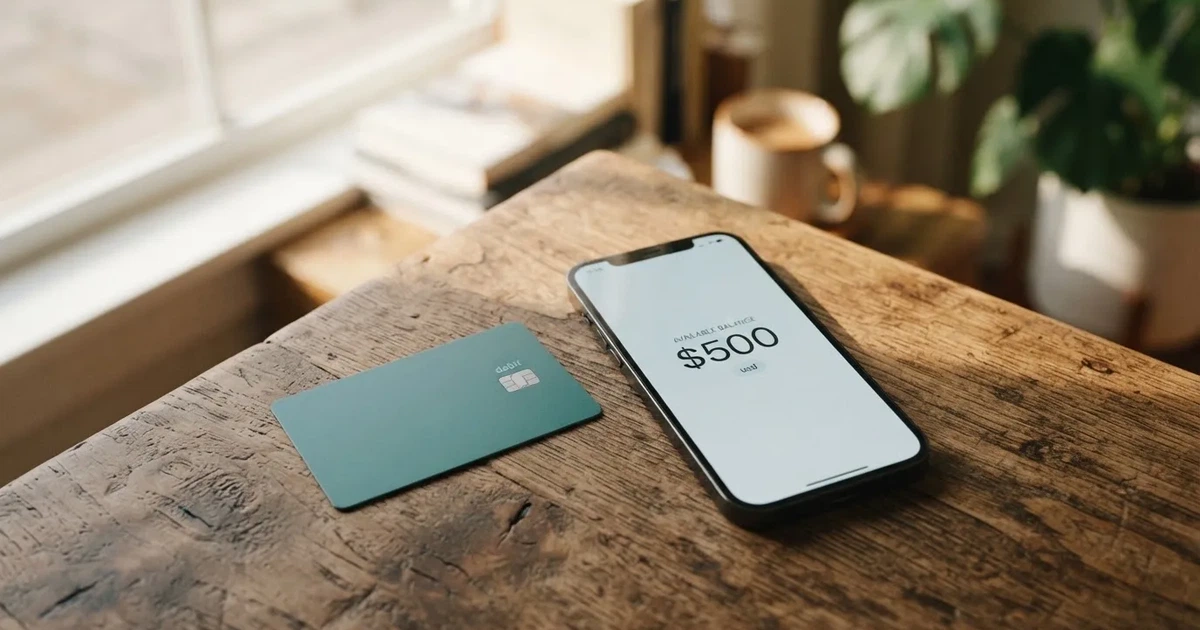
The conditions described here are current as of October 28, 2026.
Verdict: 7.4 out of 10, and who it is for
Let me lay out the score first, criterion by criterion, because the total is an average of very different strengths and weaknesses and the average hides the part that matters most to you. If the everyday-use gaps do not apply to you, this is a better card than 7.4 suggests. If they do apply, it is a worse one.

| Criterion | Mark | Why, in short |
|---|---|---|
| Who can get it | 8 / 10 | The card says it is “open to everyone” with no country list; starting data lists 14 restricted countries including Russia and Belarus, but that could not be confirmed on a readable official page. |
| Cost | 9 / 10 | Officially 0 monthly, 0 annual, 0 top-up, 0 crypto-to-fiat conversion. Unofficial sources mention a refundable 20 USDT deposit; the FX fee is not disclosed. |
| Top-up options | 8 / 10 | USDC or USDT on ETH, BSC, Base and Optimism; USDC converts to BUSD 1:1; self-custody wallet. |
| Reliability and complaints | 6 / 10 | App publisher Wuben Inc., a claimed FinCEN MSB licence, no named card issuer, and no reviews found to judge it by. |
| Everyday use | 5 / 10 | Virtual Visa with Apple Pay and Google Pay; physical card and ATM “coming soon”, not working at the date of checking. |
| Total | 7.4 / 10 | Strong on fees and networks, thin on issuer transparency and on the things you need at a shop with a terminal. |
Who this card suits, concretely: you already keep money in USDC or USDT, you hold it yourself rather than leaving it on a platform, and you would spend it through a phone wallet or a virtual card number for online payments. If that is you, a zero-fee structure and four network choices for funding are genuinely valuable things, not marketing lines.
Who it does not suit: anyone who needs to hand over a plastic card at a restaurant tonight, who takes cash out of a machine, who needs the FX rate disclosed before they commit, or who cannot accept that the institution which actually issues the card is not disclosed. For those people a more established issuer with published fee tables is simply the safer place to start.
One more thing before the detail: this is a young product. BenPay announced the card on Medium on 23 and 27 May 2025, and an earlier Platinum card article appeared in December 2024. There is no long track record, and the single US App Store rating I read, 4.8 out of 5, was read on 2026-10-21 and does not tell you how many people are behind it. Treat the fee promises as promises, not as a measured average.
Will they give you the card?
The honest answer is that the card’s own pages were not readable when I checked them, so what follows is thinner than I would like. The clearest official statement I could find comes from BenPay’s own Medium posts of May 2025, which describe the card as “open to everyone” and list no eligible or restricted countries. Starting data I worked from does list 14 restricted countries, including Russia and Belarus, but I could not confirm that list on a readable official page, so please treat it as unconfirmed rather than as a rule you can rely on.
That gap matters to you because the way this card is likely to be policed is not primarily by the card brand but by the issuer and the payment partner behind it. A card that advertises no country list is not the same as a card that is licensed and operable everywhere; it means nobody has published the boundaries yet. So before you plan around it, ask yourself the question you would ask of any unfamiliar financial provider: is my country explicitly allowed, and where does that answer come from? If the answer you can find is a third-party page rather than the operator’s own, treat the whole geography as unknown.
There is a second boundary that is separate from geography, and it is the one that surprises people. Nationality is recorded and screened apart from residence, because sanctions screening and issuer risk policy are often applied to citizenship and country of birth as well as to your address. A resident of a permitted country with citizenship of a restricted one can, in principle, be treated differently from a citizen of a permitted country living elsewhere. Nothing in BenPay’s public material explains how it applies this rule.
One reassuring detail from the general pattern: prepaid and debit cards are generally available to adults aged 18 and over, and some issuers set higher limits. BenPay’s own pages do not state what verification levels exist or what age it requires, so I cannot tell you its rule. What I can tell you is that whatever the age is, it will not be lower than that baseline in a properly regulated programme.
In short on eligibility: on paper, everyone; in practice, unknown enough that you should expect to hit a wall if you live in a restricted country, and you should not treat “no list published” as “no restrictions exist”.
How to get it
The stated sign-up path is short. According to BenPay’s Medium posts from May 2025, which describe the BenPay Card generally, there is “No KYC”, and you sign up with a Google or Apple account through zkLogin, in a two-step application. That is the frictionless version of the story.
Here is the complication, and it is the single most important practical point on this page. Unofficial sources say the Alpha card is different from the general description. A Binance Square user post, undated, says the Alpha card requires full KYC with an ID document, and ChainCatcher reported in December 2024 that the Platinum card requires “necessary KYC”. These are third-party accounts, not the card’s own statements, and I am not presenting them as confirmed. But the pattern they describe is the common one: a no-KYC entry tier for trying the product, and a verified tier for higher limits or for the card itself.
That is worth understanding rather than resenting. Anti-money-laundering law is not optional for a regulated business: it requires customer verification, ongoing transaction monitoring and reporting of suspicious activity. In the EU, due diligence normally covers name, address, date of birth, nationality and identity documents, plus a sanctions check and a politically-exposed-person determination. In the US, the customer identification programme requires name, date of birth, address and an identification number, and electronic systems also validate proof-of-address documents against records. If due diligence cannot be completed, the rules require the institution to hold back the transaction or the relationship. That is why accounts get frozen pending documents, and it applies to cards exactly as it applies to exchanges.
So the practical plan: expect to hand over an identity document, expect to be asked for more later, and do not read “No KYC” as “no checks ever”. Whether the physical card ships, and where it would ship to, is not stated anywhere I could read; the Medium posts only said a physical card was “coming soon” as of May 2025.
What it really costs
Fees are where this card is genuinely strong, and also where the picture is incomplete in exactly the place that usually bites people. On the card’s own terms as of May 2025: no monthly fee, no annual fee, no top-up fee, and no crypto-to-fiat conversion fee. Opening a balance costs nothing in the sense of a monthly or annual charge. What is not stated is the foreign-exchange fee, and that is the number you would want most, because it is the number that decides what a purchase priced in a currency other than dollars actually costs you.
The unofficial picture adds two lines. A Binance Square user post, undated, describes no card opening fee at present but a refundable deposit of 20 USDT that applies to failed transactions and disputes. ChainCatcher reported in December 2024 that the Platinum card had a 20U opening fee, top-up starting at 1%, and no monthly fee. Treat both as unconfirmed, but note what they imply: a hold on 20 USDT is not a fee, yet it is money you cannot spend while it is held, which is a real cost if you keep a thin balance.
| Fee or limit | Value | Source |
|---|---|---|
| Monthly fee | 0 | Card’s Medium posts, May 2025 |
| Annual fee | 0 | Card’s Medium posts, May 2025 |
| Opening fee for Alpha | Not stated | — |
| Top-up fee | 0 | Card’s Medium posts, May 2025 |
| Crypto-to-fiat conversion | 0 | Card’s Medium posts, May 2025 |
| FX fee | Not stated | — |
| Refundable deposit | 20 USDT, unofficial, for failed transactions and disputes | Binance Square user post, undated |
| ATM withdrawal | Not available at that date; physical card “coming soon” | Card’s Medium posts, May 2025 |
| Single-card spending | Up to $200K | Card’s Medium posts, May 2025 |
| Limits per verification level | Not stated | — |
| Card currency | USD settlement per starting data, not confirmed on a readable official page | — |
Now let me run three ordinary payments through that table, because that is the only way the numbers become useful. A ten-dollar coffee bought in your own country and billed in dollars should cost you nothing beyond the price of the coffee, on the stated terms: no monthly fee to amortise, no top-up fee on the transfer in, no conversion fee turning USDT into dollars. That is the case the fee structure is built for, and it is a good one.
A thirty-euro subscription is where the table goes quiet. The card settles in dollars, so a euro price becomes a dollar amount, and the price of that conversion is the FX fee, which is not stated. You cannot compute this payment from public information. What you can do is refuse to guess: check the rate shown in the app before you authorise, and treat the absence of a published FX fee as a reason to look at the total, not as a reason to assume zero.
A card-present purchase where the merchant also applies an extra check is a different kind of cost. Because a card number starts with a 6- or 8-digit issuer identification number that a merchant can look up, a merchant sees which institution and country issued the card, and may apply extra scrutiny if the issuer country differs from the billing address. Some merchants decline prepaid or foreign-issued cards precisely because that lookup reveals the card type and issuer country. So the practical risk of a decline is not zero even where the fee is zero, and a declined authorisation can leave a hold on funds that stays for several days, typically up to seven.
The limits deserve a moment too. A single card supporting up to $200K in spending is a headline figure, not a promise about you: no per-verification-level limits are stated, so what you can actually move depends on checks you have not been told about. Do not plan a large purchase around that number.
How to top it up
Topping up is the part this card does best, and it works in a way that will feel familiar if you have moved stablecoins before. You fund the card with USDC or USDT on the Ethereum, BNB Chain, Base and Optimism networks. USDC is converted to BUSD at a rate of 1:1, and the wallet is self-custodial. Top-up fee is 0 on the card’s own terms as of May 2025. Minimum amounts and who pays the network fee are not stated.
A few things about that deserve your attention rather than a nod. First, four networks is a real choice, not a formality. Sending on Ethereum usually costs more than sending on Base; choosing the cheaper network is the single easiest saving available to you, and the reason the multi-network support matters. Second, the USDC-to-BUSD conversion at 1:1 is worth pausing on. A 1:1 conversion assumes the two tokens are interchangeable in value at the moment you make it, which is generally the intent of dollar-pegged tokens but is not a guarantee. Stablecoins can and do lose their peg: TerraUSD collapsed in May 2022, and USDC temporarily lost its peg in March 2023 during the US banking crisis. Neither of those is a prediction about BUSD; both are a reminder that “1:1” describes an intention. Third, and most important: pick the right network and the right destination, because blockchain transfers are irreversible. A deposit sent on a network the provider does not support, or to an address belonging to another network, can be lost or need manual support recovery with no guarantee. There is no customer service line that can reverse a chain.
The networks also have their own quirks that trip people up. ERC-20 is the Ethereum token standard, and fees on Ethereum are paid only in ETH, which means a wallet holding USDT with no ETH cannot send at all. Tron works differently, pricing internally with bandwidth and energy and often burning TRX. Note that Circle stopped supporting USDC on Tron in February 2024, so USDC over TRC20 is not a native option, and Tether describes USDT as issued on networks including Ethereum, Tron, Solana, Polygon and Avalanche.
Two facts to keep in your head while you read the list above. USDT and USDC are dollar-pegged, and the BIS put roughly 90% of stablecoin market capitalisation in these two as of July 2025, which is why most of the ecosystem accepts them. Circle states USDC is redeemable 1:1 for dollars and fully backed by cash and cash equivalents, mostly in a SEC-registered government money market fund, with monthly reserve attestations by a Big Four firm, and lists it as natively supported on 38 networks as of 16 September 2026. And stablecoins are not censorship-proof: Tether says it disables tokens in wallets on the OFAC sanctions list and has frozen funds tied to illicit activity.
One last asymmetry: the network fee for your deposit is charged by the blockchain, not by the card provider. A zero top-up fee does not mean a free transfer.
Paying with it every day
Here the card is at its weakest, and the weak spot is physical rather than digital. What exists today is a virtual card on the Visa network, per the Medium posts of May 2025, plus Apple Pay and Google Pay support, with Alipay and WeChat Pay described as bindable. A physical card was “coming soon” at that date, and cash withdrawals at an ATM were described in the same terms. Neither was working when I checked. For someone in a place where tapping a phone at the terminal is normal, that gap may not matter at all; for everyone else, it is the whole ballgame.
Two features are silently load-bearing. The first is tokenisation. Apple Pay replaces the card number with a device-specific number stored in the phone’s Secure Element, never on Apple’s servers, and each payment uses a one-time dynamic security code. That is a genuine security improvement over handing over a card number, and it is why Apple Pay and Google Pay support is the most valuable thing this card offers today. The second is the issuer’s ability to restrict that tokenised number, for example blocking it on magnetic-stripe, phone or website use. That is a protection, and it is also a switch that can be thrown.
Two things are missing that you would want on a spend-everywhere card. No blocked merchant categories are stated, which matters because gambling sits under a specific four-digit merchant category code, MCC 7995, and many issuers block it on particular cards by policy rather than by law, with the blocked list varying by issuer. If gambling or another category is something you never want reachable from a card linked to your main balance, you cannot confirm from public material that it is closed, so you have to ask. Second, online payments rely on 3-D Secure, where the issuer assesses risk and either approves without friction or challenges you with a one-time code or biometric. Visa’s brand is Visa Secure and Mastercard’s is Identity Check, with the 2016 version supporting passcodes and app-based authentication aligned with EU strong customer authentication. If an issuer’s risk engine is conservative, it will challenge more often, which is friction you feel at the checkout.
Rewards are not stated for the Alpha card. Do not build a plan around a promotion you have not seen in the operator’s own terms.
The app is where you will live, and the one rating I could read is a good one: 4.8 out of 5 on the US App Store, read on 2026-10-21. I did not read the Google Play rating. A high average from an unknown number of reviews tells you little, so take it as a signal to look, not as evidence.
What can go wrong
I found no official incidents involving this card, and I found no user reviews: no Trustpilot page was found for the benpay.com domain, and no BenPay reviews surfaced on Trustpilot or Reddit through search. That sounds reassuring and is not. It means there is no track record either way, and an absence of complaints from a young product with an unnamed issuer tells you almost nothing about how it behaves when something goes wrong.
The largest structural risk is that the card’s issuer is not disclosed. This matters more in crypto cards than in ordinary banking, and the reason is worth understanding. A card payment involves several parties: the network, Visa here, routes the messages and sets the rules; the issuer, a bank or e-money institution licensed to issue under that network’s licence, holds the card programme; and the crypto brand is often only a programme manager or a front-end that markets it. So the company whose app you install and whose logo is on the card may not be the entity that owes you money when the payment fails. What is known: the app publisher is Wuben Inc.; BenPay claims a US FinCEN MSB licence; the card issuer is not named; starting data names BenFen Inc. A claimed money-services-business registration is not the same as an issuer licence, and I could not verify either.
The history of this category explains why. Visa and Mastercard do not issue crypto cards to consumers themselves; they license issuers, and they can suspend a programme. Visa terminated its global agreements with FTX on 13 November 2022, and the FTX US debit card was wound down by its issuer. WaveCrest, a Visa issuer that supplied several crypto card brands, was suspended by Visa in Europe in 2018, closing all WaveCrest-issued Visa programmes. In a crypto-card closure, the typical sequence is a notice period, then loading and spending stop, then users are asked to withdraw remaining balances; one 2026 closure reported by a secondary source ended new loads on 8 July 2026 and spending on 8 August 2026, though that is a single unconfirmed source. The pattern to hold onto is that your balance is exposed to the programme’s survival, not just to the crypto’s.
The second risk is the one you take yourself. With a self-custodial wallet, your funds stay in your own wallet until the moment of payment, which means no custodian can lose them and no platform freeze can touch them. It also means sole responsibility for key loss, phishing, and the clipboard-hijacking malware that swaps an address after you copy it. The seed phrase, typically 12 to 24 words, is an unencrypted form of the private key, and anyone who obtains it can restore the wallet and spend the funds; transfers are irreversible and a stolen key has no recovery, because the network can neither freeze nor return funds. The BenPay login itself is zkLogin with Google or Apple, and freeze and spending controls are not stated, so I cannot tell you what safety nets exist between you and the chain.
A third thing to know is what happens if you dispute a payment. Chargebacks are refunds ordered by the issuer, with reason codes such as fraud, duplicate billing or goods not received, but the dispute process for this card is not stated. In the US, debit card reversal rights come from Regulation E and credit card rights from Regulation Z, while prepaid-card coverage varies and should not be assumed. If most of your spending is on this card, that gap is worth raising before you need it.
Finally, the tax picture, which is not the card’s fault but lands on you. The IRS treats digital assets as property, so exchanging them for goods, services or dollars generally produces a taxable gain or loss. For personal holdings the result is a capital gain or loss, short-term if held a year or less, and the gain is measured in local fiat currency using fair market value on the date of the transaction, so each card payment funded from crypto may be a separate disposal event. I am not qualified to advise on your taxes and this is not tax advice; it is a flag to ask someone who is, in your own jurisdiction, before the spending adds up.
What to take instead
The honest comparison is not “this card versus a bank card” but “this card versus other crypto cards with published fee tables”. Here are the three I would put next to it, all with my scores on the same ten-point scale. Their details come from their own materials and are worth reading closely, particularly on the question of who can be served.
| Alternative | Score | Cost headline | Who it serves | What stands out |
|---|---|---|---|---|
| BenPay Alpha | 7.4 / 10 | 0 monthly, 0 annual, 0 top-up, 0 conversion; FX not stated | Stated as open to everyone; 14 restricted countries in starting data, unconfirmed | USDC or USDT on ETH, BSC, Base, Optimism; self-custody |
| BloFin Wallet Card | 6.9 / 10 | Activation, annual, issuance and dormancy all $0.00; cancellation free | 35 countries in starting data incl. US, Australia, Japan, UAE, Brazil, Mexico, Malaysia, New Zealand; citizenship vs residence not stated | Spend fee 1% or lower by VIP tier, charged at payment |
| Decaf | 6.2 / 10 | Activation $5 virtual worldwide; $10 physical US only, $90 rest of world; no annual or monthly fee | Publishes the longest exclusion list of the three, incl. 11 restricted US states | No FX fee added on its side; the rate is Visa’s |
| SafePal | 6.2 / 10 | No account or management fees; card issuance fee not stated | Citizens of supported regions living in supported areas; region list was empty when fetched | 1% FX on Mastercard non-USD settlement; crypto from 40+ blockchains |
Taking them in turn, with the reason each might suit you better than BenPay.
BloFin Wallet Card is the Visa-branded comparable, and its spend fee is the thing to weigh. It charges “1% or lower” by VIP tier, at the moment of payment: VIP 0 at 1.00%, VIP 1 at 0.90%, VIP 2 at 0.80%, VIP 3 at 0.50%, VIP 4 at 0.20%, VIP 5 at 0.00%. That is a fee you can drive to zero by climbing tiers, where BenPay’s zero is unconditional on its stated terms. Against that, BloFin charges nothing for activation, annual, issuance or dormancy, and you can cancel without a fee. You fund it with USDT and USDC on Arbitrum and Base, which is fewer networks than BenPay and both low-cost. Its reward structure is honest in a useful way: no cashback and no rebates, just a reduced spend rate. On geography it is vaguer than BenPay, not clearer; the app asks you to “select your country or region” and citizenship versus residence is not stated.
Decaf is the one to look at if you want your exclusions published rather than implied. It publishes what it will not serve, and the list is long: Belarus, China, North Korea, India, Iran, Iraq, Israel, Myanmar, Nepal, Russia, Syria, Turkey, Cuba, Ukraine, Venezuela, Vietnam, Nicaragua, Puerto Rico and Nigeria, plus restricted US states including Arizona, Delaware, Georgia, Idaho, Louisiana, Maryland, Montana, Ohio, Oregon, Rhode Island, Washington and Wisconsin. Russia and Belarus are both on it, and whether the rule follows citizenship or residence is not stated. On cost it asks $5 to activate a virtual card worldwide, or $10 for physical in the US and $90 elsewhere, with no annual or monthly fee. Its real distinguishing feature is FX: it adds no fee of its own, stating that the rate is the one Visa offers. Which coins and networks top up the card itself is not stated; you can pay a payment link or account details by card, bank transfer or USDC, the sample balance is shown in USDC, and the app runs on Solana and Stellar.
SafePal is the option if breadth of funding networks matters most to you. It is a virtual Mastercard debit, with limits given in euros against a Swiss Fiat24 account, crypto from 40+ blockchains converted to USDC by default or to fiat, and transactions on Arbitrum. Its fees are the most complicated of the four: standard top-up fee 0%, a 1% FX fee for Mastercard non-USD settlement, refund processing of 1 USD/EUR/CHF/7 CNH, swaps that include an unquantified spread, and a bank page that elsewhere advertises crypto top-up “as low as 0.4%” on the top tier. No cashback; instead referral commissions up to 40% of referred top-up fees and tier privileges tied to deposits, referrals and staking. On eligibility it is the least transparent: “citizens of supported regions who live in supported areas”, with the region list empty when I fetched it.
My read across the four: BenPay wins on stated card-side fees and on funding-network choice; Decaf wins on published FX honesty and on publishing its exclusions; BloFin wins if you will climb a VIP ladder to reach zero spend fee; SafePal wins on the number of chains you can deposit from. If your priority is certainty rather than zero fees, the two that publish their limits and their exclusions are the more comfortable choices.
Who I would recommend it to
I would recommend this card to someone in a specific and fairly narrow position: you already hold USDC or USDT in your own wallet, you are comfortable sending funds across chains and choosing the cheaper network, you mostly pay online or by phone, you will check an FX rate in the app before committing to a purchase in another currency, and you accept that the entity issuing the card is not publicly named. If all of that is true, a card with zero monthly, annual, top-up and conversion fees on its stated terms is a good tool, and there are not many of those.
I would not recommend it as a first crypto card, and I would not recommend it to anyone who needs a physical card or cash withdrawals today, since neither worked at the date of checking. I would be cautious if you plan to keep a large balance idle on it, because a single card’s $200K spending ceiling is not the same as a guarantee, and because programme closures in this category have historically asked users to withdraw balances on short notice. And I would want a straight answer from the operator, not from a forum, on three things before I deposited anything significant: which institution issues the card, what the FX fee is, and how a disputed transaction is handled.
Whichever way you go, the habits that protect you are the same. Send test amounts on a new network first, because transfers are irreversible and a wrong-network deposit can be lost or need manual recovery with no guarantee. Keep your seed phrase offline and never type it anywhere a form or a link invites you to, because whoever holds those 12 to 24 words can restore the wallet and spend it. Check whether your country appears on the operator’s own list rather than a third party’s, and remember that nationality is screened separately from residence. And check your local tax position early, since each payment funded from crypto may be treated as a separate disposal.
That is the whole picture, and it is a good card with a thin safety net. Zero fees are genuinely rare. An unnamed issuer and a plastic card that does not yet exist are the price of them.
Frequently asked questions
What is the BenPay Alpha card?
The BenPay Alpha card is a virtual Visa card that you spend from a stablecoin balance rather than from a bank account. You load it with USDC or USDT, and the card draws on that stored balance, which is why it behaves more like a prepaid card than a debit card and why it cannot overdraw. It runs on the Visa Global Network, supports Apple Pay and Google Pay, and is intended as a payment card funded from crypto rather than a crypto exchange account.
How does the BenPay Alpha card work?
You convert or top up a balance first, in USDC or USDT on Ethereum, BNB Chain, Base or Optimism, and USDC converts to BUSD at 1:1, with the wallet held in self-custody. The card then spends only that loaded balance. Because merchants can look up the card’s issuer identification number and country, the card can occasionally look foreign to a shop, which is one reason a payment is sometimes declined despite the fees being zero.
Does the BenPay Alpha card require KYC?
BenPay’s own Medium posts from May 2025, describing the card generally, say “No KYC” with sign-up through a Google or Apple account via zkLogin in two steps. Unofficial sources, including an undated Binance Square user post, say the Alpha card itself requires full KYC with an ID document. Treat the stricter version as the more likely one, since anti-money-laundering rules require verification and ongoing monitoring from regulated providers.
Is the BenPay Alpha card free?
On the card’s own terms as of May 2025, yes: zero monthly fee, zero annual fee, zero top-up fee and zero crypto-to-fiat conversion fee. Unofficial sources add a refundable 20 USDT deposit tied to failed transactions and disputes, and the FX fee is not stated at all. So the card-side costs are genuinely low, but the two things you would most want quantified for a foreign purchase, the FX fee and dispute handling, are exactly what is missing.
Is BenPay Alpha a bank, and who owns it?
No, it is not a bank, and the ownership picture is not something I could pin down from public pages. The app publisher is Wuben Inc., BenPay claims a US FinCEN MSB licence, and starting data names BenFen Inc. The card issuer is not publicly named. Since an MSB registration is not an issuer licence, ask the operator directly which institution issues the card before you hold a meaningful balance.
Who can get the BenPay Alpha card?
Officially, BenPay’s May 2025 Medium posts describe it as open to everyone with no eligible or restricted country list. Starting data lists 14 restricted countries including Russia and Belarus, but I could not confirm that on a readable official page, so treat it as unconfirmed. Prepaid and debit cards are generally available to adults aged 18 and over, but this card does not state its own age rule or its verification levels.
How do I top up the BenPay Alpha card?
You send USDC or USDT to the card’s self-custodial wallet on Ethereum, BNB Chain, Base or Optimism, and USDC converts to BUSD at 1:1. The top-up fee is zero per the card’s May 2025 terms, though minimum amounts and who pays the network fee are not stated. Choose your network carefully: on Ethereum, gas is paid only in ETH, and any transfer is irreversible, so a deposit on an unsupported network can be lost.
Can I use a BenPay Alpha card at an ATM or in a shop?
Not in the ways you might expect today. Only a virtual card existed when I checked; the physical card and ATM withdrawals were both described as “coming soon” as of May 2025 and were not working. Apple Pay and Google Pay do work, and Alipay and WeChat Pay are described as bindable. For in-person spending, a phone wallet is currently the practical route rather than handing over plastic.
Is the BenPay Alpha card safe?
The balance side is safer than most: it is self-custodial, so no custodian holds your keys, which removes counterparty and hack risk at the cost of making you fully responsible for key loss, phishing and clipboard-hijacking malware. The provider side is less clear, since the issuer is not named publicly, no freeze or spending controls are stated, and the dispute process is not described. Visa terminated its agreements with FTX in November 2022, so programme risk is a real category risk, not a theoretical one.
How do I withdraw money from a BenPay Alpha card?
The card’s own public pages do not state a withdrawal method, and ATM withdrawals were listed as unavailable with the physical card still to come. In practice the route would be to spend down the loaded balance and move funds on-chain from the self-custodial wallet instead. Whatever you do, remember that blockchain transfers are irreversible, so check the network and destination before signing anything.
Wallet cards: the entry point – cryptocardportal.com
Content created by the «cryptocardportal.com» team