
A Nigeria-first virtual dollar card with zero conversion fees on paper and almost nothing spelled out in writing
 Available in US
If you have crypto and no usable ordinary bank card, Monica Pay is worth putting on a shortlist — but on a shortlist, not at the top of it. The promise on the page is clean and appealing: a virtual dollar Visa or Mastercard, sold crypto for naira at “0% conversion fees”, loaded from your naira balance, then spent wherever those two networks are accepted. The catch is not that the offer is bad. The catch is that almost everything around the offer — who the issuer is, what the card costs at the point of sale, which networks to send funds over, what happens when a payment goes wrong — is either unstated or resolvable only from sources Monica does not control. My score is 5.6 out of 10, and the shape of that number matters as much as the number itself: the fees score beautifully, the everyday-use score badly, and both are honest readings of the same product.
The conditions described below are current as of October 28, 2026.
Who this card suits, who it does not, and the score
Monica is built for one reader in particular: a Nigerian resident who holds crypto, earns or holds naira, and wants to spend real money at ordinary shops without opening a conventional dollar account. For that person the card does something few others in this category do as directly — it makes the crypto-to-naira step part of the same app as the card. If you live in Nigeria, mostly spend naira, occasionally want dollars abroad, and are comfortable with an app-led financial relationship rather than a bank branch, the fit is genuine.
It fits much less well if any of the following is true of you. If you are outside Nigeria and were hoping to find a country list, there is no country list: the page is Nigeria-centred (Lagos, “EN-NG”, naira payouts) and the terms bar use from any jurisdiction where crypto-asset services are unlawful, which is worth reading as a real constraint rather than a formality. If you need a physical card, this is virtual only, with no delivery. If you rely on Apple Pay or Google Pay as your main tap-to-pay route, you should look elsewhere: neither is supported on Monica Pay. If you are the kind of person who wants the issuer’s name in writing before you load money, you will not find it: the card is issued by an unnamed third-party card partner. If you want to know what a single coffee costs before you buy it, the card gives you a zero on conversion and a blank on the rest.
Here is the breakdown behind the total.
| Criterion | Mark | Why |
|---|---|---|
| Who can get it | 2 / 10 | Nigeria-centred page (Lagos, EN-NG, NGN payouts), no country list |
| Cost | 9 / 10 | “0% conversion fees” when selling crypto for naira and funding the card; unofficial: one-time non-refundable $1 to open the card |
| Top-up options | 7 / 10 | BTC, ETH, SOL, TRX, BNB, USDT, USDC sold for naira, card loaded from naira balance; networks not listed |
| Reliability and complaints | 6 / 10 | Monica Technologies Limited (Lagos), claims SEC VASP framework alignment, issuer unnamed; App Store 4.6 from 15K ratings, Trustpilot 3.7 from 1 review |
| Everyday use | 4 / 10 | Virtual dollar Visa and Mastercard, NFC and QR; Apple Pay and Google Pay not mentioned, no ATM |
| Total | 5.6 / 10 | A strong fee promise wrapped in thin disclosure |
A 9 on cost next to a 4 on everyday use is the whole story of this card. It is not expensive by design; it is underexplained by design.
Will they give you the card?
Short answer: if you are a Nigerian resident with crypto and an app on your phone, most likely yes. Everyone else should assume the answer is “it depends on a country list that does not exist”.
The public page is Nigeria-centred: Lagos, the “EN-NG” marker, payouts in NGN. There is no published list of countries where the card can be obtained, so outside Nigeria you are reading a page written for someone else and hoping. What is stated plainly is that the card works wherever Visa or Mastercard is accepted — which is a statement about acceptance, not about eligibility, and the two are routinely confused. The terms do bar use from any jurisdiction where crypto-asset services are unlawful. That is a narrower, cleaner rule than a country list, but it is a rule you have to check yourself against your own country; it does not tell you whether you can open an account.
The other thing that belongs at the top of this section rather than buried in the signup section is who you are dealing with. The company is Monica Technologies Limited, based in Lagos, Nigeria. It states that it is aligned with the SEC VASP framework and compliant with the NDPA 2023 and NFIU requirements, as claimed on its site — a claim, not a licence verified here. The card itself comes from an unnamed third-party card partner. That detail matters more than it first appears, and I will come back to it in the risks section, because in this category the issuer is the party that stands between you and a refund when something goes wrong.
So: eligibility is Nigeria-first and only partly documented; the counterparty behind the card is unnamed.
How to get it
The application flow is described in about as many words as the card itself: “one-screen KYC” in the app. Only “eligible verified Users” may apply. Which documents, which age threshold, which verification tiers apply specifically to the card — not stated on the public pages, and I will not guess.
What you end up holding is this:
- A virtual dollar debit card, on Visa and on Mastercard.
- NFC tap-to-pay and QR on the Pay Cards, in USD.
- No physical card — virtual only, nothing is delivered to you.
On verification levels, the terms mention general verification tiers (clause 5.2) and tie them to naira withdrawals; what those tiers mean for a card application is not stated. So the honest description of signing up is: download the app (it is on iOS and Android), complete the one-screen KYC, and find out what the app asks you for. Everything past that point is in-app rather than on the page.
Two practical consequences of the virtual-only design deserve a mention before you commit. First, you are adding a card number to a phone wallet or merchant checkout rather than handing over a physical object at a till — that is fine for online spending and contactless, less so where a physical card is expected. Second, and more importantly, the card’s whole reason for existing is the on/off switch: spending limits can be managed in real time, which is the single most useful safety feature the product advertises. Whether that same switch can be reached quickly enough, from a locked phone, at the moment you need it is the question to ask yourself before you trust it with real money.
Fees and what a payment really costs
Monica does not publish a price list. That is the plain finding, and it is the one thing to hold on to in this section: Monica’s own pages state a single fee fact — “0% conversion fees” when you sell crypto for naira and fund the card — and do not state the rest. One unofficial line exists, from a third-party app listing page dated 2026: a one-time, non-refundable $1 fee to unlock the Virtual USD Card. Treat that as a third-party claim, not a Monica-stated price.
So here is the honest table. Where a cell says “not stated”, that is what the card’s public pages do not say — not a zero.
| Fee or limit | What the card says |
|---|---|
| Issuance | Not stated by Monica. Unofficial: one-time, non-refundable $1 to unlock the Virtual USD Card (third-party listing, 2026) |
| Monthly fee | Not stated |
| Conversion fee | “0% conversion fees” on selling crypto for naira and funding the card |
| FX spread | Set by the scheme operator; Monica states it does not retain it |
| ATM | Not stated (no ATM is described) |
| Daily limits | No amounts; limits can be managed in real time |
| Monthly limits | No amounts; transactions outside Nigeria may be subject to “additional regulatory limits” |
| Card currency | USD |
| Tiers | Single tier |
Now the part that matters more than the table: what does a real payment cost? Three everyday ones.
Coffee in a local shop, paid from naira. The 0% conversion fee applies to the step where crypto becomes naira and where naira loads the card. What you pay at the till is the merchant’s naira price, plus whatever the network charge is for a foreign-issued dollar card, which is where the FX spread set by the scheme operator enters. Monica says it does not retain that spread — which is honest and also worth pausing on, because it means the spread is not Monica’s to waive either.
A subscription billed in dollars. Here the FX spread is the entire cost of the payment, and its size is not disclosed to you. A “0% conversion fee” headline says nothing about the rate you get. If the card is going to carry your recurring dollar bills, the spread is the number you actually need, and it is the number you cannot get from the page.
Anything bought while you are outside Nigeria. Here you run into two unknowns at once: the FX spread again, and “additional regulatory limits” that Monica says may apply to transactions outside Nigeria without stating what they are. A limit you do not know the size of is a limit you cannot plan around, and a card that declines unpredictably abroad is worse than no card at all.
Two more lines from the same group deserve to be said in plain words rather than buried. There is a single tier — no premium tier, no fee for a higher ceiling, nothing to upgrade to if the limits turn out too tight. And multi-currency balances are not stated; the design on paper is a single USD card funded from a naira balance, which is a narrower thing than the multi-currency card many people imagine when they hear “crypto card”.
How to top it up
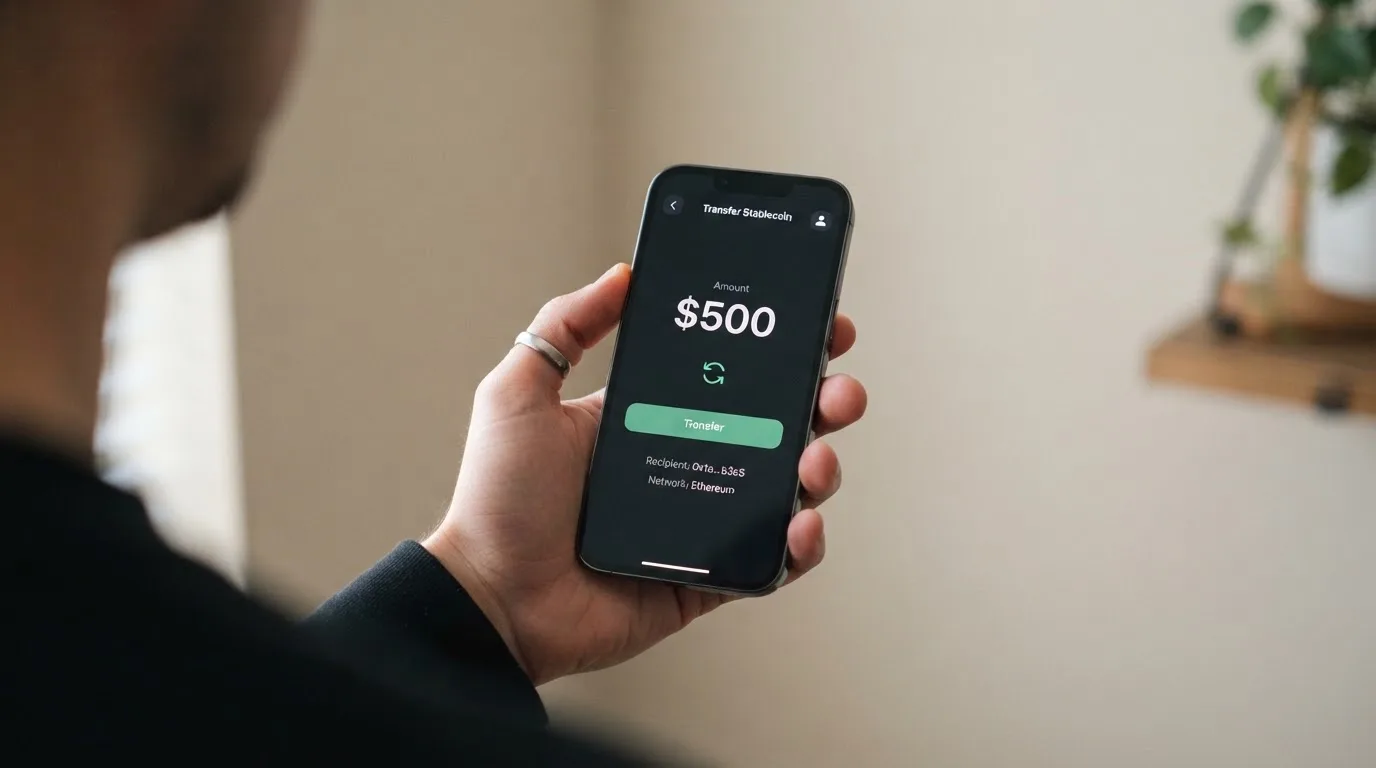
Top-up here is not “send USDT to an address”. It is a two-step, app-mediated flow: crypto becomes naira first, and the naira balance becomes card balance second.
Step one: in Monica, sell BTC, ETH, SOL, TRX, BNB, USDT or USDC for naira. Step two: load the card from that naira balance. The card then holds dollars. The networks for those coins are not itemised, which is the single most important missing detail in this section — but see below, because it is more consequential than it sounds.
The card’s own description of the flow adds: crypto sent to a Monica wallet, converted to naira at the live rate, loaded to the card, instantly; naira to bank within 60 seconds of on-chain confirmation; 0% conversion fee. The minimum top-up amount and who pays the network fee are not stated. Neither is how you get the card balance back — the App Store listing says “Move money to your bank without fees” and naira reaches the bank within 60 seconds of confirmation, but returning a card balance is not stated at all.
Here is why the missing network list is worth a paragraph of its own. Blockchain transfers are irreversible: a deposit sent on a network the provider does not support, or to an address belonging to a different network, can be lost outright or need manual support recovery with no guarantee of success. And the coin list makes this a live hazard rather than a theoretical one. USDC, for example, is natively supported on 38 networks as of 16 September 2026, including Ethereum, Solana, Base, Polygon PoS, Avalanche, Arbitrum and Stellar — so “send USDC” is not an instruction, it is thirty-eight possible wrong answers. USDT has been issued on Ethereum, Tron, Solana, Polygon, Avalanche and others. Circle stopped supporting USDC on Tron in February 2024, so “USDC over TRC20” is not a native option. There are also structural gotchas around the coins themselves: ERC-20 gas is paid only in ETH, so a wallet holding USDT and no ETH cannot send it; Tron prices fees with bandwidth and energy, often burning TRX.
My practical advice is not a workaround for anything — it is ordinary care. Ask the app, before you send, which network it wants and what it will cost. And note that the on-chain network fee for your deposit is charged by the blockchain, not by Monica.
Paying with it every day
Day to day, the card does what it says on the tin: it is a dollar Visa or Mastercard, virtual, with NFC tap-to-pay and QR, and it works where those networks work. That is the good part, and it is not nothing — paying for a subscription or a hotel in dollars without a dollar bank account is a real convenience.
What it does not do is meet you where you shop. Apple Pay and Google Pay are not supported for Monica Pay wallets. Many people now tap more often than they slide a card, and if that is you, you are looking at typing a card number into a checkout. Blocked merchant categories are not stated either, which cuts both ways: no gambling block is advertised, and no policy about restricted categories is published. Rewards are not stated at all — no cashback, no points, no rebate of any kind is claimed. If a rewards rate would change your mind, there is nothing to weigh.
The app itself deserves a mention, because it is the only part of this product with an independent rating. The App Store listing (Monica – Pay, Send, Bills) shows 4.6 from 15K ratings, read 21 October 2026. That is a decent score from a substantial number of ratings. The Google Play listing was not read, so I have no Android figure to give you.
And then the thing that keeps coming back on a day-to-day basis: currency. A USD card, funded from a naira balance, used in a country where you think in naira, is three currencies and a conversion in every transaction. The 0% applies to the crypto-to-naira step. It does not apply to the dollar-to-local step, which is the scheme operator’s spread. Everyday usability is not about tapping; it is about knowing what you are paying at the moment of payment, and this card does not tell you.
What can go wrong
I found no official incident involving Monica and no independent reviews of the virtual card itself. I want to be careful about what that absence means: it means nothing bad has surfaced in what I could check, not that nothing has happened.
Here is the list of what is genuinely not stated, which in this category is its own kind of risk:
- The card issuer is unnamed. Monica names no third-party card partner. In a prepaid-style model — crypto is converted and loaded as a balance, and the card spends only that balance, so it cannot overdraw — the issuer is the institution that holds the programme and handles refunds and disputes. Not knowing its name is not a technicality; it is the absence of the party you would contact.
- Custody model not stated. Control of crypto belongs to whoever holds the private key or seed phrase. With a custodial wallet the provider holds the credentials, and you must trust them completely. Monica’s own pages say nothing about whether your crypto sits in a wallet you control or one they do. Worth noting that custodial platforms have a real history: Mt. Gox (about US$350 million reported stolen, 2011–2014), Coincheck (about US$400 million, 2018), Ronin Network (US$625 million, 2022).
- Disputes are not addressed by the card terms. The card terms do not cover disputes at all. The general process is negotiation for 30 days, then arbitration in Lagos, under Nigerian governing law — which means a dispute over a small foreign-currency payment is a serious undertaking, not a form submission.
- Security features beyond real-time spending limits: not stated. No information on two-factor authentication, on freeze, or on how the card behaves if your phone is lost.
- Support channels, languages and hours not described. There is a support page at /get-support. What happens when you need it at 2am is unspecified.
- No ATM is described, and ATM fees are not stated.
- Trustpilot: 3.7 from 1 review (5 stars, 19 May 2026), unclaimed profile, read 21 October 2026. One review is not a track record in either direction, and there are no complaint themes to report. What it does show is that there is almost no independent public footprint.
Two structural risks sit behind all of this, and they are not Monica-specific. The first is that a card programme can end. Visa terminated its global agreements with FTX on 13 November 2022 and the FTX US debit card was wound down by its issuer; WaveCrest, a Visa issuer that supplied crypto card brands, was suspended by Visa in Europe in 2018, closing all WaveCrest-issued Visa programmes. Closures follow a pattern: a notice period, then spending and loading stop, then you are asked to withdraw remaining balances. When you hold a balance on someone else’s programme, that sequence is the risk you are actually taking, and it is why the undocumented withdrawal-back path — card balance return is not stated — bothers me more than almost anything else in this review.
The second is that the card can look foreign. A card number begins with a 6- or 8-digit issuer identification number that any merchant can look up to see which institution and which country issued it, and some merchants apply extra scrutiny when the issuer country differs from the billing address. Some simply decline prepaid or foreign cards. Address verification is mainly offered in the US, Canada and the UK and is generally unavailable for foreign-issued cards, which causes declines. Under 3-D Secure, the issuer assesses risk and either approves frictionlessly or challenges you. Also worth knowing: a declined authorisation can leave a hold on your funds that stays for several days, typically up to seven. A Nigerian-issued dollar card used on a European or American site is, structurally, a foreign card.
If you do use this card, the safeguards worth insisting on are the ordinary ones: app-based two-factor authentication, an instant card freeze, spending limits set as low as you can live with, 3-D Secure confirmation, and tokenised mobile wallets. Only the limits are advertised here.
What to take instead
Three alternatives come up repeatedly in this category, and comparing them honestly is more useful than ranking them. I have not tested any of them; the marks are the same kind of score I gave Monica.
Whop Cards — 5.2 / 10. Visa, works anywhere Visa is accepted online and in stores; virtual or physical type and card currency not stated, and cards can also be issued to team members. For consumers, 31 US states (Alabama, Alaska, Arkansas, California, Colorado, Connecticut, Florida, Hawaii, Illinois, Indiana, Iowa, Kansas, Kentucky, Maine, Massachusetts, Michigan, Minnesota, Montana, Nebraska, New Hampshire, New Jersey, New York, North Carolina, Oklahoma, Pennsylvania, South Carolina, Texas, Utah, Virginia, West Virginia, Wyoming); businesses, 41 states. Unsupported consumer countries include Belarus, China (Mainland), Cuba, Hong Kong, India, Iran, Iraq, Israel, Myanmar, Nepal, Nicaragua, North Korea, Russia, Syria, Turkey, Ukraine, Venezuela and Vietnam. The basis for eligibility — citizenship or residence — is not stated. The page says “No extra fees” with no issuance or monthly amounts listed; conversion and FX fee amounts are not stated. It spends from a Whop balance, and a pending balance is usable as soon as a payment arrives while standard withdrawals use settled funds; it is backed by stablecoin collateral from a linked wallet, with coins and networks not stated. There is 5% cashback at select merchants, currently Uber, more planned, with payout currency and conditions not stated. So: better rewards and a clearer geographic scope, and no information at all about conversion costs.
Stella — 6.5 / 10. Virtual and physical, VISA, working at “over 40 million VISA merchants globally”. Countries not stated on the official site; the terms bar users under economic sanctions programmes and route US and European users through affiliates. Fees are not stated officially — they are “described under this User Agreement and/or on the App”. Funding is the simplest model of the three: deposit crypto into the account and it automatically tops up the card, custodial in-app wallet, no conversion step to reason about. No cashback on the card page; the Earn product is separate yield. Higher score than Monica mainly because the top-up story is simpler and physical is available.
UniFi Card — 4.7 / 10. A “Prepaid Debit Visa Card” issued by Lead Bank — a named issuer, which Monica does not offer — with the app also supporting Apple Pay. Card currency USD, spending from the USD balance. Eligibility is not confirmed from official pages; the App Store lists send-money routes to the Philippines (PHP), Mexico (MXN), the eurozone (EUR), and recent release notes mention Colombia, Brazil (PIX) and UK (GBP). Fees not stated (“Fees may apply. See UniFi website for more details”), conversion and FX fees not stated. Funding via ACH, wire, SEPA (IBAN) or SPEI (CLABE), and getting paid to a USDC wallet; coins and networks beyond USDC not stated on the listing. The listing claims “3% rewards on balances”; card cashback not stated. Useful if you are in a listed corridor and want a named issuer; otherwise it is the least transparent of the four on eligibility.
| Monica Pay | Whop Cards | Stella | UniFi Card | |
|---|---|---|---|---|
| Score | 5.6 / 10 | 5.2 / 10 | 6.5 / 10 | 4.7 / 10 |
| Card | Virtual USD Visa and Mastercard | Visa, type not stated | Virtual and physical VISA | Prepaid Debit Visa, issuer Lead Bank |
| Mobile wallet | Apple Pay / Google Pay not mentioned | not stated | not stated | Apple Pay supported in app |
| Geography | Nigeria-centred, no country list | 31 US states (consumers) | not stated | routes to PH, MX, EUR, and mentions of CO, BR, UK |
| Issuance / monthly fee | Not stated; unofficial one-time $1 | “No extra fees”, amounts not listed | not stated | not stated |
| Conversion / FX | 0% conversion fee; FX spread set by scheme operator | not stated | not stated | not stated |
| Top-up | Sell BTC, ETH, SOL, TRX, BNB, USDT, USDC for naira, load from naira balance | Whop balance, stablecoin-collateral backed | Deposit crypto, card tops up automatically | ACH, wire, SEPA, SPEI; paid to USDC wallet |
| Rewards | not stated | 5% cashback at select merchants, currently Uber | none on card page | “3% rewards on balances” claimed |
| Issuer named | No, third-party partner unnamed | not stated | not stated | Yes, Lead Bank |
One comparison note that is easy to miss: none of these four publishes a conversion rate or an FX spread. If the rate you get is the thing you care about, no amount of feature comparison will give it to you — only a small test transaction will.
Who I would recommend it to
I would recommend Monica Pay to a Nigerian resident who: already holds crypto and naira, wants a dollar card more than they want a bank, is comfortable doing verification in an app, and — this is the important one — is willing to treat the card as a convenience spending tool rather than a place to hold a balance. Someone whose main irritation is a foreign-currency charge at checkout will like the 0% conversion line. Someone whose main fear is undocumented issuer risk will not, and I would not push them.
I would point someone else elsewhere. If you need a physical card, look at Stella. If you need a named issuer, UniFi names Lead Bank. If you are in a US state and want cashback, Whop publishes a 5% rate at select merchants. If you are outside Nigeria and outside the US with no idea whether you are eligible, none of these four will tell you clearly enough, and that is worth knowing before you download anything.
And if you are simply deciding whether this card is worth it, my answer is: worth a trial with an amount you would not mind losing, not worth building a money routine on. The product underneath is coherent and the fee structure is genuinely attractive. What is missing is disclosure — issuer, custody model, networks, dispute process, limits in numbers, support hours — and disclosure is what you are actually relying on when you load a balance onto a card issued by somebody who will not say who they are.
Frequently asked questions
What is Monica Pay card?
It is a virtual dollar debit card issued on the Visa and Mastercard networks, offered by Monica Technologies Limited, a company based in Lagos, Nigeria. You fund it by selling crypto in the Monica app for naira, then loading the card from your naira balance, and it holds and spends US dollars. It is virtual only — no physical card is delivered — and it supports NFC tap-to-pay and QR. Monica states “0% conversion fees” on the crypto-to-naira and funding steps.
Is Monica Pay a bank?
Not on the public evidence. Monica is a crypto platform company, and the card itself is issued by an unnamed third-party card partner, which is the usual structure in this category: the crypto brand markets and manages the programme, while a licensed institution holds the card account. Monica’s site claims alignment with the SEC VASP framework and compliance with NDPA 2023 and NIFIU requirements, as claimed on its site. That is not the same thing as a banking licence, and you should not treat your balance as a bank deposit.
Who can get the Monica Pay card?
The page is Nigeria-centred — Lagos, an “EN-NG” marker, payouts in NGN — and no country list is published, so outside Nigeria you cannot tell from the page whether you qualify. Only “eligible verified Users” may apply. The terms bar use from any jurisdiction where crypto-asset services are unlawful. The card works wherever Visa or Mastercard is accepted, but that describes acceptance, not eligibility, and the two are easily confused.
How much does the Monica Pay card cost?
Monica’s own pages state one fee: “0% conversion fees” on selling crypto for naira and funding the card. Everything else is not stated — issuance, monthly fee, ATM, and the actual FX spread at the point of sale. A third-party app listing page from 2026 mentions a one-time, non-refundable $1 fee to unlock the virtual USD card; that is unofficial and not confirmed by Monica. The FX spread is set by the scheme operator, and Monica says it does not retain it.
How do I top up the Monica Pay card?
You sell BTC, ETH, SOL, TRX, BNB, USDT or USDC for naira inside the Monica app, then load the card from that naira balance; the card holds dollars. Monica describes sending crypto to a Monica wallet, converting at the live rate and loading instantly, with naira reaching your bank within 60 seconds of on-chain confirmation. The networks are not itemised, which matters because transfers are irreversible — check in-app which network it expects before sending. The minimum amount and who pays the network fee are not stated.
Is the Monica Pay card safe?
Safety here splits into two halves. On the crypto side, custody is not stated, so you do not know from the page whether the keys are yours. Control of crypto belongs to whoever holds the private key, and with a custodial provider you must trust them completely. On the card side, the one advertised safeguard is spending limits you can change in real time; two-factor authentication, instant freeze and anything beyond that are not described. There are no published reviews of the card itself, and the issuer is unnamed.
Can I add the Monica Pay card to Apple Wallet or Google Pay?
Apple Pay and Google Pay are not supported for Monica Pay, so you should plan on using the card number rather than a tokenised mobile wallet. That means typing card details at checkout rather than tapping a phone. For comparison, the UniFi app does support Apple Pay. If tapping is how you pay, this is one of the bigger practical gaps on this card.
What should I do if a Monica Pay payment is declined or disputed?
First, know that a declined authorisation can leave a hold on your funds for several days, typically up to seven — a decline is not necessarily a lost payment, sometimes it is a frozen one. Second, be realistic about disputes: the card terms do not address them at all, and the general process is 30 days of negotiation, then arbitration in Lagos under Nigerian governing law. Note also that transactions outside Nigeria may be subject to “additional regulatory limits” whose size is not published.
Is Monica Pay worth it compared with Whop, Stella or UniFi?
Only for a specific profile. Monica scores 5.6, Stella 6.5, Whop 5.2, UniFi 4.7. Monica leads on the fee promise and on letting you sell crypto for naira in the same app; Stella wins on simplicity of top-up and physical cards; UniFi names its issuer, Lead Bank; Whop publishes a 5% cashback rate at select merchants. Crucially, none of the four publishes a conversion rate or FX spread, so the rate you actually get is only knowable by trying.
How do I withdraw money or delete my Monica Pay account?
On withdrawals, the App Store listing says “Move money to your bank without fees” and that naira reaches your bank within 60 seconds of on-chain confirmation. What is not stated is how you get a card balance back, or what happens to funds still sitting on the card. Support is available through a support page in the app, but channels, languages and hours are not described — so before you load money, work out for yourself how you would get it back, because on this card that answer is not published.
App and neobank cards: the entry point – cryptocardportal.com
Content created by the «cryptocardportal.com» team