
A USD Visa card you fund with USDT — decent everyday numbers, but a Hong Kong company that is not a bank
 Available in US
The Fizen card is a USD Visa prepaid card that you fund with USDT and then spend like any other payment card, in shops, online and at a cash machine. That is the whole idea, and it works well enough for the person it was built for: someone who already holds dollars in a stablecoin and wants those dollars to be usable at a checkout without a week of banking admin first. The numbers are respectable — a $9.99 opening fee, no annual charge if you spend $500 in the month, a 1% foreign-exchange fee — and the virtual card arrives quickly. What sits underneath is less tidy. The company behind it, Fizen Limited, is registered in Hong Kong and states plainly in its own terms that it is not a bank, not an e-money institution and not a licensed payment institution. The name of the institution that actually issues the Visa sits in a document I did not read. That is the first thing you should hold on to as you read the rest: this is a real card with real fees attached, issued through a structure that keeps one important piece hidden behind a click.
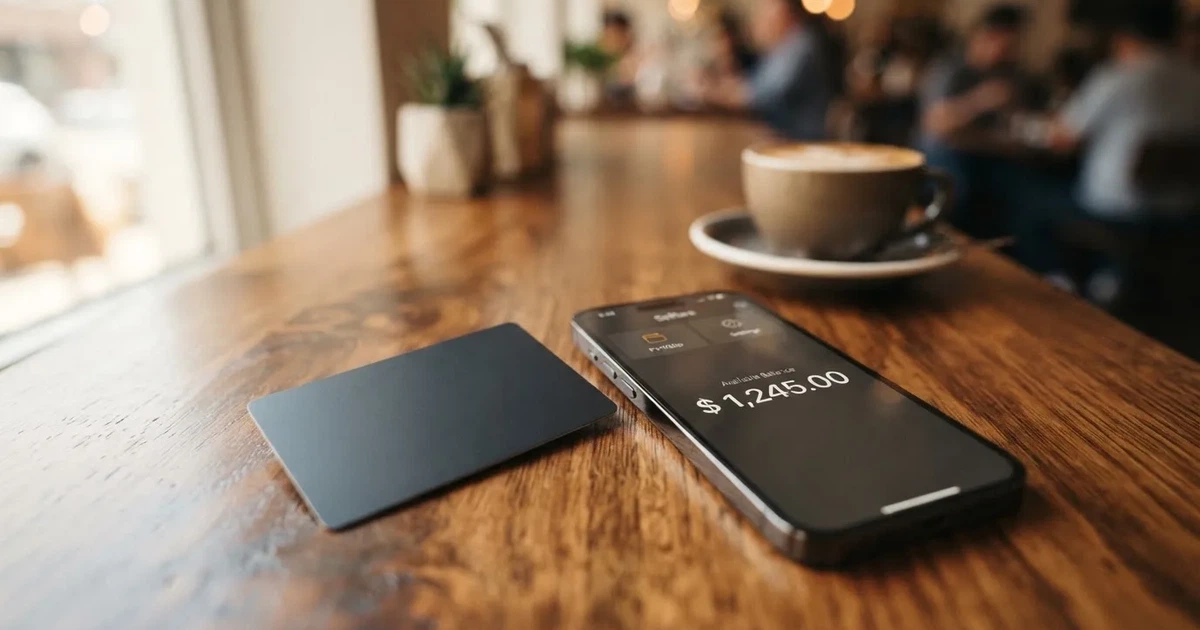
I gave it 6.4 out of 10. Not a warning, not an endorsement — a working card with an unusually clear fee table, wrapped in a corporate structure that leaves more questions than a bank would.
The conditions described here are current as of October 28, 2026.
Score
| Criterion | Mark | Why |
|---|---|---|
| Who can get it | 8 / 10 | Not available in 43 countries including the Russian Federation, Belarus, Serbia, India, China (Mainland), Croatia, Slovenia, Montenegro, North Macedonia, Bosnia and Herzegovina, Iran, Ukraine, Venezuela and others; use claimed in 160+ countries |
| Cost | 6 / 10 | Adventure issuance $9.99; servicing $0 with $500 of spending, otherwise $1.50; FX 1%, crypto conversion 0.5%, card closure $2.00; ATM $2 + 1.5% |
| Top-up options | 6 / 10 | USDT to a Fizen-controlled wallet; QR Pay funded only with USDT on Solana or BNB Chain; fiat through Transak |
| Reliability and complaints | 6 / 10 | Fizen Limited, Hong Kong, not a bank or payment institution, issuer unnamed in the text, Tether investment from 30 July 2026; Trustpilot 4.1 out of 5 |
| Everyday use | 5 / 10 | Virtual Visa straight away, Apple Pay and Google Pay; metal still “Coming soon”; ATM with a physical card: first withdrawal up to $200 a month free |
Total: 6.4 / 10
The 8 out of 10 for eligibility is not generosity — it is arithmetic against the alternatives. Most cards in this category are one country’s answer to one country’s problem. Fizen refuses 43 named countries and claims use in more than 160, so if you are outside the excluded list the door is probably open. The 5 out of 10 for everyday use is where the friction sits: no metal card today, the physical-card cash machine benefits are written for a card you cannot yet hold, and the rewards rates are either unstated or attached to tiers that do not exist yet.
If you are funding a USD virtual card with USDT, this is built for exactly that and the numbers line up. If you want a bank account feel — a named issuer, deposit-guarantee-style assurance, an ATM on every street — you will not find it here, and no marketing line will change that.
Who They Will Give You the Card To
The country list itself is not stated. The card page says the card is used in “160+ countries”, and that is where the public information stops. There is no published supported-country list on the page to check against.
What there is, on the official side, is a solid block of 43 countries where the card is not available: the Russian Federation, Belarus, Serbia, India, China (Mainland), Croatia, Slovenia, Montenegro, North Macedonia, Bosnia and Herzegovina, Iran, Ukraine, Venezuela and others. Notably, Georgia, Turkey, Kazakhstan, Armenia and the UAE are not on that exclusion list — but since no supported list is published, being absent from the block is not the same as being confirmed welcome. I cannot tell you from these pages that they are supported; I can only tell you they are not on the named blocklist.
Then there are the terms, and they are stricter than the country page suggests. The terms say users cannot be citizens, residents or located in any jurisdiction where the service is prohibited or under comprehensive sanctions. Three separate hooks — citizenship, residence, physical location — and the check is not only at sign-up.
The exception that catches my eye: the card’s own wording says that if you are a citizen of a restricted country but currently live in a supported country, you may still be eligible. I did not read the exceptions page in full, so treat that as a signpost rather than a route. If your citizenship is on the block and your address is not, that is exactly the situation the exceptions page exists for, and it is where you should look first.
The practical takeaway: the exclusions are public, the inclusions are not. If your country is anywhere near the blocklist, check before you download anything, because the terms also say eligibility is rechecked on an ongoing basis — you can be accepted and stopped later.
How to Get It
The application runs through the app: wallet first, then card. The card page carries a sign-up link, and the app is a “Fizen Super App” on iOS and Android, downloadable from fizen.io/download.
Documents are not stated. The terms say that some services require KYC “at the level each Service requires”, and that eligibility is checked at onboarding and on an ongoing basis — looking at KYC, IP, device and location. Age is not stated either. In practice, expect a regulated-looking onboarding flow: the terms themselves compare the one-time setup verification to “any regulated payment app”, and note that verification happens once at setup.
The card you get depends on the tier. Adventure is virtual — that is the one open for purchase now, and the one you get quickly. Pioneer and Frontier are physical metal cards, both marked “Coming soon”. The network is Visa, and the card terms are titled “USD Visa Prepaid Card”. The card currency is not stated on the card page; the terms say the issuer is a regulated institution “under licence from Visa”.
The one number worth writing down: your virtual card arrives quickly. Everything about the metal cards — which countries, how long delivery takes, what it costs, what a replacement costs — is not stated. Do not plan around the metal version.
Fees: What It Really Costs
The fee table is the strongest thing about this card. It is published, itemised, and mostly small. Here is what is there:

| Fee or limit | Amount |
|---|---|
| Virtual card issuance | $9.99 (free for pre-registered users) |
| Monthly maintenance | $0 if spending ≥ $500 in the month; $1.50 if under (first month free) |
| Foreign-exchange fee on non-USD payments | 1% (0% on USD payments) |
| Crypto-to-fiat conversion | 0.5% standard; the Adventure card page advertises “0 crypto-to-fiat conversion fees” and “0 top-up fees within plan limits” |
| Small transaction fee (under $50) | $0.50 |
| Card closure | $2.00 |
| ATM withdrawal (physical card) | $2 + 1.5%; first withdrawal up to $200 per month free |
| Per transaction | $150,000 |
| Daily spending | $1,000,000 |
| Monthly spending | $1,000,000 |
| ATM limits | $100,000/day, $200,000/month, 3 per day, 30 per month |
One wrinkle worth flagging, because it will confuse you if you read the pages out of order. The card page advertises “0 crypto-to-fiat conversion fees” for Adventure, while the documentation table lists 0.5% as the standard rate. Some fees are waived by card benefits. Read the two together: the headline zero applies to the Adventure tier within its plan limits; 0.5% is the number to assume otherwise.
Monthly and annual fees are not stated beyond the $0/$1.50 servicing line. Spending limits are stated as above. A “free ATM withdrawal quota” is advertised for Adventure, but its size and the fee beyond it are not stated in that phrasing — the official table’s $2 + 1.5% with a free first withdrawal up to $200 per month is the concrete version.
Let me run three ordinary payments through it, because that is where fees stop being abstract.
A $60 subscription in USD. USD, so the FX fee is 0%. If the balance is already in USD, no conversion fee. If it is funded from USDT, the 0.5% conversion applies unless the Adventure waiver covers it. Above the $50 small-transaction threshold, so no $0.50 charge. All in: the $9.99 you already paid to open, and possibly half a percent if you are converting as you go.
A €40 dinner in Europe. Non-USD, so 1% FX — that is €0.40 on €40, charged as part of the payment. Above the $50 line in dollar terms? Depends on the day’s rate; the fee is defined on transactions under $50, so a €40 purchase that converts to under $50 could also pick up the $0.50. Two small charges on a small bill, and both are avoidable by paying in dollars where the terminal offers it.
A $200 cash withdrawal. This is the one that needs the physical card — the ATM terms are written for the Pioneer/Frontier metal card, which is still “Coming soon”. If you had that card today, the first $200 each month would be free, and anything beyond would be $2 plus 1.5%, which on $200 is $5. The ATM limits are large, but the free allowance is monthly, not per withdrawal.
The pattern to take away: small everyday payments cost you nothing meaningful if you spend in dollars from a funded balance. The real fees are the ones that appear when you convert crypto, when you pay in a foreign currency, or when you use a cash machine. Those are the three to watch.
How to Top It Up
You fund the card by transferring USDT to a Fizen-controlled wallet — the card draws on that balance rather than on a bank account of yours. That is the mechanism, and it is worth understanding plainly: the balance sits under Fizen’s control, not yours. (I come back to what that means in the risks section below.)
Fiat works the other way round, through third parties. The terms name Transak for the on-ramp and off-ramp — buying crypto with ordinary money, and turning it back. The terms also say the fee schedule shows no top-up fee line, while the card page advertises “0 top-up fees within plan limits”. The standard crypto-to-fiat conversion rate of 0.5% is the number to hold in mind. The minimum top-up is not stated. Network fees go to the validators, not to Fizen — on-chain gas is the blockchain’s charge, charged by the network for your transfer.
QR Pay is the separate rail, and it has a rule that catches people out: it is funded only with USDT on the Solana or BNB Chain networks. Other networks or other tokens may be permanently lost. That is stated plainly, and it is the kind of sentence that saves money if you read it before transferring rather than after.
Withdrawal needs its own paragraph. Closing the card costs $2.00. QR Pay balance can be discharged through withdrawal where available, and Fizen says it will provide a reasonable method for that — but that method may require identity verification, proof of source of funds, or a verified destination address. QR Pay balance will not be forfeited solely because access is suspended or terminated, and wallet assets stay on-chain after you stop using the platform. Card balance withdrawal terms sit in the card terms and issuer agreement, which I did not read.
The plain summary: USDT in, spend from a USD balance, cash out via third parties or withdrawal, and keep the network right for QR Pay or lose the money.
Paying With It Every Day
The virtual card is a Visa, so it works wherever Visa is accepted, online and in stores. Apple Pay and Google Pay logos are shown — the standard way people actually use a card like this, and the reason the tokenised number matters more than the plastic ever will.
QR Scan-to-Pay works in countries including Brazil, Argentina, Peru, Vietnam and the Philippines. That is a genuinely useful spread for anyone whose problem is not having a card that works in their own country.
Rewards. Adventure gives discounts and cashback on eSIMs, hotels and flights, “FiPoint cashback” at a rate that is not stated, a 5% APR bonus on the USDT Vault, and 0 trading fee on US stocks and ETFs for the first $5,000. Pioneer, at $999.99 and “coming soon”, adds a physical metal card, 10% APR bonus, higher FiPoint cashback and VIP support. Frontier, at $9999, goes to 20% APR and 100+ card skins also “coming soon”. A blog promo advertises “up to 10% cashback + FiPoints on every spend” with terms applying, and there was a $10 eSIM credit offer on 19 August 2026. Read those rates as marketing ceilings on tiers you cannot buy yet, not as income.
App ratings are not available. App Store and Google Play ratings were not found, so I cannot give you a number for how people rate the app day to day. One user on Trustpilot describes it as “a bit buggy” sometimes — a single comment, not a pattern.
If something goes wrong with a payment. The terms give a Notice of Dispute route to [email protected], a 60-day good-faith resolution window, then SIAC arbitration in Singapore, with class actions waived and claims limited to one year. Blockchain transactions are generally irreversible, though Fizen may reverse them “where technically possible”. QR Pay refunds follow the separate QR Pay terms. Chargebacks are not addressed in the master terms — that is a real gap, and the card terms and FAQ pages that might cover it I did not read.
Merchant-category blocks are not stated. The terms do prohibit using the card for illegal gambling and other illegal activity, and in this category that kind of block is often issuer policy rather than law anyway, so expect some merchant categories to decline you regardless.
What Can Go Wrong
Four risks, roughly in order of how much they should occupy your attention.
Who holds your money. The terms describe custody by product. The Fizen Wallet and Swap are non-custodial: the private key is generated on your device, encrypted locally, and Fizen cannot recover it for you. The Fizen Card is different — it is a custodial balance, with assets pooled on Fizen’s internal ledger. QR Pay is different again: ownership of accepted assets passes to Fizen, and that balance is not segregated. So within one app you have three different custody models, and only one of them keeps the key in your hand. That is worth sitting with. Self-custody means you bear the full risk of key loss, phishing and clipboard malware that swaps addresses; custody means you are trusting an institution that describes itself as not a bank, not an e-money institution and not a licensed payment institution. Card insurance is not stated. A freeze and controls page exists in the app; I did not read it.
Transfers that cannot be undone. Crypto transfers are typically irreversible, and a stolen key has no recovery path — the network cannot freeze or return funds. The QR Pay network rule is the sharpest edge: wrong network or wrong token may mean permanently lost. And stablecoins are not censorship-proof either — Tether says it disables tokens in wallets on the OFAC sanctions list and has frozen funds tied to illicit activity. The wider category has a history here: custodial platforms have failed before, at Mt. Gox, Coincheck and Ronin Network, and stablecoins themselves have depegged, TerraUSD in May 2022 and USDC briefly in March 2023.
The company and the missing issuer. Fizen Limited is in Hong Kong (company number 77059696, Unit 1411, 14/F, Cosco Tower, Queen’s Road Central). It is backed by Tether per its site — Tether announced a strategic investment on 30 July 2026, amount undisclosed. The name of the Visa issuer appears only in the issuer cardholder agreement, which I did not read. The master terms took effect on 5 June 2026, with material changes taking effect 30 days after notice. And Visa itself does not issue consumer crypto cards; it licenses issuers and can suspend a programme — it terminated FTX’s global agreements in November 2022, and WaveCrest’s programmes were closed in 2018. Programme closures follow a pattern: notice, then spending and loading stop, then you are asked to withdraw.
Complaints and support. Trustpilot shows 4.1 out of 5. All five visible reviews are five-star, dated 21 April to 3 June 2026, and the company replied to each. No Reddit threads or card-specific complaints surfaced in the search, which is not the same as none existing. Trustpilot does flag that the company “may be associated with high-risk investments” — a generic platform label, not a finding about Fizen. Support is in-app live chat, plus [email protected], Discord and [email protected] for notices; the card page claims 24/7 support, with priority and VIP support on higher tiers.
Identity checks. If you are ever asked for verification, note the timeline in the terms: report unauthorised access to [email protected] within 72 hours. Two-factor authentication must be enabled where offered. I will not walk you around identity checks or country rules — if a document request arrives, answer it honestly and read what you are signing.
Taxes. A final thing that surprises people. The IRS treats digital assets as property, so exchanging them for goods, services or dollars generally produces a taxable gain or loss, measured in local currency at fair market value on the transaction date. Each card payment funded from crypto can be a separate disposal. I am not giving tax advice — I am telling you it exists and that nobody’s fee table will mention it.
What to Take Instead
I looked at three alternatives in the same category. None of them is dramatically better; they are differently shaped, and the shape matters more than the score.
| Alternative | Score | Card | Cost stated | Funding |
|---|---|---|---|---|
| Whop Cards | 5.2 / 10 | Visa, type and currency not stated | “No extra fees”; no amounts listed | Whop balance; stablecoin collateral from a linked wallet |
| Stella | 6.5 / 10 | Virtual and physical Visa | Not stated | Deposit crypto into the account, which auto-tops-up the card |
| UniFi Card | 4.7 / 10 | Prepaid Debit Visa, issued by Lead Bank | Not stated (“Fees may apply”) | ACH, wire, SEPA (IBAN), SPEI (CLABE); paid to a USDC wallet |
Stella scores highest of the three, 6.5 — level with Fizen’s weaker areas. It has virtual and physical cards and works at “over 40 million VISA merchants globally”, which is Visa’s own claim. Deposit crypto and the card tops up automatically, custodial, via an in-app wallet. Countries are not stated on its site; the terms bar users under economic sanctions programmes and route US and European users through affiliates. No cashback is stated on the card page — the Earn product is a separate yield. If you want a physical card now, or if US/EU routing matters to you, Stella is the one to compare seriously.
Whop Cards is the narrowest. Consumers in 31 US states, businesses in 41 — Alabama to Wyoming on the consumer list, and a named unsupported-country list that includes Belarus, China (Mainland), Cuba, Hong Kong, India, Iran, Iraq, Israel, Myanmar, Nepal, Nicaragua, North Korea, Russia, Syria, Turkey, Ukraine, Venezuela and Vietnam. Unsupported corporate countries include Russia and Belarus. 5% cashback at select merchants, currently Uber. “No extra fees” with no amounts listed is a claim, not a schedule. If you are in the US and want a stablecoin-collateral balance with a familiar merchant rebate, it is worth a look; outside it, the geography closes the question.
UniFi Card is the one that names its issuer, Lead Bank, which is a point in its favour on the exact problem Fizen leaves open. But it scores lowest at 4.7, its fees are not stated beyond “fees may apply”, and it is built around US rails — ACH, wire, SEPA, SPEI — plus a USDC wallet. A listing claims 3% rewards on balances, not on card spend. Send-money routes are listed to the Philippines, Mexico and the eurozone, with release notes mentioning Colombia, Brazil and the UK. For someone who wants a named bank behind the card and lives in the US plumbing, that is a coherent proposition; for USDT on a phone, it is not.
Fizen’s own advantage against all three is the combination that USD virtual card funded with USDT offers, with the widest stated country usage of the group. Its disadvantage is the same everywhere — the issuer is unnamed on the pages I read, and the entity you are contracting with says it is not a bank.
Who I Would Recommend It To
Three groups, in descending order of confidence.
Someone already holding USDT who needs a USD Visa virtual card today. This is the designed-for case and the numbers serve it. $9.99 to open, five minutes to a working virtual card, no annual fee if you spend $500, no FX fee when you pay in dollars, no conversion fee within the Adventure plan limits. Apple Pay and Google Pay are there for daily use. If your money is already in a stablecoin, converting to dollars through a bank you cannot open an account with is the problem this card solves, and it solves it today rather than eventually.
Someone in a country on the 160+ usage list who wants QR Pay in Brazil, Argentina, Peru, Vietnam or the Philippines. That is a real, specific reach that the alternatives in this comparison do not offer.
Someone who has read this and is still uneasy about a Hong Kong company that is not a bank holding their balance. For you, honestly, this is the wrong card — or at least, not yet. The issuer is named only in a document I did not read. The card balance is custodial and pooled on Fizen’s internal ledger. Insurance is not stated. For that reader, a named issuer (as UniFi shows) or a bank you already hold an account with is worth more than 1% FX or a cashback rate.
And what I would tell every reader, which is not advice so much as a habit: keep the balance on the card small enough that losing access to it would be an inconvenience rather than a crisis. That single habit neutralises most of what I have worried about above.
Frequently asked questions
What is Fizen card?
Fizen is a USD Visa prepaid card that draws on a balance you fund with USDT. You transfer stablecoin to a Fizen-controlled wallet, and the card spends from that stored balance like an ordinary Visa — online, in shops and through Apple Pay or Google Pay. It is a prepaid model, not a bank account: there is no credit, no overdraft, and no bank behind the balance.
Is Fizen a bank?
No, and the company says so itself. Fizen Limited is registered in Hong Kong and its terms state it is not a bank, not an e-money institution and not a licensed payment institution. The institution that issues the Visa is named only in the issuer cardholder agreement. Backed by Tether, which announced a strategic investment on 30 July 2026.
Who can get the Fizen card?
It is not available in 43 named countries, including the Russian Federation, Belarus, Serbia, India, China (Mainland), Iran, Ukraine and Venezuela, among others. The card page claims use in 160+ countries but publishes no supported list, so there is no way to confirm your country from the page. Terms bar citizens, residents and located users of sanctioned jurisdictions.
Does the Fizen card require KYC?
The terms say KYC is required at the level each service requires, verified once at setup, and that eligibility is rechecked on an ongoing basis using KYC, IP, device and location. The specific documents, the verification levels and the rejection reasons are not stated on the public pages. Expect a standard regulated-app onboarding flow.
How much does the Fizen card cost?
Adventure, the only tier open now, costs $9.99 to issue. Servicing is $0 if you spend $500 or more in the month, otherwise $1.50, with the first month free. Then: 1% FX on non-USD payments, 0.5% standard crypto-to-fiat conversion, $0.50 on transactions under $50, $2.00 to close the card, and $2 plus 1.5% at the ATM.
How do I top up the Fizen card?
You send USDT to a Fizen-controlled wallet and the card spends from that balance. For fiat, the terms route buying and selling through third parties such as Transak. QR Pay is the exception: it is funded only with USDT on the Solana or BNB Chain networks, and the terms warn that other networks or tokens may be permanently lost.
Is the Fizen card safe?
It depends which part you mean. The wallet and swap features are non-custodial — your key is generated on your device. The card balance is custodial and pooled on Fizen’s internal ledger, and QR Pay assets pass to Fizen and are not segregated. The entity holding that balance is not a bank. Insurance is not stated. Keep the balance small.
Is the Fizen card free?
Not quite. Issuance is $9.99, though free for pre-registered users. Monthly servicing is free only if you spend at least $500, and $1.50 below that. The card page advertises zero conversion and zero top-up fees within plan limits, but the documentation table lists 0.5% as the standard conversion rate.
Can I add the Fizen card to Apple Wallet?
Apple Pay and Google Pay logos appear on the card’s own pages, so mobile wallet support is offered for the virtual card. The wallet logos do not replace the card details, but there are no restrictions published that would keep the virtual Visa out of a phone wallet.
Is the Fizen card worth it?
Worth it if you already hold USDT, need a USD Visa virtual card today, and spend mostly in dollars — the fees then approach zero. Not worth it if you want a named bank behind the card, a physical card in your hand today, or the reassurance of a regulated deposit. At 6.4 out of 10, it is a competent tool with a soft institutional foundation.
App and neobank cards: the entry point – cryptocardportal.com
Content created by the «cryptocardportal.com» team