
Ezzocard Review: A Prepaid Virtual Card With More Questions Than Answers
 Available in US
If you have ever tried to open an ordinary bank account — or apply for a normal debit card — and run into a wall of paperwork, country restrictions or a verification process that never ends, then a card like Ezzocard will appeal to you. It is presented as a prepaid virtual card that you can pay for with cryptocurrency, without the usual bank-style identity checks. On paper that sounds like the answer to a real problem.
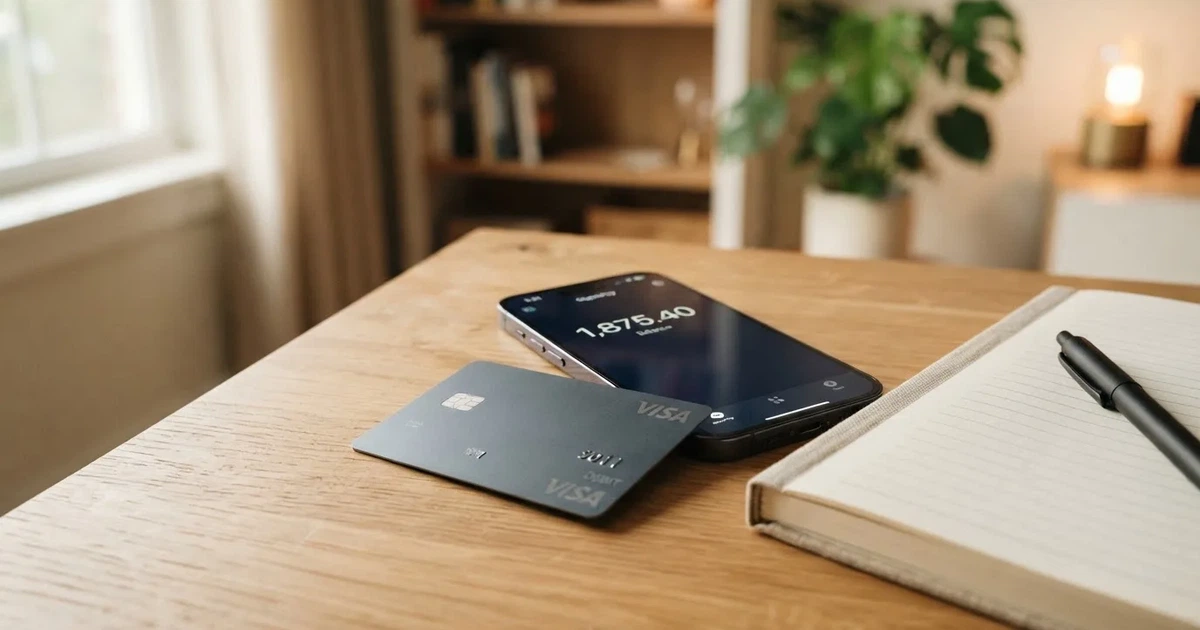
I went through Ezzocard’s own pages, its public descriptions and the complaints and reviews people have left about it, so you do not have to. What I found is a card with a real use case attached to a set of gaps you should know about before you pay anyone: most of its prices and fees are simply not published, the company behind it is not clearly identified, and its customer feedback is poor in a way that raises real questions about money you already spent. My score for it is 5.3 out of 10 — a card I would not put large amounts of money through without checking things first.
The conditions described here are current as of October 28, 2026.
Verdict: who this card is for, and who it is not
Ezzocard sits in the middle of the crypto-card market, and the middle is where it stays. Its own audience note describes it plainly: a card for one-off online payments made from a prepaid virtual card. That is a legitimate need. If you want to pay for a subscription, a software tool or a one-time purchase where a normal card is refused or awkward, a virtual prepaid card funded with crypto can genuinely help. If you want a card to live on — for a salary, a rent payment, a weekly shop — this is not the card.
The score of 5.3 out of 10 comes from six separate criteria, each marked on its own merits:
| Criterion | Score | Why |
|---|---|---|
| Who can get it | 8 / 10 | The main page does not read cleanly; a search summary says cards can be bought “from anywhere in the world” |
| Cost | 5 / 10 | Issuance and fees are not disclosed; the site served an empty page |
| Top-up options | 7 / 10 | Crypto at checkout: Bitcoin, Ethereum, USDT, Dogecoin, Litecoin, Tron, Solana, BNB; prepaid, not reloadable; networks not named |
| Reliability and complaints | 2 / 10 | Owner, registration and issuer not found; Trustpilot 2.5 from 368 reviews: payment without a card, declined cards, site down, domain copies in 2025 |
| Everyday use | 4 / 10 | Virtual prepaid Visa or Mastercard, single-use and reloadable per a third-party summary; Apple Pay, Google Pay and ATM not disclosed |
| Total | 5.3 / 10 | — |
Two things stand out in that table, and they matter more than the average. The high mark for access is not really a triumph — it mostly reflects that Ezzocard does not put the usual barriers in your way, which is exactly what it promises. The low mark for reliability, 2 out of 10, is the one that should give you pause. It is not a rounding error against a good product; it is the score of a card whose users, in numbers large enough to matter, report losing access to money.
Let me be fair to the card before I go further. The problem it sets out to solve is real. Plenty of people, in plenty of countries, cannot get a standard bank card — for reasons of residency, documentation, immigration status, or simply because their country’s banking system has no interest in them. A prepaid virtual card that accepts crypto and asks for no documents at registration fills a genuine gap. Ezzocard is not pretending to be a bank or a full financial service. It is a way to turn crypto into a card number that a website will accept.
Where it falls down is everything around that core function. If the card does not arrive after you pay for it, if the site is down when you go to load it, if the money does not come back when you ask — those are not small annoyances. They are the difference between a tool and a risk.
Who can get an Ezzocard card
The site does not publish a clear eligibility list. What can be read says cards can be bought “from anywhere in the world”, and there is no country list or exclusions section I could find on the pages that load. So on paper, almost anyone can try. Whether that means you can complete a purchase depends on things the card does not explain.
There are a few practical realities worth knowing. Ezzocard is aimed at users outside the traditional banking system, and a card that asks for no documents is not unusual in that world. But “no documents at registration” is not the same as “no restrictions ever.” Regulated providers are required to identify customers and screen them against sanctions lists as part of anti-money-laundering law, and the identity rules they end up applying can be stricter than the sign-up page suggests. One Trustpilot reviewer, in September 2025, reports that ID verification blocked their use of a card — so the card was obtainable, and then became unusable once a check appeared.
The verification levels are not stated anywhere I could read. There is no published tier system, no explanation of when a light check becomes a full one, and no stated minimum age. That absence matters, because the amount you can move through a card and the way you are checked often go together: lighter checks usually mean lower limits, and higher limits usually mean more questions.
So who is it actually for? In practice, it looks like the card is for someone who already holds crypto, wants to spend a defined amount online, and does not expect — or cannot obtain — a normal bank card. It suits a person paying for something specific today. It does not suit a person who needs a durable everyday payment method with a real support desk behind it.
How to get an Ezzocard card
It is a virtual card, so there is nothing to be delivered to your door. You buy it online, and the card details appear in your account for you to enter into payment forms. That is the entire physical story — there is no postal delivery, no waiting, no card in a letter.
The card works on sites that accept Mastercard or Visa prepaid cards. According to a third-party summary, there are single-use options and reloadable options. The currency of the card is not stated.
Getting one is nominally simple: register, pay, and use the card details. The site says no verification is needed at card registration — no ID, no other documents. That is the promise that draws people in, and I understand the appeal. It is also where the risk concentrates, because a purchase that goes wrong has fewer human steps behind it. Reviewers describe the pattern repeatedly: a reviewer reported a card that had not arrived 1.5 days after payment (March 2023). Others, more recently, report paying and simply not receiving a usable card.
Nothing on the site tells you what to do if that happens — no support number, no published dispute process, no stated refund timeline. When money is involved and the company has not said how it handles failure, the burden falls on you.
Fees and costs: what you are actually paying
This is the part I find hardest to write, because the honest answer is: most of it is not published. Ezzocard does not state its issuance fee, its fees, its ATM terms, its limits, its tiers, or the currency of the card. The pricing page simply did not render — the site served an empty page on more than one attempt. That is a poor first impression and a real problem for anyone trying to work out whether a card is worth paying for.

Here is the cost picture as far as it can be reconstructed from what has been said publicly:
| Item | What Ezzocard states |
|---|---|
| Issuance fee | not stated |
| Monthly fee | not stated |
| Conversion fee (crypto to fiat) | not stated |
| Foreign exchange fee | not stated |
| ATM withdrawal | not stated |
| Daily limits | not stated |
| Monthly limits | not stated |
| Tiers or plans | not stated |
| Card currency | not stated |
The one public hint about money attached to a card is a reviewer’s mention of a “$25 CAD” card (June 2026) — a single user’s account, not a published price, and not something to plan around.
Compare that with what the category normally looks like. OkiCard, for example, publishes a starting price of $15 for its virtual card, a 3% load fee, and 0% transaction fee on USD purchases. TakeCard lists USD 5 for the virtual card, 1% commission per purchase, and a monthly fee that is simply absent. These are not endorsements of those cards; they are examples of what a fee table looks like when a provider publishes one.
So what does it mean for you, practically? It means you cannot compute your cost per payment before you start. You do not know what conversion spread will apply when crypto is turned into balance. You do not know what a foreign-currency purchase will cost. You do not know the daily ceiling. Every one of those is a number you would normally see before committing, and every one of them is missing here.
If you still want to work out your own position, the fair method is to look at the checkout screen itself before you pay — what the card costs, what the network is charged, and whether any fee appears at the next step — and to treat anything not shown there as unknown rather than zero. One further cost sits outside the provider entirely: on-chain network fees for a deposit are charged by the blockchain, not by the card company, so a transfer can cost more than the card.
Top up: how the money gets onto the card
Here the picture is a little more concrete, and a little more restrictive than you might expect. Crypto is accepted at the checkout when you buy the card: Bitcoin, Ethereum, USDT, Dogecoin, Litecoin, Tron, Solana and BNB are all named. That is a decent spread of assets.
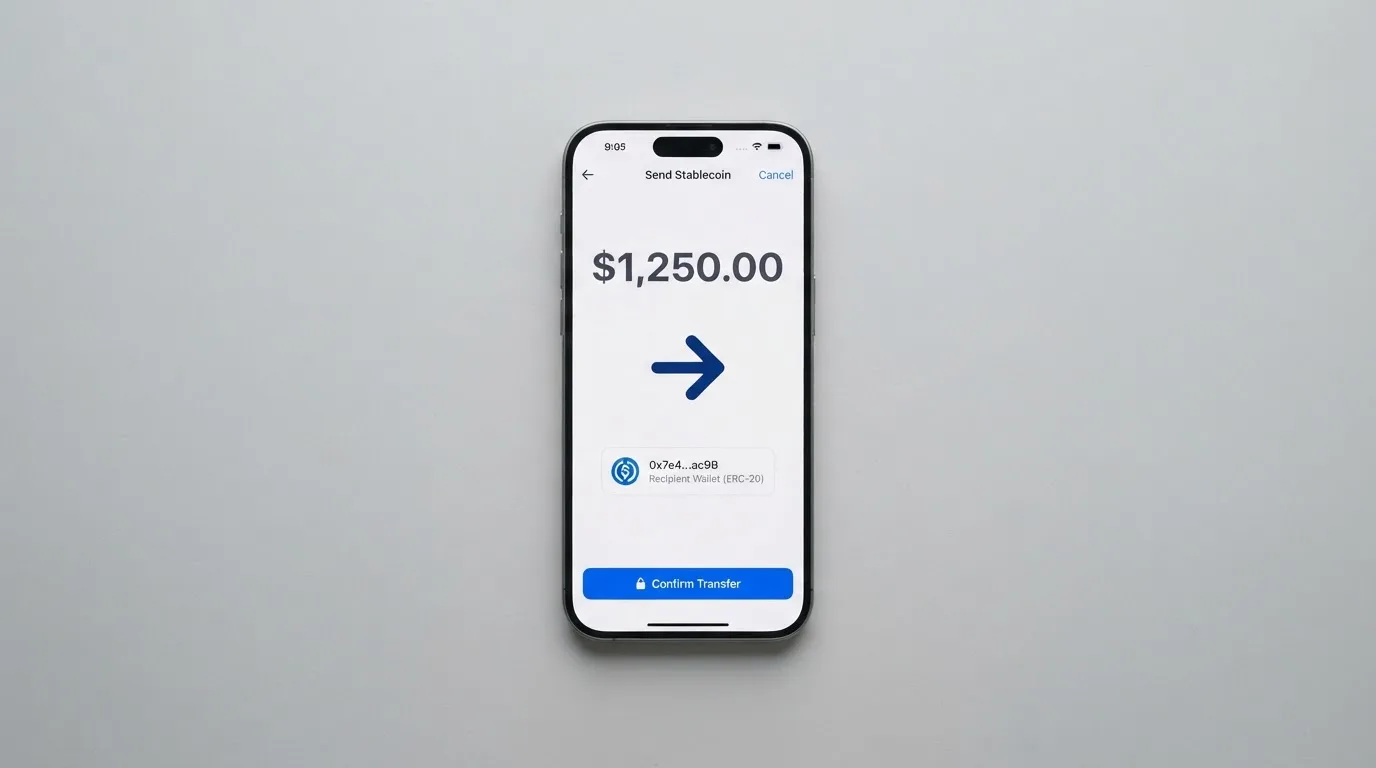
But two things cut the other way. First, the cards are prepaid and are not reloadable with crypto. That means the balance you load at purchase is the balance you have; there is no topping it up again through the same mechanism later. For a one-off payment, that is fine. For anything longer, it is a hard limit. Second, the networks are not stated — and with crypto that gap has teeth. Sending on the wrong network is one of the most common ways people lose money in this category, and blockchain transfers are irreversible, so a transfer to an unsupported network can be gone or need slow manual recovery with no guarantee. Some providers also freeze tokens tied to sanctions lists, so stablecoins are not beyond the reach of compliance systems either way.
For reference, OkiCard names its networks outright: USDT on BSC (BEP-20), Ethereum (ERC-20), Tron (TRC-20) and Solana (SPL), with USDC, Bitcoin and altcoins listed as coming later. That kind of specificity is what lets you send with confidence.
Given that Ezzocard does not name networks and the card is non-reloadable with crypto, the sensible approach is to treat any balance you load as money you have already decided to spend, not money parked on a card. Sending the smallest amount that does the job, only after you have seen the network information on the provider’s own screen, keeps the consequence of a mistake small.
Paying with it every day
Ezzocard’s design points at one-off online payments. That is what the third-party summary describes: virtual prepaid cards, with single-use and reloadable options, on the Visa or Mastercard networks. If your day involves a shop, a restaurant or a subscription you renew every month, you will find the reload limit and the virtual-only design working against you.
Apple Pay, Google Pay and ATM withdrawals are all not disclosed. So there is no way to know from the public information whether you could add the card to a phone wallet, and no way to know whether cash is available at all. For most people, virtual-online-only is fine. For anyone who needs cash or a phone wallet, it is a gap you would have to fill by contacting the company directly.
Two general points about card payments help explain why virtual prepaid cards behave the way they do. The card number begins with a 6- or 8-digit issuer identification number that tells a merchant which institution and country issued it; merchants can look this up and apply extra scrutiny if the issuer country differs from the billing address, which is why a card issued in one country can look “foreign” to a shop in another. Some merchants decline prepaid or foreign cards precisely because of this. And address verification — comparing the numeric parts of the billing address — is mainly a US, Canada and UK thing and is generally unavailable for foreign-issued cards, which can cause declines on their own.
Then there is the merchant category angle. Gambling transactions carry a four-digit code, MCC 7995, and many issuers block that category on specific cards as policy rather than law, with the blocked list differing by issuer. Nobody knows Ezzocard’s policy here because it is not stated. It is another of those unknowns you only discover by trying.
What can go wrong
This is where Ezzocard scores worst, and where I would ask you to read most carefully. There was no official incident found in the company’s own communications. But the volume and consistency of user complaints is the story.
On Trustpilot the profile shows 2.5 out of 5 across 368 reviews, read on 2026-10-21. The themes are consistent and they are not minor:
- Payment without a card. Money taken and no card to show for it (March 2023, July 2026).
- Cards declined. Cards refused by PayPal and by eSIM providers (August 2023, August 2025), and more broadly declined from 2022 to 2026.
- Refunds delayed or unanswered. Requests pending 12 to 54 days (September 2025).
- Site offline and lookalike domains. The site was down and copycat domains appeared (August to November 2025).
- Extra fees demanded after an “ezzo gift card” transfer. Requests for additional fees after a gift-card transfer (May and June 2026).
Trustpilot also warns that the profile is unclaimed and that the company “may be associated with high-risk investments,” and reviewers claim a move to a new domain (September to November 2025). A domain move is not itself sinister — companies rebrand — but combined with lookalike sites and a domain move in the same window, it is the pattern a careful person watches for.
The company question sits underneath all of it. The provider is named as Ezzocard.Finance, formerly Ezzocard. The owner, the registration and the issuer behind the card were not found. That is the single most important gap on this page. A card that spends your money is issued by someone, and here no one will say who. When you cannot identify the institution, you cannot know who is obliged to make you whole if something goes wrong, or which regulator to complain to.
Support is email. Company replies are visible on some Trustpilot reviews, but most of the 2025–2026 negative reviews show no reply at all. Language support is not stated. A decline on an unfamiliar card with a dispute window measured in weeks, and an inbox where most complaints go unanswered, is a difficult combination.
The security side of the card — how it protects you — is also not stated. And because these are custodial-style balances, the general risk applies: control of crypto belongs to whoever holds the private key, and where the provider holds it you are trusting them entirely. Transfers are typically irreversible and a stolen key has no recovery path. This is the part of the category where history is instructive — custodial platforms have failed before, at Coincheck (about US$400 million, 2018) and Ronin Network (US$625 million, 2022), among others.
None of this is a prediction that you will lose money. It is a description of what the people who already used this card have reported, in numbers, and a caution to size your exposure accordingly.
What to take instead
If Ezzocard’s shape appeals to you but its disclosure does not, you are not out of options. Here is how the three main alternatives compare to it, all with their own caveats.
| Ezzocard | OkiCard | TakeCard | Cardex | |
|---|---|---|---|---|
| Score | 5.3 / 10 | 6.0 / 10 | 5.5 / 10 | 5.6 / 10 |
| Who can get it | “from anywhere in the world”, no list | 150+ (some pages 200+) countries; no passport geo-blocking; not in sanctioned jurisdictions | physical card Bolivia only; wallet receivable “from any country” | “200+ countries”; app listing is Naira-focused |
| Card | virtual prepaid, Visa/Mastercard | virtual (physical mentioned) | virtual + physical (Bolivia); Visa, US-issued; prepaid | virtual + physical; VERVE/Visa/Mastercard/UnionPay |
| Cost | not stated | virtual $15; issuance $0; initial deposit 100 USDT | virtual USD 5; physical USD 20 + shipping | not stated |
| Fees | not stated | 3% load; 0% USD transaction | 1% per purchase | real-time conversion, best rate claimed; % not stated |
| Top-up | crypto at checkout only; non-reloadable | USDT on BSC, Ethereum, Tron, Solana; more later | from Takenos balance; USDC/USDT chains (unconfirmed) | USDT, USDC, BTC wallets |
OkiCard is the most transparent of the group, at least on the numbers: it publishes its starting price, its load fee and its transaction fee, and it names its networks. Against that, its pages disagree with each other on the exact issuance fee, and it holds an initial deposit of 100 USDT. It is the one I would look at first if a published fee table is your priority.
TakeCard is the one with the clearest pricing on purchases — 1% per purchase, USD payments 1:1 — but it is the most geographically restricted, with the physical card currently limited to Bolivian users and the virtual card listed for a specific set of Latin American and European countries. There is also an internal conflict in its own help centre about physical-card pricing.
Cardex claims the broadest reach and offers a choice of four card networks, and it markets an “AI-Powered Conversion Rate” that picks a live rate at the moment you spend — though no fee percentage is published. Its app listing is Naira-focused, so the experience may tilt toward one market.
The pattern across all four is worth naming: even the better-disclosed cards have gaps and internal inconsistencies. Choosing between them is really a choice about which kind of gap you can live with — a restriction on countries, a fee you cannot calculate, or, in Ezzocard’s case, a company you cannot name.
Who I would recommend this to
I would recommend Ezzocard to exactly one kind of person: someone who needs to make a single, defined online payment today, already holds the crypto to fund it, cannot get a normal card, and is willing to treat that money as spent the moment they send it. For that person, with a small amount, it is a reasonable tool.
I would steer everyone else away — and I say that as someone who thinks the underlying idea is good. If you are planning to keep money on this card, or use it repeatedly, or rely on it when a payment has to go through, the combination of unpublished fees, an unidentified issuer and a 2.5 star complaint history is too much. If you cannot get a standard bank card and need something more permanent, a better-disclosed alternative with named networks and a published fee table will serve you more reliably, even with its own limits.
The honest summary is this: Ezzocard solves access and creates transparency problems. That is an understandable trade for a lot of people in a pinch, but it is a trade, not a free lunch. Check the checkout screen yourself, load only what you can afford to lose, and go in knowing exactly which numbers nobody has published to you.
Frequently asked questions
What is an Ezzocard card?
Ezzocard is a virtual prepaid payment card you buy online and pay for with cryptocurrency. It gives you card details — a number, expiry and security code — that you enter into websites accepting Visa or Mastercard prepaid cards. There is no physical card delivered; it exists only as details in your account, and it is meant mainly for one-off online purchases.
How does an Ezzocard card work?
You register, choose a card, and pay at checkout in crypto — Bitcoin, Ethereum, USDT, Dogecoin, Litecoin, Tron, Solana and BNB are all accepted. The crypto is converted into a card balance, and you spend that balance on sites that take Visa or Mastercard prepaid cards. The cards are prepaid, so they draw on a stored balance rather than a bank account, and they cannot be reloaded with crypto.
Is Ezzocard a bank?
No — it is not a bank, and it is not described as one. It is a prepaid card programme, and the issuing institution behind it was not identified in the public information I could find. The provider is named as Ezzocard.Finance, formerly Ezzocard, but its owner, registration and card issuer are not stated. A prepaid balance is not a bank deposit, so it is not covered by deposit guarantee schemes.
Does Ezzocard require KYC or ID verification?
The site says no verification is needed at card registration — no ID, no other documents. But that is the sign-up promise, not a guarantee for life. Regulated providers must screen customers against sanctions lists and may ask for documents later; one reviewer reports ID verification blocking their card’s use in September 2025. The card’s verification levels and minimum age are not stated anywhere public.
How much does an Ezzocard card cost?
The card’s own pages do not state it. Issuance, monthly fees, conversion, foreign exchange and ATM charges, and daily or monthly limits are all unpublished, and the pricing page served an empty page when I looked. A single reviewer mentioned a “$25 CAD” card in June 2026, but that is one user’s experience, not a published price. Work out the real cost from the checkout screen before paying, and treat anything not shown there as unknown rather than zero.
Can I use an Ezzocard card in my country?
The site says cards can be bought “from anywhere in the world”, and there is no published country list or set of exclusions. That does not guarantee a purchase will go through, though. Merchants can look up the card’s issuing country and apply extra scrutiny when it differs from your billing address, and some decline prepaid or foreign cards outright. If a specific country matters to you, the only reliable answer is to try a small amount first.
How do I top up an Ezzocard card?
You do not, in the usual sense — the cards are prepaid and are not reloadable with crypto. The balance you pay for at checkout is the balance you have. The networks are not named, so if you do send crypto, you need to see the network information on the provider’s own screen before you send, because transfers on the wrong network are irreversible. The networks accepted for other providers are named openly, which is the standard worth expecting.
Is an Ezzocard card safe to use?
The card’s own security arrangements are not stated, so there is nothing published to judge. What is published is its feedback: Trustpilot shows 2.5 out of 5 from 368 reviews, with reports of payment taken without a card, cards declined by PayPal and eSIM providers, refunds pending 12 to 54 days, the site offline, lookalike domains, and extra fees demanded after a gift-card transfer. Most recent negative reviews show no company reply. The provider is unclaimed on Trustpilot.
Can I add an Ezzocard card to Apple Wallet or Google Pay?
Not stated. Neither Apple Pay nor Google Pay support is disclosed for this card, so you cannot assume it will work in a phone wallet — the same is true of ATM cash withdrawals. If a phone wallet or physical cash matters to how you pay, ask the company directly before you commit, because the public pages do not answer it. For simple online payments, the card details alone are all you need.
How do I get a refund if an Ezzocard card payment goes wrong?
The refund process is not stated on the card’s pages. In practice, reviews report refund requests pending anywhere from 12 to 54 days, and most recent negative reviews show no reply from the company. If you are considering using this card, treat a refund as something you may have to chase rather than something that will happen promptly, and keep your own record of every payment and transaction reference you are given.
Virtual cards: the entry point – cryptocardportal.com
Content created by the «cryptocardportal.com» team