
Ripio, reviewed: a no-fee crypto Visa for Argentina and Brazil
 Available in US
The Ripio card scores 5.5 out of 10 in my review. That middle-of-the-road number is not a shrug — it is what I get when I weigh a genuinely useful everyday card against gaps that matter: the card is aimed at Argentina and Brazil, several fees and limits are simply not published, and the company behind it carries a heavy load of public complaints. If you are an Argentine or Brazilian user who wants to spend crypto like ordinary money, the no-maintenance-fee promise and the 2% crypto cashback are real attractions. If you are anywhere else, or if you want published conversion and foreign-exchange fees before you commit, this is not the card for you.
The conditions described here are current as of October 28, 2026.
Verdict: 5.5 / 10 — good daily card, thin on published detail
Let me put the score on the table before I argue about it. A reviewer working from Ripio’s own pages can confirm some things and simply cannot confirm others, and a card that will not tell you what it charges for conversion is a card you have to approach carefully.
| Criterion | Mark | Why |
|---|---|---|
| Who can get it | 2 / 10 | The page footnote says only: “Product available for Argentina and Brasil”. |
| Cost | 7 / 10 | Virtual and physical card with no maintenance fee; conversion and FX fees are not disclosed. |
| Top-up options | 7 / 10 | Wallet balance in crypto or ARS, any Ripio coin including BTC, ETH, USDT; converted at purchase; networks not named. |
| Reliability and complaints | 4 / 10 | Visa network, Pomelo processing; issuer and licences not named; Trustpilot company-wide 2.4/5 from 1,848 reviews — uncredited funds, unreachable support. |
| Everyday use | 9 / 10 | Virtual and physical Visa, free home delivery, Apple Pay and Google Wallet, cash withdrawals at ATMs. |
| Total | 5.5 / 10 | — |
The heaviest weights pull in opposite directions. Everyday use is genuinely strong: a virtual and a physical Visa, free delivery to your home, Apple Pay and Google Wallet, and cash withdrawals — that is a well-rounded set of features, which is why it earns 9. But availability is the gateway to all of it, and that scores 2, because the product is stated as available for Argentina and Brazil only. Reliability is where I get most uneasy, at 4: the card runs on Visa with Pomelo handling processing, but the issuing institution and its licences are not named on the pages I read, and the company’s overall Trustpilot standing is poor — 2.4 out of 5 across 1,848 reviews, with reports of funds not being credited and support being unreachable.
Cost and top-up land in the middle at 7 each. Cost earns its mark because “virtual and physical VISA card no maintenance cost” is a plain, useful commitment — there is no monthly or annual fee to argue with. But the fee that actually determines your cost, the crypto conversion fee and the foreign-exchange fee, is not stated. Top-up earns 7 because the funding side is genuinely flexible — a wallet balance in crypto or in Argentine pesos, any coin Ripio holds including BTC, ETH and USDT, converted automatically at the moment of purchase — but the networks you deposit over are not named, which is exactly the detail you need before sending a transfer.
Who it suits: an Argentine or Brazilian user who wants to turn crypto balance into everyday spending, values having no maintenance fee, and is comfortable doing the arithmetic on conversion costs themselves. Who it does not suit: anyone outside those two countries, anyone who needs published conversion and FX fees, and anyone who treats a company’s complaint record as a dealbreaker.
Who will they give you the card?
Ripio’s own footer states it plainly: “Product available for Argentina and Brasil”. That is the entire stated eligibility. If you live in Argentina or Brazil, you are inside the product’s stated footprint. If you are reading this from anywhere else, this card is not offered to you, and no amount of account-opening enthusiasm will change that.
There is a subtlety worth pausing on, because people often conflate citizenship with residence. The availability note speaks about the product being available in two countries. It does not say anything about your nationality, your passport, or what happens to a citizen of one country who lives in another. Nothing on the pages I reviewed tells you how Ripio treats a Brazilian who has moved to Spain, or an Argentine living in the United States. If your situation is exactly that — a citizen of Argentina or Brazil who is not resident there — you should raise it with Ripio directly rather than assume either way. I cannot confirm the answer from what is published, and I will not guess at it.
So the honest summary is: two countries, clearly stated; everything else about who qualifies inside them, not stated on the card’s public pages.
How to get it
The sign-up path Ripio describes is short: sign up or log in to Ripio, accept the terms and conditions, and order the card. That is the whole described process. There is no application form walkthrough, no eligibility quiz, no stated approval timeline.
The card itself is an international prepaid Visa, available in a virtual or a physical form. The virtual card is intended for online and QR payments; the physical card works at any Visa merchant. Amounts are deducted immediately from your wallet balance — this is a prepaid card drawing on stored value, not a credit line. The currency of the card is not stated on the pages I reviewed, so I cannot tell you definitively which currency it bills in.
On delivery: the physical card is sent to your home address free of charge, and you can activate the virtual card while you wait for the physical one to arrive. That is a nice touch if you want to start spending immediately. The delivery time and the cost of a replacement card are not stated, so if a card is lost or damaged, do not assume a free replacement.
What identity verification is involved is not stated on the card page — it only says to sign up or log in and accept the terms. Nor are different KYC levels described, if they exist. This matters more than it might seem: anti-money-laundering rules require regulated businesses to verify customers and monitor transactions, so *some* verification exists somewhere in the process; the card page simply does not describe it. Do not treat this as a signal that none is required. If getting verified matters to you, ask Ripio what documents they need before you deposit anything.
What it really costs: Fees
Here is where a card like this either reassures you or leaves you guessing, and Ripio’s card page mostly leaves you guessing. The one clear, positive number is that there is no maintenance fee; the numbers that decide your actual cost per purchase are the ones not published. I want to be plain about that rather than bury it.

| Fee or limit | What Ripio states |
|---|---|
| Card issuance / maintenance | “Virtual and physical VISA card no maintenance cost.” |
| Monthly fee | None — the no-maintenance-cost statement covers the card. |
| Crypto conversion fee | Not stated on the card page. |
| Foreign-exchange (FX) fee | Not stated on the card page. |
| Cash withdrawal fee | Cash withdrawals available at cash machines, supermarkets and service stations; fee not stated. |
| Cash withdrawal limit | Not stated. |
| Daily spending limit | Not stated. |
| Monthly spending limit | Not stated. |
| Card currency | Not stated. |
| Spending currency | In your local currency or in dollars. |
| Funding currency | In crypto or in ARS (Argentine pesos). |
| Tiers | Single tier — none mentioned. |
So: free to hold, and unpriced to spend. Let me walk through three ordinary payments so you can see which of the missing numbers actually bites.
Paying for groceries in Argentina, funded from crypto. You spend in pesos, but your wallet holds crypto. At the moment of purchase Ripio converts your crypto at the then-current rate. There is no stated maintenance fee, so that part costs nothing. But the crypto conversion fee — the cut Ripio takes on the swap — is not published, so the amount actually debited will be slightly less favourable than the headline exchange rate, by an amount you cannot predict from the card’s own documentation. This is the fee that matters most, and it is the one Ripio does not quote.
Paying a subscription in dollars while your balance is in pesos. You are spending dollars, which usually means a foreign-exchange conversion. Ripio states you can spend in your local currency or in dollars, so this is a supported payment. But the FX fee is not stated. On top of an undisclosed FX fee, converting pesos into whatever the merchant charges in dollars may involve a second conversion along the way. Two unpublished percentages can stack into a cost that quietly eats a noticeable slice of a small purchase.
Withdrawing cash at an ATM. Cash withdrawal is supported, at cash machines, at supermarkets and at service stations — that is a real convenience. But the withdrawal fee is not stated, and neither is the withdrawal limit. ATM withdrawals are typically the most expensive way to use any card, because the ATM operator sets its own charge on top of the issuer’s. Walking into that with two numbers unknown is not a good idea if you plan to use this as your primary way to get cash. Also note: because this is a prepaid card drawing on a stored balance, a declined authorisation can leave a hold on funds that may sit for days.
One more general point about cards of this kind. When your money goes on-chain, the blockchain charges its own network fee for the deposit — that is charged by the network, not by Ripio, but it comes out of the same wallet. And a card payment funded from crypto is a disposal of that crypto for tax purposes in many jurisdictions, which I am not qualified to advise on.
How to Top up
Topping up the Ripio card is really a question about how you fund the underlying Ripio wallet, because the card draws on that wallet’s balance. Ripio states that you need a wallet balance in crypto or in ARS; any crypto available on Ripio can be used, including BTC, ETH and USDT; you choose the payment currency in the Ripio Card section; and the amount is converted automatically at the point of purchase rather than in advance.
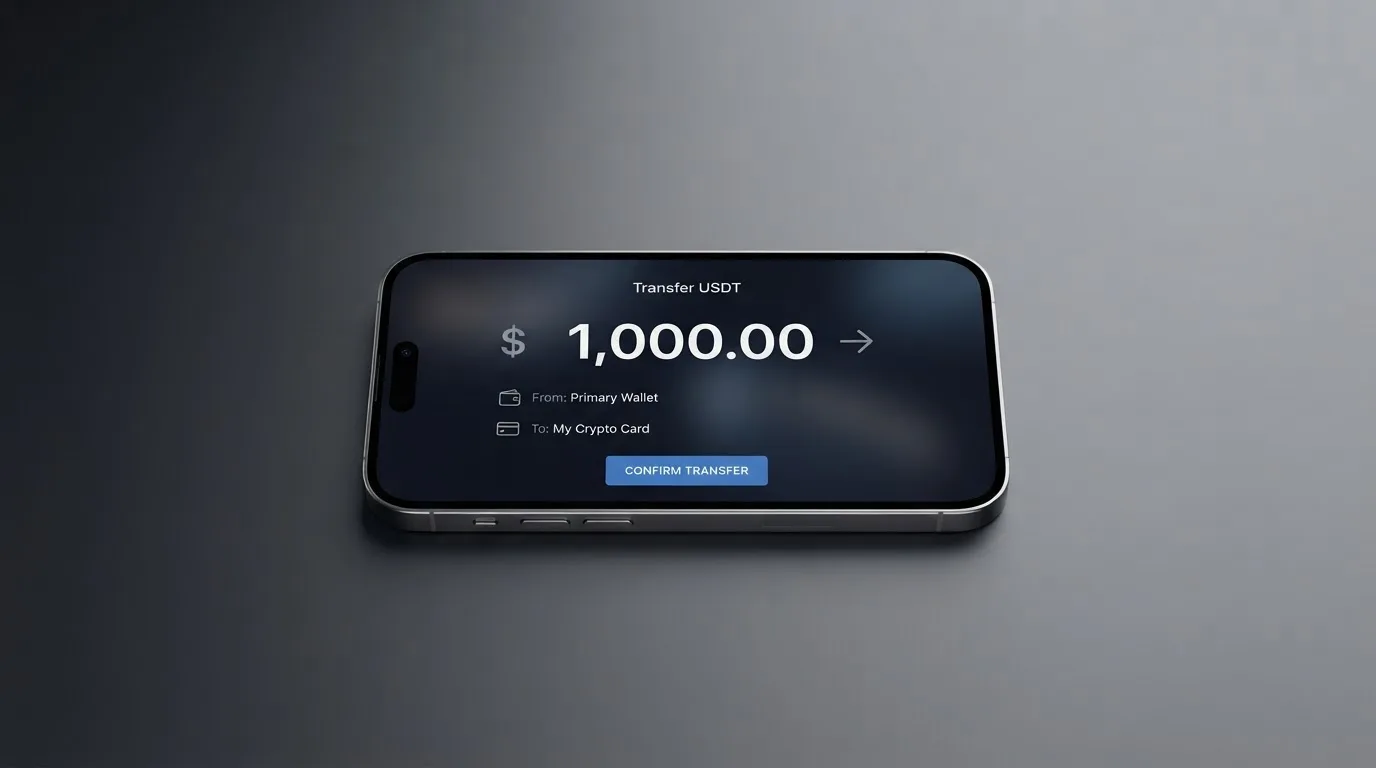
That flexibility is the real appeal here. You are not locked to holding one coin. If you hold BTC, ETH or USDT in your Ripio wallet, you can spend from it. And because conversion happens at purchase, you are not forced to time a single conversion for all your money — which, on reflection, is the fairer way to handle a volatile balance.
The gap is the deposit side. The card page does not set out top-up methods. The information available comes from the launch article for Argentina in February 2023, which described loading the wallet by bank transfer, through Mercado Pago, or in cash at Rapipago Online and Pago Fácil. That is launch-era information, not a current promise of the methods available today, and the two cash networks named are Argentinian, so if you are in Brazil they are not your routes. Withdrawing money from Ripio is also not stated.
And the detail I would most want before sending anything: the networks are not named. This is not a small omission. Blockchain transfers are irreversible. If you send on a network Ripio does not support, or to an address belonging to a different network, the funds can be lost, or need a manual support recovery with no guarantee of outcome. So before you transfer, confirm with Ripio which network and which address they want for your coin.
Paying with it every day
This is the card’s strongest suit, and it earned 9 out of 10 for good reason. It is a Visa — virtual and physical — which means it works wherever Visa is accepted, in stores and online. You can add it to Apple Pay and Google Wallet, which is how most people will actually use it day to day. Cash is available at ATMs, supermarkets and service stations. Spending draws immediately from your wallet balance.
The cashback is worth understanding properly, because the headline number depends on what you pay with. From the card’s FAQ and its Cashback section:
- Crypto payments: 2% cashback. The FAQ lists USDT, BTC or ETH as the qualifying coins; the Cashback section phrases it as BTC, ETH or USD. Read whichever list applies to your coin before you rely on it.
- ARS payments: 0.5% cashback.
- New card users: a boosted 4% on crypto payments and 1% on ARS payments, for the first 30 days.
So if you spend from crypto, you are on the 2% rate; if you fund in pesos and spend pesos, you are on the much lower 0.5% rate. That gap is the single most useful thing to internalise about the rewards.
There are things the card page does not tell you. Whether any merchant categories are blocked is not stated — and blocked categories matter, because gambling is one of the most commonly restricted on crypto cards, and you would not discover the restriction until a payment is declined. The app’s rating on the App Store and Google Play I could not obtain, so I cannot vouch for the app itself. The dispute process — what happens when a charge is wrong, when goods never arrive — is not stated either, and that is the process you would need on the day something goes wrong, not afterwards. Whether blocked categories and dispute handling exist is exactly the sort of thing to ask Ripio directly when you sign up.
What can go wrong
Let me separate two different questions: what the published pages show, and what users report.
Official record. I found no official incidents — no regulator action, no named enforcement, nothing in the public record on the card itself.
What the company has named about itself. The site footers name Ripio entities including BitPagos, Inc. and Moonbird S.R.L. The launch material says the card was created with Visa, the network, and that Pomelo provides the processing technology. But the issuing institution and its licences are not stated. That gap is the one I would press on. When you hold a card, somebody is legally responsible for issuing it and for your money behind it. When that party is not named, you cannot check its licence, and you cannot tell which regulator stands behind the balance. Ask Ripio who the issuer is.
What users report. On Trustpilot, the Ripio company rating is 2.4 out of 5 from 1,848 reviews, 45 of them in the last twelve months (read 2026-10-21). Be clear about scope: this is the whole company, not the card specifically. The themes users raise are funds not credited (reported August 2026), no reachable support (August 2026, and earlier in June 2021), and fees (2021). The “funds not credited” and “unreachable support” combination is the pattern that worries me most, because it is the pattern that turns a routine problem — a transfer sent to the wrong network, a payment that needs reversing — into money you cannot get back and no one answering.
On support itself: Ripio points to an in-app or desktop Support section, and a Help Center at help.ripio.com, which redirects to help-ar.ripio.com. When I checked, the Ripio Card section of that help centre was empty. Languages and support hours are not stated.
Other risks that are structural rather than specific to Ripio. If your balance sits with the platform, you carry counterparty and hack risk — custodial platforms have a real history of it, from Mt. Gox to Ronin Network. Crypto transfers are irreversible, so recovery of a misdirected deposit depends on goodwill. And card programmes can be wound down: Visa terminated its global agreements with FTX in November 2022, and a wave of closures has followed, where spending stops and you are asked to withdraw what is left. None of these are allegations against Ripio. They are the ordinary weather of this category, and they are a reason to keep only what you can afford to have tied up on the card.
Also worth knowing: prepaid-card consumer protection varies by country and should not be assumed to match a bank’s debit card. And if a merchant declines the payment, a declined authorisation can leave a hold on your funds for days.
What to take instead
If the Ripio card does not fit — because you are outside Argentina and Brazil, or because the missing fees bother you — here are three alternatives from the same category, and I will be candid that the comparison is uneven because they publish different amounts of detail.
MSX — 6.4 / 10. On paper this scores above Ripio. But I could not read official pages that confirm who can get it, what the card is, what it costs, how it is funded, or what it pays in rewards. I am not going to fill those gaps with guesses. Treat the score as the only hard number here and go look for yourself.
Bybit Card — 6.0 / 10. This one publishes the most, and what it publishes is worth your time. Eligibility is broader: the official help centre lists card regions including Argentina, AIFC (Kazakhstan), Georgia, Kazakhstan, Australia, Mexico, Brazil, Peru and Asia Pacific. The application asks your country of residence; if your country is unsupported, Bybit says it will register your interest. Two hard boundaries: the cards page states the product is not meant for European Economic Area customers and that all EEA customer participation is strictly prohibited, and Bybit’s fiat-service restricted list includes Belarus, the Russian Federation, Serbia, China and the United States. On cost, virtual card issuance is free in all regions “until further notice”, physical issuance varies (for example 29.99 USD in Australia, 5 USD or USDT in Argentina, none in Brazil and Mexico), and the cards page states “Auto interest, no annual fees”. On fees it is the most transparent card in this comparison: a 0.9% crypto conversion fee in several regions (0.5% in Argentina), an FX fee quoted per region (for example 2% in several, 7% in Argentina, 1.5% in Brazil, 1% in Peru), and Argentina-specific taxes including 21% VAT and 30% tax on foreign transactions. It also runs a tiered cashback structure by spend level. For anyone outside Ripio’s two countries, Bybit is the more informative place to start — not because it is better, but because it tells you its prices.
MEXC — 5.6 / 10. Virtual card only, physical cards not yet available. Issuance is listed at 20 USD (the page shows it possibly beside a discounted 0 USD price, which is itself unclear), service fee 0%. Funding is via USDT transferred to the fiat account. Cashback is tiered by M-Score: Standard 4% capped at 100 USDT a month, up to Elite 10% capped at 800 USDT. Networks and conversion and FX fees are not stated on the page.
| Option | Score | Card type | Cost clarity | Biggest caveat |
|---|---|---|---|---|
| Ripio | 5.5 / 10 | Virtual + physical Visa, prepaid | Maintenance free; conversion and FX not stated | Offered for Argentina and Brazil only |
| MSX | 6.4 / 10 | Not confirmed officially | Not stated | No official detail I could read |
| Bybit Card | 6.0 / 10 | Virtual + physical; prepaid or credit by region | Most detailed of the three | EEA participation strictly prohibited |
| MEXC | 5.6 / 10 | Virtual only | Issuance 20 USD, service 0% | Conversion and FX fees not stated |
Who I would recommend it to
I would recommend the Ripio card to an Argentine or Brazilian user who: wants to spend crypto balance as ordinary money day to day; values paying no maintenance fee; is comfortable that conversion and FX costs are not published and will therefore keep the balance modest at first; and mainly pays in crypto rather than in pesos, since the cashback is 2% on crypto payments but 0.5% on ARS payments. I would also suggest it to someone who wants a virtual card usable immediately while the physical card is still in the post, since delivery is free and the virtual card can be activated while you wait.
I would steer it away from: anyone living outside Argentina and Brazil; anyone who wants to know the conversion and FX fees before committing; anyone who needs to know the issuer and its licence in advance; and anyone who has been burned by a custodial platform before and needs support to be reliably reachable when a transfer goes wrong.
My own approach, if I were the one holding it, would be modest. Keep a working balance rather than a large one, top up in the currency you actually spend from, and before your first deposit confirm the network and address with Ripio in writing — because as I said, a wrong-network transfer is the irreversible mistake, and the published support pages did not help me.
Frequently asked questions
What is the Ripio card?
It is an international prepaid Visa, offered in virtual and physical form, that spends directly from your Ripio wallet balance. The virtual card is meant for online and QR payments; the physical card works at any Visa merchant. Amounts are deducted from your wallet immediately when you pay, so it behaves like a stored-value card rather than a credit card. Ripio’s page footnote states the product is available for Argentina and Brazil.
How does the Ripio card work?
You fund your Ripio wallet in crypto or in Argentine pesos, then spend from that balance with the card. When you pay in a currency different from what you hold, Ripio converts automatically at the moment of purchase — you do not have to time a conversion yourself. You can spend in your local currency or in dollars, and add the card to Apple Pay or Google Wallet.
Is Ripio a bank?
The public pages do not present Ripio as a bank. The card runs on the Visa network, with Pomelo providing the processing technology, and the site names group entities including BitPagos, Inc. and Moonbird S.R.L. The issuing institution and its licences are not stated, which is the detail I would want confirmed before depositing anything substantial.
Do I need KYC to get the Ripio card?
The card page does not say. It describes only signing up or logging in, accepting the terms, and ordering the card; it sets out no identity documents and no verification levels. That is an absence of information, not evidence that verification is skipped — anti-money-laundering rules normally require regulated businesses to verify customers. Ask Ripio what documents they need before you deposit.
Is the Ripio card free?
Free to hold, yes: Ripio states “Virtual and physical VISA card no maintenance cost”. But the fees that decide your real cost are not published — the crypto conversion fee and the FX fee are not stated, and the cash withdrawal fee and limit are not stated either. So the card is free, while what you pay to use it is not fully knowable from the card’s own pages.
How do I top up the Ripio card?
Top-up methods are not set out on the card page. Launch-era material from February 2023 described loading an Argentine wallet by bank transfer, through Mercado Pago, or in cash at Rapipago Online and Pago Fácil. Crucially, the networks are not named — and blockchain transfers are irreversible, so confirm the network and address with Ripio before sending, or the funds can be lost.
Is the Ripio card safe?
There is no official incident I could find, but treat that as thin comfort. The company’s Trustpilot rating is 2.4 out of 5 across 1,848 reviews (company-wide, not card-specific), with user themes of funds not credited and unreachable support. The issuer and its licences are not named. Holding crypto with a platform also carries counterparty and hack risk, as the sector’s history shows.
What cashback does the Ripio card pay?
Crypto payments earn 2% cashback — the FAQ lists USDT, BTC or ETH as qualifying coins. ARS payments earn 0.5%. New card users get a boost of 4% on crypto payments and 1% on ARS payments for the first 30 days. If you spend mainly from pesos rather than crypto, you are on the lower rate, so it is worth checking which side of that line you sit on.
Is Ripio card available in my country?
According to Ripio’s own footnote, the product is available for Argentina and Brasil. If you are elsewhere, the card is not offered to you as stated. Note also that the note speaks to the product’s availability in two countries and says nothing about citizenship versus residence — if you are a citizen of one of those countries living elsewhere, ask Ripio directly rather than assuming.
Is the Ripio card worth it?
For an Argentine or Brazilian user spending crypto, the honest answer is: yes, if you value a no-maintenance-fee Visa with free delivery, Apple Pay, and cash withdrawals, and you are comfortable sizing your own balance because the conversion and FX fees are unpublished. It is less clearly worth it if you need published fees, a named licensed issuer, or reliable support on the day a transfer goes wrong.
Exchange cards: the entry point – cryptocardportal.com
Content created by the «cryptocardportal.com» team