
A $5 virtual card with crypto top-ups and a lot of silence about the details
 Available in US
Gpayvcc sells prepaid virtual Visa and Mastercard cards that you pay for in crypto and use like an ordinary payment card, with the card details landing in your inbox five minutes after the crypto payment confirms. The entry price is $5, there is no monthly fee and no inactivity fee, and the coin list is long. That is the good news, and it is genuine. The less good news is that this is not a bank, the cards come from third-party issuing partners whose licences are not named, and a surprising amount that a shopper would want to know — FX fees, spend limits, ATM access, identity-check levels — is simply not stated on the public pages. I scored it 6.9 out of 10. For someone who needs a virtual card today, pays in crypto, and is comfortable checking a detail with support before relying on it, that is enough. For anyone building a routine around it, the gaps matter.

The conditions described here are current as of October 28, 2026.
The score in full
| Criterion | Mark | Why I gave it that |
|---|---|---|
| Who can get it | 8 / 10 | No country list and no excluded countries; sign-up is by email, name and phone number |
| Cost | 7 / 10 | Issue fee of $5 on most cards, $15 on Visa Platinum; no monthly or inactivity fee; third-party reviews call out a high crypto-to-fiat conversion spread |
| Top-up options | 8 / 10 | USDT, BTC, TON and more; earlier checks also listed ETH, BNB, Solana, TRX, LTC, BCH; networks are not disclosed |
| Reliability and complaints | 6 / 10 | Not a bank; cards issued by partners; licences not named; Trustpilot 4.7 from 56 reviews with 92% five-star; third-party reviews list “no refunds on card balances” as a con |
| Everyday use | 5 / 10 | Virtual only; details by email five minutes after payment; Apple Pay and Google Pay supported; no plastic and no ATM |
| Total | 6.9 / 10 | Strong on price and coin choice, weak on disclosure and on being a real everyday card |
The pattern in that table is the short version of this review. Gpayvcc is generous where it is cheap to be generous — the entry fee, the coin list, the free monthly — and silent where disclosure costs money or effort: the exact conversion terms, the country rules, the licence. I understand why. This is a small programme run through partners, not a bank building a consumer brand. But you are the one carrying the residual risk, so you should read the price and treat the silence as a fact to ask about, not as a promise.
Who they will give the card to
The country list is not stated, and no excluded countries are listed. That is the honest summary, and it cuts both ways. There is no visible whitelist telling you that, say, your country is out, but there is also no visible guarantee that a given one is in. People looking for a way around their country’s rules should read that as an absence of information, not as permission — the issuer partner decides who ultimately gets served, and those decisions sit outside anything Gpayvcc publishes. If your nationality or country of birth matters to your situation, that is exactly the question to ask support before you load any money, not after.
More broadly, prepaid cards are generally available to adults aged 18 or over, and some issuers set higher limits. The identity-check level is not stated on the official pages either, which is the single most important omission for anyone weighing this card. A third-party card directory, reporting for 2026, describes signup as “Level 1, email only — no phone, ID or selfie”, but that is unofficial and I could not confirm it from the card’s own pages. Treat it as a lead to ask about, not as a settled fact. Official signup asks for email, name and phone number, with more information possibly required for legal and issuer reasons.
The categories Gpayvcc is built for are the same ones the whole prepaid crypto card category serves: users buying prepaid virtual cards who hold several coins and want to pay from that balance without moving through a bank. If that is you, the card’s shape fits. If you want a card for the shops you use every week, or one you can hand over in person, keep reading — that is where this one falls short.
How to get it
The flow is short and there is no bank account in it. You sign up with your email, name and phone number; you choose a card; you pay in crypto; and the details arrive by email. That last part is worth pausing on: the card number, expiry date, CVV and billing address reach you by email five minutes after the crypto payment confirms. Nothing physical is posted, because there is nothing physical — Gpayvcc’s offering is virtual prepaid Visa and Mastercard cards, and the page says there are 28 card types across 4 networks to choose from.
The range is wider than it sounds. Cards are denominated per card, so you can pick the currency you actually spend in — the Argentine Peso Card is a concrete example — and the cards differ by type and value, from Reloadable and Gold through to Platinum. The entry point is $100 of card value. Which one suits you depends on what you are paying for, not on features the card advertises; extra tier benefits are not stated.
Because details arrive by email within minutes, the practical risk shifts from shipping to your inbox. Keep it in a secure place, do not forward it casually, and expect to enter the details yourself wherever the card is accepted. There is no app mentioned anywhere in the official material, so whatever dashboard or history you get, if any, is not something I can promise you.
Fees and what a payment really costs
The headline number is good. Card value against issue fee across the range runs from $100 for $5 up to $300 for $15, and there is no monthly fee and no inactivity fee. That is the best part of the offer. What sits behind it is where you have to slow down, because the costs that actually move money are the ones the public pages do not quantify.
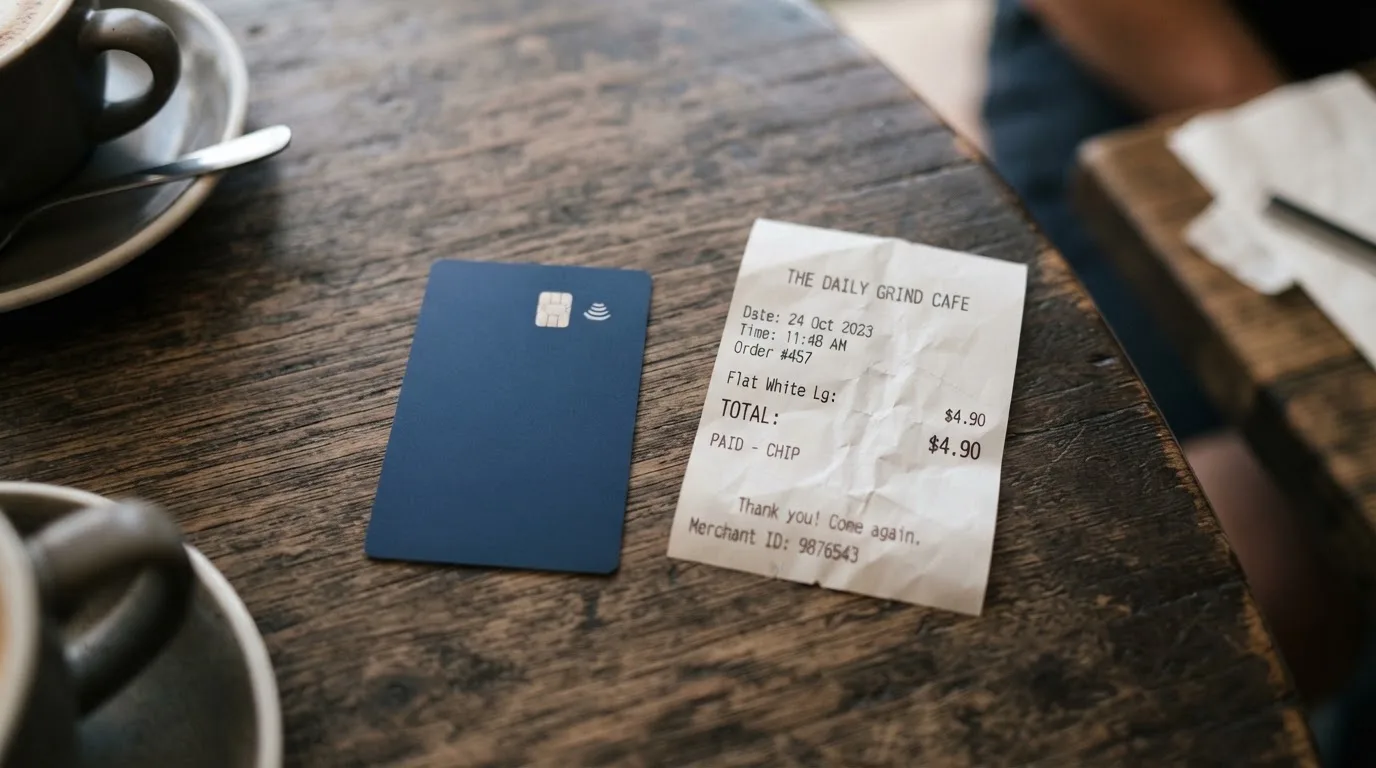
| Fee or limit | What is stated |
|---|---|
| Issue fee, Virtual Visa Reloadable | $200 card value, $5 |
| Issue fee, Visa Gold | $200 card value, $5 |
| Issue fee, Visa Platinum | $300 card value, $15 |
| Issue fee, Visa Virtual Universal | $100 card value, $5 |
| Issue fee, Mastercard Reloadable Classic | $100 card value, $5 |
| Monthly fee | None |
| Inactivity fee | None |
| Starting card value | $100 |
| Conversion fee | Not stated; third-party reviews flag a “high crypto-to-fiat conversion spread” |
| FX fee | Not stated |
| ATM | Not stated; virtual cards only, no cash access |
| Daily and monthly spend limits | Not stated; third-party listings say “Unlimited”, not confirmed by the card |
| Extra tier benefits | Not stated |
Note the awkward corner in that table. A third-party directory, for 2026, lists card issuance at $200 — which conflicts sharply with the official $5 issue fee for the Virtual Visa Reloadable. I have no way to reconcile those two figures from the outside; treat the $200 as unverified and the $5 as the card’s own number, but if you are planning around a large first load, confirm the total you will be charged before you send it. The same directory lists monthly, ATM, FX, top-up and decline fees as “Free”, and I would not plan a budget on that line either. Nothing is stated officially about FX fees, which is the gap that should worry you most if you spend in a currency other than the card’s.
To make this concrete, take three ordinary payments and ask which fees could touch each.
- A $20 subscription in the card’s own currency, paid online. Your only certain cost is the issue fee already sunk. Whether the merchant or the platform adds anything for a prepaid, foreign-issued card is not something I can tell you, because the FX and conversion terms are not stated.
- A €30 dinner abroad on a dollar-denominated card. Here a conversion spread is the real question, and the only thing on record about it is a third-party con line about a high crypto-to-fiat conversion spread. That is not a number, and I am not going to invent one.
- A cash withdrawal. There is no ATM story here at all — the cards are virtual, ATM fees are not stated, and virtual cards generally cannot be used at cash machines.
That third example is the clearest signal of what this card is: it is built for spending, not for cash, and not for the incidental friction of being abroad. On-chain network fees for your deposit are a separate matter entirely — those are charged by the blockchain, not by Gpayvcc.
Top up
Topping up is straightforward in outline. You deposit crypto to your account balance — USDT, BTC, TON and more are named, with ETH, BNB, Solana, TRX, LTC and BCH seen in earlier checks — and you then buy cards from that balance. Reloadable cards can be topped up again when they run down.
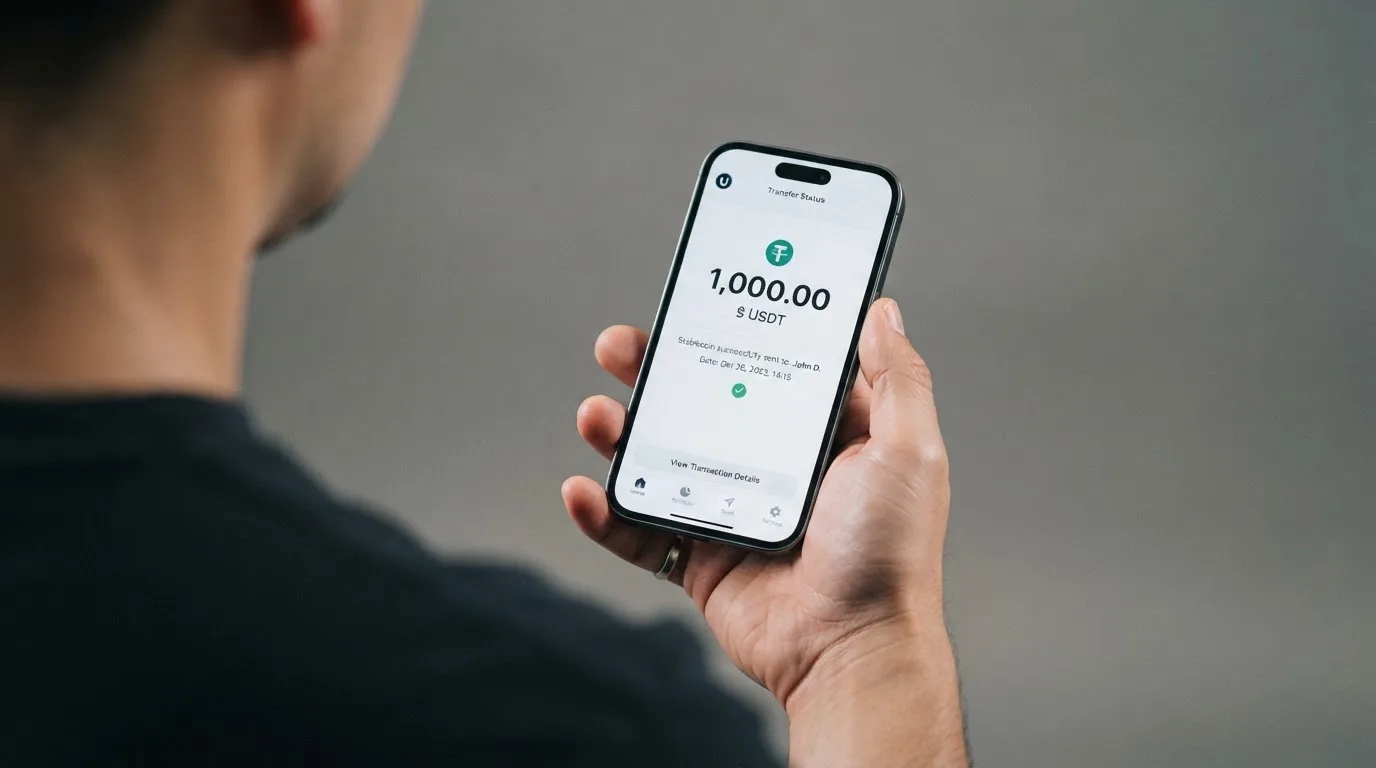
Two things are not stated and both of them matter. The top-up fee is not stated, and neither is the minimum top-up or who pays the network fee for the transfer. The coin list is also the point where a lot of care is needed that the page does not give you: USDT and USDC live on several different networks, and sending on a network the provider does not support, or to an address belonging to another network, can lose the deposit or force a slow manual recovery with no guarantee. Blockchain transfers are not reversible. Tether also states that it disables tokens in wallets on the OFAC sanctions list and has frozen funds tied to illicit activity, so these coins are not censorship-proof. My advice is not clever but it is the correct one: before your first transfer, ask support which network to use for the coin you are sending, and send a small test amount first.
Nothing is stated about withdrawing money from Gpayvcc, and refunds are not stated either. A third-party listing records “no refunds on card balances” as a con. Read that as money loaded onto a card being one-directional, and size your loads accordingly.
Paying with it every day
Day to day, this is a virtual card and a phone. Apple Pay and Google Pay are both supported, which means for most online and in-store contactless spending you can push the card into a mobile wallet and not handle the number much. That is the best of the everyday experience, and it is a real convenience.
Beyond that, the everyday surface is thin. There is no physical plastic, so nothing to hand over at a counter. Blocked merchant categories are not stated. Some merchants refuse prepaid cards regardless of what the provider says. And a card issued in one country can look “foreign” to a shop in another, because the issuer’s country is visible in the card’s own prefix and some merchants apply extra scrutiny on that basis. Address verification, which compares the numeric parts of the billing address a buyer types against the issuer’s records, is mainly offered in the US, Canada and the UK and is generally unavailable for foreign-issued cards, which is another reason an online checkout may decline you for no reason you can see.
There is no cashback stated, no app mentioned, and no stated rewards of any kind. If you were hoping for a rewards card, this is not it. What you get instead is speed — details in five minutes — and the ability to spend a crypto balance through the wallets you already use.
What can go wrong
None of the following is alarmist; it is the shape of the risk when the provider is not a bank and the disclosure is thin.
- The counterparty. Gpayvcc states plainly that it is not a bank and does not issue cards; the cards come from third-party issuing partners, and the partners’ registration and licences are not stated. Card networks themselves do not issue crypto cards to consumers — they license issuers, and they can suspend a programme. Visa said in November 2022 that it had terminated its global agreements with FTX, and the FTX US debit card was wound down; WaveCrest, a Visa issuer that supplied several crypto card brands, was suspended by Visa in Europe in 2018, closing all its Visa programmes.
- Money held with a custodian. Where a provider holds funds, you are trusting it. The record is not encouraging in general terms — Mt. Gox reported about US$350 million stolen 2011–2014, Coincheck about US$400 million in 2018, and Ronin Network US$625 million in 2022.
- Reversibility. Crypto transfers are essentially irreversible, and a declined payment can leave a hold on your money for days, typically up to seven, without telling you why.
- Holds and closures. When an issuer winds a programme down, the pattern is a notice period, then loading and spending stop, then users are asked to withdraw what remains. A 2026 closure reported by a secondary source ended new loads on 8 July 2026 and spending on 8 August 2026 — a single unconfirmed source, but the shape of it is what to expect.
- Complaints, in their own words. One detailed user report describes a card failing repeatedly at checkout and a refund that was slow and needed repeated chasing. On Trustpilot, read 21 October 2026, the score is 4.7 from 56 reviews with 92% five-star, though the page notes similar-wording reviews among them and no replies to negative ones. The only complaint I could actually see on the page was a lag on the details page on mobile, dated 23 August 2026, and that was a user report. I saw no official incidents. So: a small sample, a good average, and one visible complaint that is mundane rather than alarming.
- What I could not check. Security features are not stated. Disputes and chargeback handling are not stated. Languages supported are not stated. There is nothing here to reassure you on those points, so do not let a high Trustpilot average stand in for it.
- Where to reach them. Live chat, WhatsApp, Telegram and [email protected], with a stated target response within 24 hours. That is a real support surface, and it is also the practical route to the answers this page had to mark “not stated”.
What to take instead
If any of the above gives you pause, these are the same-category alternatives I compared, with the same questions asked of them. None is a clear winner; they trade the same unknowns differently.
| Gpayvcc | Cardex | TakeCard | OkiCard | |
|---|---|---|---|---|
| Score | 6.9 / 10 | 5.6 / 10 | 5.5 / 10 | 6.0 / 10 |
| Card type | Virtual prepaid Visa and Mastercard, 28 types across 4 networks | Virtual and physical debit card on VERVE, Visa, Mastercard, UnionPay | Virtual (immediate), physical Bolivia only; Visa; USD 1:1 | Virtual; physical mentioned without detail; Visa/Mastercard; USD/EUR |
| Who can get it | Country list not stated | “One crypto card, 200+ countries”; no exclusions listed | Physical only for Bolivian users for now; wallet says payments from any country | “150+ countries” (some pages “200+”), no geo-blocking by passport; must not be in a sanctioned jurisdiction |
| Issue cost | $5 most cards, $15 Platinum | Not stated | $5 virtual; $20 physical + $20 shipping in Bolivia (another page says $10 — conflicting) | Issuance $0, monthly $0, starting price $15; pages disagree |
| Fees | Monthly/inactivity none; FX and conversion not stated | Real-time conversion, “AI-Powered Conversion Rate”, no percentage stated | 1% commission per purchase; other currencies at Visa’s rate of the day | Load fee 3%; USD transaction fee 0%; FX not stated |
| Top-up coins | USDT, BTC, TON and more | USDT, USDC, BTC; networks not stated | Takenos balance; USDC/USDT via Polygon, BNB Chain, Tron or Ethereum per unverified starting data | USDT on BSC, Ethereum, Tron, Solana; USDC “soon”; BTC “coming soon” |
| Rewards | None stated | None stated | None stated | None stated |
Reading across the row, the honest observation is that not one of these four publishes a clean, complete fee schedule. What differs is emphasis. TakeCard is the most transparent on its own terms — a stated 1% commission, USD payments at 1:1, and a clear statement that the physical card is Bolivia-only — at the cost of the narrowest reach. OkiCard publishes a load fee of 3% and a 0% USD transaction fee and advertises no hidden exchange spread, which is a more concrete set of numbers than Gpayvcc offers, though its own pages disagree about whether there is an issuance fee. Cardex markets an optimised conversion rate but never states the percentage. If the single thing you need is to know what a payment will cost before you make it, TakeCard and OkiCard are more forthcoming. If what you need is a virtual card in many currencies with a low entry fee and a long coin list, Gpayvcc’s shape is competitive.
Who I would recommend it to
I would recommend Gpayvcc to someone who holds crypto already, pays for things online or by phone, needs a virtual card in a specific currency rather than their bank would give them one, and is comfortable verifying a detail with support rather than reading it off a page. For that person the $5 entry, the absence of a monthly fee, the coin list and the five-minute delivery are a genuinely good deal, and I can say so without hedging.
I would not recommend it as your only card. The missing pieces — conversion terms, spend limits, identity-check level, country rules, dispute handling — are the ones that decide what happens on the day something goes wrong, and none of them are filled in by a good Trustpilot score. Nor would I recommend it to anyone who needs cash, a physical card, or certainty that they will be served next year, and I would be cautious about loading a large balance at once given that card balances are described by third parties as non-refundable. If you are new to this whole category, spend a little of your first balance to learn how the card behaves, and keep it away from your rent.
Frequently asked questions
What is Gpayvcc?
Gpayvcc is a service selling prepaid virtual Visa and Mastercard cards that you pay for in crypto. The card works like an ordinary payment card — including Apple Pay and Google Pay — but it exists only as digits: the number, expiry, CVV and billing address arrive by email five minutes after your crypto payment confirms. It is not a bank and does not issue cards itself; third-party partners issue them.
How does Gpayvcc card work?
You top up a balance in crypto, buy a card from that balance, and spend what is on it. The card draws on a stored balance rather than on a bank account, so it cannot go overdrawn and payments must be covered by the balance. Conversion between your crypto and the card’s currency happens along the way, though the card does not state its conversion terms or spread on its public pages.
Is Gpayvcc a bank, and who owns it?
No, it is not a bank, and it says so itself: it does not issue cards, and third-party issuing partners do. The partners’ registration and licences are not stated on the public pages, and no parent company is named. That means the entity ultimately holding your licence obligations is not something the marketing material tells you.
Is the Gpayvcc card available in my country?
The country list is not stated and no excluded countries are listed, so there is no way to confirm your country from what is published. Availability is decided in practice by the issuing partner. If your situation is sensitive to that, ask support directly before sending any money — and treat the absence of a list as an absence of information, not as permission.
How do I get the Gpayvcc card, and does it require KYC?
You sign up with your email, name and phone number, choose a card from around 28 types across 4 networks, and pay in crypto. No bank account is needed. The official pages do not state the identity-check level; a third-party directory describes email-only signup, but that is unofficial and unconfirmed by the card, and more information may be required for legal or issuer reasons.
What does the Gpayvcc card cost to issue?
Most cards issue at $5 against a card value of $100 to $200, and the Visa Platinum is $15 against $300. There is no monthly fee and no inactivity fee. One third-party listing shows issuance at $200, which conflicts with the official $5 figure — if you plan a large first purchase, confirm the total before you pay.
How do I top up the card, and can I withdraw money?
You deposit crypto to your account balance — USDT, BTC, TON and more — and buy cards from it; reloadable cards can be topped up again. The top-up fee, minimum top-up and network-fee payer are not stated, and neither is any withdrawal option. Ask which network to use before your first transfer, since a deposit on the wrong network can be lost.
Can I add the Gpayvcc card to Apple Wallet and use it in shops?
Apple Pay and Google Pay are both supported, so in most cases you add the card to a mobile wallet and pay by phone without handling the number. There is no physical card, so there is nothing to hand over at a counter. Some merchants refuse prepaid cards, and a card issued in one country can look foreign to a shop in another and attract extra checks.
Is the Gpayvcc card safe, and what about refunds?
The card’s own pages state no security features and no refund policy, so I cannot vouch for either. A third-party listing records “no refunds on card balances” as a con. Trustpilot shows 4.7 from 56 reviews with 92% five-star, though the page notes similar-wording reviews and no replies to negative ones. Support is reachable by live chat, WhatsApp, Telegram and email, targeting a reply within 24 hours.
Is the Gpayvcc card worth it?
It is worth it if you already hold crypto, want a low-cost virtual card in a particular currency, and are willing to confirm the open details with support yourself — the fee and coin-list picture is good for the money. It is not worth it as your only card, for cash, or for anyone who needs certainty about limits, conversion costs and dispute handling, because the card simply does not publish those things.
Virtual cards: the entry point – cryptocardportal.com
Content created by the «cryptocardportal.com» team