
What xPortal actually does well, and the three things its own pages will not tell you
 Available in US
The xPortal card is a Mastercard Debit that spends a balance you load yourself, funded from crypto or, as the card’s own pages put it, from a debit or credit card. Issuing is free, the coin list is unusually long for a card of this kind — BTC, ETH, EGLD, POL, BNB, SOL, DOGE, BERA and SUI — and the everyday-use side of the card is genuinely well built: virtual cards you can create more than one of, Apple Wallet and Google Wallet, and a physical card. On top of that, the app itself rates 4.8 out of 5 on the App Store across 1.8K ratings, and I could find no complaint story attached to the card at all, which is rarer than it sounds.
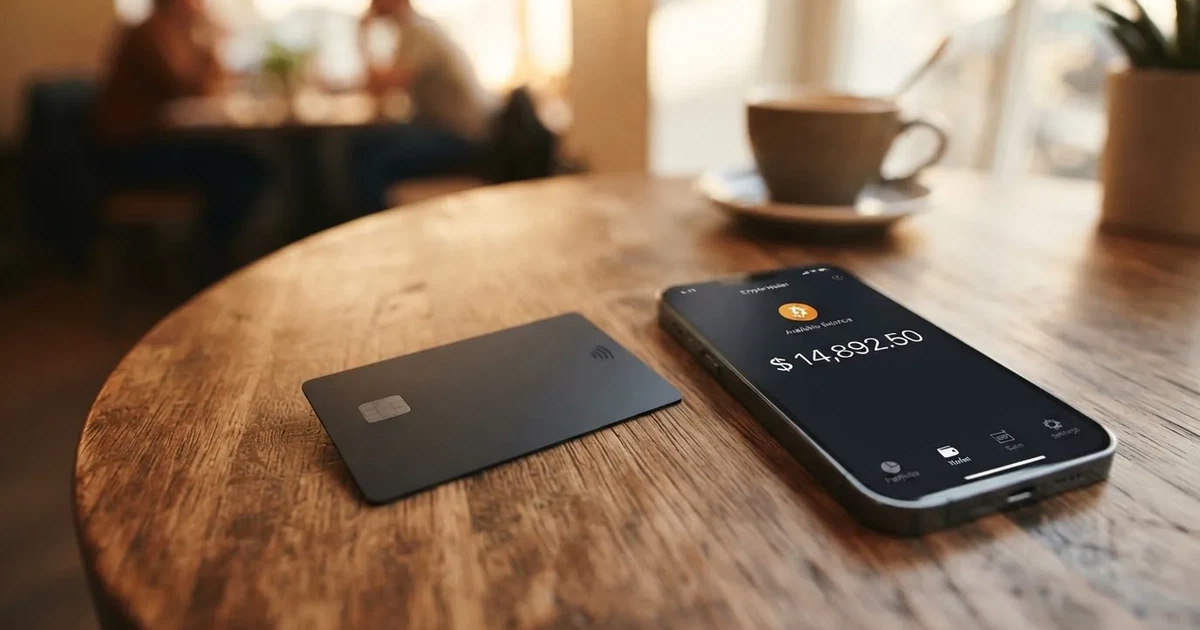
What holds it back is not the product but the disclosure. I went through the card page, the terms and the fees PDF line by line, and the single most repeated thing I found was silence. There is no published country list or eligibility rule. There is no stated identification process. There is no stated monthly fee, no stated FX allowance, no stated ATM fee, and no statement of who pays the blockchain network fee when you top up. Two of the card’s own official pages contradict each other on the daily spending limit. The cashback rate appears twice on the same page as “Up to 0,5%” and “Up to 5%”. None of that means the card is badly run — it means you are being asked to take several of the numbers on trust, and the ones that matter most to your month are the ones not printed anywhere.
The conditions described here are current as of October 28, 2026.
That is why I land on 6.4 out of 10. It is a good everyday card with an unusually broad coin list and a poor transparency record. Read the sections below in order, and you will know which of those two problems you personally have.
The verdict: 6.4 out of 10, good for people already holding coins and already in the EEA
I scored the card on six things, and here is the whole picture at once — every mark below is out of 10.
| Criterion | Mark | Why |
|---|---|---|
| Who can get it | 5 / 10 | No countries and no eligibility rule are stated anywhere official; third-party pages put it in 29 EEA countries and list Canada, Iran, North Korea, Switzerland, the UK and the US as closed |
| Cost | 6 / 10 | Issuing is free and delivery is EUR 5.99 (Romania) or EUR 9.99 (international), but a 1.49% crypto purchase fee and a foreign exchange fee of Maximum 2.5% sit underneath |
| Top-up options | 6 / 10 | Nine coins named, plus a debit or credit card route — but no networks named, and no stablecoins named either |
| Reliability and complaints | 7 / 10 | Operated by xPortal Equity A.G.; no complaints found at all, and an App Store rating of 4.8 out of 5 from 1.8K ratings |
| Everyday use | 9 / 10 | Virtual cards and a physical Mastercard Debit, Apple Wallet and Google Wallet, and cash out at an ATM up to EUR 500 in a month |
| Total | 6.4 / 10 | A strong spending card built on top of a weakly documented one |
Two things about who should read on and who should stop here.
This card is built for EEA residents who already hold crypto and want to spend it. If your coins are already sitting in EGLD or one of the other eight listed assets, the card does exactly one thing — turns that balance into day-to-day spending — and it does that with a nine out of ten on everyday use. The virtual cards, the mobile wallets and the ATM allowance are the parts of the offer that touch your life weekly, and they are the best built.
If you are outside the EEA, or you need an ordinary bank card and this is your second try at one, the missing country list is not a detail to shrug at. The terms say access “may not be available to you … in certain regions” without ever saying which regions. For someone in a restricted jurisdiction that sentence is the whole answer, and you will only get the real one by applying and being refused. There is a full comparison with the three alternatives I looked at further down.
Who will they give the card to: nobody publishes the rule
Straight answer: I could not find a published eligibility test. The card page and the terms do not state who qualifies. What they do contain is a country-coded delivery price — “RO” and “INT” — which tells you the card ships to Romania and internationally, and nothing about who inside those places may hold one. The terms carry one sentence: access “may not be available to you … in certain regions”. No regions are named.
That is the whole official picture. Here is what third parties say, and I want to be clear about the status of every line in this section: none of it is confirmed by the card.
- Available in 29 EEA countries.
- Restricted in Canada, Iran, North Korea, Switzerland, the UK and the US.
- That same third-party page contradicts itself about Germany, which is a good illustration of why I am labelling all of it unofficial.
The unofficial picture is consistent with the shape of the card: an EEA-centred offer, with the notable exclusions that are usual for this category of product. The US, the UK and Switzerland are the exclusions that would surprise a reader most, because those are the three countries where a crypto card is easiest to find elsewhere. If you live in one of those three, assume no until the app says otherwise.
One more thing worth knowing before you spend time on this. The official pages do not draw a line between citizenship and residence, and in this category that line matters more than it looks. Sanctions screening and issuer risk policy are usually applied to citizenship and country of birth as well as to your address, so a resident of an open country with citizenship of a restricted one may be treated differently from a citizen of the open country living abroad. Since the card states neither, this is a real unknown rather than an oversight I can excuse.
If you want the practical answer to “can I get this where I live”, the honest answer is: apply and see, and expect the app to ask you for documents before it issues anything.
How to get it: a wallet app, then identity checks the card does not describe
The route is an app. The card page lists an iOS app on the App Store, a Google Play app and a Huawei AppGallery app, in 30 languages including Russian, for iPhone, iPod touch and Apple Vision on iOS 15.1 and above. You create the wallet, and the card lives inside it — the Cards section is where you find it, which is also where the freeze control is.
The identity part is where the card goes quiet. The card page and the terms do not state what identification is required, at what level, how long verification takes, or why an application might be refused. Not a word. And this is not a trivial gap: in the EU, customer due diligence covers name, address, date of birth, nationality and identity documentation, a sanctions check, the purpose of the relationship, and a politically exposed person determination, and if due diligence cannot be completed the institution is required to stand aside from the transaction or the relationship.
What the help centre does show is that checks exist and can bite. There are articles titled “Source of funds check” — five of them — and one asking “Why do I have to provide my tax identification number?”. The second of those is the one to note: the card may ask you for a tax identification number, and if you cannot complete verification the help centre says to contact support by in-app chat or at [email protected]. Another help page lists [email protected], which is a useful clue about who is behind the money side, discussed later.
Unofficial, from a third-party site and not confirmed by the card: a full identity check before issuance — identification plus proof of address.
What the physical card costs and how it arrives is also inconsistent between the card’s own pages, so take both figures and expect the larger one:
- Fees PDF: the first physical card is EUR 9,99, plus delivery of EUR 5,99 to Romania or EUR 12,99 internationally.
- Card page: delivery EUR 5,99 for RO and EUR 9,99 for INT.
- Help centre, in an older article: international delivery “only EEA”.
Delivery time and replacement cost are not stated. There are help centre articles on both, by title only.
What it really costs: free to open, and then the fees start on the payment itself
The headline is good: opening and maintaining the account is free, and card payments are free. Everything after that is where your attention belongs, and the fee table is the single most useful thing the card publishes.

| Fee or limit | What the card states |
|---|---|
| Account opening and maintenance | Free |
| Issuing a card | Free |
| Virtual card | Free for the first three, then EUR 3 per virtual card |
| First physical card | EUR 9,99, plus delivery |
| Delivery | EUR 5,99 (Romania) or EUR 9,99 (international) on the card page; the fees PDF says EUR 5,99 (RO) and EUR 12,99 (international) |
| Monthly or annual fee | Not stated |
| Buying crypto through xMoney | 1.49% |
| Card payment | Free |
| Foreign exchange fee | Maximum 2.5% applied to the exchange rate |
| Payments to high-risk merchants, e.g. gambling | Max 3%, min EUR 1 |
| Cash withdrawal | Free up to EUR 200 per month; above EUR 200 a 2% fee plus EUR 1 per withdrawal |
| ATM balance check | EUR 1 in Romania, EUR 2 outside Romania |
| ATM limit | Maximum EUR 500 per day and EUR 2,500 per month |
| Chargeback for an unjustified chargeback | EUR 20 |
| FX fee and free FX or ATM allowance | Not stated — the fees PDF shows a dash |
Now let me walk three ordinary payments through that table, because the table alone does not tell you which lines actually bite.
A EUR 12 lunch in an eurozone city, paid by tapping the phone. No fee at all. Card payments are free and the FX fee does not apply to a euro transaction. This is the case the card is genuinely good at, and no line in the table will touch you.
The same EUR 12 lunch, in a city that is not on the euro. Here the foreign exchange fee applies, at Maximum 2.5% added to the exchange rate, with the actual rate depending on the transaction type, the merchant type, the geography or campaigns. The help centre has an article titled “What foreign exchange rate will I get?” — title only, no answer published. So the worst case on EUR 12 is roughly EUR 0.30 and the best case is zero, and the card does not tell you which you will get. On a card you use for travel this is the number that decides whether the card is worth having.
Taking EUR 100 out of a cash machine abroad. EUR 200 per month is free, so a single EUR 100 withdrawal inside that allowance costs nothing beyond whatever your own bank charges you for the ATM operator. Push past EUR 200 in a month and the 2% plus EUR 1 applies. Note also that paying an ATM to check your balance is not free: EUR 1 in Romania, EUR 2 everywhere else. And if the cash machine sits in a currency that is not the euro, the FX fee is on top of all of it.
Two limits you should know before you build a routine around the card, because the fees PDF and the card page disagree:
- The fees PDF says daily card spending — point of sale, e-commerce and ATM — has “No limit”.
- The card page says daily spending EUR 5,000.
- The ATM allowance is EUR 500 per month on the card page and EUR 500 per day with EUR 2,500 per month in the fees PDF.
If the lower figure is the real one, a large monthly purchase could be declined. I would not plan around the higher number. Splitting limits by KYC level is not stated anywhere.
One last thing in this section that is not a fee but behaves like one: a 2.5% maximum foreign exchange fee is high against cards that advertise no FX markup, and the card does not publish any free FX allowance at all. If you live outside the eurozone and spend in your own currency every day, you should price that in before you commit.
How to top it up: nine coins, one conversion fee, and no network named
Top-up is the part that makes this card different from a normal crypto card, and it is also the part with the biggest holes.
The coins. The card names BTC, ETH, EGLD, POL, BNB, SOL, DOGE, BERA and SUI. That is a long list, and it is the main reason to pick this card over one that only takes the two or three biggest assets. What the card does not name is the network to send each coin on, and it does not name a single stablecoin.
That last omission is worth a moment, because stablecoins are how most people actually hold dollar balances. Tether’s USDT and Circle’s USDC are US-dollar-pegged, and the BIS put about 90% of stablecoin market capitalisation in those two as of July 2025; Circle listed USDC as natively supported on 38 networks as of 16 September 2026. None of that appears on the xPortal card page. If your plan is “hold dollars on-chain, spend dollars off-chain”, you would be converting through a coin that is designed to move, which is not the same thing.
The routes. You can top up from crypto, or from a debit or credit card. Adding fiat — EUR, for example — is free, the minimum top-up is EUR 10, and the fees PDF gives daily top-up limits of EUR 5,000 and monthly EUR 25,000 across all methods for the Standard Mint Account. The card page states something different: daily top-up EUR 2,500 and monthly EUR 10,000. Same conflict as the spending limit, and the same advice — use the lower figure for planning.
Buying crypto through xMoney inside the card costs 1.49%.
Who pays the network fee is not stated. This is a genuinely important gap for anyone topping up from a self-custody wallet, and it is not a small one. On-chain network fees for a deposit are charged by the blockchain, not by the card provider, and they have to be paid in the chain’s own token — gas on Ethereum is paid only in ETH, so a wallet holding USDT with no ETH cannot send at all. Tron prices fees through bandwidth and energy and commonly burns TRX. If xPortal is watching for a transfer on a network you have chosen yourself, and your balance of that chain’s native token runs out mid-flight, you are in a support conversation with no guarantee. Circle stopped supporting USDC on Tron in February 2024, so “USDC over TRC20” is not a native option to fall back on either.
The failure mode to understand is specific and it is unforgiving: blockchain transfers are irreversible. A deposit sent on a network the card provider does not support, or sent to an address belonging to a different network, can simply be lost, or need manual recovery through support with no guarantee of success.
Withdrawing. Not stated. The help centre has an article titled “How do I cancel my Debit Card?”, a collection called “xPortal Card Balance”, and one on “Locked or Closed Accounts” — titles only, no published answers.
And one thing to hold in mind before you read too much into any of it: stablecoins are not censorship-proof either. Tether states that it disables tokens in wallets on the OFAC sanctions list and has frozen funds tied to illicit activity. That is not a reason to avoid them, but it is a reason to know that “on-chain” does not mean “beyond anyone’s reach”.
Paying with it every day: this is where the card is excellent
Everyday use was the highest mark I gave, and it deserves the highest mark. Nothing here is a workaround or a trick; it is what the card plainly does.
- Two forms of card. Virtual cards — xPortal, MultiversX or Sui branded — plus a physical card, described as a Mastercard Debit.
- Mobile wallets. Apple Wallet and Google Wallet, with the Apple Pay and Google Pay logos shown on the card page.
- Cash out. Withdrawals up to EUR 500 per month, with EUR 200 of that free.
- Real controls. Freeze and unfreeze from inside the app — Cards section, select the card, Freeze/Unfreeze button — and card settings that also offer Terminate or Replace. Lost or stolen, there is a 24/7 phone line.
- Cashback. Paid in $EGLD or $UTK depending on staking.
The cashback figure deserves its own warning, because the card page states it twice and the two statements are not compatible. The comparison table says “Up to 0,5%” and elsewhere on the same page it says “Up to 5% cashback”. Tier definitions are not stated on the card page at all — “Tier 2” appears only inside an image. The help centre names a “Diamond Touch” upgrade and a “Plan & Benefits” collection, by title only, and the fees PDF covers only the Standard Mint Account.
Unofficial, and not confirmed by the card: only the entry tier — Fresh Mint — is live, with cashback up to 0.5%, and the 5% figure belongs to higher tiers that have not launched. On that reading, plan for 0.5%, paid in a token rather than in euros, and treat the 5% as an advertisement for a future tier. Paying rewards in $EGLD or $UTK also means the value of your cashback moves with those assets, which is a different thing from a fixed percentage back.
When payments get declined. Some of this is generic to crypto cards and worth knowing before it happens to you. A merchant category code is a four-digit number classifying a business, and MCC 7995 covers gambling; many issuers block it on specific cards by policy rather than by law, and the blocked list varies by issuer. That is consistent with the card’s own high-risk merchant fee of max 3%, min EUR 1 — a fee for transactions the card does permit. Some merchants decline prepaid or foreign-issued card numbers because the issuer lookup reveals the card type and the issuer country, which is why a card issued in one country can look foreign to a shop in another. Address verification, which compares the numeric parts of the billing address a buyer typed against issuer records, is mainly offered in the US, Canada and the UK and is generally unavailable for foreign-issued cards, which can cause declines. And a declined authorisation may leave a hold on your funds that can remain for several days, typically up to seven.
On the plus side, tokenised mobile wallets are the safest way to tap: Apple Pay replaces the card number with a device-specific number stored in the Secure Element, never on Apple’s servers, and each payment uses a one-time dynamic security code. Online, 3-D Secure adds an identity check where the issuer assesses the risk and either approves it silently or challenges you — a one-time code or a biometric. Mastercard’s brand is Identity Check; Visa’s is Visa Secure.
Disputes and cancellation. A chargeback is a refund the issuer orders to settle a dispute, and this card charges EUR 20 per unjustified chargeback. The help centre has articles on cancelling a transaction, on a transaction you do not recognise, and on a duplicate transaction — titles only. One of those articles says a transaction cannot be cancelled once initiated. Time frames are not stated. If you are in the US, note that debit reversal rights come from Regulation E and credit card rights from Regulation Z, that prepaid-card coverage varies and should not be assumed, and that under 3-D Secure liability for a fraudulent online payment can shift from the merchant to your bank.
The app itself. On iOS the App Store rating is 4.8 out of 5 from 1.8K ratings as I read it, for iPhone, iPod touch and Apple Vision on iOS 15.1+, in 30 languages including Russian. The card page lists Google Play and Huawei AppGallery too, and shows an App Store figure of 4.9 — the page’s own number. The Google Play rating was not read. Where support matters, there is in-app chat (Intercom), [email protected] for KYC problems, and a 24/7 phone line for a lost or stolen card.
What can go wrong: the gaps, the counterparty, and the fees that apply when things go wrong
I want to separate three different risks here, because they are usually lumped together and they are not equally real.
First, the disclosure risk — the one that is actually live today. As section by section above: no country list, no stated KYC, no monthly fee, no FX allowance, no ATM fee, no network list, no stablecoins named, no stated answer on who pays the chain fee, no delivery time or replacement cost, and no stated answer on how to withdraw. If any of those numbers matters to your decision, you are relying on the app telling you at the moment you need it.
Second, the counterparty risk. The terms name xPortal Equity A.G. as the operator of xPortal, and the site footer names xPortal Labs. The issuer, the BIN sponsor and the licences are not stated on the official pages. Unofficial, from a third-party site and not confirmed by the card: the issuer is Capital Financial Services S.A. (Twispay), an electronic money institution licensed as IEME-RO-0001 by the National Bank of Romania, and the product was developed by MultiversX.
That unofficial detail is useful, because it tells you what kind of institution sits behind the money. An electronic money institution in the EU can issue e-money, payment cards and e-wallets but cannot lend, and it may offer services across the EU and EEA from a licence granted in one member state. Such an institution must safeguard customer funds — segregated in dedicated accounts or insured — but those funds are not the same as bank deposits and may not be covered by a deposit guarantee scheme. So the balance you load is safeguarded in the e-money sense, not the deposit sense. Ask which one applies to your balance before you keep anything meaningful on it.
Note also what “custody” means here, because the card’s own pages do not say where custody of the crypto sits. Control of crypto belongs to whoever holds the private key or the seed phrase; with a custodial wallet the provider holds the credentials and you must trust them completely. A seed phrase — typically 12 to 24 words — is an unencrypted private key, and anyone who obtains it can restore the wallet and spend its funds. Transfers are typically irreversible, and a stolen key has no built-in recovery: the network cannot freeze or return the funds. This category has a documented record of custodian failure — Mt. Gox at about US$350 million reported stolen across 2011–2014, Coincheck at about US$400 million in 2018, and Ronin Network at US$625 million in 2022.
Third, the category risk — programs can be switched off. Visa and Mastercard do not issue crypto cards to consumers themselves; they license issuers and can suspend a programme. Visa said it had “terminated our global agreements with FTX” in November 2022, and the FTX US debit card programme was being wound down by its issuer. WaveCrest, a Visa issuer that supplied crypto card brands, was suspended by Visa in Europe in 2018, closing all WaveCrest-issued Visa programmes. The usual sequence is a notice period, then loading and spending stop, then you are asked to withdraw your remaining balance. Unofficial user reports mention slow support response times, and reviews also suggest improvements in the verification process and seed phrase visibility.
For the regulatory frame, one thing is worth knowing in 2026: under MiCA — the EU’s markets-in-crypto-assets regulation, which ESMA states took legal effect in June 2023 — e-money tokens may be issued only by a credit institution or an electronic money institution. The transitional period lets providers already operating under national law continue only until 1 July 2026 or until they receive or are refused a MiCA authorisation, whichever comes first. ESMA keeps an interim register of authorised crypto-asset service providers, and a CASP authorised in one member state can serve the whole EU. A card is regulated separately from the crypto side, which is why a product like this often rests on two licences rather than one.
And a risk with its own name: chargebacks cost you EUR 20 if the issuer decides the claim was unjustified. For someone who disputes transactions rarely, that is a fair price. For someone whose card gets charged back against repeatedly, it is the most expensive line on the whole fee table.
What the card does offer against risk: app-based freeze and unfreeze, spending limits in card settings, termination and replacement, a 24/7 lost-and-stolen line, in-app chat support, tokenised mobile wallets, and help centre articles on “Is my money safe?” and “How does the account and card issuer keep my money secure?” — titles only, answers not read. Custody of the crypto itself is not stated.
On taxes, I will not advise you, but you should not be surprised by it: the IRS treats digital assets as property, so exchanging them for goods, services or dollars generally produces a taxable gain or loss, measured in local fiat currency at fair market value on the date of the transaction. Each card payment funded from crypto may therefore be a separate disposal. Your own jurisdiction will differ — check with a professional, not with me.
What to take instead
If the gaps in the paperwork are the problem rather than the product, here are three cards I compared, with their own scores. Two of them are more transparent than xPortal on the things xPortal is silent about.
| Card | Score | Country list | Cost | Spending fee | Rewards |
|---|---|---|---|---|---|
| xPortal | 6.4 / 10 | Not stated officially; unofficial 29 EEA, six countries restricted | Issuing free; delivery EUR 5,99 (RO) / EUR 9,99 (INT) | Free; FX Maximum 2.5% | Up to 0,5% or up to 5%, stated twice on the same page |
| BloFin Wallet Card | 6.9 / 10 | Not published on the card page; unofficial 35 countries including the US, Australia, Japan, UAE, Brazil, Mexico, Malaysia, New Zealand | Activation, annual, issuance and dormancy $0.00 each; cancellation free | 1% or lower by VIP tier: 1.00%, 0.90%, 0.80%, 0.50%, 0.20%, 0.00% | None — a reduced spend rate instead |
| Decaf | 6.2 / 10 | Restricted in 19 named countries and 11 named US states; citizenship vs residence not stated | Virtual $5 worldwide; physical $10 (US) or $90 (rest of world); no monthly or annual fee | FX fee none — the rate is Visa’s | Not stated |
| SafePal | 6.2 / 10 | “Citizens of supported regions who live in supported areas”; the regions page was empty when fetched | No account creation or management fee; card issuance not stated | Mastercard non-USD settlement 1% FX; standard top-up 0%; refund processing 1 USD/EUR/CHF/7 CNH | No cashback; referral commissions up to 40% of referred top-up fees |
BloFin Wallet Card scores 6.9, above xPortal, and it wins on two things you can verify. It is a Visa Platinum, it charges $0.00 for activation, annual, issuance and dormancy, and its spending fee runs from 1.00% down to 0.00% by VIP tier. It has no cashback at all — the pitch is a lower spend rate, not a rebate — and you top up with USDT and USDC on Arbitrum and Base. What it does not do is publish a country list on the card page; you pick your country in the app, and whether that check is on citizenship or residence is not stated.
Decaf is the one to look at if the FX fee is what stops you. It is a Visa card, virtual or physical with tracked delivery, it adds no fee of its own to foreign exchange — the rate is the one Visa offers — and it charges an activation fee of $5 for the virtual card worldwide, or $10 for a physical card in the US and $90 elsewhere, with no monthly or annual fee. You pay a Decaf payment link or account details by card, bank transfer or USDC, and the app runs on Solana and Stellar, though the card page does not say which coins and networks top the card itself. It publishes the longest restricted list of the four — 19 countries including Belarus, China, North Korea, India, Iran, Iraq, Israel, Myanmar, Nepal, Russia, Syria, Turkey, Cuba, Ukraine, Venezuela, Vietnam, Nicaragua, Puerto Rico and Nigeria, plus 11 US states including Arizona, Delaware, Georgia, Idaho, Louisiana, Maryland, Montana, Ohio, Oregon, Rhode Island, Washington and Wisconsin — which cuts both ways: it is the clearest of the four, and it excludes a great deal.
SafePal is the one with the broadest on-ramp and the quietest fine print. A virtual Mastercard debit, spending limits given in euros against a Swiss Fiat24 account, crypto top-up from 40+ blockchains converted to USDC or fiat, transactions on Arbitrum, no account or management fees. But the regions page returned empty when fetched, card issuance is not stated, swaps include an unquantified spread, refunds cost 1 USD, EUR, CHF or 7 CNH, and the bank page elsewhere advertises crypto top-up “as low as 0.4%” on the top tier against a standard top-up fee of 0%.
The honest summary of the comparison: xPortal has the longest coin list of the four and one of the better everyday-use features, including cash out. BloFin has the lowest cost and the widest spend discount. Decaf has no FX markup and the clearest restricted list. SafePal has the easiest funding. None of the four publishes everything.
Who I would recommend it to
Yes, if you are an EEA resident who already holds crypto — particularly EGLD or any of the other eight listed coins — and you want a card that spends it without selling your whole position every time. You get free issuing, free card payments, up to three free virtual cards, Apple Wallet and Google Wallet, a physical Mastercard Debit if you want one, EUR 200 a month of free cash out, an app rated 4.8 out of 5 from 1.8K ratings, and a provider I could find no complaints about. That is a good card.
Yes, cautiously, if you mostly spend in the eurozone and treat foreign purchases as occasional, since the Maximum 2.5% FX fee only bites when you do not.
No, if you are outside the EEA or in Canada, Iran, North Korea, Switzerland, the UK or the US until the app confirms you in writing — the official pages will not tell you first.
No, if you plan to hold a large balance. The custody arrangement is not stated, the issuer and licences are not official facts, and any balance here is safeguarded in the e-money sense rather than the deposit-guarantee sense.
No, if you travel often and the FX fee decides your cost, or if you need to pay a large amount in one go, because the two official pages disagree about the daily spending limit and I would plan around EUR 5,000.
No, if you want to top up with USDC or USDT and keep them as dollars. No stablecoin is named on the card, and the network for each of the nine coins is not named either — which means you are the one choosing the network, and a wrong choice on an irreversible transfer is a loss.
Before you commit, check three things in this order: what the app says about your country at signup; what it says about KYC, including why a tax identification number might be requested; and what the fees PDF in your account says about your daily spending limit, since that is where the two official pages disagree. Ask support in the app chat what the FX rate will be on a typical transaction, because the help centre has the article and does not publish the answer.
And a closing thought. Everything I have praised here is about how the card behaves. Everything I have criticised is about how little the card tells you. Those are different problems, and they do not cancel out: a well-built product with a blank country list is still a card you have to trust at the moment you are least able to check.
Frequently asked questions
What is the xPortal card?
The xPortal card is a Mastercard Debit that spends a balance you load yourself rather than drawing on a bank account. It comes as virtual cards — xPortal, MultiversX or Sui branded — and a physical card, and it works in Apple Wallet and Google Wallet. You fund it from crypto or from a debit or credit card. Issuing is free, and it is aimed at people who already hold coins and want to spend them.
How does the xPortal card work?
You convert or top up a fiat balance, and the card spends only that balance, so it cannot overdraw — the model is closer to a prepaid card than to a normal debit card. Buying crypto inside the app through xMoney costs 1.49%, adding fiat is free, and the minimum top-up is EUR 10. A foreign exchange fee of Maximum 2.5% applies to non-euro spending. You can freeze and unfreeze the card from inside the app at any time.
Is xPortal a bank?
No — it is a card programme, not a bank account. The site footer names xPortal Labs and the terms name xPortal Equity A.G. as the operator, but the issuer and the licences are not stated on the official pages. Unofficial sources point to Capital Financial Services S.A. (Twispay) as issuer, licensed as electronic money institution IEME-RO-0001 by the National Bank of Romania. That is not confirmed by the card.
Who owns xPortal?
The official record is thin. The site footer names xPortal Labs, and the terms name xPortal Equity A.G. as the operator of xPortal. Unofficial reporting credits the product to MultiversX as developer and names Twispay as the issuing institution, neither confirmed by the card itself. If ownership matters to your decision, ask support directly in the app chat before you load anything meaningful.
Is the xPortal card available in my country?
The card does not publish a country list or eligibility rule — that is the honest answer, and it is why this is the question I would ask support first. Third-party sources, unofficial and not confirmed by the card, put availability at 29 EEA countries with Canada, Iran, North Korea, Switzerland, the UK and the US restricted; the same page is internally inconsistent about Germany. Terms add only that access “may not be available to you … in certain regions”.
Can I use the xPortal card abroad?
Yes, with the foreign exchange fee in mind. Non-euro spending carries a fee of Maximum 2.5% applied to the exchange rate, depending on transaction type, merchant type, geography or campaigns, and no free FX allowance is published. Cash out abroad and the same applies on top of EUR 200 free withdrawals per month, a 2% fee plus EUR 1 above that, and EUR 2 for an ATM balance check outside Romania. Some merchants also decline foreign-issued card numbers.
How do I get the xPortal card?
Download the app — iOS on the App Store, plus Google Play and Huawei AppGallery — and sign up. Virtual cards are free for the first three and EUR 3 each after that. A physical card is EUR 9,99 on the fees PDF, with delivery quoted as EUR 5,99 for Romania and EUR 9,99 internationally on the card page, or EUR 12,99 internationally in the PDF. Delivery time and replacement cost are not stated, and older help content says international delivery is EEA only.
Does the xPortal card require KYC?
Almost certainly yes, though the card page and terms do not state what is required. EU rules cover identity documents, address, nationality, a sanctions check and a politically exposed person determination, and the help centre carries five articles on a “Source of funds check” and one on being asked for a tax identification number. Unofficial sources describe ID verification plus proof of address before issuance. If you cannot finish, the help centre says to use in-app chat or [email protected].
How do I top up the xPortal card?
From crypto — the card names BTC, ETH, EGLD, POL, BNB, SOL, DOGE, BERA and SUI — or from a debit or credit card, and you can add fiat for free. No network is named for any of those coins and no stablecoin is named at all, so you choose the network yourself and a mismatch on an irreversible transfer can lose the funds. Limits also differ between pages: EUR 5,000 daily and EUR 25,000 monthly in the PDF, EUR 2,500 and EUR 10,000 on the card page. Who pays the chain fee is not stated.
Is the xPortal card safe, and is it worth it?
Worth it if you already hold the listed coins and spend mostly in the eurozone; less so otherwise. Card payments are free, issuing is free, three virtual cards are free and the app rates 4.8 out of 5 from 1.8K ratings. Against that: no official complaints found, but custody is not stated, the issuer is not an official fact, balances are safeguarded in the e-money sense rather than the deposit-guarantee sense, and a Maximum 2.5% FX fee with no published free allowance is steep for frequent travel.
Wallet cards: the entry point – cryptocardportal.com
Content created by the «cryptocardportal.com» team