
WebWisePay card, reviewed: USDT top-ups, a Telegram bot, and an awful lot of "not stated"
 Available in US
I went through WebWisePay’s public pages, its Telegram channel, and its Android app listing to put this review together. The card lives inside a small ecosystem: a Telegram bot, an Android app, and a virtual card you spend from a USDT balance. That shape tells you almost everything about who it is for, and also a lot about who it is *not* for. The headline is simple. WebWisePay works as advertised for one narrow audience — Telegram users who already hold USDT and want a virtual card to spend it through — and outside that audience the published information is thin to the point of being a real risk. I scored it 4.7 out of 10 and I’ll explain that number, then walk through who can get one, what it costs, how the top-up and daily spending actually work, and where I’d send you instead.

The conditions described here are current as of October 28, 2026. I have tried to keep every fee, country, date and company name exactly as the card’s own materials state them.
Verdict
WebWisePay is a small, narrowly focused product. It is built around a Telegram bot and an Android app from a developer called NovaCyber Ltd, with a virtual card you fund with USDT. That is genuinely the whole of it. The card is virtual, the supported top-up is USDT, and the supported networks are not officially listed anywhere I could find. The company’s own footer notes the card’s terms are subject to eligibility, availability, and compliance review by independent partners. The issuer is not named. The country list is not published. The fees are not published on the home page. The daily and monthly limits are not published. The currency the card settles in is not published. If you read the public pages and try to answer the questions a normal cardholder would ask — what does it cost, where can I use it, can I get one where I live — you walk away with more questions than you started with.

Score
| Criterion | Mark | Why it lands there |
|---|---|---|
| Who can get it | 5 / 10 | Country list and exclusions are not stated; simplified KYC is required before a card is issued |
| Cost | 5 / 10 | Tariffs are not on the home page; the referral page mentions an issuance fee and a top-up fee, but the amounts are not given |
| Top-up options | 4 / 10 | USDT deposit is supported; the networks are not stated, with an unverified earlier check suggesting BNB Smart Chain, Ethereum and Tron |
| Reliability and complaints | 4 / 10 | App developer is NovaCyber Ltd, the footer says “Not a bank”, the issuer is not named; no complaints surfaced; the app has 500+ downloads and no star rating |
| Everyday use | 5 / 10 | Virtual only, issued in 5–10 minutes; Apple Pay and Google Pay mentioned in a February 2026 channel post; ATM access not stated; no iOS app |
| Total | 4.7 / 10 | A real, working product for one specific audience — Telegram users topping up a virtual card with USDT — with too many unanswered questions for anyone else |
The card is not a scam in the ways you might fear. There are no obvious red flags of fraud, no community reports of stolen funds, and the developer behind the app is a named company. The problem is the opposite of fraud. It is opacity. A reader who needs a card for everyday use cannot answer basic questions from the public pages, and that is enough to make me cautious.
Who they will give the card to
The honest answer here is that I cannot tell you in detail, because WebWisePay does not publish a country list, an age policy or an exclusions list on the pages I read. The card-related-services footer tells you that the service is “subject to eligibility, availability, and compliance review”, which is the kind of language an issuer uses when the rules are decided case by case rather than written down. So the practical answer is: you will find out when you try.
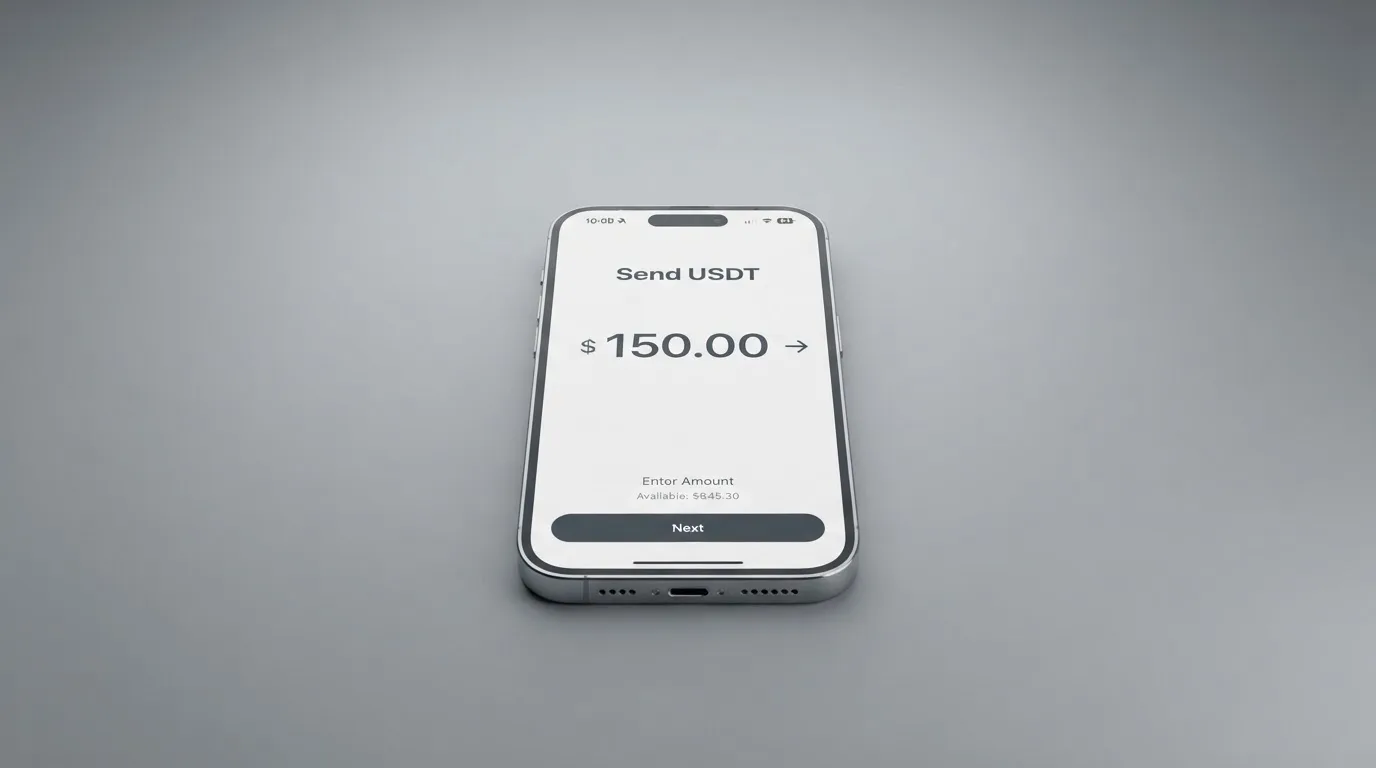
A few things are stated. The card requires KYC before it can be issued. The referral programme is described as “available to users who have already completed KYC and issued a card”, which confirms the KYC gate. The site calls it a “simplified KYC” without listing which documents are accepted. There is no published breakdown of KYC tiers (basic versus enhanced, limits at each level, when a second round of documents is needed). For comparison, a regulated EU e-money issuer typically lists a tiered scheme with explicit limits at each level, so the gap here is significant. The application flow is built around a Telegram bot called @WebWisePay_bot and the Android app, both of which I read in October 2026.
If you are an adult with a government-issued ID, an address, and a willingness to upload documents through Telegram or the Android app, you are likely eligible in the general sense. Whether you are eligible in the specific sense — for your country, your citizenship, your residency status, your age, your document type — is something the bot will tell you at signup, not something you can read on a website. That is fine for a community product; it is uncomfortable for a payment product where declined authorisations can leave a hold on funds for several days.
The audience that fits cleanly is the audience the card was clearly designed for: people who already use Telegram as their main interface for crypto, who already hold USDT, and who are looking for a fast, virtual card to spend that USDT online or through a mobile wallet. The audience that does *not* fit is anyone who needs to compare fees, limits, currencies or coverage before they sign up, because the public information does not let you do that comparison.
How to get it
The signup path is short and works almost entirely inside Telegram or the Android app. The card is virtual, the issuer is unnamed publicly, the network is described in August 2026 channel posts as VISA and in earlier February 2026 posts as “virtual Mastercard cards” — so the network branding has been a moving target — and the card is issued through the bot or the app by going to “Cards” → “Add Card”. The card is reported as being issued within 5–10 minutes of completing the simplified KYC.
A few practical points to know going in:
- There is no physical card. Everything is virtual, which means you cannot insert or swipe it anywhere; you spend it by typing the card details, by adding it to a mobile wallet, or by using tokenised checkout.
- The official delivery question does not really apply, since there is no card to ship. The card details appear in the app once issued.
- There is no iOS app. The Google Play listing for “WebWise Pay: Wallet & Card” by NovaCyber Ltd had 500+ downloads at the time I read it (2026-10-22), had been updated on 25 September 2026, and shows no star rating. If you live on iPhone, your interface is the Telegram bot on the web or in another app.
- A 50% off card-issuance promo code ran through a February 2026 contest, with the content side extended through September 2026 — so promotional pricing has been used as a growth lever, not as a permanent fee schedule.
If you already have a Telegram account, a phone number, and an ID document you can photograph, the practical path from “I’ve heard of this” to “I have a card number” is short. The KYC step is the only real gate, and because the company is not publishing what the KYC requires, the only way to know whether your document will work is to start it.
What it really costs
This is the section where WebWisePay is weakest, and it is worth being direct about why. The public home page does not publish a tariff. The site describes the referral programme as paying a share of the card issuance fee and the top-up fee, which confirms that both fees exist, but it does not name the amounts. The currency the card settles in is not published. The conversion fee is not published. The ATM fee is not published (and the card is virtual, so this is a different question for a virtual card anyway). The FX margin is not published. The daily and monthly limits are not published. There is no published tier structure.
I am not going to invent numbers. Where a fee exists but the amount is not stated in the official materials, the only honest description is “not stated”. When you compare that to the published fees of regulated card issuers, even small ones, the difference is stark: most will publish an issuance fee, a monthly fee, a top-up fee, a conversion fee, an ATM withdrawal fee, and at least one set of limits, all on a single tariff page. WebWisePay does not.
Here is what I can put in a table, with the gaps left as “not stated” rather than guessed:
| Fee or limit | What WebWisePay says |
|---|---|
| Card issuance | Fee exists (referral programme references it); amount not stated |
| Monthly fee | Not stated |
| Top-up fee | Fee exists (referral programme references it); amount not stated |
| Conversion / FX | Not stated |
| ATM withdrawal | Not stated |
| Daily limit | Not stated |
| Monthly limit | Not stated |
| Card currency | Not stated |
| Tiers | Not stated |
Now, three worked examples so you can see where the fees would bite. None of these are real WebWisePay transactions; they are the kind of everyday situations where a card fee matters, and they are written so you can think about which fees would apply if you were the one paying.
- A monthly subscription for a streaming service, paid from a USDT balance. The relevant fees are the conversion fee (USDT to whatever the card settles in) and any FX fee if the merchant’s currency is not the card’s currency. If WebWisePay is silent on the conversion fee, the only way to know what you actually pay is to make a small test payment and read the receipt.
- A dinner in a city where the card’s currency is not the local one. You would pay the conversion fee on the spot, and if the card is in a third currency (say euros when the merchant bills in pounds), you would pay the FX margin twice — once into euros, once into pounds. That is the cost of not having a clear card currency published.
- An online purchase with a 3-D Secure challenge. If the card supports 3-D Secure (not stated), the verification step itself is free, but if a hold is placed on the funds while the authorisation is reviewed, the hold can last several days. With a prepaid-style card that draws on a USDT balance, a held amount is a held amount of stablecoin — it is not spent, but you cannot spend it elsewhere either.
Two things follow. First, the cost of using this card in practice is something you can only learn by using it, which is a poor position for a reader. Second, “no fee on the home page” is not the same as “no fee” — the referral programme’s reference to an issuance fee and a top-up fee tells you both exist, even if their amounts are not published.
How to top it up
The funding story is the cleanest part of WebWisePay. The card is designed to be topped up with USDT, and only USDT. The site and channel describe a flow in which you deposit USDT, then issue a virtual card that draws on the resulting balance. The internal-transfers feature launched in August 2026 lets you move funds between your own cards and to other WebWisePay users “at the first stage… with no fee” (channel post, August 2026). What is *not* published is the list of supported networks for the USDT deposit.
The networks for USDT matter. USDT exists on many chains — Ethereum, Tron, BNB Smart Chain, Solana, Polygon, Avalanche, and more — and each chain has its own address format and its own fee. An unverified earlier check of the project’s materials suggested BNB Smart Chain, Ethereum and Tron, but I cannot confirm that against an official page. If you have USDT on Polygon and the card only supports Tron, your deposit will not arrive. Stablecoin transfers are typically irreversible, so a deposit sent on a network the card provider does not support, or to an address for a different network, can be lost or need manual support recovery with no guarantee.
A practical guide to the top-up, written for the reader who already holds USDT:
- Confirm which network the WebWisePay app is asking you to send on. The wallet or bot should show a deposit address and a network name; if it doesn’t, ask the support bot before sending anything.
- Send a small test amount first. With stablecoins, a US$1 test that arrives is worth a US$1,000 mistake that doesn’t.
- Keep enough of the network’s native token to pay gas. On Ethereum, fees are paid only in ETH, so a wallet with USDT but no ETH cannot send. On Tron, fees are paid in TRX or use the network’s bandwidth and energy resources. The card provider does not pay this — you do.
- Watch for the network’s confirmation time. Tron is fast, Ethereum depends on congestion, BNB Smart Chain sits in between. The card balance should reflect the deposit after the network’s finality, not after you press “send”.
- Use the referral programme if you can. The August 2026 post says 15% of the top-up fee of a first-level user and 5% of a second-level user is paid out — useful context for sizing the top-up fee if you ever do see it on a receipt.
Withdrawal back to crypto is not stated. If you load the card with USDT, then change your mind, the path back to a private wallet is not documented. That is a real gap, and you should treat the top-up as a one-way decision until the project publishes the reverse flow.
Paying with it every day
Once the card is in your hand, the daily-use story is mostly a mobile-wallet story. A February 2026 channel post announced “full integration with Apple Pay and Google Pay for online and in-store purchases”. If that integration is still in place at the time you read this, the card works wherever Apple Pay or Google Pay is accepted, which is most modern point-of-sale terminals and a wide slice of online checkout. The card details themselves can also be typed into a checkout form, which is the standard virtual-card path for subscriptions and online services.
The everyday-use picture, as far as I can piece it together from the public material:
- In-store. Add the card to Apple Pay or Google Pay on a supported device and tap to pay. The actual card is never handed over; the phone produces a one-time dynamic security code linked to a device-specific number.
- Online. Type the card details into a checkout form, or use the mobile wallet’s autofill. If 3-D Secure is enabled, expect an additional verification step on some merchants. The card’s 3-D Secure policy is not stated, so this is a “try it and see” question.
- Subscriptions. A virtual card is the right shape for a subscription if the merchant accepts the card’s BIN and currency. If the merchant runs address verification and the card is foreign-issued, the payment can decline even when there is enough balance.
- ATM. Not stated. The card is virtual, so this is unusual territory; the public material does not say whether a virtual-only card can be used at an ATM through a mobile wallet.
- Cashback. None is stated. There is no published cashback, reward, or loyalty scheme. The referral programme (40% of the first-level user’s issuance fee, 10% of the second level, 15% of the first-level user’s top-up fee, 5% of the second level) is the only published economic incentive, and it pays you for inviting other people, not for spending.
- Disputes and chargebacks. Not stated. The site does not describe a dispute process, a chargeback window, or a refund flow. A regulated card issuer in the EU or the UK would publish this; the absence of that page is a real gap.
- App and account. The Telegram bot @WebWisePay_bot and the Android app are the only published interfaces. There is no iOS app, no web dashboard, and no published support phone number.
A small note on hold times. When a card authorisation is placed on hold (because the merchant pre-authorises an amount, or a verification step is in progress), the held amount can stay unavailable for several days. With a prepaid-style card drawing on a USDT balance, a hold is a hold on stablecoin — the funds are not lost, but you cannot spend them elsewhere while the hold is in place. If you plan to keep a low balance, a hold can effectively freeze the card for a while.
What can go wrong
The risks I would flag fall into three buckets. The first is the bucket of unanswered questions. The second is the bucket of ordinary crypto-card risks that the product does not address publicly. The third is the bucket of platform-specific risks that come with the Telegram-first design.
Unanswered questions
- Issuer and licence. The site footer notes that card-related services are provided through independent partners. The issuer is not named on the public pages I read. If the issuer is a regulated bank or e-money institution, the regulator and licence number would normally appear in the cardholder agreement. Their absence is not proof of anything, but it is a gap.
- Country and citizenship rules. Not stated. Sanctions screening is normally applied to citizenship and country of birth as well as to country of address, so the absence of a country list is the kind of gap that bites a reader after they have already uploaded documents.
- Fees and limits. Not stated. The only published sign of the fee structure is the referral programme, which references an issuance fee and a top-up fee without naming the amounts.
- Card currency and FX. Not stated. A virtual card that is silent on its base currency and on the FX margin is a card on which the real cost of a foreign-currency payment is invisible.
- Dispute and chargeback process. Not stated. If a payment goes wrong, the public materials do not tell you how to ask for a refund.
Ordinary crypto-card risks
- Stablecoin depeg. USDT is a US-dollar-pegged stablecoin, but stablecoins are not guaranteed to hold their peg. USDC briefly lost its peg during the March 2023 US banking stress. The card’s spending balance is denominated in USDT (or in the card’s settlement currency after conversion), and any depeg would change what your balance is worth.
- Network choice. The networks supported for USDT deposits are not officially published. Sending USDT on the wrong network can mean lost funds with no recovery path.
- Issuer risk. The site says card-related services are “subject to eligibility, availability, and compliance review”. Card programmes can be wound down. The Visa-Mastercard side of the industry has seen this in the past — WaveCrest’s 2018 suspension in Europe closed every WaveCrest-issued Visa programme overnight, and FTX’s 2022 collapse ended the FTX US debit card.
- Custodial risk. A card that holds a balance on your behalf carries counterparty risk on the custodian. A card that converts at the moment of payment into a pre-loaded balance shifts some of that risk onto the issuer.
Platform-specific risks
- Telegram as the only interface. The card is administered through a Telegram bot. If your Telegram account is lost, locked, or compromised, the card is locked with it. The bot supports two-factor authentication (channel post, February 2026), which is the standard mitigation; it is not a substitute for securing the account itself.
- Limited support surface. Support runs through a Telegram bot (@WebWisePay_support_bot), the channel @WebWisePay, and an X account @webwise_pay. Hours, languages and response times are not stated. There is no support phone number, no support email, and no published ticketing system.
- No complaints profile. I searched twice for complaints and found only unrelated brands with similar names (Wise, WisePay UK, PayWithUs). The absence of complaints is encouraging but not the same as a verified clean record on a third-party review site.
The honest summary of the risk picture: a working, narrowly-scoped product with too much operational opacity for a reader to evaluate it cleanly. The risks are not exotic; they are the ordinary risks of a small, lightly-disclosed card product amplified by the fact that the public information is thin.
What to take instead
If WebWisePay’s gaps are deal-breakers for you — and for most readers they will be — there are alternatives in the same general category (virtual card funded from a crypto balance), with different trade-offs. I picked three that are commonly compared, and gave each its own quick read based on the same kind of public-information review I did for WebWisePay. Scores are from the same project, not invented for this page.
| WebWisePay | Ape Wallet | MaxSwap | AnoCard | |
|---|---|---|---|---|
| Score | 4.7 / 10 | 5.5 / 10 | 5.2 / 10 | 5.9 / 10 |
| Country list | Not stated | Not stated; Russian focus (SBP, Russian passport KYC) | “No … geographical restrictions” claimed | Not stated on the page read 2026-10-22 |
| Card form | Virtual only | Virtual Visa (service card + Apple/Google Pay card) | Virtual only, Mastercard | Virtual (VCC), reloadable and one-time, several BINs |
| Card currency | Not stated | Not stated | Not stated (fees in USD) | Depends on the BIN |
| Issuance fee | Not stated (fee exists) | Not stated (promo pricing varies) | US$50 card + US$25 first deposit (listed total US$77.125) | Not published; varies by BIN |
| Monthly fee | Not stated | Not stated | Not stated | Some products have a maintenance fee |
| Top-up fee | Not stated (fee exists) | Not stated; transfers by Telegram username free | 4.5% + US$1 | Not published; shown in SORN before payment |
| Transaction fee | Not stated | Not stated | US$0.25 + 0.4% | Not published |
| FX / conversion | Not stated | Not stated | No separate FX rate | Not published |
| Top-up assets | USDT | USDT (wallet balance) | Wide list incl. BTC, ETH, USDT, USDC, TON and others | Route depends on asset; unverified list includes SOL, BTC, USDT, USDC, ETH |
| Cashback | None stated | None stated | Not stated | None stated; referral pays US$5 per card creation and 0.25% of referred top-ups |
| Mobile wallet | Apple Pay, Google Pay (Feb 2026 post) | Apple Pay, Google Pay | Not stated | Not stated |
The shape of the table tells the story. None of these products is fully transparent; every one has gaps. AnoCard scores highest of the three alternatives because its dashboard surfaces the fee before payment, even when the home page does not. MaxSwap publishes its fees, which is what you want when you are comparing cards. Ape Wallet has a Russian focus that makes it a natural fit for SBP users but a harder fit for everyone else. WebWisePay, by contrast, publishes the fewest concrete numbers of the four.
If you want a virtual card funded from a crypto balance and you care about published fees, MaxSwap is the cleanest of the three. If you want a card tied to a specific regional payment rail (SBP), Ape Wallet is the obvious match. If you want a virtual card from a dashboard that surfaces fees before you pay, AnoCard is worth a look. If you are a Telegram-native USDT user who is comfortable with operational opacity, WebWisePay is a working product for that narrow audience.
Who I would recommend it to
I would recommend WebWisePay to a very specific reader, and I would actively warn most others off. The reader I would point at this card is one who already lives in Telegram, already holds USDT, needs a virtual card today, and is comfortable with the fact that the published information about fees, limits, currency, country list and dispute process is thin. For that reader, the card is fast (issued in 5–10 minutes), the top-up flow is built for USDT, the mobile-wallet integration is in place, and the developer behind the app is a named company. Those are real positives.
The reader I would not point at this card is anyone who needs to compare two cards on a fee schedule before they sign up; anyone who needs to know whether their country is supported before they upload documents; anyone who needs a published dispute process; anyone who needs an iOS app; anyone who needs a physical card; anyone who needs cashback or rewards; and anyone who needs an ATM-accessible card. For all of those readers, the public information does not let them answer the question they need answered, and a different product will serve them better.
The 4.7 is a fair score for what the product actually is. It is not a fraud, it is not a finished regulated card programme, and it is not a marketing-only shell. It is a small, working, virtual card product for a specific audience, with too much undisclosed detail for anyone outside that audience to rely on it. If you are inside the audience, you know who you are. If you are not, the alternatives are better fits.
Frequently asked questions
What is WebWisePay card?
WebWisePay is a virtual payment card you fund with USDT and spend online or through Apple Pay and Google Pay. The card is administered through a Telegram bot called @WebWisePay_bot and an Android app called “WebWise Pay: Wallet & Card” by NovaCyber Ltd. The card details are issued in 5–10 minutes after a simplified KYC check. The site notes that services are provided through independent third-party partners.
How does WebWisePay card work?
You complete a simplified KYC, deposit USDT, and the bot or Android app issues a virtual card. The card is spent at merchants that accept the card’s network, or through a mobile wallet. Earlier posts referenced a “virtual Mastercard cards” branding; later posts reference VISA. The networks the USDT deposit is sent on are not officially published.
Is WebWisePay a bank?
No. The footer on the official site confirms it is not a bank, with services provided through independent partners. The issuer of the card is not named on the public pages. The Android app is published by NovaCyber Ltd.
Who owns WebWisePay?
The Google Play developer of the Android app “WebWise Pay: Wallet & Card” is listed as NovaCyber Ltd. The site does not publish an ownership structure, a registered address or a regulator. The card-related services are described as being supported through independent third-party partners, but the partners are not named.
Is WebWisePay card available in my country?
The site does not publish a country list, a citizenship list or an exclusion list. The card-related-services footer says the service is “subject to eligibility, availability, and compliance review”, which means the answer is decided at signup. The only practical way to find out is to start the KYC and read what the bot tells you.
How do I get a WebWisePay card?
You open the Telegram bot @WebWisePay_bot or install the Android app, complete a simplified KYC, deposit USDT, and issue the card from “Cards” → “Add Card”. The card is reported as being issued within 5–10 minutes. There is no iOS app.
Does WebWisePay card require KYC?
Yes. The referral programme is described as “available to users who have already completed KYC and issued a card”, which confirms the KYC gate. The site calls it a “simplified KYC” without listing the documents. The published KYC does not have a tiered scheme with named limits.
How do I top up WebWisePay card?
You deposit USDT to the address and network the bot or app provides. The supported networks are not published. The August 2026 channel post says internal transfers between your own cards and to other WebWisePay users are “with no fee” at the first stage. Withdrawal back to crypto is not stated.
Is WebWisePay card safe to use?
The app supports two-factor authentication on a Telegram-based multichain wallet, and there is no published complaints profile of stolen funds. The risks are the ordinary ones for a small, lightly-disclosed card product: the issuer is not named, fees and limits are not published, the country list is not published, and stablecoin transfers are typically irreversible if sent on the wrong network.
Is WebWisePay card worth it?
For a Telegram user who already holds USDT and wants a fast virtual card, the product is a working tool, and the 4.7/10 score reflects that narrow usefulness. For anyone who needs published fees, published limits, a known country list, a physical card, an iOS app, a dispute process or cashback, the published information is too thin to make the card a good fit.
Virtual cards: the entry point – cryptocardportal.com
Content created by the «cryptocardportal.com» team