
A virtual Visa prepaid card funded from a crypto wallet, useful in narrow cases and weaker than it looks on a few important points
 Available in US
Trustee Plus is a virtual Visa prepaid card that spends from a balance you top up from a crypto wallet. The wallet supports stablecoins and dozens of other coins across many networks, and the card itself is denominated in US dollars, so it suits someone who already holds crypto in stablecoins and wants a familiar card number to pay with online, in apps, and through Apple Pay or Google Pay. It does not suit someone who needs a physical card, an ATM, or a real bank account, because none of those are available right now. The official pages also do not give a list of countries where the card is supported, and one of the most recent news items, from September 2025, is a Ukrainian central bank action that halted new registrations in Ukraine. Taken together, this is a narrow, partly constrained product rather than an everyday replacement for a bank card.
Conditions are current as of October 28, 2026.

The conditions described below are current as of October 2026.
Verdict
Trustee Plus earns 5.7 out of 10 in this review. The card is cheap to run once you have it, the top-up side is genuinely strong, and the wallet itself supports a wide range of coins and networks. What drags the score down is the missing physical card, the missing ATM, the missing country list, the missing licence disclosure, and the active regulatory friction in Ukraine — which is precisely the country the official FAQ names as the primary audience. If you are a Ukrainian holder of stablecoins who can live entirely with a virtual card and mobile wallets, the day-to-day experience is reasonable. If you need a card you can hand over in a shop, withdraw cash from, or use confidently across borders, the gap is too large to ignore.
| Criterion | Mark | Why it earns that mark |
|---|---|---|
| Who can get it | 3 / 10 | Officially aimed at Ukrainians regardless of country of residence, but the Terms point to a “countries We support” list that is not published, the English card page has no eligibility FAQ, an unofficial third party also claims EEA residents, and the Ukrainian central bank barred the operator’s Lithuanian subsidiary in September 2025 with new Ukrainian registrations halted. |
| Cost | 8 / 10 | Virtual card issuance is 10 USD, monthly maintenance is 0 USD, payments are 0%, and topping up the card balance costs 0.5%. The catch is a 20 USDT equivalent monthly wallet inactivity fee that kicks in after a year without transactions, and a Visa conversion rate whose own markup, if any, is not stated. |
| Top-up options | 9 / 10 | The wallet supports USDC and USDT, more than 30 coins, and networks including TRC20, ERC20, SOL and NEAR, with fiat on-ramps through Smart P2P and a personal SEPA IBAN. This is the card’s strongest area. |
| Reliability and complaints | 5 / 10 | The card is issued by Wirex Limited in England, with the service provider listed as MIKEPAY INC. in Panama, no licence or regulator is named on the pages reviewed, and a user review from June 2026 reports slow USDT transfers, an opaque AML review, and confusing company information; separately, the Ukrainian central bank action is unresolved for new Ukrainian users. |
| Everyday use | 4 / 10 | Apple Pay and Google Pay are supported, the company claims acceptance at more than 60 million merchants, and there is no cashback on the card. A physical card is on a waitlist and an ATM is not available. |
The reader this card is built for is a Ukrainian, or Ukraine-connected, holder of stablecoins who is comfortable with a virtual-only Visa and a mobile wallet. If that is not you, the rest of the page explains where the limits start to bite.
Who will they give you the card
The headline line from the official FAQ, on the Ukrainian-language site, is that Ukrainians can get the card regardless of country of residence. The Terms of Service add two important conditions: the user must reside or be incorporated “in countries and territories We support”, and must not be a citizen or resident of any country on sanctions lists. The English-language card page does not carry an eligibility FAQ, and the list of supported countries is not published anywhere on the pages reviewed. The English FAQ effectively defers the country question to the Terms.
This creates a real-world gap. The official text invites Ukrainians wherever they live, but the Terms require a supported country, and the only country the company names by name in the FAQ is Ukraine — the same country where, according to news reported in September 2025, the National Bank of Ukraine barred the Lithuanian operating subsidiary from offering payment services. The director of the Lithuanian entity said existing clients would not be affected, and new registrations in Ukraine were halted from 22 May. As of August 2026, a separate source describes the situation for residents of Ukraine as “still being checked”.
One unofficial third-party site, cryptocardhub.com, describes the card as offered to residents of the European Economic Area, which contradicts the official Ukrainian-focused positioning. The same third-party page lists a euro card and IBAN accounts issued by a Polish payment institution called Quicko Sp. z o.o., with physical cards “temporarily unavailable”. None of that matches the official Trustee Plus card page, which describes a USD Visa Prepaid issued in Great Britain by Wirex Limited. Unofficial information like this is useful as a hint that the product may look different in different markets, but the official pages are what the Terms bind you to.
The practical answer to “will they give me one?” is therefore: if you are a Ukrainian national, you are explicitly invited, but the operating environment around that is unstable, and if you are not Ukrainian, the company does not name your country and an unofficial source suggests EEA coverage that the official site does not confirm. If sanctions, dual citizenship or residence in a restricted country apply, the Terms exclude you outright.
How to get it
The order of steps, as described on the official pages, is straightforward. You install the Trustee Plus app, complete KYC, order a virtual card, and then top it up before you can spend.
KYC, which is the “know your customer” identity check the regulator requires, runs in the app through a partner called Kycaid. A Trustee Plus guide describes uploading a passport or ID card photograph and a selfie, but the full page was not opened here. Proof of address is not stated as a requirement, and the minimum age is 18 or the legal age in your jurisdiction, per the Terms. The page reviewed does not state how long KYC takes, what the various KYC levels are, or what would cause a rejection, so a first applicant has no published estimate for how long the gap between “I installed the app” and “the card is in my hand” will be.
The card itself comes in two flavours. The virtual card is orderable in the app and costs 10 USD to issue. The physical card is described as “currently unavailable”, with a waitlist you can join. The card is a Visa Prepaid denominated in US dollars, valid for three years, with a separate card balance from the main wallet. Because the card is prepaid, it cannot overdraw: once the balance is gone, payments decline.
A few practical pieces of information are simply not stated. Delivery countries, delivery time, delivery cost, and what happens if the physical card is lost or needs replacement — none of this is on the pages reviewed, and because there is no physical card to deliver, there is no field-tested answer either. For now, “how to get it” effectively means “how to get the virtual card”, and that is a 10 USD in-app purchase once KYC has cleared.
What it really costs: Fees
This is one of two areas where Trustee Plus looks attractive. The headline fees are clear and, for the most part, low.
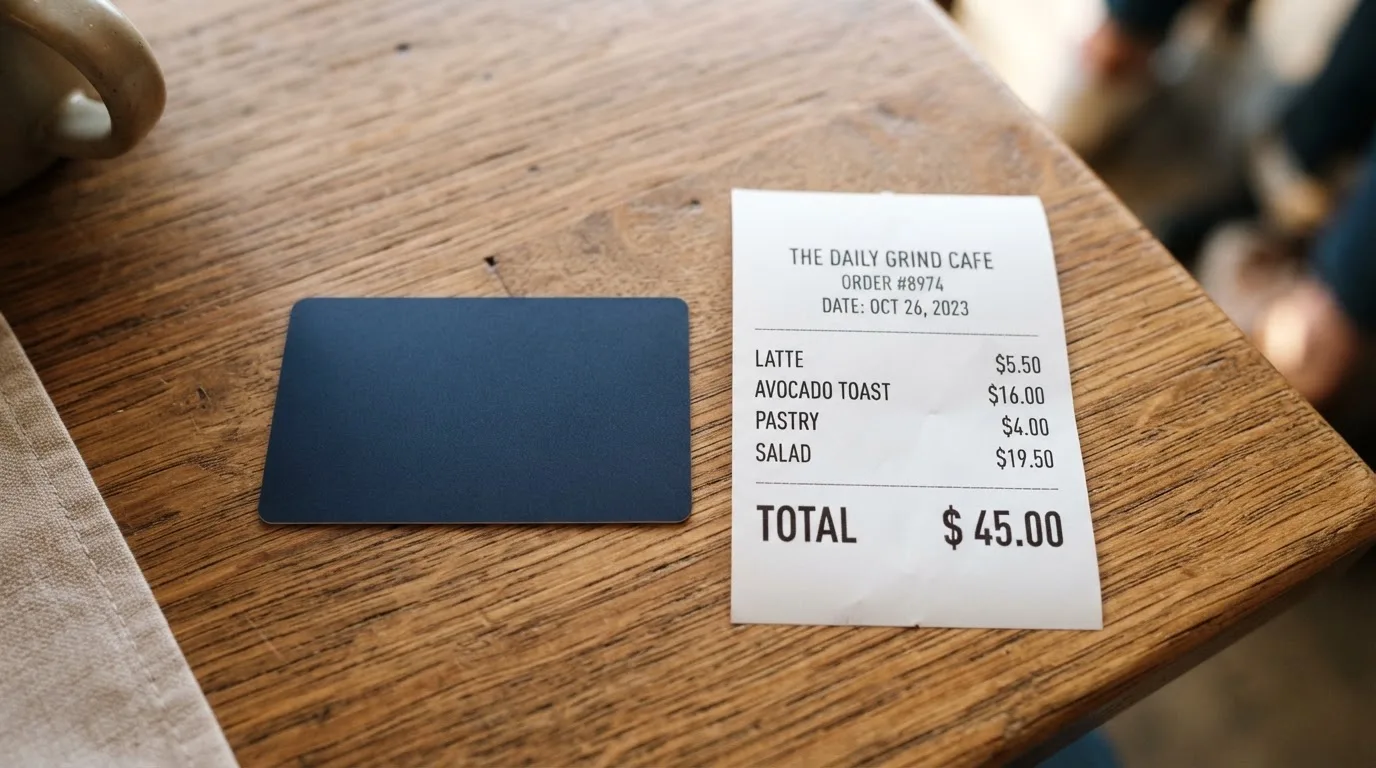
| Fee or limit | Amount |
|---|---|
| Virtual card issuance | 10 USD |
| Card maintenance | 0 USD per month |
| Card payments | 0% |
| Card balance top-up | 0.5% (Ukrainian page; English page lists 0% transactions) |
| ATM withdrawal | Not available (physical card on a waitlist) |
| Monthly operations limit | 30,000 USD (table) / 30,000 USDC (FAQ) |
| Per-transaction / daily limit | Not stated |
| Wallet inactivity fee | 20 USDT equivalent per month after 12 months without transactions |
| Conversion markup beyond Visa rate | Not stated |
| Physical card price | Not shown |
The card balance is held in USD, and the card is a single-tier product: there is one virtual card option, no tiered limits, no cashback, and no premium version. The Terms also note that the Payment Card service “may be subject to fees”, which is a wider reservation than the published fee schedule.
To make this concrete, three everyday payments would look like this for someone topping up with USDC.
- A 50 USD online subscription. The card itself charges 0% to make the payment. The 0.5% top-up fee on the 50 USD you loaded costs 0.25 USD. The Visa network converts USD to the merchant’s currency at the Visa rate, and the published fees say nothing about an extra markup on top of that. Net cost to you on a USD-denominated merchant: 0.25 USD plus whatever the Visa rate is versus the mid-market rate.
- A 30 EUR card payment at a European merchant. The card is denominated in USD, so this is a foreign-currency transaction. Trustee Plus says these are converted automatically at the Visa rate, but the company does not publish any additional percentage it adds. If your USD card balance is funded at the right moment, the 0.5% top-up fee plus the difference between the Visa rate and the rate you would have got on the open market are your two real costs.
- A 100 USD in-store payment through Apple Pay or Google Pay. The card is 0% for the payment itself. The 0.5% top-up fee is the only fee Trustee Plus adds on the way in. The merchant sees a Visa transaction, not a crypto transaction.
The one cost that is easy to forget is the wallet inactivity fee. After twelve months with no transactions on the wallet, you start paying 20 USDT equivalent per month. If you fund the card, pay a couple of subscriptions, and stop using the wallet for a year, that 20 USDT per month becomes a slow leak. If you keep some activity, the fee does not apply.
A second caveat: the English-language page says “0% fees on transactions” and does not list the 0.5% top-up fee that the Ukrainian page does. Whether this is a translation gap, a regional difference, or simply a less detailed English page is not stated. It is another example of the kind of small inconsistency that makes it worth reading the page in the language that matches your residency before you commit.
How to top up the card
Top-up is the card’s strongest area. The Trustee Plus wallet supports USDC and, on the English guide, USDT, plus more than thirty other coins and a number of networks, with TRC20, ERC20, SOL and NEAR named on the official pages. Funding the card itself is a two-step process: you put money into the wallet, then you move it to the card balance.
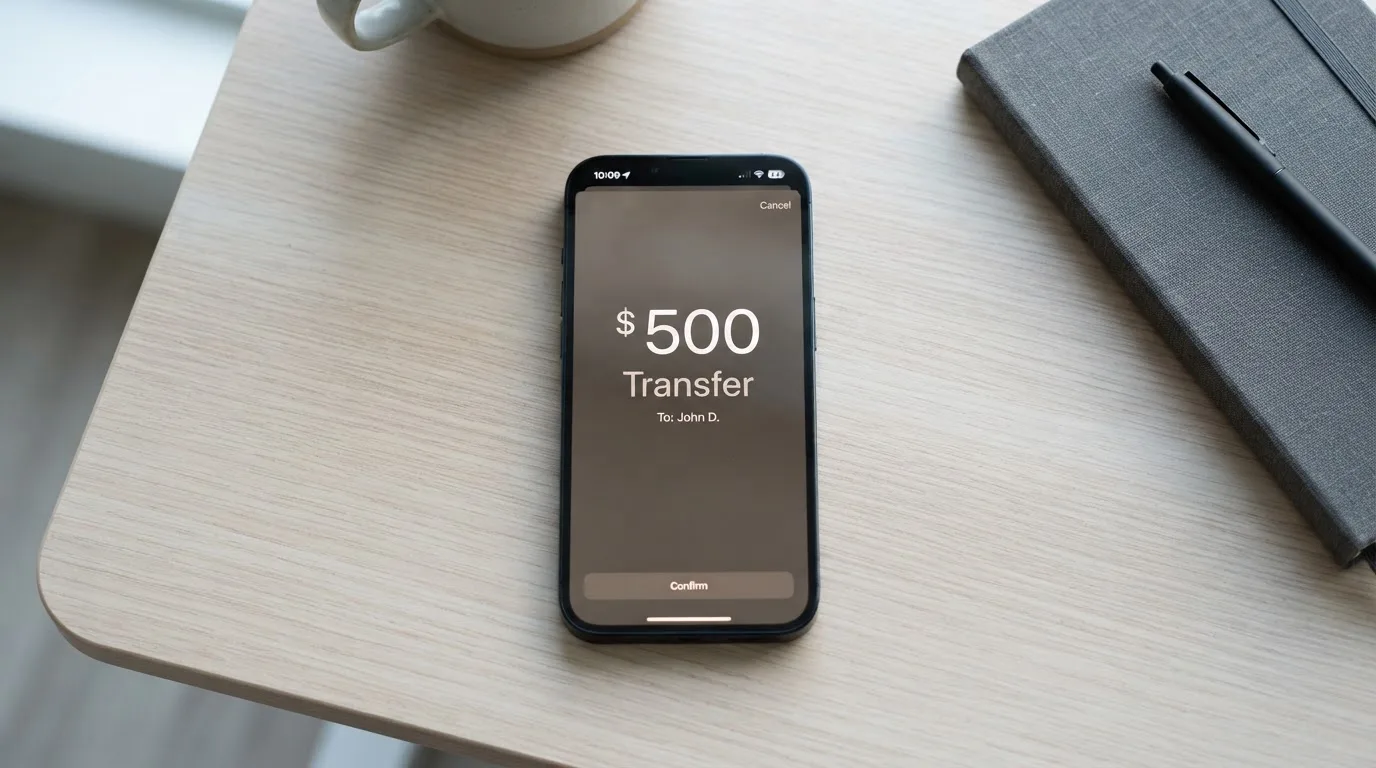
There are three reasonable paths.
- Stablecoin transfer. Send USDC or USDT to the wallet from another wallet or exchange, on a supported network, then tap “Top up” inside the card section to move the balance to the card. The 0.5% top-up fee applies on the way to the card. The blockchain charges its own network fee on the way in — that is paid to the network, not to Trustee Plus, and what you pay depends on the chain and current congestion. The wallet’s instructions do not state who pays the network fee, what the minimum top-up is, or how long the transfer takes to confirm, so the first time you do this, you are working from experience rather than from a published schedule.
- Smart P2P. Smart P2P is Trustee Plus’s peer-to-peer fiat on-ramp, where you can buy crypto into the wallet with a bank card. The fees, counterparties and minimums are not stated on the card pages reviewed, so this needs a check in the app at the moment you use it.
- Personal IBAN. Trustee Plus provides a personal IBAN for SEPA, the standard euro-area bank transfer system, so you can receive euros from a regular bank account into the wallet, then move funds to the card. The fee for moving card balance back to crypto or to a bank account, and what happens to the card balance if you close the account, is not stated.
A few details worth knowing if you intend to fund by stablecoin. Circle, which issues USDC, stopped supporting USDC on the Tron network in February 2024, so “USDC over TRC20” is not a native option, even though TRC20 is widely used for USDT. ERC-20 transfers on Ethereum pay gas in ETH, so a wallet that holds USDT but no ETH cannot send. Tether says it has disabled tokens in wallets on the OFAC sanctions list and has frozen funds tied to illicit activity, which is a reminder that stablecoins are not censorship-proof at the issuer level. And once a transfer is sent on a network or to an address the card provider does not support, blockchain transfers are irreversible, so a wrong network choice can be lost or stranded pending support recovery with no guarantee of return.
Paying with it every day
The everyday experience is the card’s other weak point, mainly because so much of it is not yet available.
In-app, the card works with Apple Pay and Google Pay, so a phone becomes a virtual card in a wallet. The card is a Visa Prepaid, so the company claims acceptance at more than 60 million merchants worldwide, plus online payments and subscriptions. There is no cashback on the card, and the cashback-style rewards on the platform are a separate loyalty and referral programme rather than a feature of the card itself. The Trustee Plus app is also distributed as an APK, the Android installation file, from the company’s own site, in addition to the normal app stores, which is worth knowing if you are installing on a device without Google services.
What does not work yet: the physical card is on a waitlist, so you cannot hand over a piece of plastic in a shop; the ATM is listed as a physical-card benefit, but the physical card is not available, so cash is not available; merchant categories blocked by the issuer, such as gambling MCC 7995, are not stated; the card is USD only, with payments in EUR, PLN, GBP and other currencies converted at the Visa rate automatically, with the markup on top of the Visa rate not stated; and disputed transactions and the chargeback process are not stated. For a person who pays for streaming services, online subscriptions, and groceries through Apple Pay or Google Pay, the experience is workable. For a person who needs a real card in a wallet, or cash, or a clear complaints procedure, it is not.
Two further practicalities are worth noting. Address Verification Service, the address check some merchants use to fight fraud, is mainly offered in the US, Canada and the UK and is generally unavailable for foreign-issued cards, which can cause declines at some online stores. And a declined authorisation can leave a hold on the card balance that can stay in place for several days — usually up to 7 days — even if no money actually changed hands. The 30,000 USD monthly limit, expressed in USDC in the FAQ and in USD in the limit table, sits well above what most personal card users would spend in a month, but the per-transaction and daily limits are not stated, which matters for larger one-off purchases.
What can go wrong
The product has three clusters of risk worth weighing.
The first is the regulatory and corporate picture. The Terms list the service provider as MIKEPAY INC., registered in Panama, and the card service as Wirex Limited in England, with company number 09334598 at 9th Floor, 107 Cheapside, London EC2V 6DN. The card page describes the card as “issued in Great Britain” by Wirex. No licence or regulator is named on the pages reviewed, and the NBU’s September 2025 decision and the May 2026 halting of new Ukrainian registrations are not yet resolved in public. The Terms of Use were last updated on 25 May 2026. None of that is, on its own, a sign of wrongdoing, but it is a picture of a company operating across several jurisdictions with limited public licensing information, and that matters for a card whose primary audience is in a country where the regulator has acted.
The second is complaints and reviews. The pages reviewed do not list any official incident statements. A Trustpilot review from June 2026 cites slow USDT transfers, an unclear AML, or anti-money-laundering, review, an unclear complaint procedure, and confusing company information. The same review was posted on trustee.io. A separate Trustpilot page for the trusteeglobal.eu site is currently shown as “unavailable” because the page does not meet Trustpilot’s guidelines, with reviews citing cards moving to a merged platform, failures to withdraw or pay, and funds frozen after source-of-funds checks. kurs.com.ua reported in August 2026 that the situation for Ukrainian residents was “still being checked”. None of this is a court finding, but the pattern is consistent: a company whose customer-service and AML processes have been hard to navigate for some users.
The third is the underlying technology. The Trustee Plus wallet with card is custodial, which means the provider holds the credentials and you do not. A separate, non-custodial product called Trustee Wallet exists, but the card sits on the custodial side. The published safeguards are two-factor authentication, Face ID, an AML check, a bug bounty on HackenProof, and Hacken audits of the apps in February 2025. Card freeze and insurance are not stated, and where card payments are funded from a stablecoin balance, the underlying token is, like every other crypto asset, exposed to issuer and depeg risk: USDC briefly lost its peg in March 2023, and USDT has had its own depeg events. The history of crypto card programmes also includes abrupt closures: Visa terminated its global agreements with FTX in November 2022, and WaveCrest, a Visa issuer that supplied crypto card brands, was suspended in Europe in 2018, closing all WaveCrest-issued Visa programmes. A programme can end on short notice, and Trustee Plus has not published what its closure plan would look like.
What to take instead
The alternatives below are the cards most often compared with Trustee Plus, in the same general category of crypto-funded Visa or Mastercard products, with the trade-offs they actually offer.
| Card | Score | Card | Top-up | Cashback | Best for |
|---|---|---|---|---|---|
| Whop Cards | 5.2 / 10 | Visa; type and currency not stated | Whop balance backed by stablecoin collateral from a linked wallet | 5% at select merchants (currently Uber) | US-based sellers and creators who can stay within the 31 supported US states |
| Stella | 6.5 / 10 | Virtual and physical Visa | Crypto deposit into an in-app custodial wallet | No card cashback stated | A broader, less restricted product, with the caveat that supported countries are not published |
| UniFi Card | 4.7 / 10 | Prepaid Debit Visa issued by Lead Bank; Apple Pay in app | ACH, wire, SEPA, SPEI, USDC wallet | “3% rewards on balances” (card cashback not stated) | US-style banking rails, including ACH and USDC funding, with the caveat that eligibility is not confirmed from official pages |
Whop Cards is the most geographically constrained of the three, with consumers restricted to 31 US states and businesses to 41, and a long list of unsupported countries including Ukraine. Its strongest feature is the 5% cashback at select merchants, currently Uber, which Trustee Plus does not match. Stella does not publish its supported countries either, and routes US and European users through affiliates while barring users under economic sanctions, but it offers both virtual and physical Visa cards and accepts crypto deposits into an in-app custodial wallet. UniFi Card is a USD prepaid Visa issued by Lead Bank, with send-money routes to the Philippines, Mexico, the eurozone and (more recently) Colombia, Brazil and the UK, and funding through ACH, wire, SEPA, SPEI and a USDC wallet; its headline “3% rewards on balances” is a listing claim, and card-specific cashback is not stated. The basic pattern is that none of the four cards is a clean replacement for an ordinary bank card, and the best fit depends on whether your constraints are more about geography, cashback or banking rails.
Who I would recommend it to
I would recommend Trustee Plus in a fairly specific case. If you are a Ukrainian national or a Ukrainian resident, you hold USDC or USDT (or another supported coin) in a self-custody wallet, you are comfortable with a virtual-only card, you pay for things through Apple Pay or Google Pay or online, you do not need cash from an ATM, and you accept that the company is operating in a regulatory grey zone in your home country, then the day-to-day experience is cheap and workable. The 10 USD issuance, 0 USD monthly fee, 0% payment fee and 0.5% top-up fee are hard to beat, and the stablecoin-to-card path through USDC on a cheap network is genuinely convenient.
I would not recommend it if you need a physical card, an ATM, or a published list of countries where the card is supported. I would be cautious if you are not Ukrainian and cannot find a clear statement of your eligibility on the official pages, and I would be cautious if you are depositing large amounts, because the 30,000 USD monthly limit, the missing per-transaction and daily limits, and the frozen-funds reports in user reviews are real reasons to think about how much exposure you want on a custodial platform. If you are simply looking for a crypto-funded card and you do not fit the narrow use case above, one of the alternatives in the previous section is probably a better starting point.
Frequently asked questions
What is Trustee Plus card?
Trustee Plus card is a Visa Prepaid card denominated in US dollars that spends from a balance you top up from a crypto wallet. The wallet supports USDC, USDT, and more than thirty other coins across networks including TRC20, ERC20, SOL and NEAR. The card is virtual for now, with a physical version on a waitlist.
How does Trustee Plus card work?
You install the Trustee Plus app, complete a KYC identity check through the partner Kycaid, order a virtual card for 10 USD, top up the card balance from your wallet, and then pay with the card online or through Apple Pay or Google Pay. The card is prepaid, so it spends only the balance you have loaded and cannot overdraw.
Is Trustee Plus a bank?
No. Trustee Plus is a card-and-wallet service, not a bank. The Terms list the service provider as MIKEPAY INC., registered in Panama, and the card issuer as Wirex Limited in England, with no banking licence or regulator named on the pages reviewed.
Who owns Trustee Plus?
The Terms list the service provider as MIKEPAY INC. in Panama and the card service as Wirex Limited in England, company number 09334598, at 9th Floor, 107 Cheapside, London EC2V 6DN. The card page describes the card as issued in Great Britain by Wirex. The non-custodial Trustee Wallet is a separate product from the custodial wallet-and-card product reviewed here.
Is Trustee Plus card available in my country?
The official Ukrainian FAQ says Ukrainians can get the card regardless of country of residence, but the Terms require you to reside in “countries and territories We support” and that list is not published. The English-language card page does not include an eligibility FAQ, and an unofficial third-party site also claims EEA residents can get the card. If you are not Ukrainian, the official pages do not give you a clear answer.
How do I apply for the Trustee Plus card?
You apply inside the Trustee Plus app. The steps are: install the app, complete KYC with Kycaid, order the virtual card for 10 USD, and top up the card balance from the wallet. The physical card is currently on a waitlist, with no published delivery time, delivery country, or replacement terms.
Does Trustee Plus card require KYC?
Yes. KYC is required before you can order the card, and it runs in the app through a partner called Kycaid. A Trustee Plus guide describes uploading a passport or ID card photo and a selfie, but the full list of accepted documents, processing time, and KYC levels is not stated on the pages reviewed.
How do I top up the Trustee Plus card?
You fund the wallet first, then top up the card. The wallet accepts USDC and USDT across multiple networks including TRC20, ERC20, SOL and NEAR, plus more than thirty other coins; fiat comes in through Smart P2P with bank cards or through a personal SEPA IBAN. Moving funds from the wallet to the card costs 0.5% on the Ukrainian page; the English page lists transactions as 0%.
Is the Trustee Plus card free?
The virtual card costs 10 USD to issue, has 0 USD monthly maintenance, charges 0% on payments, and costs 0.5% to top up the card balance. The main long-term cost to watch is the 20 USDT equivalent monthly wallet inactivity fee, which begins after twelve months with no transactions on the wallet.
Is the Trustee Plus card safe?
The wallet-and-card is custodial, so the provider holds the credentials and you do not. Published safeguards are two-factor authentication, Face ID, an AML check, a HackenProof bug bounty, and Hacken audits from February 2025. Card freeze, insurance, and the dispute procedure are not stated, and user reviews from 2026 report slow transfers, unclear AML reviews, and funds frozen after source-of-funds checks, so a reasonable size of exposure matters.
App and neobank cards: the entry point – cryptocardportal.com
Content created by the «cryptocardportal.com» team