
Privacy Gateway card: a no-KYC virtual Visa funded by crypto, examined
 Available in US
Privacy Gateway is one of those crypto card products that shows up on a few lists and forums, gets an invite code passed around, and then disappears from the conversation for a while. The marketing pitch is short and sharp: a virtual Visa paid in from crypto, with a list of supported coins longer than most banks have ATMs. The reality, once you start pulling at the threads, is murkier. The card’s public pages are thin, the issuer is not named on the site, the company behind it is not named either, and what you can actually find about it comes mostly from a single third-party post and scattered mentions on X.
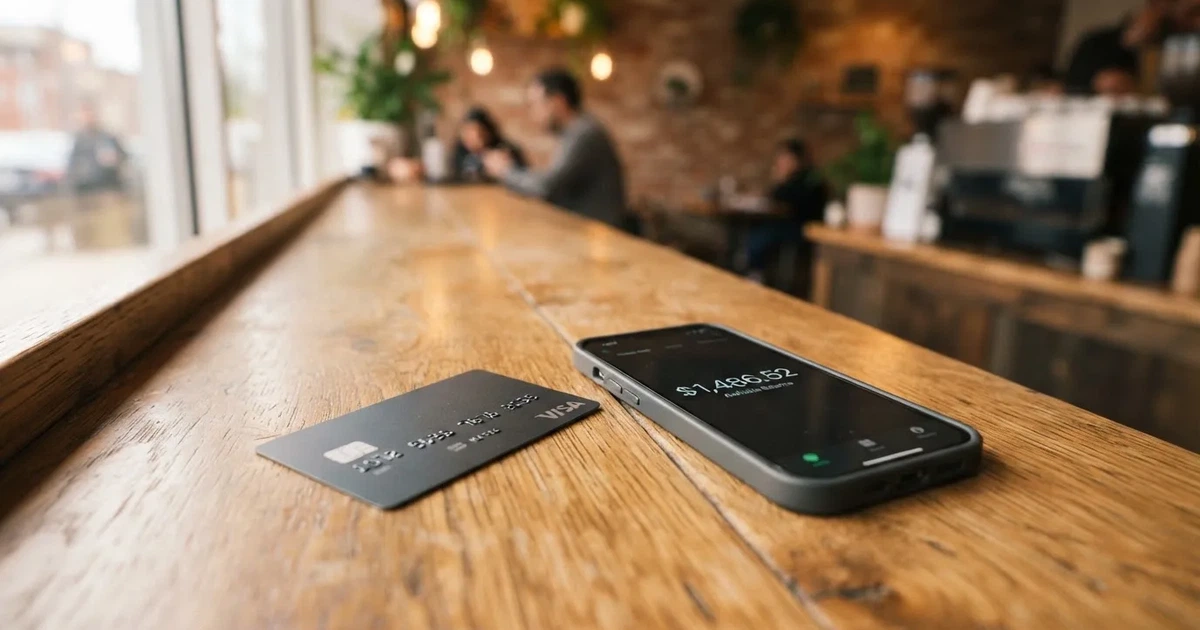
I went through what is publicly available, cross-checked the card’s own pages, and looked at how the product compares to other crypto cards in the same rough space. The short version: Privacy Gateway does a few things right, especially around the breadth of coins it accepts, but it is also a card where the gaps in the public information matter as much as what the card says about itself. If you are weighing it against an ordinary bank card, or against a more established crypto card, the rest of this review walks through what I found, what I could not confirm, and where the risks actually sit.
Conditions in this review are current as of October 28, 2026.
Verdict
Privacy Gateway scores 5.3 out of 10 in my assessment. That is not a damning number, but it is well below the cards that name their issuer, publish a full fee schedule, and have a public complaints trail. The card has genuine strengths: it accepts a wide list of coins, including Monero and several stablecoins, and it is available in a large part of the world. What holds it back is the combination of an unnamed issuer, an unnamed company, an unclear KYC posture, and a fee structure that is only partially official.
The card suits a narrow reader: someone who is privacy-minded, comfortable funding a virtual Visa from crypto, and willing to accept that a no-KYC product can be shut down with little warning and that a frozen balance may not be recoverable. It does not suit someone who needs a physical card, someone who needs reliable customer support, or anyone who would be hurt by a sudden card closure. If you fall into that first group and you understand the trade-offs, the card can work. If you do not, the risk of holding a meaningful balance on a card you cannot independently verify is too high.
Here is how the score breaks down across the criteria I weighed.
| Criterion | Mark | Why |
|---|---|---|
| Who can get it | 9 / 10 | Global except ten named countries, invite-only. Wide reach for a no-KYC card. |
| Cost | 3 / 10 | Official: 3.5% load fee. Unofficial: $5 monthly subscription. The full schedule is not public. |
| Top-up options | 7 / 10 | XMR, BTC, ETH, LTC, SOL, ZANO, BDX, USDT, USDC, FUSD. Networks not named. |
| Reliability and complaints | 3 / 10 | Issuer and company unnamed. Users on X have questioned whether it is a scam. No-KYC cards can be closed suddenly. |
| Everyday use | 4 / 10 | Unofficial: virtual Visa, USD balance, mobile wallet add. Physical card and ATM access not confirmed. |
| Total | 5.3 / 10 |
The single biggest variable is trust. The card does what it says on the tin, in the sense that it does appear to issue a virtual Visa loaded from crypto. What is not on the tin is the company name, the issuer name, the support process, the dispute process, and the conditions under which the card can be frozen. For a $5 coffee that does not matter much. For a $500 grocery run, it matters a great deal.
Who will they give you the card
According to the card’s public page, Privacy Gateway is open to the world except ten countries: Pakistan, Ukraine, Venezuela, Cuba, Iran, Russia, North Korea, Syria, Afghanistan, and Yemen. That is a wide footprint for a crypto card, and it covers most of Latin America, sub-Saharan Africa, Southeast Asia, and the European Union. Russia is explicitly excluded, which is one of the more concrete pieces of information on the public page.
The card is invite-only. You cannot simply sign up with an email and start the process; you need a code. Where the codes come from, and whether they are shared publicly or only through specific communities, is not stated. The card’s public page does not break out citizenship versus residence. If you are a citizen of one of the excluded countries but live in, say, Germany, the public pages do not say whether the card would still refuse you. That is a real gap, because sanctions screening and issuer risk policies are typically applied to citizenship and country of birth as well as to the country of address. In practice, the safest assumption is that being tied to one of the excluded countries in any official sense will block you.
The card does not publish the criteria it uses to issue invite codes, the criteria for closing accounts, or the sanctions lists it screens against. Anyone considering the card needs to weigh that silence: a no-KYC product in 2026 either has a clear compliance posture, or it has a posture that is not being shared. With Privacy Gateway, it is the latter, and that is part of why the reliability score is so low.
What the public page does not say is also worth listing once, because it is the same set of facts I will refer to later:
- KYC requirements: not stated on the card’s official page.
- Card type (virtual, physical, prepaid, debit): the page refers to “prepaid-cards” but does not spell out the form factor.
- Delivery time and regions: not stated.
- Tiered accounts with different limits: not stated.
If any of those matter to your decision, treat the card as not having them until told otherwise.
How to get it
The signup flow is not fully documented. The official page, when I checked it, did not walk through a step-by-step application the way a regulated card issuer would. The third-party post that has the most detail, on aicoin from March 2026, describes a flow that starts with an invite code and then asks for either an email or what the post calls “minimal info,” and stops short of any ID, selfie, or address upload.
If that unofficial account is accurate, the card is genuinely no-KYC at signup. There is no document to scan, no liveness check, no proof of address. That is the headline feature for the audience the card appears to be built for: people who cannot or do not want to hand over an ID to a card issuer. It is also the source of the risk profile: a card that does not know who you are cannot refund a mistaken charge to a verified identity, and it cannot easily defend a balance against an issuer decision to freeze it.
The card itself, per the same third-party post, is a virtual Visa with a USD balance. There is no mention of a physical card, no mention of ATM access, and no mention of a delivery address because there is no card to deliver. The card lives as a number you can paste into a checkout form or, reportedly, into a mobile wallet. Whether Apple Pay or Google Pay specifically is supported, and on which devices and in which regions, is not stated in any source I could verify.
Account tiers, if any exist, are not stated. There is no published schedule of daily, monthly, or per-transaction limits. The third-party post warns that cards of this type often impose “stricter limits” than the headline implies, but it does not give numbers.
Fees: what it really costs
The cost picture is the part of this card that I would urge you to look at carefully, because it is also the part where the official and unofficial information diverge the most.
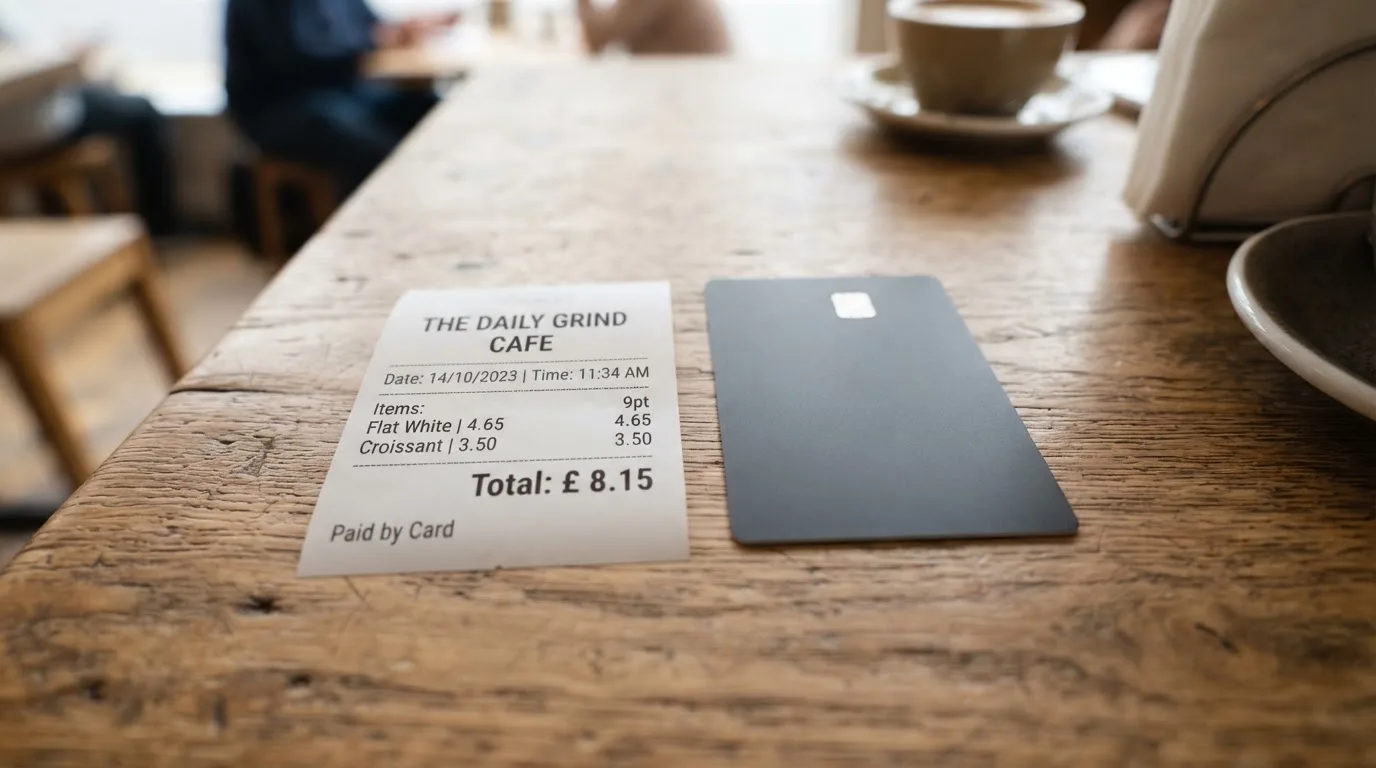
Officially, the card charges a 3.5% load fee when you convert crypto to the USD card balance. That is the only fee the card’s own page states with a number. Unofficial sources, including the aicoin post from March 2026, also mention a $5 monthly subscription, which would put the card in the same general cost band as a mid-tier crypto debit card. The post also describes “0% extra fees” on USD spending, which, if accurate, would mean the card does not add a foreign-exchange markup on top of the load fee.
Beyond that, the schedule is not public. There is no stated ATM fee (because ATM access is not confirmed), no stated FX fee (because the card balance is USD and the load already includes the conversion), no stated inactivity fee, and no stated replacement or dispute fee. I cannot tell you what the card does charge for these because the card does not say.
| Fee or limit | Value |
|---|---|
| Issuance fee | Not stated |
| Monthly fee | $5 (unofficial) |
| Crypto-to-USD load fee | 3.5% (official) |
| FX fee | Not stated (USD balance) |
| ATM fee | Not stated |
| Daily limit | Not stated |
| Monthly limit | Not stated |
To make this concrete, here is what three everyday scenarios would actually cost under what is publicly known.
A $50 grocery run paid from a USD balance would not trigger the load fee, because the load fee applies when you top up, not when you spend. The cost to you is the 3.5% you already paid when you converted crypto into the balance. If you top up $50 of crypto, the card receives the converted USD balance, and you spend that balance. The 3.5% is the only fee you can confirm.
A $200 online subscription paid monthly would cost the same way: 3.5% on the top-up, no extra fee on the spend. Over a year, the subscription costs $2,400 of crypto to fund, with about $84 lost to the load fee. Add the unofficial $5 monthly subscription, and the annual fee stack rises by another $60, taking the total to roughly $144 a year on a $2,400 spend. That effective cost is high for a card with no rewards, no cashback, and no insurance on the balance.
A $5 coffee paid from a balance that you topped up with $5 of crypto would cost you the 3.5% load fee, which is 17.5 cents. That is small in absolute terms, but it is a 3.5% premium on every top-up, regardless of size. If you top up small amounts frequently, the load fee compounds. The unofficial $5 monthly fee, if it applies, also does not scale with usage, so it disproportionately hurts low-volume users.
The honest summary is this: the card’s load fee is in the normal range for a no-KYC crypto card, the unofficial monthly fee is on the high end of what I would expect, and the absence of a published full schedule is a problem in itself. You are being asked to take a 3.5% plus a possible $5 a month on faith.
Top up: how to fund the card
The card accepts a wide list of coins. According to the official page, you can send XMR, BTC, ETH, LTC, SOL, ZANO, BDX, USDT, USDC, or FUSD to a deposit address, and the card converts the result into a USD balance. That list is longer than what most crypto cards support, and the inclusion of Monero (XMR) is a deliberate signal about the audience the card is targeting: privacy-oriented users who do not want their funding transactions trivially traceable on a public blockchain.

What the public page does not say is the network for each coin. USDT, for example, exists on several chains, and the fee you pay to send it varies widely depending on whether you use Ethereum, Tron, Solana, or another network. ETH on Ethereum mainnet is a different proposition from ETH on a Layer 2. The card does not publish this. If you send USDT on a network the card does not support, the deposit can be lost, because blockchain transfers are typically irreversible, and the card provider may not be set up to recover funds sent on the wrong chain. That is a real-world risk and one I would weight heavily before sending any meaningful amount.
The load fee on the top-up is the 3.5% that the official page does publish. There is no stated minimum top-up, no stated maximum, no stated network-fee policy, and no fiat top-up option. The card does not say whether the deposit address changes per user, whether it is a single shared address, or how the conversion to USD is priced. In the absence of public information, the reasonable assumption is that the card uses its own rate, which may differ from the rate on a major exchange, and the 3.5% is layered on top of any spread the card takes between the rate you see and the rate it uses.
Withdrawals are not described. There is no stated process for cashing out the card balance back to crypto or to a bank account, and the third-party post warns that a frozen or closed card’s balance is likely unrecoverable. That is not an idle warning. No-KYC cards have a long history of being closed by their issuer, by their programme manager, or by the card network itself, and when that happens, the user has very limited recourse. The card’s own page does not address this, and that silence is itself a piece of information.
Paying with it every day
On a day-to-day basis, the card behaves as a virtual Visa with a USD balance. You paste the card number into a checkout, you confirm with whatever 3-D Secure challenge the issuer puts in front of you (and, importantly, the card does not say whether 3-D Secure is enabled or how it works), and the merchant is paid from your balance.
The third-party post says the card “can be added to mobile payments,” which is the most concrete piece of information I have on contactless use. If that is accurate, you can tokenise the card into Apple Pay or Google Pay and pay at a terminal by tapping your phone. The post does not say which wallets work, which devices, or which regions. It also does not say whether the tokenised card inherits any limits or restrictions the issuer has set on mobile-wallet use.
Merchants, in general, can see the BIN (the first six or eight digits of a card number) and use it to identify the issuing institution and country. For a no-KYC card issued in an unknown jurisdiction, that BIN lookup can work against you: some merchants decline prepaid cards, some decline foreign-issued BINs, and the decline logic is not always visible to the cardholder. Address Verification Service, which compares the numeric parts of the billing address with the issuer’s records, is generally unavailable for foreign-issued cards, and that can cause further declines. None of this is unique to Privacy Gateway; it is a structural feature of any prepaid or foreign-issued card.
The card does not publish any rewards or cashback programme. There is no stated earn rate, no stated bonus category, no stated staking requirement, and no stated sign-up bonus. If the card earns anything, it is not on the public page.
There is no app to download. The card’s own page does not list an iOS or Android app, and the public information I could find did not point to one. That means the cardholder experience is, at best, a web dashboard, and possibly nothing more than an email-based account. It also means that features like instant card freeze, in-app 2FA, and real-time transaction push notifications are not available, because the surface to deliver them is not described.
The dispute process is not described. The card does not say how to dispute a charge, what evidence to provide, how long disputes take, or whether chargebacks are even available on a no-KYC card. In practice, chargeback rights for prepaid cards are weaker than for credit cards, and the practical experience depends heavily on the issuer, which here is unnamed.
What can go wrong
The risk picture is what I would weight most heavily in any decision about this card.
The first risk is identity. The card’s company is not named on the public page. The issuer is not named. The programme manager is not named. You are giving your money to an entity that has not told you who it is. That is not a fatal flaw, because some crypto products genuinely do not publish the legal entity until you sign up, but it is a meaningful one. If the company turns out to be in a jurisdiction where your consumer protection rights are weak, you have very limited recourse.
The second risk is debanking. No-KYC cards have a long history of being closed by the issuer, by the programme manager, or by the card network itself. Visa, in particular, has suspended programmes in the past: in 2018, Visa suspended WaveCrest, which at the time was the issuer behind several crypto card brands, and every WaveCrest-issued Visa programme was closed. In November 2022, Visa terminated its global agreements with FTX after FTX’s collapse. When a programme is closed, the typical sequence is: a notice period, then new loads stop, then spending stops, then users are asked to withdraw their balance. The length of that runway varies, and the card’s public page does not describe its own process for this scenario. The third-party post warns that a frozen card’s balance is likely unrecoverable, and the card itself does not contradict that warning.
The third risk is custodial loss. The card is custodial by design: you send crypto to a deposit address, the card provider holds it, converts it, and credits your USD balance. You do not hold the private key to the funds once they are in the card. If the provider is hacked, if the provider is insolvent, or if the provider simply disappears, the funds are exposed in the same way that funds on any custodial platform are exposed. The card does not publish any segregation policy, any insurance on customer balances, or any custody arrangement. Crypto custodians have failed in the past, and the pattern of those failures is not reassuring.
The fourth risk is sanctions and compliance. The card excludes ten named countries, but the public page does not say what sanctions list it screens against, how it handles citizens of excluded countries who live elsewhere, or what it does with funds that turn out to be linked to a sanctioned address after the fact. Stablecoin issuers themselves can and do freeze funds tied to illicit activity, and that capability is built into the underlying tokens regardless of what the card does.
The fifth risk is fraud and scams. The third-party post from March 2026 noted that some users on X questioned whether the card itself is a scam. I did not find a Trustpilot page or a Reddit thread dedicated to Privacy Gateway, and a search for “Privacy Gateway card reviews trustpilot reddit” returned only unrelated results from the unrelated Privacy.com service. That absence of a complaints trail is not proof either way, but it does mean that there is no public record of how the card has handled disputes, freezes, or complaints.
The sixth risk is operational. There is no stated support channel, no stated support hours, no stated response time, and no stated escalation path. For a card that handles your money, that is a real gap. If a load fails, if a card number is compromised, or if a charge is in dispute, the path to a human being is not described.
What to take instead
If the gaps in Privacy Gateway’s public information are deal-breakers for you, here is how three alternatives compare. None of these is a perfect substitute, because Privacy Gateway’s narrow appeal is its privacy posture and its coin list, but each addresses at least one of the concerns above.
Cardex scores 5.6 out of 10. It is open to 200+ countries, though the public materials do not list specific exclusions, and its app store listing is geared toward the Nigerian market. The card is a debit crypto card available on the Verve, Visa, Mastercard, and UnionPay networks, with both virtual and physical form factors, and the card currency is Naira. The card’s site describes an “AI-Powered Conversion Rate” that scans global exchange rates at the moment of payment, which is a different pricing model from Privacy Gateway’s flat 3.5% load fee. No fee percentage is published. Funding is via USDT, USDC, and BTC, with networks not stated. If you are in Nigeria or sub-Saharan Africa and you want a card with a local-rail flavour, Cardex is the closer match. If you are elsewhere, the Naira peg is a friction.
TakeCard scores 5.5 out of 10. The virtual card is available in several Latin American countries plus the US, Spain, and Italy, and the physical card is currently available only to Bolivian users. The card is a prepaid Visa issued in the United States, with a USD balance and USD payments settled 1:1. The virtual card costs USD 5 to issue, and the physical card costs USD 20 to issue plus USD 20 to ship (with a conflicting article in the same help centre saying USD 10 for the physical card in Bolivia, which is a yellow flag for documentation quality). There is a 1% commission per purchase, USD payments are 1:1, and other currencies use the official Visa rate of the transaction day. Top-up is from a Takenos balance, with USDC and USDT via Polygon, BNB Chain, Tron, or Ethereum listed in some materials but not officially confirmed. If you are in Latin America and you want a card that is cheaper to use, TakeCard is a real alternative, with the caveat that documentation conflicts need to be resolved before you commit.
OkiCard scores 6.0 out of 10 and is the most fully documented of the three. It is open to 150+ to 200+ countries depending on the page, with no geo-blocking based on passport, and users must confirm they are not in a sanctioned jurisdiction. The card is virtual, with a USD or EUR balance. Pricing is free for issuance and free monthly, with a starting price of $15 for the virtual card and a 100 USDT initial deposit. Load fee is 3%, transaction fee in USD is 0%, and there are no hidden exchange spreads. Funding is USDT on BSC, Ethereum, Tron, or Solana, with USDC, BTC, and other coins “coming soon.” The deposits are converted to fiat at the moment of spending, which is a different model from Privacy Gateway’s pre-loaded balance. OkiCard’s documentation is the most complete, and its score reflects that.
Across all three, the common limitation is that none of them match Privacy Gateway’s specific combination of Monero support, no-KYC at signup, and a coin list that runs into double digits. If that combination is what you need, the alternatives are compromises. If you can give up any one of those three, one of the alternatives above is likely to be a better fit.
Who I would recommend it to
Putting the verdict in plain terms: Privacy Gateway is a card I would recommend only to a narrow reader, and only with eyes open.
The reader I would recommend it to is someone who already understands the trade-offs of a no-KYC product, who is funding the card from coins they have already taken custody risk on, who keeps the balance small, and who would not be financially hurt if the card were closed tomorrow and the balance were not returned. That reader is also someone who has a real need for Monero as a funding source, or who needs a card that accepts a coin the alternatives do not, and who has weighed the cost of the 3.5% load fee plus the possible $5 monthly subscription against the cost of a more conventional card.
The reader I would not recommend it to is anyone who needs a physical card, anyone who needs reliable support, anyone who needs a clear dispute path, anyone who needs to be able to explain to a regulator where their money came from, and anyone who is funding the card with a large balance. For those readers, the absence of a named issuer, the absence of a published fee schedule, the absence of a complaints trail, and the structural risk of a no-KYC card being closed all push the balance against Privacy Gateway.
If you are on the fence, the cheapest test is a small top-up, a single low-value transaction, and a withdrawal if the card supports one. Do not load the card with more than you are willing to lose, and do not treat the balance as a savings account. The card works for small, ad-hoc spends. It does not work as a primary financial tool, and the public information available today does not support trusting it as one.
Frequently asked questions
What is Privacy Gateway card?
Privacy Gateway is a crypto-funded prepaid card. You send supported coins to a deposit address, the card converts them to a USD balance, and you spend the balance with a virtual Visa card number. The card’s public pages describe a no-KYC product, available globally except ten named countries and by invite only.
How does Privacy Gateway card work?
You receive an invite code, sign up with minimal information, get a virtual Visa, and top it up by sending XMR, BTC, ETH, LTC, SOL, ZANO, BDX, USDT, USDC, or FUSD to a deposit address. The card takes a 3.5% load fee on the conversion to USD. You then spend the USD balance at any merchant that accepts Visa online, or reportedly via a mobile wallet.
Is Privacy Gateway a bank?
No, it is not described as a bank. The card is a prepaid card, and the issuer behind it is not named on the card’s public page. A prepaid card draws on a stored balance rather than a linked bank account, and the card does not describe any banking services such as deposits, lending, or interest.
Who owns Privacy Gateway?
The public pages do not name the company behind Privacy Gateway, the issuer of the card, or the programme manager. This is one of the more significant gaps in the available information, because it makes it harder to assess jurisdiction, regulatory status, and recourse if something goes wrong.
Is Privacy Gateway card available in my country?
The card’s public page lists ten excluded countries: Pakistan, Ukraine, Venezuela, Cuba, Iran, Russia, North Korea, Syria, Afghanistan, and Yemen. If you are not in one of those countries, the card’s stated coverage is global, but you also need an invite code. Citizenship and residence are not separately addressed on the public page.
Does Privacy Gateway card require KYC?
The official page does not state a KYC requirement. A third-party post from March 2026 describes a flow with no ID, selfie, or address upload, and signup with email or “minimal info.” This is an unofficial account and has not been confirmed against the card’s own terms.
How do I top up Privacy Gateway card?
You send one of the supported coins (XMR, BTC, ETH, LTC, SOL, ZANO, BDX, USDT, USDC, FUSD) to the deposit address provided by the card. The card converts the crypto to a USD balance and charges a 3.5% load fee. The card does not publish which network each coin should be sent on, and sending on the wrong network can cause loss of funds.
How do I add Privacy Gateway card to Apple Pay or Google Pay?
A third-party post says the card “can be added to mobile payments,” but the card’s own page does not describe the process, the supported devices, or the supported regions. In practice, you would tokenise the card through the relevant wallet app if the issuer has enabled tokenisation, but this has not been publicly confirmed for Privacy Gateway.
Is Privacy Gateway card safe?
The card’s safety depends on factors the public page does not fully disclose: the issuer’s regulatory status, the custody arrangement for customer balances, the support process, and the conditions under which the card can be frozen or closed. No-KYC cards carry structural risks, including sudden closure and the difficulty of recovering a frozen balance, and these risks apply to Privacy Gateway as much as to any card in the category.
How do I withdraw money from Privacy Gateway?
The card’s public page does not describe a withdrawal process. There is no stated way to cash the card balance back out to crypto, to a bank account, or to a wallet. A third-party post warns that a frozen or closed card’s balance is likely unrecoverable, which is a serious consideration before loading any meaningful amount.
Virtual cards: the entry point – cryptocardportal.com
Content created by the «cryptocardportal.com» team