
PokePay card review
 Available in US
PokePay is a Visa card you top up with crypto and spend like any other debit or prepaid card, online, in store and at the ATM. The pitch is simple: convert your USDT, USDC, BTC or ETH into a balance, then pay anywhere Visa is taken. Underneath that simple pitch, though, the card comes with some sharp edges. The most important one is geography. PokePay’s own website states that “the content of our website is only for Hong Kong residents living in Hong Kong,” and the issuing bank is not named in any public document. That combination alone narrows the audience considerably.
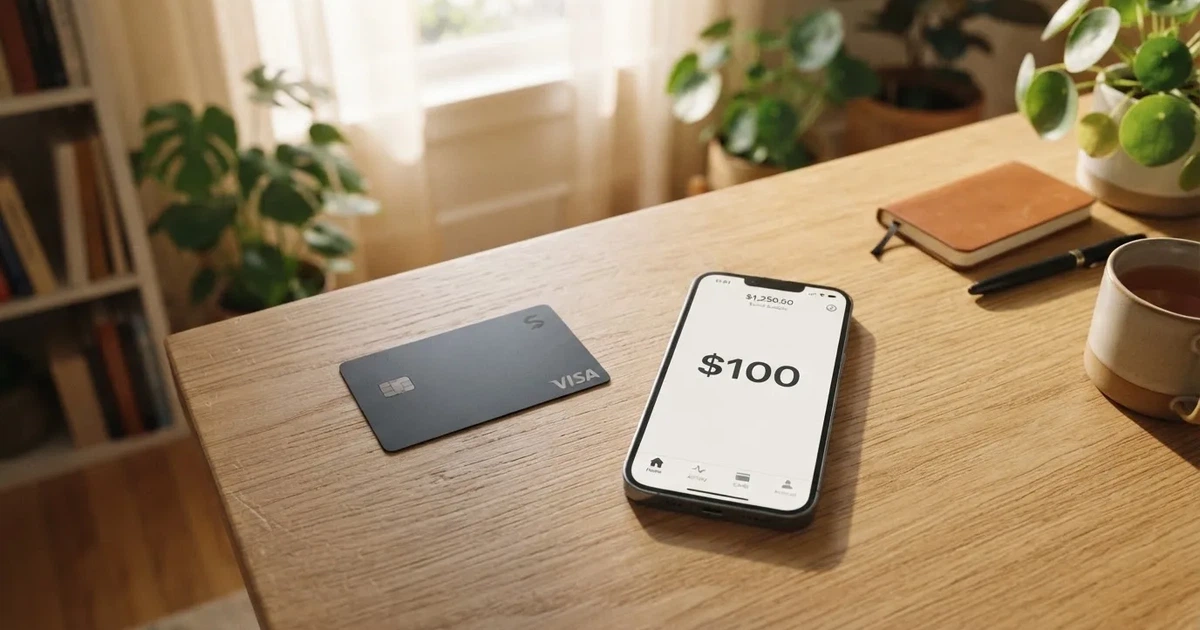
I went through PokePay’s terms, its FAQ, the app store listings, and the third-party reports that exist about it, and put together a full picture. The card is live and functional. It’s not, however, a card I would recommend to most people reading this.
Conditions are current as of October 28, 2026.
Verdict
PokePay earns 5.4 out of 10 in my scoring. That score reflects a card that is real and working, with reasonable costs on its main fees, but with serious limits on who can use it, gaps in its published information, and a regulatory profile that depends entirely on the company’s own claims.

Here’s how I broke the score down.
| Criterion | Mark | Reason |
|---|---|---|
| Who can get it | 2 / 10 | Site is for Hong Kong residents only; US explicitly restricted |
| Cost | 8 / 10 | No monthly or annual fee, 0% cross-border transaction fee |
| Top-up options | 8 / 10 | USDT, USDC, BTC and ETH; multiple networks reported |
| Reliability and complaints | 4 / 10 | Issuing bank not named, licences self-declared, third-party reports of a 2025 freeze wave |
| Everyday use | 6 / 10 | Physical and virtual Visa, cash withdrawal mentioned, no Apple Pay |
Who it suits: a Hong Kong resident who already holds USDT and wants a card that turns that balance into everyday Visa spending without a foreign-transaction fee. Who it does not suit: anyone in the United States, anyone outside Hong Kong who needs reliable support, anyone who needs their card to work in Apple Pay, and anyone who wants a clearly named bank behind the product.
Who can get the card
PokePay’s own site is blunt about this. The site says: “The content of our website is only for Hong Kong residents living in Hong Kong.” Promotion outside Hong Kong, the same page warns, may need regulatory permits in the destination market.
Third-party coverage suggests the actual eligibility is wider than that one sentence implies, but with sharp country-by-country variation. A German-language affiliate review lists the United States as explicitly restricted, calls coverage “most countries,” and in one version also flags China as blocked. None of that second-hand detail is on PokePay’s own pages, so I would treat it as unofficial and not confirmed by the card.
The practical reading is: if you are a Hong Kong resident living in Hong Kong, you are in the card’s intended audience. If you are not, you are relying on the marketing rather than the small print. For the United States, the answer is clearly no.
Beyond country, the card requires identity verification, including email confirmation, before you can use any of the services. The terms note that the data you enter “must be exactly the same as the uploaded documents” and that enhanced due diligence may ask for source of funds or source of wealth. The site recommends using Google Chrome with your camera enabled and warns that mismatches fail. The full set of documents and proof of address is not stated. Unofficial reports say the age range is 18 to 80 and that KYC is free, with verification under a minute via a third-party service called Didit, with an ID and a face scan. None of that is on PokePay’s own pages, so I would treat it as third-party information.
How to get it
The sign-up path looks like a standard crypto-card flow. You create an account, complete KYC, then order a card. Two card types are available: a physical Visa and a virtual Visa. The card currency is not stated on PokePay’s own pages.
If you order the physical card, PokePay says delivery takes about 10 to 30 working days, depending on country or region, and may be longer. The site does not state countries, delivery cost, or the cost of a replacement card. Unofficial reports of a virtual card opening fee “as low as 5 USD” are worth knowing about, even though the official banner of “no annual fee in the 0th year” is unclear. The app is available on iOS in the Hong Kong App Store, on Google Play, as an APK download, and on the web at app.pokepay.cc. The Hong Kong App Store rating is 3.9 out of 5 from 15 ratings, read on 2026-10-20.
A note on KYC levels: the site says identity verification is required before any service is available, but the specific levels, the processing time, and the conditions for moving between them are not stated. If you have a complicated situation (a country of birth on a sanctions list, a non-standard address history, a source of wealth that needs explaining), you should expect to wait and to provide documents on request.
What it really costs
On its published fees, PokePay is competitive. The home page and the FAQ both state “0 monthly fees, 0 annual fees,” and the same applies to micro-transactions. The cross-border transaction fee is listed as 0%. That is the headline.
The picture is less clean once you go past those three numbers. The crypto conversion fee or spread is not stated. The card’s own opening fee is not stated officially, although the FAQ’s “no annual fee in the 0th year” line hints at a fee in later years and unofficial reports put a virtual card opening fee as low as 5 USD, with the app in one case charging 5 USD in June 2026 despite a “limited-time free” banner. The FX fee for non-HKD currencies is not disclosed officially. The ATM withdrawal fee and the cash withdrawal allowance are not stated officially, with only “payments and cash withdrawals” appearing in the card description.
The official limits are stated in HKD: a daily limit of 100,000 HKD, with a minimum single transaction of 0.1 HKD. Monthly limits are not stated. The card currencies and the way other currencies are converted are not stated. The issuing bank is not named, so you cannot check an external schedule.
Unofficial third-party reports add detail that PokePay’s own site does not. According to one affiliate review from June 2026, deposits on ERC20 carry a +5 USDT surcharge, while deposits on Arbitrum, BNB Chain, Polygon and AVAX C-Chain have no surcharge. The same source reports an FX fee is not disclosed and that the ATM fee is not disclosed, and that heavy ATM use is a poor fit for the card.
Here is what the published cost picture looks like.
| Fee or limit | Value | Notes |
|---|---|---|
| Issuance fee | Not stated officially | Unofficial: “as low as 5 USD” for virtual card |
| Monthly fee | 0 | |
| Annual fee | 0 | FAQ says “no annual fee in the 0th year” — later years unclear |
| Cross-border transaction fee | 0% | |
| Crypto conversion fee / spread | Not stated | |
| FX fee (non-HKD) | Not disclosed | |
| ATM withdrawal fee | Not stated | Cash withdrawal mentioned; no amount published |
| Daily spending limit | 100,000 HKD | |
| Minimum single transaction | 0.1 HKD | |
| Monthly limit | Not stated | |
| Card currency | Not stated | Limits stated in HKD |
In everyday terms, what does that mean? Three common payments:
- Buying a coffee in Hong Kong for 50 HKD. The card charges 0 monthly, 0 annual, 0 cross-border. The only thing that matters is the conversion from your USDT (or USDC, BTC or ETH) into HKD at the moment of top-up, and the spread on that conversion is not stated. Unofficial reports of an FX fee that is not disclosed should make you assume there is one.
- Buying a flight in euros for 200 EUR while travelling. The cross-border fee is 0%. What you pay depends on the euro-to-HKD conversion, which is not disclosed, and on any FX fee, which is also not disclosed. You are being charged something; you just cannot tell from the public materials what.
- Withdrawing 1,000 HKD from an ATM. The fee is not stated and the allowance is not stated. The unofficial advice is that heavy ATM use is a poor fit. If ATM use matters to you, this card is not for you.
The cost score is 8 out of 10 because the headline numbers are good. The reason it is not higher is that the cost is genuinely not knowable for several common use cases.
Top up
The funding model is the strongest part of the card. PokePay says you can recharge with cryptocurrencies such as USDT, USDC, BTC and ETH. The networks it supports are not stated officially, but the same unofficial source from June 2026 reports five deposit networks: ERC20, Arbitrum, BNB Chain, Polygon and AVAX C-Chain. Treating that as unconfirmed, the takeaway is that you have a multi-chain stablecoin top-up, which is a good position to be in if you already hold USDT or USDC on a non-Ethereum network.
The top-up process itself is straightforward in principle. The recharge usually credits in about 15 minutes, and PokePay asks you to contact support if it has not arrived after 30 minutes. There is no top-up fee or minimum listed officially. PokePay also names several payment platforms — WeChat, PayPal, Alipay and Wise — and references SWIFT, SEPA and local clearing for overseas accounts. Fees are described in the terms as “disclosed before a transaction or published on the Website or a Fees Schedule,” but no actual amounts are in the terms I read.
A practical note: this is a custodial top-up, not a self-custody one. Your crypto goes to PokePay, gets converted into a card balance, and is held against that balance until you spend. That has implications for what can go wrong, which I cover below.
Withdrawing your balance back out is more constrained. Account closure is via the website or support, only with no pending transactions or amounts owed. Remaining funds are returned after AML/CTF checks. PokePay can suspend or freeze an account and its balance without prior notice in listed circumstances. The fee to withdraw the balance back to crypto or to a bank is not stated.
Paying with it every day
The day-to-day experience is reasonable but unremarkable. The card is Visa, it works anywhere Visa is taken, and cash withdrawal at an ATM is mentioned. The app is available on iOS, Android, as an APK, and on the web. Refund and dispute times are typical for a Visa programme: 3 to 7 working days for normal merchants, 7 to 14 for airlines, hotels and travel agencies, 3 to 10 for online payment platforms, 7 to 30 for cross-border, and 30 to 90 days for chargebacks. Disputes go through a designated contact whose details are still placeholders in the Terms. Canadian law governs the terms.
There are a few things that bite in daily use. Apple Pay is not supported, per unofficial user reports: trying to add the card returns “this card is not supported.” Steam is also reported as not working. The site mentions only “generous rewards” without a rate, currency or conditions, and an unofficial banner in June 2026 advertised a 3% cashback on the first purchase, time-limited. If rewards matter to you, this card does not give you a published number to plan around.
Standard Visa protections like 3-D Secure and AVS are available, but their behaviour depends on the issuer. With no named issuing bank and the licences self-declared, the practical reality is that you may see more declines than on a major-bank card, especially on US sites that use AVS against foreign-issued cards. That’s a category effect, not a PokePay-specific failure, but it is something to expect.
What can go wrong
This is the section that pulls the score down. The risks are not abstract.
The biggest is the regulatory and corporate picture. PokePay Technology Co., Ltd. lists licences in Hong Kong, the United States, Canada, Ontario and Poland, but the list is on the company’s own website and the issuing bank is not named. The Canadian MSB registration is with FINTRAC, and FINTRAC explicitly states that registration is not an endorsement. None of this is a deal-breaker on its own; it is a normal pattern for a non-bank card programme. But combined with the Hong Kong-only marketing language, the picture is of a card that sits in a regulatory grey zone for most of its users.
The second risk is operational. A third-party source from June 2026 reports a “suspension wave” in the second half of 2025, with the company saying affected funds would be returned within about 10 business days. That report is unverified, and I would not treat it as a fact, but it is the kind of event that should make you keep only the balance you need on the card. A 10-business-day return window is not a worst-case outcome, but it is also not a same-day refund.
The third risk is the customer service experience. The Trustpilot page I found is for a similarly named entity — it may belong to a different provider, with only 3 reviews and a 2.8 out of 5 score. There is no PokePay Trustpilot page in the data I read. One 1-star review calls the app “fake” and says verification passed without showing the full face, which is a serious claim and one I cannot independently verify. The most consistent complaint in the third-party review, again unofficial, is slow support response time. The site does not publish support hours or channels on the home page; the contact page is contactus.html.
The fourth risk is the user-side security model. PokePay’s published safeguards include fund segregation, 24/7 monitoring, partner-bank custody, transaction monitoring, AML screening, encryption, and a card lockout after repeated wrong CVV or expiry entries or three wrong PIN entries (unlocked by customer service after verification). Multi-factor authentication is recommended but not required. Funds are explicitly “not deposits” and are not insured by CDIC or any deposit insurance scheme. That is normal for a custodial card, but it means you are bearing the counterparty risk: if PokePay fails, you are an unsecured creditor of the company.
The fifth risk is the recovery story. Crypto transfers are irreversible. If you send USDT on a network PokePay does not support, or to an address for the wrong network, the funds can be lost or require manual support recovery with no guarantee. PokePay’s published 15-minute credit window and 30-minute support escalation are helpful, but the network list is not officially published, so you have to rely on what the app shows you at the time of deposit.
The sixth risk is the category risk: a Visa card programme can be wound down by Visa or by the issuer. Visa’s termination of FTX’s global agreements in November 2022, and the earlier 2018 suspension of WaveCrest, are recent examples. If a programme closes, new loads stop, spending stops, and remaining balances have to be withdrawn within a notice period.
What to take instead
If PokePay’s geographic limits, missing fees, or Apple Pay gap are deal-breakers, here are three alternatives I have looked at, with their own trade-offs.
| Card | Score | Where it works | Card | Cost | Top-up | Rewards |
|---|---|---|---|---|---|---|
| PokePay | 5.4 / 10 | HK only (officially), US restricted | Visa, physical and virtual | 0 monthly, 0 annual, 0% cross-border | USDT, USDC, BTC, ETH | “Generous rewards,” 3% first-purchase banner (unofficial) |
| Whop Cards | 5.2 / 10 | 31 US states (consumers), 41 (businesses); 18 countries unsupported incl. Hong Kong, China (Mainland), India, Russia, Turkey, Ukraine, Vietnam | Visa, virtual and physical | “No extra fees” | Whop balance, stablecoin-backed | 5% at select merchants (Uber and more) |
| Stella | 6.5 / 10 | Country list not stated; routes US and EU users via affiliates | Visa, virtual and physical | Not stated | Deposit crypto to in-app wallet | No card cashback; separate Earn product |
| UniFi Card | 4.7 / 10 | Send-money routes: PH, MX, EUR; recent: CO, BR (PIX), UK (GBP) | Prepaid Debit Visa, issued by Lead Bank; Apple Pay in app | Not stated | ACH, wire, SEPA, SPEI, USDC | “3% rewards on balances” claimed |
Whop Cards is the most US-centric of the three, with explicit state-by-state coverage and explicit unsupported-country lists, but Hong Kong is on the unsupported list, so it does not help a Hong Kong reader. It also is not useful to a non-US reader outside the supported states. Its stablecoin-backed balance and 5% cashback at select merchants are appealing for US users. Stella is the closest to PokePay in shape, with a Visa card and crypto top-up, and a higher overall score, but with very little published about its fees and country availability, and no published card cashback. UniFi Card has the most concrete information about who it is for (people sending money to the Philippines, Mexico, the eurozone, Colombia, Brazil and the UK), is issued by a named US bank (Lead Bank), supports Apple Pay, and advertises 3% rewards on balances, but its fees are not stated and its overall score is lower than PokePay’s.
If you are a Hong Kong resident and PokePay’s HK-only restriction is the wrong shape, none of the three above replaces it directly. If you are a US reader, Whop Cards or UniFi Card are the more concrete options to look at. If you are a Europe-based reader, Stella is the closer shape but the published information is thin.
Who I would recommend it to
PokePay is the right card for a narrow group. If you are a Hong Kong resident living in Hong Kong, you already hold USDT or USDC, and you want a Visa that spends that balance at 0% cross-border with no monthly or annual fee, PokePay does that. You will need to live with the missing published numbers on the conversion spread, the FX fee and the ATM fee, and you will need to keep the balance small enough that a 10-business-day freeze window is not a problem.
For everyone else, the answer is more complicated. The site is for Hong Kong residents only, and PokePay does not name its issuing bank, so the regulatory and operational risks sit on top of the standard custodial-card risks. The card is live, the cost headline is good, the top-up is multi-coin, and the everyday experience is functional. But the gaps in the published information — the missing fees, the missing card currency, the missing monthly limit, the missing issuing bank, the missing support hours — are real and they are not addressed by the company’s public pages.
If you are choosing a crypto card for the first time, my advice is to first decide what you actually need from it. If the answer is “turn my USDT into a Visa balance cheaply and I am in Hong Kong,” PokePay is a reasonable pick. If the answer is anything else, look at the alternatives and read their published information with the same care you have just read PokePay’s.
Frequently asked questions
What is PokePay card?
PokePay is a Visa card, available as physical and virtual, that is funded by a crypto balance. You top it up with USDT, USDC, BTC or ETH, and the card spends the converted balance anywhere Visa is taken, including at the ATM.
How does PokePay card work?
You create an account, complete identity verification, and order a card. You send supported crypto to the deposit address shown in the app, the balance converts into a card balance, and from that point the card behaves like a prepaid Visa. Cross-border transactions are listed at 0%, and monthly and annual fees are listed at 0.
Is PokePay a bank?
No. PokePay is a card programme, not a bank. The issuing bank is not named on PokePay’s public pages. Funds held with PokePay are explicitly described as not deposits and are not insured by CDIC or any deposit insurance scheme.
Who owns PokePay?
PokePay is operated by PokePay Technology Co., Ltd., according to the copyright notice on the site. The company lists its own registrations in Hong Kong, the United States, Canada, Ontario and Poland. None of those registrations is an endorsement by the regulator.
Is PokePay card available in my country?
Officially, PokePay is for Hong Kong residents living in Hong Kong. The United States is reported as restricted. Other country availability is not clearly published. If you are not a Hong Kong resident, you should assume the card is not intended for you.
Does PokePay card require KYC?
Yes. Identity verification is required before you can use the services. PokePay’s terms say the data you enter must exactly match the uploaded documents, and that enhanced due diligence may ask for source of funds or source of wealth.
How do I top up PokePay card?
You send USDT, USDC, BTC or ETH to the deposit address shown in the app. The card usually credits in about 15 minutes; if it has not arrived after 30 minutes, PokePay asks you to contact support. Top-up fee and minimum are not stated officially.
How do I add PokePay card to Apple Wallet?
Per unofficial user reports, adding the card returns “this card is not supported.” PokePay’s own pages do not address Apple Pay. If Apple Wallet support matters to you, this card does not currently provide it.
Is PokePay card safe?
It uses standard crypto-card safeguards: segregated funds, 24/7 monitoring, AML screening, encryption, and a card lockout after repeated wrong entries. Like any custodial card, however, the user’s funds are not insured by a deposit guarantee scheme, and the user carries the counterparty risk of the operator. A 2025 suspension wave is reported by a third-party source but is unverified.
How do I withdraw money from PokePay?
Card cash withdrawals at the ATM are mentioned by PokePay but the fee and allowance are not stated officially. To close the account and have remaining funds returned, the account must have no pending transactions and no amounts owed, and AML/CTF checks apply. Withdrawal of the balance to crypto or to a bank, and its fee, are not stated.
App and neobank cards: the entry point – cryptocardportal.com
Content created by the «cryptocardportal.com» team