
A Nigeria-first virtual card, scored on what the company actually tells you
 Available in US
I went through HostFi’s public pages, the App Store listing and the help centre, and what I found is a card that has not quite finished arriving. The product is positioned as a crypto-funded payment card, but the site still labels parts of the card offering as “Coming soon”, the cost of the card is not stated anywhere, and the country rules are described in a single sentence. My score reflects that gap between ambition and disclosure. If you are weighing HostFi against other crypto cards, the rest of this review walks you through what the company does and does not tell you, what the everyday experience looks like, and where the obvious alternatives sit.

Conditions are current as of October 28, 2026.
Verdict
HostFi earns 4.3 out of 10 in this review. The reasons are short: the company is real, the app exists on iOS and Android, and the card section on the site is visible, but almost none of the practical questions a cardholder asks are answered in writing. Fees, limits, KYC documents, supported coins and networks, the issuing bank and the licence behind the programme are all left blank. A reader who needs a card to spend crypto today will not find the answers they need on HostFi’s own pages.
Here is how that 4.3 breaks down across the criteria I scored:
| Criterion | Mark | Why |
|---|---|---|
| Who can get it | 4 / 10 | Country list is a single line, terms governed by Nigerian law, App Store is the Nigerian storefront |
| Cost | 5 / 10 | Issuance fee, monthly fee and operation fees are not disclosed on official pages |
| Top-up options | 4 / 10 | App Store says fiat or digital assets, but coins and networks are not named |
| Reliability and complaints | 5 / 10 | Company is identified, licences and issuing bank are not, no public complaints found, App Store rating 4.3 from 89 raters |
| Everyday use | 3 / 10 | Virtual only, no wallet support or ATM details stated, rewards block is marked “Coming soon” |
| Total | 4.3 / 10 | Disclosure gap is the dominant reason, not a bad product |
The audience that gets the most out of HostFi today, based on what the public materials actually show, is a Nigeria-based user who wants a Naira-denominated virtual Visa or Mastercard loaded from the HostFi app and spent online. If that does not describe you, the rest of the review explains which boxes HostFi does not tick.
Will they give you the card
HostFi does not publish a list of supported countries, and the only line about geography is the generic disclaimer “Some products are available only in selected countries.” The terms of service are governed by Nigerian law, the App Store storefront is the Nigerian one, and the App Store release notes talk about Naira virtual cards. Taken together, those four signals describe a Nigeria-first product more than a global one. The company, HostFi Services Ltd, trades as Host Finance, with a US address at 1007 N Orange St. 4th Floor, Wilmington, DE 19801, and the App Store developer name is HostFi Services Limited. Licences, the issuing bank and the regulator behind the card are not stated on the official pages.
The reader-facing consequence is straightforward. If you are not in Nigeria or you are not certain the App Store serves your country with the card feature, you cannot rely on HostFi to tell you whether you are eligible. The information that would normally answer that question — supported countries, restricted countries, sanctions screening rules, age requirement — is officially not stated.
What I can say is that the legal framework for the card is Nigerian, which is a meaningful data point if you live elsewhere and were hoping to use the card from another jurisdiction. A cardholder agreement is a contract, and the contract is read under Nigerian law in this case.
How to get it
HostFi is sold as a virtual-only card. There is no mention of a physical card on the official pages, so the entire sign-up journey runs through the mobile app. The App Store listing says you can create several cards and fund them with fiat or digital assets; you choose between Visa and Mastercard at the moment of card creation, and you also pick “your preferred currency”, although the currencies on offer are not named on the page. Naira appears in App Store release notes as one of the currencies you can hold a card in.
The KYC process is not described in the materials I could read. Documents, proof of address, age threshold and the difference between an unverified and a fully verified account are not stated on the official pages. That silence is the single biggest gap in the sign-up story, because the reader cannot tell what the verification friction will be, or how long it will take, before they download the app.
What you can do as a reader is to treat sign-up as a stepwise process: download the app, register an account, see what the app asks for in terms of identity, decide whether you are willing to provide it under Nigerian-law terms, then create a virtual card. The delivery step is immediate because the card is virtual: there is no shipping address, no courier and no waiting for a PIN letter. Once the card number is visible in the app, it can be used for online payments and added to a mobile wallet that supports tokenised Visa or Mastercard numbers.
Fees and what the card really costs
This is the section where HostFi’s public materials are thinnest. The official pages do not state an issuance fee, a monthly fee, an FX margin, an ATM fee or any per-transaction percentage. I am not going to invent numbers to fill the gap; the company simply has not published them. That matters, because the fees of a virtual card are typically a small share of the headline price but a large share of the ongoing cost, and a reader cannot budget without them.

What the App Store does say is that the cards are “prepaid”, and that you can “fund cards with fiat or digital assets”. A prepaid structure means you can only spend what is loaded, so the card cannot overdraw. It also means that the moment a top-up is converted from a digital asset into the card’s balance, the conversion margin is the de facto cost of using the card, even if no explicit fee is shown.
| Fee or limit | HostFi (official) |
|---|---|
| Card issuance | Not stated |
| Monthly fee | Not stated |
| Conversion (crypto to card balance) | Not stated |
| FX / cross-currency payment | Not stated |
| ATM withdrawal | Not stated |
| Daily spending limit | Not stated |
| Monthly spending limit | Not stated |
To make the gap concrete, I will walk through three everyday payments and mark which fees would apply if the card were a typical prepaid crypto card. The point is not to invent HostFi’s own numbers, but to show what a reader is meant to be looking for.
- A subscription paid in US dollars from a card held in Naira. This is a cross-currency payment. On a typical card there is an FX margin plus any cross-border fee, and a 3-D Secure step may be required. On HostFi, none of those numbers are published.
- A one-off online purchase in the same currency as the card. If the card is funded in the merchant’s currency, you would normally expect a single conversion fee from the digital asset into that currency at the moment of funding or spending. HostFi does not state the rate.
- A refund or a chargeback on a disputed payment. The dispute process itself is not stated on the official pages, which means a reader has no written commitment on how long reversals take, or whether they apply at all on a prepaid product.
My read of this section is that HostFi is a card you can only test by putting a small amount on it and watching the math. A reader who needs predictable monthly costs should not commit significant balance until the fees are written down.
How to top up the card
The official answer to “how do I load this card” is also short. The App Store says cards can be funded with fiat or digital assets, and the Help Centre is the place to look for the practical walkthrough. The coins and the networks on which they are supported are not named on the App Store page, which is a real limitation. A reader who holds USDT on Tron, for example, has no way of knowing from the public page whether that is a supported route, or whether they would need to bridge the token to a different chain first.
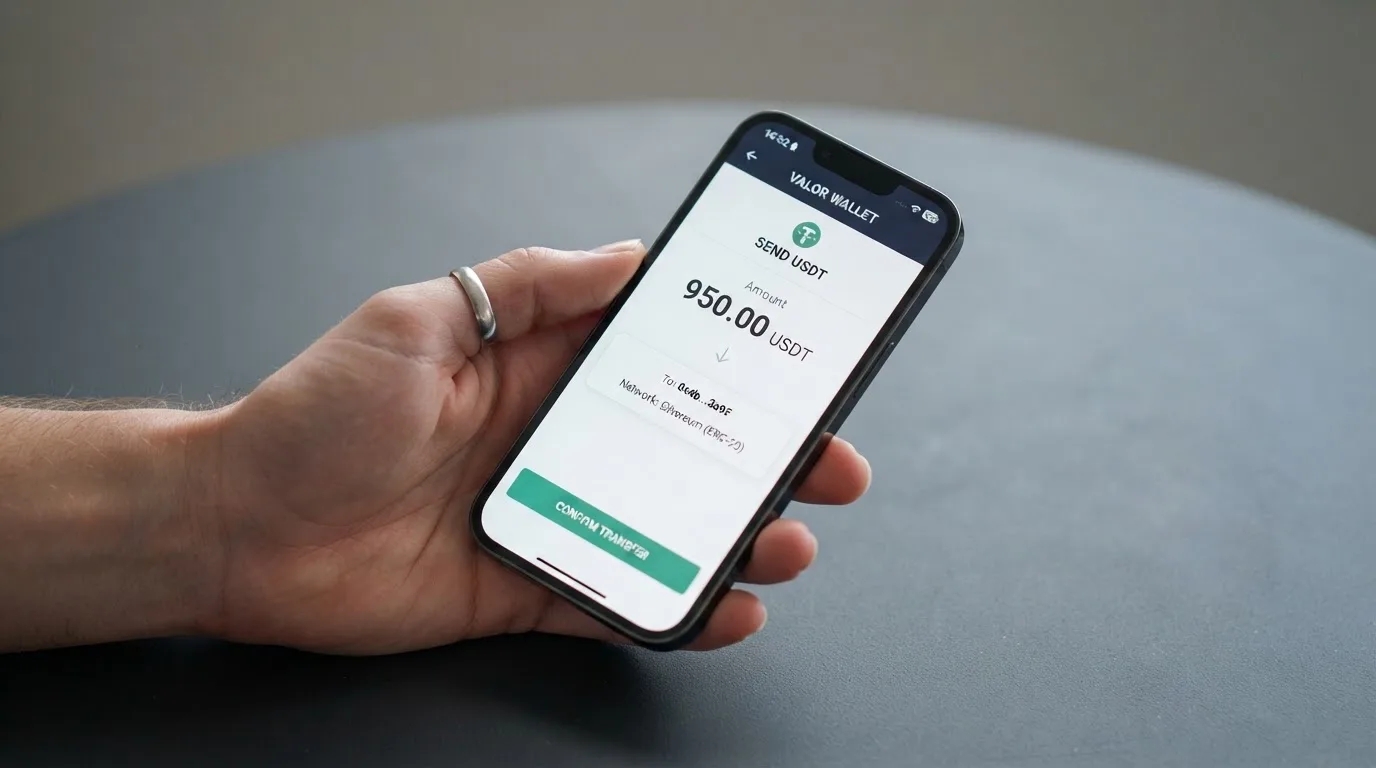
Two more pieces of context. The first is that the App Store release notes mention Naira withdrawals to bank accounts as a feature of the broader HostFi app, which is described there as a crypto banking app. Card balance withdrawals, in the sense of moving unused balance back to a bank or to a crypto address, are not stated. The second is that crypto transfers are irreversible in general, so the practical risk of getting the network wrong on a top-up is high. Stablecoin issuers document this in their own materials, and it is worth keeping in mind whenever a top-up flow asks you to choose a network.
A practical order of steps for the reader, as far as the public materials allow:
- Open the app, create or pick a card, and choose a funding source.
- If the funding source is a digital asset, identify the supported network in the app before sending, then send only that asset on that network to the address the app shows.
- If the funding source is fiat, the App Store release notes suggest Naira bank transfers as one route, but the full list of rails is not stated.
- Wait for the balance to settle before spending. The settlement time for each rail is also not stated.
What I would avoid is sending a token on a network that the in-app instructions do not explicitly list, and sending to a copied address without verifying the first and last few characters against what the app shows. Both errors are common, and both are unrecoverable in most cases.
Paying with it every day
The card, once issued, is a virtual Visa or Mastercard. The cardholder experience in the App Store description covers three areas: funding, card creation and management. There is no mention of wallet support such as Apple Pay or Google Pay, no mention of ATM use, no mention of contactlesstap-to-pay support, and no published list of merchant categories that are blocked or restricted.
On rewards, the App Store talks about a points-based rewards programme and a referral programme that lets you “invite friends to HostFi and earn rewards”. Cashback in the conventional sense is not stated. The site itself marks the rewards block as “Coming soon”, which means the on-page experience of the programme is not yet visible to a non-customer.
The App Store rating is 4.3 out of 5 from 89 raters (read 2026-10-21), taken from the Nigeria storefront. Google Play ratings are not officially stated. The Help Centre and a contact email link are the support channels mentioned on the site; the hours, languages and response-time targets are not officially stated.
A reader who only needs the card to pay a handful of online subscriptions and is comfortable with a Naira-denominated balance should be able to make that work. A reader who needs a card for travel, ATM use or a wide range of merchants will not find the answers they need on the official pages.
What can go wrong
The risks with HostFi fall into three groups, and the order is roughly the order of likelihood.
The first group is disclosure risk. Because the official pages do not state fees, limits, supported coins, supported networks, the issuing bank or the licence, a reader is signing up for a product whose total cost, legal framework and dispute process are only knowable after the fact. This is the practical meaning of a 4.3 score: the product is not a bad product, but it is an under-disclosed one.
The second group is platform risk. HostFi is described as using “cold storage, multi-factor authentication, and advanced encryption” at the platform level, which is a reasonable baseline. The custodial model and the card-specific controls — instant freeze, spending limits, merchant blocks — are not stated. The Help Centre and the contact email are the only support channels mentioned. The card programme is also still labelled “Coming soon” on parts of the site as of 2026-10-21, which means some of the functionality the App Store describes is not yet visible to the public web reader.
The third group is regulatory and operational risk. The terms are governed by Nigerian law, the issuing bank and the regulator are not named, and licences are not stated. There is no public Trustpilot page for HostFi and no HostFi-specific complaints were found in the searches I ran on 2026-10-21 (“HostFi card reviews trustpilot reddit” only returned unrelated results for a brand called HostFaddy). The company is real, the developer is named in the App Store, and the US address is a registered-agent style address, but the absence of a public complaint trail is not the same as a clean record. New programmes tend to have a thin public record precisely because they are new, so the absence of complaints is a neutral data point rather than a positive one.
Two more practical risks to keep in mind. Crypto transfers are irreversible, so a top-up sent on the wrong network or to the wrong address is generally lost. And a prepaid virtual card without AVS support in your region can be declined at checkout by merchants that validate the billing address, especially in the US, Canada and the UK, because the BIN lookup may show a foreign issuer country.
What to take instead
The alternatives below are cards that publish more of their pricing or country rules than HostFi currently does, which is why I have included them. They are scored on the same scale as HostFi and grouped by what they offer.
Cardex
Cardex scores 5.6 out of 10 in the broader comparison. Its headline is breadth: “one crypto card, 200+ countries”, although no country list or exclusions are published. The card itself is a debit crypto card that runs on the VERVE, Visa, Mastercard and UnionPay networks, with virtual and physical options per the App Store. The card currency is Naira on the listing, which makes it directly comparable to HostFi for Nigeria-based users. Pricing is not stated, but the site describes an “AI-Powered Conversion Rate” that picks the best of several exchange rates at the moment of payment; no fee percentage is published. Funding is from USDT, USDC and BTC wallets, with the networks again not stated. Rewards are not stated. A reader who needs a multi-network card and is comfortable with a Naira denomination will find Cardex more developed on the marketing side, while still finding the cost gap.
TakeCard
TakeCard scores 5.5 out of 10. Its country rules are mixed: the physical card is “available only to Bolivian users for now”, and the broader Takenos wallet says it can receive payments from any country. The article I read names Visa as the network and describes the card as prepaid, issued in the United States, with USD as the card currency at a 1:1 rate. Cost is more concrete here: a virtual TakeCard is USD 5 to issue, a physical card in Bolivia is USD 20 issuance plus USD 20 shipping, with another article in the same centre putting the physical issuance at USD 10. There is no monthly fee, the per-purchase commission is 1%, USD payments are 1:1 with no currency adjustment, and other currencies are converted at the official Visa rate of the transaction day. Funding is from the Takenos account balance. Rewards are not stated. A reader who needs a published commission and a USD-pegged card will find TakeCard more transparent than HostFi on the cost side, at the cost of a more limited physical footprint.
OkiCard
OkiCard scores 6.0 out of 10 and is the most pricing-transparent of the three. The site advertises “150+ countries” (with some pages saying “200+”), no geo-blocking by passport, and a user confirmation that they are not in a sanctioned jurisdiction. The card is virtual, with a physical card also mentioned but not detailed. Card currency is USD/EUR-pegged. Cost has a published baseline: issuance $0, monthly $0, starting price $15 for a virtual card (the FAQ also mentions a one-time issuance fee, so pages disagree), with a 100 USDT initial deposit. Fees are partially stated: a 3% load fee, a 0% transaction fee in USD, and the site says “no hidden exchange spreads”, with the FX fee itself not stated. Funding is more detailed than HostFi: USDT on BSC (BEP-20), Ethereum (ERC-20), Tron (TRC-20) and Solana (SPL); USDC is “soon”; BTC and other coins are “coming soon”. Deposits go to a generated address and are converted to fiat at the moment of spending. Rewards are not stated. A reader who needs the network names printed on the page will find OkiCard a more honest description of the top-up route.
The point of putting these three next to HostFi is not to declare a winner but to show what “more disclosed” looks like. TakeCard and OkiCard, in particular, have at least a partial fee schedule, which is the single most useful thing a reader can have before they put real money on a card.
Who I would recommend it to
My honest recommendation is narrower than HostFi’s marketing implies. The card is worth trying if all of the following are true: you are in Nigeria or you are comfortable operating under Nigerian-law terms, you want a virtual Visa or Mastercard denominated in Naira, you are happy to test the cost with a small balance before committing more, and you do not need published support for a specific coin, network or wallet. Outside that profile, the disclosure gap is wide enough that a reader is taking a leap of faith on fees, limits and dispute process.
If you are reading this from outside Nigeria, or if you need a card for travel, ATM use, mobile-wallet tokenisation or a published fee schedule, the alternatives above are likely a better starting point. HostFi can be worth returning to once the site stops labelling core features as “Coming soon” and once the cost of using the card is written down somewhere a reader can find without opening the app.
Frequently asked questions
What is the HostFi card?
The HostFi card is a virtual Visa or Mastercard offered by HostFi Services Ltd, a company that trades as Host Finance. Cards are created in the HostFi app and are described as prepaid, so they draw on a balance that you fund rather than a linked bank account.
How does the HostFi card work?
You create a virtual card in the app, choose Visa or Mastercard, pick a currency (the App Store mentions Naira), and fund the balance with fiat or a digital asset. The card is then used like any other Visa or Mastercard number at online checkout. The exact mechanics of the crypto-to-fiat conversion are not described in detail on the official pages.
Is HostFi a bank?
HostFi is not described as a bank on its own pages. It is registered as HostFi Services Ltd, the App Store developer is HostFi Services Limited, and the terms of service are governed by Nigerian law. The issuing bank behind the card and the regulator are not named in the materials I could read.
Who owns HostFi?
The company is HostFi Services Ltd, trading as Host Finance. Ownership beyond that, including individual shareholders or a parent company, is not stated on the public pages.
Is the HostFi card available in my country?
HostFi does not publish a country list. The only geographical line on the site is the general disclaimer that “some products are available only in selected countries”. The App Store storefront is the Nigerian one, the terms are governed by Nigerian law, and the App Store release notes talk about Naira virtual cards. Practically, you have to download the app and try, because the public pages do not commit to a list.
How do I get the HostFi card?
You download the HostFi app on iOS or Android, register an account, complete the in-app identity steps, and create a virtual card. The KYC documents and the verification time are not stated on the official pages. Delivery is immediate because the card is virtual.
Does the HostFi card require KYC?
The official pages do not describe the KYC process in detail. The App Store listing does not name documents, proof of address, age threshold or the difference between verification levels. The actual requirements become visible only after you open the app and start the registration flow.
How do I top up the HostFi card?
The App Store says cards can be funded with fiat or digital assets, and the help centre describes the in-app flow. The specific coins and the supported networks are not named on the public pages, so the safest practice is to identify the supported network inside the app before sending, and to send only the asset on the network the app explicitly lists.
Is the HostFi card safe?
HostFi describes platform-wide safeguards that include cold storage, multi-factor authentication and advanced encryption. The card-specific controls — instant freeze, spending limits, merchant blocks — and the dispute process are not stated. Because HostFi is custodial, the safety of the balance also depends on the company, and licences or an external auditor are not named.
Is the HostFi card worth it?
It depends on what you need. For a Nigeria-based user who wants a Naira virtual card and is willing to test the fees with a small balance, the card is usable today. For a reader who needs a published fee schedule, named networks, ATM support, mobile-wallet tokenisation or a clear non-Nigerian country list, the public materials do not yet support that decision, and one of the alternatives in this review is likely a better starting point.
Virtual cards: the entry point – cryptocardportal.com
Content created by the «cryptocardportal.com» team