
The card works like a prepaid voucher, and it tells you almost nothing
 Available in US
If you have ever been refused an ordinary bank card, or you simply need a card number that expires in a year and works exactly once, Fastcoincard is worth a look. That is the narrow job it does. If you want a card you can rely on next month, hold a balance you trust, or pay for things in the high street, this is not it. I went through the company’s own site, its terms, the app listing and the reviews people leave behind, and I scored it 4.3 out of 10.
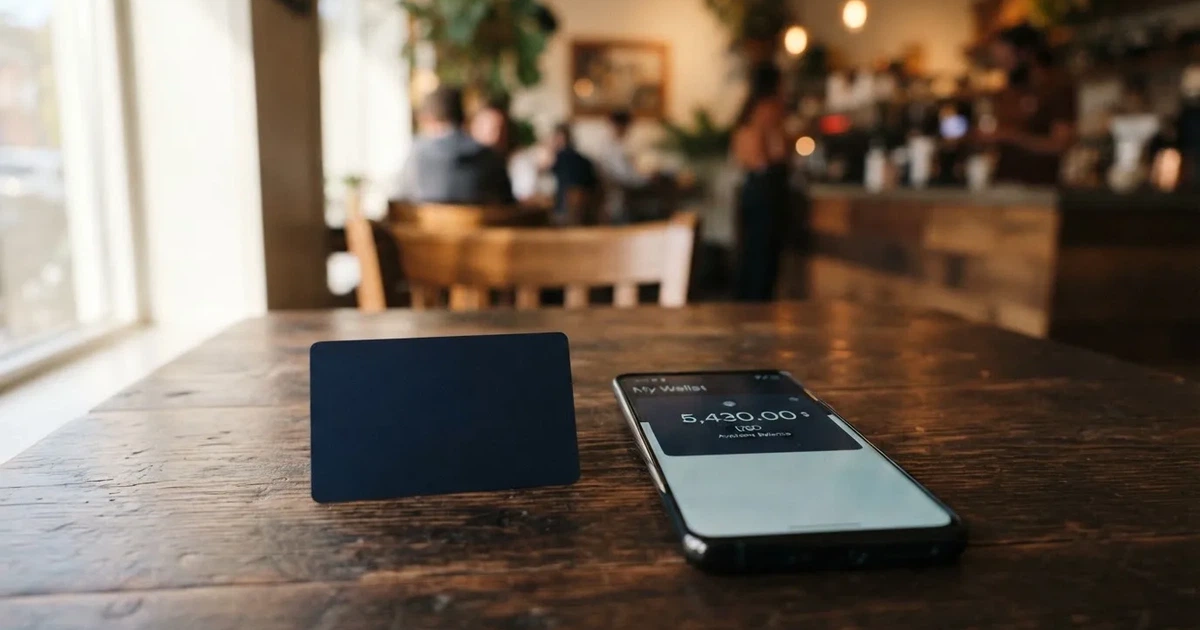
The conditions below are current as of October 28, 2026.
Verdict: 4.3 out of 10, and the low marks are not a misunderstanding
Let me put the number first, then explain it, because a single figure on its own tells you nothing. I score Fastcoincard on five things: who can get the card, what it costs, how you top it up, how reliable the operation is, and how it holds up in everyday use. The total is 4.3.
| Criterion | Mark | Why |
|---|---|---|
| Who can get it | 6 / 10 | Cards are said to be accepted in more than 120 countries, but no issuing-country list is published, and the site says a VPN is needed outside Europe, the USA, Australia or other supported countries |
| Cost | 4 / 10 | Visa and Mastercard: $20 one-time, $120 reloadable; Amex: $35 and $150. No annual fee, and no FX fee by the site’s claim, but no fee table is published |
| Top-up options | 5 / 10 | Bitcoin, Litecoin, Ether and others, plus Perfect Money and PayPal. USDT and the networks are not named |
| Reliability and complaints | 3 / 10 | A UK company, number 12550033, with no bank issuer named. Trustpilot shows 3.1 out of 46 reviews, citing deposits not credited, cards not delivered and support that goes quiet |
| Everyday use | 3 / 10 | Virtual Visa, Mastercard and Amex only. Apple Pay, Google Pay and cash withdrawals are not mentioned |
| Total | 4.3 / 10 | A card built for one-time online payments with a bought virtual card |
The strongest thing here is not the card. It is that Fastcoincard says you do not need to verify your identity to get going. That matters enormously if an ordinary bank’s application has been turned down for you, which is exactly the situation a lot of people arrive here from. What you get in exchange is a virtual card number, a stored balance, and a company whose terms leave large parts blank. The best score in the table is the 6 for eligibility; the two worst are reliability and everyday use, at 3 each, and both are about the same thing: there is very little written down, and what people write about their own experiences is not encouraging.
Who this suits
Fastcoincard makes sense if you are making a one-off online payment, you already hold the crypto or cash you want to spend, and you want a card number today rather than a week from now. The site’s own framing is a bought virtual card for a single purchase. It also makes sense as a fallback for people who cannot open a bank account quickly, because the site claims no ID verification is needed to start.
Who it does not suit
If you want to live on this card, forget it. There is no mention of Apple Pay or Google Pay, no mention of cash withdrawal, and only virtual cards in three networks. If you are holding money on it for weeks, the withdrawal and closure terms are not clearly described, and there is a Trustpilot record of deposits that were not credited. If you need to know exactly what a payment will cost you in currency conversion terms, the answer is that the card’s own fee sheet is not published. And if you are in a country the service does not support, the site itself points you at a VPN, which tells you the rule exists and that the company knows it.
Will they give you the card
The site says the cards are accepted in more than 120 countries. It does not publish a list of the countries it issues in, so I cannot tell you which ones those are, and neither, on the evidence, can you. It also says that outside Europe, the USA, Australia or other supported countries you need a VPN. I am not going to explain what that means in practice, and I would treat the sentence as a warning rather than a convenience: the company is telling you that where you live is not automatically a place it will serve.
There is no stated age requirement, no published list of blocked countries, and no country-by-country limit table. The company behind it, Fastcoincard, is a UK registered company, number 12550033, at 27 Broadhurst Gardens, London NW6 3QX, and the site carries a 2021 copyright. The card itself is issued by a bank that the terms do not name, and the site refers to cards “from Entropay”.
How to get it
Signing up is free. The site claims no identity verification, but it also says that a higher load limit needs several scanned documents. So the picture is a two-tier arrangement rather than a fully anonymous one.
There are exactly two account levels. The free account can transfer a maximum of $20, under conditions the site does not explain. The document-verified account carries a higher load limit once you have sent documents through. The processing time for that verification is not stated, and neither are the rejection reasons, which is the information you would most want if a verification ever went wrong.
As for what you get: virtual Visa, Mastercard and Amex cards, in one-time and reloadable variants, denominated in US dollars, euros, Australian dollars and pounds among others. There is no physical card in any of this.
Delivery is described as instant, with details shown on screen after you add funds. One Trustpilot reviewer reported delivery taking more than four days, in December 2025, which is a user report rather than something the company confirms.
Fees: the price is clear, the running cost is not
The purchase prices are the easiest thing on this card. The one-time cards are meant for a single purchase and the reloadable ones for repeat use over a longer life.

| Fee or limit | What the card states |
|---|---|
| One-time Visa / Mastercard | $20, valid 1 year |
| Reloadable Visa / Mastercard | $120, valid 4 years |
| One-time Amex | $35, valid 1 year |
| Reloadable Amex | $150, valid 9 years |
| Sign-up | Free |
| Annual fee | “No annual fees” |
| Foreign transaction fee | None, by the site’s claim |
| Conversion fee | Not stated |
| Account Transfer Fee | May apply, per the terms |
| Cash withdrawal / ATM | Not stated |
| Card limit | “Maximum 10,000” stated alongside “unlimited transactions” claims, currency not stated |
| Free-account transfer limit | $20 maximum |
Three things in that table need saying out loud. First, the $20 and $35 one-time prices are not the whole cost of one payment; they are the cost of access to the card. Second, the terms say fees are deducted from your balance and that an Account Transfer Fee may apply, but the actual amounts sit in a “Fees and Limits Sheet” that is not published on the page. Third, the card limit of “Maximum 10,000” comes with no currency attached and sits next to a claim of “unlimited transactions”, which are two different things to read in the same breath.
Now, three everyday payments, and which fees apply to each.
You buy a $30 item online with a one-time Visa card you paid $20 for. The card price is already gone. What the site claims is no foreign transaction fee and no hidden fees, and the terms say fees come off your balance, but because the fee sheet is not published you cannot calculate the conversion cost from the page alone. If the item is priced in a currency other than the card’s, the conversion fee is simply not stated.
You load $120 onto a reloadable Mastercard for four years of use. You are $120 in from day one, plus whatever the top-up costs. Deposit fee and minimum are not stated. If you top up in Bitcoin, Litecoin or Ether you are also exposed to the network fee for that transfer, which the blockchain charges and the card provider does not.
You spend in a currency your card is not denominated in, say pounds on a euro card. The site’s no-foreign-transaction-fee claim is doing a lot of work here, because the conversion rate itself is never stated and the conversion fee is not stated. That is the line in this review where I stop being able to tell you what a payment will cost.
I do not have figures for the rewards side, but the card mentions 1% cashback on purchases and “up to 1.5%” instantly, with no payout currency and no conditions given, so treat both as a claim rather than a plan.
Top up: crypto, two payment services, and no networks named
The stated options are Bitcoin, Litecoin, Ether “and others”, plus Perfect Money and PayPal. The FAQ adds that you can top up through a wallet by buying credit with Coinbase. What is missing is the single most important detail: networks. Neither USDT nor the chain a deposit must be sent on is named anywhere I could see. Neither is a minimum deposit, and neither is a deposit fee.
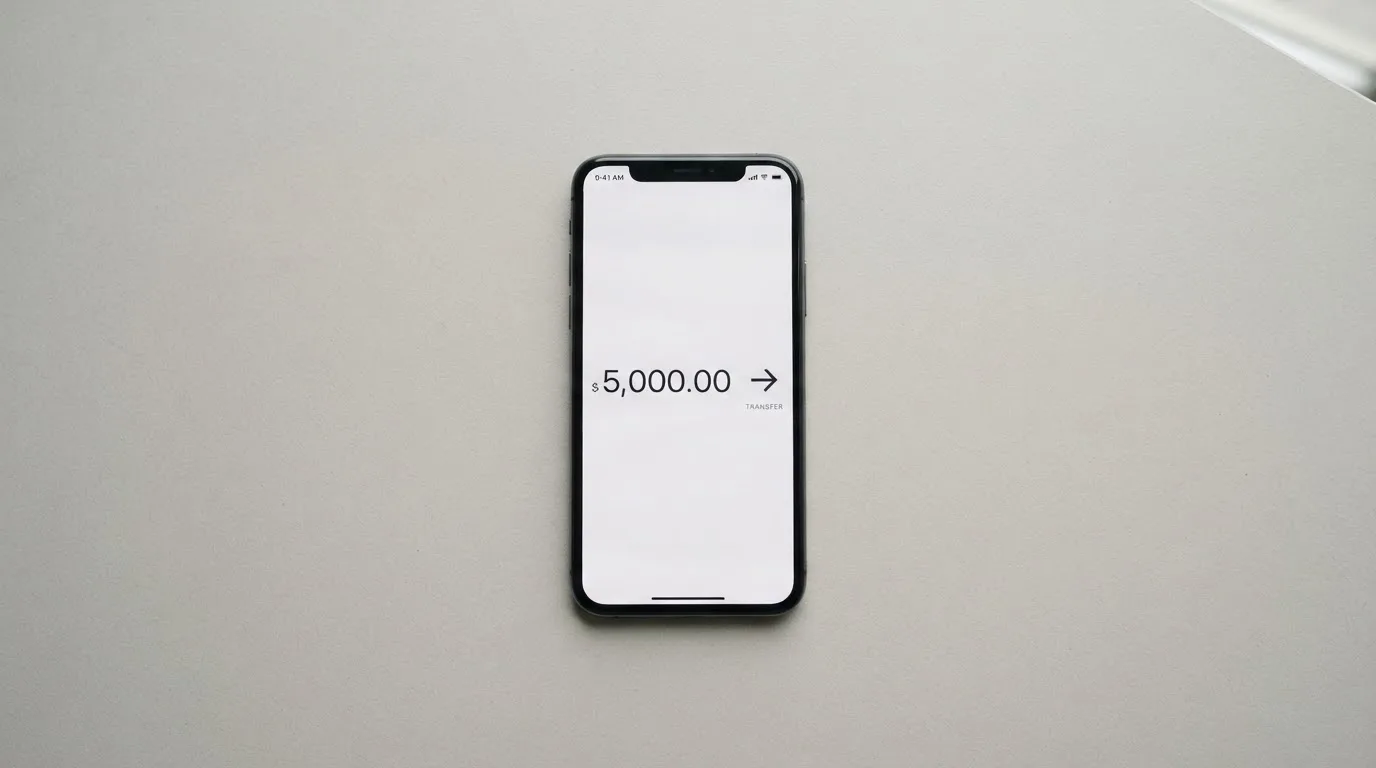
This matters more than it sounds. A blockchain transfer is irreversible. Send funds on a network the provider does not support, or to an address belonging to a different network, and the money can be gone or sit in manual support recovery with no guarantee of ever returning. If the provider has not told you which network to use, you are being asked to guess with your own money, and that is not a reasonable thing to ask of anyone.
| Top-up option | Named by the card | Networks stated | Deposit fee or minimum stated |
|---|---|---|---|
| Bitcoin | Yes | No | No |
| Litecoin | Yes | No | No |
| Ether | Yes | No | No |
| “And others” | Yes | No | No |
| Perfect Money | Yes | Not applicable | No |
| PayPal | Yes | Not applicable | No |
| Coinbase credit, via wallet | Yes, in the FAQ | No | No |
| USDT | No | No | No |
On the way out, the withdrawal and closure terms are not clearly described. The terms do not give you clear conditions for closing an account or for what happens to a balance that is still there when you leave. For a card you are meant to top up and spend, that is a gap worth noticing.
Paying with it every day
The short answer is that it was not built for this, and the record shows it. It is virtual only, in Visa, Mastercard and Amex. Apple Pay and Google Pay are not mentioned at all, which means the phone-based tap to pay that people have quietly come to expect from any card is simply absent. Cash withdrawals are not stated.
Two other everyday concerns go unanswered. The blocked merchant categories are not listed, and merchants may restrict card types in their own right, so a purchase can fail for reasons that have nothing to do with you. And a card can be declined by a shop not because of anything you did but because of what the card number reveals: the first six or eight digits of any card identify the institution that issued it and the country it came from, and some merchants apply extra scrutiny when that country differs from the billing address. Cards issued through arrangements like this one can look foreign to a shop.
For account management there is an Android app on Google Play, package com.fastcoinltd. I did not read its rating.
On refunds and problems, the terms carry a heading about buy-and-order refunds not being accepted, with the note that refunds may be considered case by case. For an unauthorised transaction the terms tell you to report it before the card is delivered, which is an odd instruction, and complaints go through the online complaints policy.
If you want the background on why a card behaves this way, it is worth knowing that a prepaid card simply draws on a stored balance, while a standard debit card asks your bank to withdraw from a linked account at the time of purchase. Most crypto cards behave like prepaid cards. In this model the card cannot overdraw, because it spends only what you loaded. That is a genuine safety property. It is also the reason the missing withdrawal terms matter so much: your money is sitting in a stored balance, not in an account you control.
What can go wrong
I found no official incidents, which is worth stating plainly before anything else. What follows is not a record of regulatory action or a documented failure. It is what people report, and it is the kind of report you should weight accordingly.
On Trustpilot the card sits at 3.1 out of 5 from 46 reviews, read on 21 October 2026, with 61% five-star and 33% one-star. The themes in those reviews are consistent over time: deposits not credited and cards not delivered, reported in February 2024, July 2024 and January 2025; support that goes silent, from October to November 2023 and again in January 2026; and doubts about the company’s legitimacy raised in 2025 and 2026. One reviewer claims the UK company was dissolved, in January 2025 and again in January 2026. That claim is unverified and I have no way to confirm it, so I am giving it to you as a user allegation and nothing more.
Read together, those themes line up with the gaps in the paperwork. A deposit that is not credited and a support line that does not answer are two halves of the same experience, and both land hardest on the people who most wanted this card because a bank would not give them one.
Some reviewers mention a VPN being needed from outside supported countries, which I have deliberately not recorded as a technique and will not discuss further. My point is narrower: it is a sign that eligibility is not automatic, and that a card accepted in 120 countries is not the same thing as a card issued to you.
| Risk | What I actually found |
|---|---|
| Deposits not credited | Reported by users, 2024 to 2025, on Trustpilot |
| Card not delivered | Reported by users, 2024 to 2025, and delivery over four days in Dec 2025 |
| Support unresponsive | Reported by users, Oct to Nov 2023 and Jan 2026 |
| Company status questioned | Alleged dissolution in Jan 2025 and Jan 2026, unverified |
| Issuer unnamed | Terms say a bank issues the card but do not name it |
| Balance on exit | Closure and withdrawal terms not clearly described |
| Wrong network on deposit | Networks not stated by the card; transfers are irreversible |
On the security side, the card describes password protection, firewalls and 128-bit encryption. Card freeze and spending controls are not stated. Support runs through a contact page and links to Facebook, Twitter, YouTube, Skype and Telegram, with no stated languages and no stated hours. Absence of stated hours is the part that connects back to the complaints: a support channel with no published response time is exactly the channel that goes quiet.
One structural fact is worth carrying with you. Visa and Mastercard do not issue crypto cards to consumers themselves; they license issuers, and they can suspend a programme. In November 2022 Visa said it had terminated its global agreements with FTX, and the FTX US debit card programme was wound down by its issuer. WaveCrest, a Visa issuer that supplied several crypto card brands, was suspended by Visa in Europe in 2018, closing every WaveCrest-issued Visa programme. Programme closures follow a pattern: a notice period, then spending and loading stop, then you are asked to withdraw what is left. If you ever hold a balance here, that is the shape of the risk.
What to take instead
None of these is perfect either, and I am not endorsing any of them. I am giving you the ones where more is written down, so you can compare like with like. The scores are mine on the same five criteria.
| Alternative | Score | Card | One-off price | Fees stated | Funding |
|---|---|---|---|---|---|
| Fastcoincard | 4.3 | Virtual Visa, Mastercard, Amex | $20 / $35 | Not published | BTC, LTC, ETH, Perfect Money, PayPal |
| Cardex | 5.6 | Debit crypto card on VERVE, Visa, Mastercard, UnionPay; virtual and physical | Not stated | No fee percentage stated; conversion at the moment of payment | USDT, USDC, BTC wallets |
| TakeCard | 5.5 | Virtual card, physical for Bolivia; Visa; USD | USD 5 virtual; USD 20 plus USD 20 shipping physical | 1% commission per purchase; USD 1:1 | Takenos balance; coins not named |
| OkiCard | 6.0 | Virtual card; network not specified | Starting price $15, issuance $0 on the pricing page, pages disagree | Load fee 3%; transaction fee in USD 0% | USDT on BSC, Ethereum, Tron, Solana |
Cardex scores 5.6 and says one crypto card in 200+ countries, with no country list and no exclusions. Its app store listing is Naira-focused, and it converts crypto to fiat at the moment of payment using what it calls an AI-powered conversion rate, though no fee percentage is given. This is a debit card rather than a stored-balance voucher, which is a different model.
TakeCard scores 5.5. The physical card is available only to Bolivian users for now, while the virtual one is immediate, and it is a prepaid Visa issued in the United States spending in USD 1:1 with a 1% commission per purchase. Its own help pages conflict on the physical price, with one article saying USD 10 and another USD 20 plus shipping.
OkiCard scores 6.0 and is the one I would look at first if you want the clearest published numbers. It names USDT on BSC, Ethereum, Tron and Solana, publishes a 3% load fee and a 0% transaction fee in USD, and says there are no hidden exchange spreads. Its own pages disagree, though: the pricing page shows a $0 issuance fee while the FAQ mentions a one-time issuance fee. It also states there is no geo-blocking based on your passport and that users must confirm they are not in a sanctioned jurisdiction.
That last point is the one to sit with. Each of these cards asks you somewhere between no verification and full verification. OkiCard and Cardex are more explicit about what they want. Fastcoincard is vaguer, and vagueness is what you are weighing here, not a policy.
Who I would recommend it to
I would recommend this card to exactly one kind of person, and I want to be specific. You are making a single online payment. You already have the money in a form this card accepts. You need the card number today and not a week from now. You accept that you cannot easily calculate the conversion cost, that you cannot rely on support answering, and that you should load only what you intend to spend. If all of that is true, this is a reasonable tool and it costs $20 to use.
I would not recommend it if the card is meant to be part of your life. That means no Apple Pay, no Google Pay, no stated cash withdrawal, no published fee table, no clear exit terms for your balance, and a Trustpilot record where a third of reviewers gave it one star. If any of that is what you need, look at OkiCard for its published numbers or Cardex for a different model, and read their pages as carefully as I have read these.
The honest summary is that Fastcoincard solves the problem of not having a card by accepting a set of conditions that most people only discover afterwards. It is cheap for a one-off, it asks almost nothing of you at the start, and it tells you very little about the rest.
Frequently asked questions
What is Fastcoincard card?
Fastcoincard is a service that sells virtual cards you fund yourself and spend like a stored-balance payment card. It offers Visa, Mastercard and Amex, in one-time versions meant for a single purchase and reloadable versions for longer use. There is no physical card. You add funds yourself, in crypto or through payment services, and the card draws down that balance. It is aimed at people who need a card number quickly, including people an ordinary bank has turned down.
How does Fastcoincard card work?
You create a free account, add funds, and receive a virtual card number that you enter at checkout. It behaves like a prepaid card: the balance you loaded is the balance you can spend, so it cannot overdraw. The site’s own framing is a bought virtual card for one-time online payments. Some merchants apply extra checks to cards issued in a country different from the billing address, so a payment can be declined for reasons that have nothing to do with your balance.
Is Fastcoincard a bank?
No, not as far as the public pages describe. It is a UK registered company, number 12550033, and the terms say the cards are issued by a bank that they do not name. The site refers to cards from Entropay. An e-money institution can hold customer funds and issue cards in some jurisdictions, but you should check the register for whatever jurisdiction actually applies to you, because the card does not tell you which one that is.
Does Fastcoincard card require KYC?
The site claims no identity verification, but it also says a higher load limit needs several scanned documents, and there are two account levels: a free one limited to a $20 transfer maximum, and a document-verified one with a higher load limit. So the honest answer is that a low level requires nothing and a useful limit requires documents. The processing time and the rejection reasons are not stated.
How much does Fastcoincard card cost?
A one-time Visa or Mastercard is $20 and lasts one year; the reloadable version is $120 and lasts four years. A one-time Amex is $35 for one year; the reloadable Amex is $150 and lasts nine years. Sign-up is free and there is no annual fee. The site’s claim of no foreign transaction fee is on top of that, but the conversion fee is not stated and the fee sheet itself is not published.
How do I top up the Fastcoincard card?
The named options are Bitcoin, Litecoin, Ether and others, plus Perfect Money and PayPal, and an FAQ suggests buying credit with Coinbase through a wallet. What is not stated is the network to send on, the deposit fee and the minimum deposit. That combination is the single thing I would want answered before sending anything, because blockchain transfers are irreversible and funds sent on an unsupported network can be lost.
Can I add the Fastcoincard card to Apple Wallet?
Nothing on the card’s pages mentions Apple Pay or Google Pay, so I cannot tell you that it works. That is a real gap rather than a technical objection, and it matters if tap to pay on a phone is how you normally expect to pay. If in-wallet use is important to you, pick a card whose pages describe it. The Android app for account management is on Google Play, package com.fastcoinltd, but its rating I did not read.
Is the Fastcoincard card safe?
It is safe in the narrow sense that a stored balance cannot overdraw and the funds are not held by a crypto exchange in the way a custodial wallet holds coins. But trust runs to the company, and the record is thin. It describes password protection, firewalls and 128-bit encryption, while freeze controls and spending limits are not stated. On Trustpilot it sits at 3.1 from 46 reviews, with reports of uncredited deposits, undelivered cards and silent support.
Why do people say Fastcoincard is not legitimate?
Some reviewers claim the UK company was dissolved, in January 2025 and again in January 2026. That is a user allegation and I could not verify it, so I am not presenting it as fact. What I can show is what is verifiable: the company number and London address are published, the issuer bank is unnamed, the fee sheet is unpublished, and a third of the Trustpilot reviews are one star. Draw your own conclusion from that.
Is Fastcoincard card worth it?
For a single online payment where you have nothing better, $20 is not outrageous and the card arrives fast. For anything ongoing, I would not say so: there is no stated cash withdrawal, no mobile wallet, no published conversion fee, no clear terms for closing an account, and a support record that people describe as unresponsive. Load only what you plan to spend, and treat the balance as gone until you have spent it.
Virtual cards: the entry point – cryptocardportal.com
Content created by the «cryptocardportal.com» team