
A virtual card you can open with an email — and the price of that convenience
 Available in US
There is a particular kind of relief in being able to sign up for a card with nothing but an email address and a password. If you have been turned away by a conventional bank — because of where you live, what documents you can produce, or simply because no bank in your country will open an account for you — a virtual card that asks for no ID looks like the shortest possible route back to paying for things online. CardUpNow is one of those products. It offers virtual Visa and Mastercard cards, top-ups in Bitcoin, Ethereum and USDT, a mobile-wallet link for Apple Pay and Google Pay, and no identity check on the basic plan.
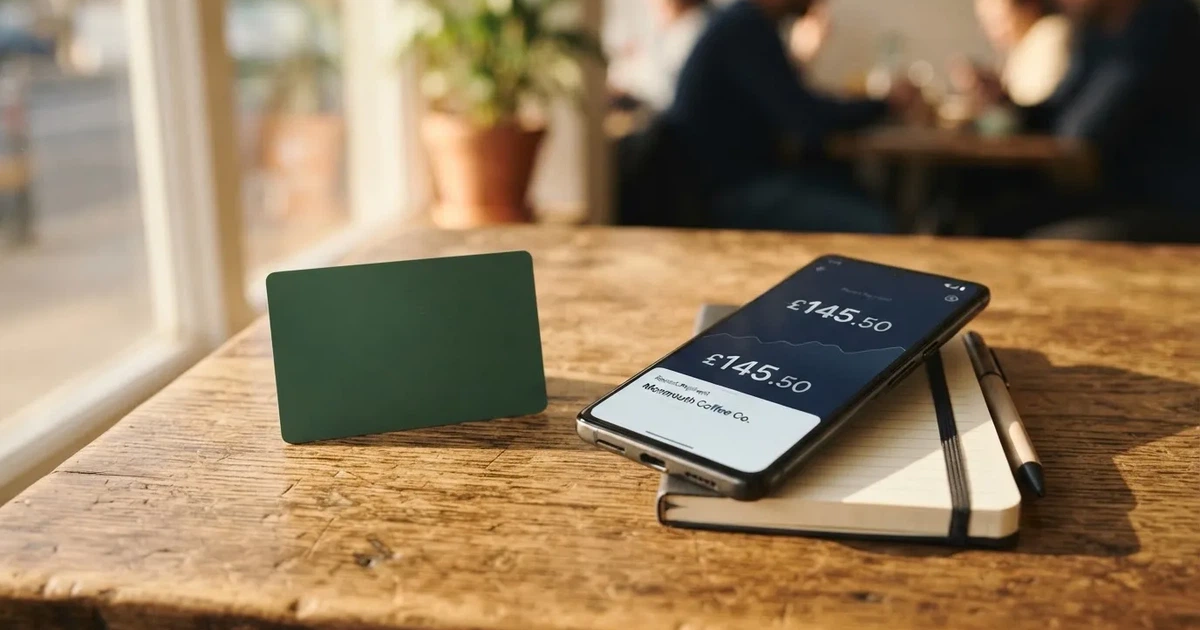
The price of that convenience is stated plainly on the card’s own pages: a $50 one-time account activation fee, 5% on card issuance, 5% on deposits, 5% on withdrawals, $0.40 for a declined transaction and $0.40 on any payment under $30. Those are not edge cases in a crypto card; they are the ordinary path. Add a monthly Elite tier, and a complaint record in which frozen cards and unreturned balances recur, and you have a product that works exactly as advertised for a narrow group of people and is a poor fit for almost everyone else.
The conditions described here are current as of October 28, 2026.
My score for CardUpNow is 4.2 out of 10. That is not a rounding error away from passing. It reflects a real service with a real product and a documented fee schedule, weighed against fees that sit at the punishing end of the category and a company whose legal entity and card issuer are not named on the public pages.
| Criterion | Mark | Why |
|---|---|---|
| Who can get it | 8 / 10 | Open worldwide with no country list; the UK and India are named as markets; non-residents allowed; use in sanctioned countries prohibited |
| Cost | 1 / 10 | $50 activation, 5% of the card amount on issuance, 5% on deposit, 5% on withdrawal |
| Top-up options | 6 / 10 | Bitcoin, Ethereum, USDT and “other major coins”; the networks are not named |
| Reliability and complaints | 2 / 10 | No legal entity or issuer named; on Trustpilot 79% of ratings are one star, citing frozen cards and unreturned funds |
| Everyday use | 4 / 10 | Virtual Visa and Mastercard only; Apple Pay and Google Pay for the Visa card; no ATM |
| Total | 4.2 / 10 |
Who this suits, in plain terms: someone who needs a virtual card number today, cannot pass KYC anywhere else, spends in small amounts, and treats the balance as disposable. Who it does not suit: anyone moving meaningful sums, anyone who needs a card to survive a bad week, anyone whose income depends on a payment not being declined, and anyone who needs to raise a dispute and be heard.
The strongest single reason for the 2 out of 10 on reliability is not that complaints exist — every product has those — but that the card’s public pages do not name the legal entity behind the service or the institution that issues the card. You are asked to preload money with no issuer to identify.
Who will they give you the card
CardUpNow states that it is available worldwide with no country list, and it names the UK and India as markets it operates in. Non-residents are allowed. Use in sanctioned countries, or with sanctioned entities, is prohibited.
That is the entire eligibility story, and it is short in both directions. There is no waiting list of approved jurisdictions to check, which is genuinely unusual and genuinely useful for a lot of people. But “worldwide, no country list” is also the phrase a reader should treat with care, because the absence of a list is not the same as a licence. The card’s own pages say the card is not a bank and describe a custodial prepaid balance; no legal entity, registration number or issuer is named there. If your reason for wanting this card is that a sanctioned person, entity or jurisdiction is involved, the prohibition in their terms is where your answer is: they do not permit that use, and I am not going to describe how to get around it. For everyone else, the practical question is whether a card with no named issuer behind it is a trade you want to make.
One further detail from the signup terms is worth knowing at this stage rather than at the point of payment, because it shapes what the card is useful for: the age floor is 18, and while the basic plan needs no ID, higher limits and business accounts may require verification — the marketing language is “for eligible plans” and “where allowed by law”. So the no-KYC promise is real at the entry level and is explicitly conditional at the top end.
If you are in one of the countries where ordinary banking is difficult and you only need a Visa or Mastercard number for online subscriptions and hosting, this eligibility profile is the strongest thing the product has going for it. If you need a card that will be accepted everywhere without hesitation, no country list in the world changes that.
How to get it
Registration is the shortest part of the whole process. You register with an email address and a password — no ID, no phone, no social security number — and you must be 18 or older. You then receive a virtual Visa or Mastercard card, offered in a single-use or reloadable form, and there is an upgraded tier called CardUp Elite. There is no physical card in the product as described on the public pages, so if a physical card in your hand is the requirement, this does not meet it.
The card details are expected within 15 minutes of payment, which matters because it tells you what “apply” means here: you pay first and the number arrives afterwards. That is a normal pattern for virtual cards, but it also means the money leaves you before you have checked anything about whether the card works at the places you intend to use it.
What the card’s pages do not state is the verification level in force for any given account — no tier structure of checks is published. That is one of those “not stated” points that a reader should not fill in with optimism. The service is built around not asking, and the pages do not describe a ladder of checks that might apply later.
So the getting-it sequence is simple enough to describe in a sentence: email, password, pay, wait up to 15 minutes, use the number online. The parts that need thought are the payment (next section) and what you are trusting with the money.
What it really costs: Fees
The fee schedule is the single most important thing to understand about CardUpNow, and the card is unusually open about it — which is to its credit. What it does not do is make the schedule small.

| Item | Fee or limit as stated |
|---|---|
| Account activation | $50 one-time, non-refundable |
| Card issuance | 5% of the card amount |
| CardUp Elite | Free with a $300 top-up |
| Deposit | 5% |
| Withdrawal | 5% |
| Declined transaction | $0.40 |
| Payment under $30 | Extra $0.40 |
| Refund overuse | $0.50 or 2% |
| FX fee | Not stated |
| ATM | Not stated — the card is virtual |
| Published spending caps | None published; you can set limits per card |
| Elite limits | Higher, amount not given |
| Currency | Fees charged in USD; “international currencies” claimed, none listed |
Two things in that table deserve a second look before you read anything else. First, the $50 activation is non-refundable and it applies before you have spent anything, so the real cost of testing the card is $50 plus the 5% issuance fee on whatever card amount you choose. Second, 5% on deposit and 5% on withdrawal mean that moving money in and back out costs roughly a tenth of the amount in round trip. That is not a fee you pay once; it is a permanent toll on every cycle.
Now the everyday arithmetic, because fee percentages hide themselves. The minimum deposit is $50 according to the fees page, and $100 according to the fees-and-usage page — the card’s own two pages disagree, which I will come back to below. Take the $50 figure. A $50 deposit costs $2.50 in deposit fee. The $0.40 fee on payments under $30 adds a significant extra cost to a $50 balance, on top of everything else. Pay for a $4 streaming subscription twice in a week and the fixed charges are doing more work than the percentage ones.
The three payments that show how this lands:
- A $4.99 monthly subscription. The $0.40 small-payment fee applies, so the effective rate on that transaction increases significantly. Add the 5% deposit fee you paid to load the balance that funded it and the effective cost climbs again. A declined attempt on the same subscription adds a further $0.40.
- A $120 online purchase. No small-payment fee here, but the card’s FX fee is not stated and “international currencies” are claimed without a list — so if the merchant prices in a currency other than the one you loaded, you have no published number to check the charge against.
- A $60 top-up followed by a $10 withdrawal. 5% of $60 is $3.00, 5% of $10 is $0.50, and there is a $50 minimum on withdrawal according to the fees page — so this small withdrawal may not be possible at all.
The two-page conflict deserves to be stated plainly rather than smoothed over. The fees page says a deposit carries a 5% fee; the fees-and-usage page says crypto deposits carry no CardUpNow fee. Similarly, the minimum withdrawal is $50 on one page and absent on the other. Where a provider’s pages disagree, I assume the worse reading until the provider tells me otherwise, so budget the 5% and assume the $50 minimum. If the no-fee reading turns out to be correct, good; but you should not decide on that basis.
Fees are charged in USD, which is worth noting if your income is in something else. And the refund-overuse charge of $0.50 or 2% is an unusual line: it suggests the card watches how often you ask for refunds, which is a behaviour it may eventually penalise.
How to top it up
Top-up is where the product is most straightforward, and also where one detail is genuinely dangerous if you get it wrong.
You fund the account with Bitcoin, Ethereum, USDT or “other major coins”. The networks are not named on the card’s pages, and that is not a small omission — see the top-up section below.
The cost of funding is a 5% deposit fee, plus blockchain fees charged by the network rather than by CardUpNow. Deposits of USDT under $100 carry an extra $1 USDT handling charge, which matters most for small and frequent top-ups. There is no maximum deposit stated. On withdrawal there is a 5% fee with a $50 minimum on the fees page and no minimum on the fees-and-usage page; if you close the card or the account, any remaining balance may be returned to you subject to the company’s policy, which is not the same as a promise that it will be.
The network question deserves more than a warning, so let me walk you through it as I would for a friend. Blockchain transfers are irreversible. A stablecoin exists on many different networks — USDT, for example, has been issued on Ethereum, Tron, Solana, Polygon, Avalanche and others — and sending a token on a network the provider does not support, or to an address belonging to a different network, can mean the money is simply gone, or can mean a support conversation with no guarantee of recovery. There is an extra trap here specifically: Circle stopped supporting USDC on Tron in February 2024, so “USDC over TRC20” is not a native option even though USDT over TRC20 is a normal one. If a provider’s pages do not name the networks, that is not a detail you can safely guess at. You would need the card to tell you which network to use for which coin, and you would want that answer in writing before you send anything.
The $1 handling charge on sub-$100 USDT deposits also tells you something about the intended size of a deposit. This product appears to be built around larger loads, not small daily top-ups.
Paying with it every day
Day-to-day use is where the absence of a physical card becomes the central fact. What you have is a virtual Visa or Mastercard number, available as a single-use card or as a reloadable one. The Visa card can be linked to Apple Pay or Google Pay, which effectively gives you a contactless card on your phone without holding plastic. Mastercard gets no equivalent stated.
Three things are prohibited on the card’s terms: unlawful gambling, pornographic services and dark-web markets. Unlawful gambling is the one with commercial weight, and it connects to something structural rather than moral. Every merchant carries a four-digit category code assigned under ISO 18245; gambling falls under MCC 7995, and many issuers block that code on specific cards by policy rather than by law, with the blocked list differing from issuer to issuer. A card with a narrow fee structure and no visible issuer is exactly the kind of card that tends to have an aggressive block list.
Beyond the block list, expect friction that has nothing to do with you. When you pay, a merchant’s system can look up the card’s first six or eight digits to see which institution and country issued it, and apply extra scrutiny when the issuer country differs from the billing address. That is why a card issued in one country can look foreign to a shop in another. Some merchants decline prepaid or foreign-issued cards for exactly this reason. Address verification, which compares the numeric parts of the billing address you type against issuer records, is mainly offered in the US, Canada and the UK and is generally unavailable for foreign-issued cards — a common cause of declines on a card with no named issuer. These are the mechanics behind the “cards declined” reports on the complaints record, and they will not fix themselves.
Declines also have a cost and a consequence here. A declined transaction costs $0.40, and a declined authorisation can leave a hold on your funds for several days — typically up to seven. With no ATM access at all, there is no cash fallback.
If a payment does go wrong, the dispute route is narrow. Refund requests must be made within 48 hours of the transaction, are reviewed within 3 business days, and paid out in 5–10 business days. They are for system errors or unusable cards only. Chargebacks — the mechanism where an issuer orders a refund with a reason code such as fraud or goods not received — are not mentioned at all, and in the US, prepaid-card coverage varies and should not be assumed. On the positive side, online payments may be subject to 3-D Secure, Visa’s brand being Visa Secure and Mastercard’s Identity Check, which adds a one-time code or biometric check and can shift liability in a fraud case. Whether this card implements it is not stated.
Three more small realities. CardUp Elite promises “cashback, rewards & perks” at a rate that is not stated. There is no app in the stores — the service runs as a web app at app.cardupnow.com, which matters if you are the kind of user who would rather not hand a browser your credentials. And support is reachable by contact page, Telegram at t.me/CardUpNowSupport and WhatsApp, with hours not stated; Elite gets “premium support”, which is a claim rather than a schedule.
What can go wrong
The complaints record is the reason for the 2 out of 10 on reliability, and I want to be precise about what is documented versus what is inferred. On Trustpilot, read on 2026-10-21, 79% of ratings are one star, across 14 reviews — the page also says 16 reviews in the last 12 months — and the rating itself is shown as unavailable because of a breach of guidelines with fake reviews removed. A page whose rating cannot be displayed and whose review count is internally inconsistent is not a place to draw firm statistical conclusions. It is, however, a place where the same themes repeating across a small number of reports is worth noting: failed and declined cards between May and October 2026, frozen cards and unreturned funds between June and September 2026, and complaints about fees and upselling in May and June 2026.
The individual reports are specific. A user report from May 2026 cites high fees, the $50 account fee, a $300 Elite upsell and charges from failed authorisations. Another from May 2026 says the card was removed with about $7 left. Reports from September 2026 describe frozen cards, restricted accounts and unreturned funds. Reports across August to October 2026 describe cards declined. The company replies and disputes, which is what a company does, and it does not by itself resolve the accounts.
Underneath the complaints sits a structural fact, and it is the one I would want a reader to hold onto. A prepaid card draws on a stored balance, and this is one: crypto is converted and loaded as fiat balance, which is the model where the balance is spent and therefore cannot overdraw. The balance is custodial. Control of crypto belongs to whoever holds the private key, and here the provider holds the credentials, so you have to trust the provider completely. There is no seed phrase of your own, which removes one class of risk and introduces a larger one — you cannot self-custody your way out of a problem with this provider.
Custodial platforms have a real history of failure: Mt. Gox with roughly US$350 million reported stolen in 2011–2014, Coincheck at about US$400 million in 2018, and the Ronin Network at US$625 million in 2022. Card programmes themselves have been switched off underfoot. Visa terminated its global agreements with FTX on 13 November 2022 and the FTX US debit card programme was wound down by its issuer. WaveCrest, a Visa issuer that supplied several crypto card brands, was suspended by Visa in Europe in 2018, closing all WaveCrest-issued Visa programmes. The pattern in closures is a notice period, then loading and spending stop, then a request that you withdraw remaining balances — and a 2026 closure reported by a secondary source had new loads ending 8 July 2026 and spending stopping 8 August 2026, which I mention as single-source and unconfirmed. If that happened to a wallet you had already funded, you would be competing with everyone else at the same time.
What the card does say about itself is limited: the balance is custodial and prepaid, encryption is claimed, and you can set limits per card. What is not stated anywhere is the safeguarding of customer funds. This matters because the general rule in this category is that electronic money institutions must safeguard customer funds by segregating them in dedicated accounts or insuring them, and that such funds are not the same as bank deposits and may not be covered by deposit guarantee schemes. If the entity holding your money is not named, you cannot check whether any such arrangement exists. No news coverage of significance was found for the company, which tells you nothing either way but does mean you will not be learning about it elsewhere first.
One more asymmetry to hold onto: blockchain transfers are irreversible, and Tether says it disables tokens in wallets on the OFAC sanctions list and has frozen funds tied to illicit activity. So the same chain that makes a transfer final also gives intermediaries the power to stop it — stablecoins are not censorship-proof, in either direction.
What to take instead
If the reason you want this card is “I cannot get an ordinary card”, the honest comparison is not against other no-KYC cards; it is against a bank or an e-money institution that will verify you properly, because that route comes with a named issuer, deposit-like safeguards and a dispute process that actually works. Everything below assumes you have already decided that a crypto-funded virtual card is the right shape of solution, and is comparing like with like.
| CardUpNow | Cardex | TakeCard | OkiCard | |
|---|---|---|---|---|
| Score | 4.2 / 10 | 5.6 / 10 | 5.5 / 10 | 6.0 / 10 |
| Where | Worldwide, no country list; UK and India named | “One crypto card, 200+ countries”; no exclusions | Physical card Bolivia only; starting data lists virtual for Latin America, US, Spain, Italy (unverified) | “150+ countries” (some pages say “200+”); no geo-blocking on passport |
| Card | Virtual Visa and Mastercard; no physical | Debit card on VERVE, Visa, Mastercard, UnionPay; virtual and physical | Virtual (immediate) and physical (Bolivia only); Visa; issued in the US; prepaid; USD 1:1 | Virtual; a physical card is mentioned without detail; network not specified |
| Cost | $50 activation; issuance 5%; Elite free with $300 | Not stated | Virtual $5; physical (Bolivia) $20 issuance + $20 shipping, one article says $10; no monthly fee stated | Issuance $0, monthly $0, starting price $15 for virtual — pages disagree |
| Fees | Deposit 5%, withdrawal 5%, declined $0.40, payment under $30 extra $0.40, FX not stated | Real-time conversion at payment; “AI-Powered Conversion Rate”; no percentage stated | 1% per purchase; USD 1:1; other currencies at the official Visa rate | Load fee 3%; transaction fee in USD 0%; FX not stated |
| Top-up | Bitcoin, Ethereum, USDT, “other major coins”; networks not named | USDT, USDC and BTC wallets; networks not named | From the Takenos balance; coins not named; starting data says USDC/USDT via Polygon, BNB Chain, Tron or Ethereum (unverified) | USDT on BSC, Ethereum, Tron, Solana; USDC “soon”; BTC and altcoins “coming soon”; initial deposit 100 USDT |
Reading across that table, three differences matter more than the scores.
Named networks versus unnamed ones. OkiCard is the only one of the four that names the chains it accepts — USDT on BSC, Ethereum, Tron and Solana — which is the difference between a top-up you can execute confidently and one you are guessing at. TakeCard’s article names coins only in unverified starting data, and Cardex and CardUpNow name no networks at all. CardUpNow’s own minimums also put pressure in the wrong direction: a $50 deposit triggers a 5% fee, and a sub-$100 USDT deposit adds $1.
Fee structure versus headline conversion. OkiCard states a 3% load fee and 0% transaction fee in USD, with “no hidden exchange spreads” claimed, though its pages contradict each other on whether issuance costs anything. TakeCard charges 1% per purchase with USD at 1:1 and other currencies at the official Visa rate — a rule you can actually calculate against. Cardex promises real-time conversion with an “AI-Powered Conversion Rate” that scans exchange rates and picks the best, but states no percentage, so there is nothing to hold it to. CardUpNow names its fees, which is more than most, and they are among the highest here: 5% on deposit and 5% on withdrawal plus a $0.40 floor on small payments and declines.
Reach versus support. Cardex and OkiCard both advertise very wide country coverage; Cardex’s App Store listing is Naira-focused, which suggests a Nigerian centre of gravity even behind a 200-country claim. TakeCard’s physical card is Bolivia-only for now, though its site says the wallet can receive payments from any country. OkiCard requires you to confirm you are not in a sanctioned jurisdiction and claims no geo-blocking based on your passport. CardUpNow is worldwide with the UK and India named, and prohibits use in sanctioned countries.
None of these three is a rescue. If your problem is that a bank will not open an account for you, OkiCard is the closest of the four on cost and the only one that names its networks — but it starts with a 100 USDT deposit and, on its own pages, disagrees about whether the card is free.
Who I would recommend it to
I would recommend this card to a narrow group, and I would rather describe the group precisely than talk myself into a broader one.
I would recommend it if you need a Visa or Mastercard number in the next hour, cannot pass identity checks anywhere else, will spend in small amounts from a balance you can afford to lose entirely, and are paying for online subscriptions and services where the merchant does not care about the card’s issuing country. If you are in that position, the product does what it says: email, password, pay, and you have a number in about fifteen minutes. The absence of a country list is a real advantage when you are outside the banking system of the place you actually live in.
I would not recommend it, and would suggest looking at a properly licensed e-money institution first, if any of the following are true. The balance matters — if losing it would hurt, the combination of a custodial wallet, an unnamed issuer and a complaint record mentioning frozen cards and unreturned funds is not a trade I would make. You need a physical card. You need cash, since there is no ATM. You pay in a currency other than USD, since the FX fee is not stated. You need to dispute a purchase, since refunds are limited to system errors within 48 hours and chargebacks are not mentioned. You are a business, since business accounts may require verification and the terms around that are thin. You plan to hold a balance and move it in and out, since 5% each way is a permanent tax on that.
If you are still tempted after that list, the single question I would put to the company before sending money is the one the pages do not answer: who is the legal entity, who is the issuer, and which network should I send each supported coin on. A provider that answers those three plainly is worth another look. One that does not has already told you what it is.
Frequently asked questions
What is CardUpNow card?
CardUpNow is a virtual payment card service, not a bank. You register with an email address and password, without ID, phone or social security number, and receive a virtual Visa or Mastercard number — either single-use or reloadable. There is no physical card, and no ATM. You fund the balance with crypto and spend it like a prepaid card. The Visa card can also be linked to Apple Pay or Google Pay.
Does CardUpNow require KYC?
On the basic plan, no. Registration is by email and password with no identity documents, phone or social security number. But the card’s own marketing qualifies this with “for eligible plans” and “where allowed by law”, and states that higher limits and business accounts may require verification. The verification level that applies to any particular account is not stated on the public pages, so do not assume it will stay absent.
How much does CardUpNow cost?
A $50 one-time, non-refundable account activation fee, plus 5% of the card amount when a card is issued. Deposits cost 5% and withdrawals 5%. A declined transaction costs $0.40, any payment under $30 adds $0.40, and refund overuse is charged $0.50 or 2%. The foreign-exchange fee is not stated. CardUp Elite is free with a $300 top-up and promises zero reload and transaction fees plus higher limits.
How do I top up the CardUpNow card?
You send Bitcoin, Ethereum, USDT or other major coins to the service, and the card says networks are not named — which is the part to be careful about, because transfers on a blockchain are irreversible. Deposits carry a 5% fee, USDT deposits under $100 add a $1 handling charge, blockchain network fees apply on top, and no maximum is stated. The minimum deposit is given as $50 on one page and $100 on another.
Can I use CardUpNow in my country?
The card’s pages say it is available worldwide with no country list, naming the UK and India as markets, and that non-residents are allowed. Use in sanctioned countries or with sanctioned entities is prohibited. Because no issuer or legal entity is named, and because merchants can check a card’s issuing country, you may still meet declines in some places — so treat the worldwide claim as an eligibility statement rather than a guarantee of acceptance.
Is CardUpNow a bank, and who owns it?
No, it is explicitly not a traditional bank, and its public pages name no legal entity, registration or issuer. That is the core problem with this product: you are asked to preload a custodial balance with no named institution behind it. Safeguarding of customer funds — segregation or insurance, the usual arrangement for licensed e-money institutions — is not stated either. I would not treat anything you deposit here as protected the way a bank deposit is.
Is the CardUpNow card safe?
Safe is the wrong question; the useful one is who holds the risk, and the answer is the provider. The balance is custodial, so you trust them completely and have no key of your own. The card claims encryption and offers per-card limits, but it names no issuer and no safeguarding. On Trustpilot, read 2026-10-21, 79% of 14 reviews were one star, with the rating itself shown as unavailable after a guidelines breach.
Why was my CardUpNow card declined?
Several ordinary reasons, none of them reassuring. Merchants can look up the card’s first six or eight digits and see the issuer country, and some decline foreign-issued or prepaid cards; address verification is generally unavailable for foreign-issued cards. Gambling, pornography and dark-web markets are prohibited on the card’s terms, and gambling has its own merchant category code that issuers often block. A declined authorisation may also leave a hold on your funds for up to seven days, and the decline itself costs $0.40.
Can I add the CardUpNow card to Apple Wallet?
The Visa card can be linked to Apple Pay or Google Pay, which is the closest thing to a physical card this product offers — a tokenised number held in your phone’s Secure Element, with a fresh security code for each payment. The Mastercard variant has no equivalent stated. There is also no app in the app stores; the service runs as a web app at app.cardupnow.com.
How do I get my money back, or close the account?
Withdrawal costs 5%, with a $50 minimum on the card’s fees page and no minimum on its fees-and-usage page — a conflict worth assuming the worse way round. If you delete the card or close the account, any remaining balance may be returned subject to the company’s policy, which is not the same as a commitment. Card closures in this category tend to follow a pattern: loading stops, then spending stops, then users are asked to withdraw what is left.
Virtual cards: the entry point – cryptocardportal.com
Content created by the «cryptocardportal.com» team