
Bleap Card: The Zero-Fee Crypto Card That Pays Up to 20% Cashback
 Available in US
The Bleap card is one of the more interesting crypto payment cards I have looked at, because it removes almost every fee I normally complain about. There is no issuance fee, no monthly fee, no maintenance charge, no subscription and no minimum balance. International spending carries a 0% FX markup. Adding money by bank transfer carries no Bleap conversion fee. Cash withdrawals are free up to EUR 400 a month. And on top of that, spending earns cashback in USDC, up to 20% on streaming, gaming and AI subscriptions.
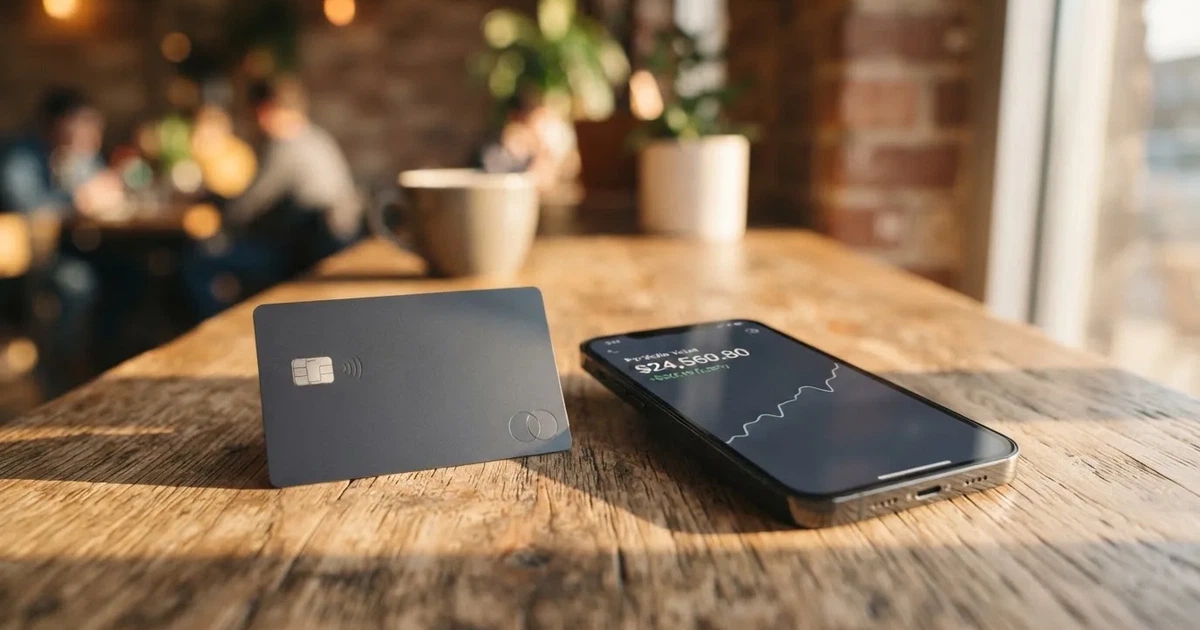
That is a genuinely strong offer on paper. The catch is not the fees, it is the eligibility rules and the state of the company behind the card. Bleap scores 7.5 out of 10 in my assessment. It is the right card for a resident of the EEA or Latin America who wants a no-cost Mastercard with real cashback and comfortable spending from a crypto balance. It is the wrong card if you live outside those regions, if you are a US citizen or hold citizenship of certain other countries regardless of where you live, or if you need support to answer quickly when something goes wrong.
The conditions described on this page are current as of October 28, 2026.
Verdict
Bleap is a well-priced card with a real rewards scheme attached to it, run by a properly licensed European company, but it sits inside narrow borders and its customer support is its weakest point.
Let me break that down criterion by criterion. The score is 7.5 out of 10.
| Criterion | Mark | Why |
|---|---|---|
| Who can get it | 6 / 10 | Residents of the EEA and Latin America, with Mexico and Brazil live and more “coming soon”; unofficial sources say 31 countries, and residence in the EEA or Switzerland is required |
| Cost | 9 / 10 | Issuance, monthly and maintenance all 0; 0% FX markup; free bank-transfer top-ups; free ATM withdrawals up to EUR 400 a month |
| Top-up options | 8 / 10 | Bank transfer in EUR/USD, tokens from an external wallet on Solana, Base and Arbitrum, other currencies converted to USDC |
| Reliability and complaints | 6 / 10 | Bleap SIA in Latvia holds a MiCA CASP licence from Latvijas Banka; unofficial sources name Unlimit as the issuer; Trustpilot 3.5/5 across 72 reviews, support replies taking 2–3 weeks, card blocks reported |
| Everyday use | 9 / 10 | Instant virtual card and physical Mastercard, Apple Pay and Google Pay, free ATM withdrawals up to EUR 400 a month |
| Total | 7.5 / 10 | Excellent economics, limited reach and slow support |
The pattern to notice: the two criteria I score highest are the two that touch your money directly, the fees and the daily use. The two I score lowest are eligibility and reliability, both of which are about access and what happens when something breaks. That is why this card can be a nine-out-of-ten experience for one person and a non-starter for another.
Who it suits: EEA residents who want a zero-fee card with cashback, and people in Mexico and Brazil who want to spend a crypto balance like an ordinary balance. Who it does not: anyone outside the supported regions, anyone who is a citizen of an excluded country even if they live in a supported one, and anyone for whom a two-week support reply is a dealbreaker.
Will they give you the card
The card is issued to residents of the EEA and Latin America. Mexico and Brazil are live; more Latin American countries are described as coming soon. The full country list lives in the Help Center rather than on the homepage. The rule is residence-based, so where you actually live is what counts.
There is one important complication, and it comes from outside the card’s own pages. Unofficial sources (CryptoCardHub, 11 August 2026) report 31 listed countries, with residence in the EEA or Switzerland required, and state that citizens of many countries, including the United States, the UAE, Turkey and Nigeria, are excluded regardless of residence. That is not confirmed by Bleap’s public pages, so treat it as a warning to check the official list rather than as a settled rule, but if you hold one of those passports it is worth knowing before you spend time on the application.
So there are two separate gates. The first is where you live. The second, less visible, is what citizenship you hold. EU rules require institutions to screen nationality separately from residence for sanctions and risk purposes, which is why a perfectly eligible address can still be turned down. The card’s own public pages do not state which nationalities are excluded; that detail is not published where a prospective applicant would easily find it.
The application itself is straightforward in shape. You need to be 18 or older and live in a supported country. Identity verification happens inside the app and the homepage says it usually takes under five minutes. The accepted documents and the proof-of-address requirements are listed in the Help Center. Unofficial sources add that the highest verification level the card needs involves a selfie, a government ID and proof of address, and that the company may also ask for a residence permit or the source of your funds.
How to get it
The path runs through the mobile app: download it, complete verification, and either take the virtual card instantly or order the physical one. Both are Mastercard debit cards, and both draw on the same balances, which can be held in fiat as EUR or USD (internally as EURe and USDC) or as crypto.
Verification is described in a single step rather than as a tiered system, and the card’s public pages do not say what the rejection reasons are or what the full set of levels looks like. That is worth knowing: if you are refused, the app may not explain why in terms you can act on.
One area where the card’s own materials disagree with each other is delivery. The homepage says physical cards ship within two working days. The Bleap blog describes approval timelines running from instant for the virtual card to two to four weeks for physical delivery. An unofficial source says no shipping timeframe appears on the page and that physical ordering was referral-gated, at least according to one App Store reviewer. The cost of the physical card and of a replacement is not stated on the public pages.
None of that makes the process hard. It makes it worth treating the virtual card as the reliable starting point and the physical card as a convenience whose timing you should plan around rather than depend on.
Fees
This is where Bleap is strongest, and it is worth walking through a normal month to see what the zero fees actually mean in practice.
The fee picture, as stated on the card’s pages:
| Fee or limit | Value |
|---|---|
| Issuance fee | 0 |
| Monthly fee | 0 |
| Maintenance fee | 0 |
| Subscription | None |
| Minimum balance | None |
| FX markup on international transactions | 0% |
| Bleap fee converting bank transfers | 0 |
| Fee converting external-wallet tokens | 0, one tap |
| Free ATM withdrawals | Up to EUR 400 per month |
Now, three everyday payments.
Paying for a coffee in your own country. You tap the card or your phone and the balance is spent. There is no issuance fee, no monthly fee and no conversion in the way, because the money is already sitting in a EUR balance. Nothing is taken beyond what the shop charges you.
Paying for something priced in dollars while you hold euros. The card states a 0% FX markup on non-EUR transactions. That means Bleap adds nothing. Mastercard’s own exchange rate and any third-party charges that may apply to the payment can still exist, according to an unofficial source, so “0%” is not the same as “costless in every possible sense” at the point of settlement, but it is the cleanest FX offer most cards in this category manage.
Taking EUR 100 out of an ATM in cash. Withdrawals are free up to EUR 400 a month, so this costs you nothing. The card page also says free withdrawals worldwide without mentioning a cap, which conflicts with the capped figure on the FAQ and homepage. Unofficial sources add a detail the official pages do not carry: that the allowance is three withdrawals and EUR 400 in total per rolling month, and that ATM operator surcharges can still apply.
That last point is the one to hold onto. Free up to a limit is not the same as unlimited, and a card page saying “free” without a number next to it is not something to rely on when you are standing at a machine abroad.
On limits, the official pages state the EUR 400 monthly ATM allowance and point to the Help Center for spending limits, which are not stated in public. Unofficial sources list card purchases of EUR 10,000 per transaction, EUR 15,000 per day and EUR 30,000 per rolling 30 days, with outgoing transfers at EUR 3,000 single, EUR 5,000 daily and EUR 10,000 rolling monthly. Those figures are not confirmed by the card, so I would not plan a large purchase around them without checking first.
Top up
There are two main routes, and both are fee-free on Bleap’s side.
The first is a bank transfer in EUR or USD. The balance is held as EURe or USDC at one to one, and other currencies are converted into USDC. There is no Bleap fee for converting a bank transfer, and Bleap describes adding money, converting and spending as free. What the card does not publish is a minimum top-up amount or the network fees that a crypto deposit would incur, which are charged by the blockchain rather than by the card provider.
The second is tokens from your own external wallet, on Solana, Base or Arbitrum. The tokens are convertible in one tap with no fees. The wallet itself is non-custodial in the MPC sense: the key is split into shares so that no single party, Bleap included, ever holds the whole thing, and there is no seed phrase to write down. Recovery is through a secure email sign-in instead.
If you would rather buy crypto with a bank card, Apple Pay or Google Pay, an unofficial source puts a 1% processing fee on that route, so the cheaper path is to move existing money in rather than to buy on the platform.
Two more things live in this area. There are savings vaults with a 0% withdrawal fee and no lock-in, denominated in USD, with a EUR vault described as coming soon. And there is a cash-out feature that converts crypto from a connected wallet to fiat, documented in the Help Center under a “Cash out” collection; the methods and fees for that are not set out in the public material I checked. What happens to your card balance if you close the account is also not stated.
Paying with it every day
The daily mechanics are good. You get an instant virtual Mastercard and a physical one, and the virtual card can be added to Apple Pay and Google Pay. Cash withdrawals are free up to EUR 400 a month, as covered above.
The rewards are the part that stands out. Cashback is paid in USDC and is set by merchant category:
- 20% on streaming, gaming and AI subscriptions
- 3% on rides and food delivery
- 2% on restaurants and supermarkets
- 1% on everything else
The cashback is paid after the merchant confirms the transaction, and the caps and conditions live in the cashback terms, which is where the fine print sits. The unofficial listing of a metal card as “coming soon” is not confirmed on Bleap’s pages, so I would not wait for it.
The apps are on iOS and Android. The homepage shows an App Store rating of 4.8 and a Google Play rating of 4.5, with no review counts and no date on the page itself, so treat those as a snapshot rather than a standing fact. Which merchant categories are blocked is not stated, which is the sort of thing that only reveals itself at a till.
What can go wrong
The risks here are mostly about access and support rather than about money being lost on a payment.
Support is slow. On Trustpilot the card sits at 3.5 out of 5 across 72 reviews, 59 of them in the last twelve months as read on 20 October 2026. The themes in the reviews are consistent: replies that take two to three weeks or never arrive, card or transaction blocks, funds frozen without a stated reason, and a report of being able to withdraw only to crypto with EURe hard to exchange. There is also a report of an SMS for adding the card to Google Wallet that never arrived. The company has not replied to negative reviews. An earlier reading of the same source showed 2.5 out of 5 across 46 reviews, so the visible number moved between reads.
You may not get the card at all. Unofficial reporting from August 2026 says card access is not enabled for every eligible resident, with some users in Italy and Spain seeing a “Coming soon” screen. Eligible is not the same as issued, apparently.
Your funds can be held. EU rules require institutions to stop or end a relationship when customer due diligence cannot be completed, which is exactly why accounts get frozen pending documents. The public pages do not state what triggers a block on this card, so the honest answer is that you cannot predict it.
The savings feature sits outside MiCA. Bleap’s savings vaults are not part of the MiCA-regulated services, so MiCA investor protections do not apply to them. That is a real distinction between the card balance and the savings product.
Crypto movements are irreversible. A transfer sent on a network the card does not support, or to an address belonging to a different network, can be lost or need manual recovery with no guarantee. That is a property of the technology, not of Bleap specifically, but it is part of what topping up from a wallet means.
Programme closures happen. Cards in this category have been wound down before. Visa ended its agreements with FTX on 13 November 2022, and the FTX US debit card was wound down by its issuer. WaveCrest, a card issuer that supplied several crypto brands, was suspended by Visa in Europe in 2018, closing all its Visa programmes. Closures typically mean a notice period, then spending and loading stop, then you are asked to withdraw what is left.
On the company side, Bleap SIA in Latvia (registration 40203714425, Riga) is the EU operator and is wholly owned by Bleap Ltd in the UK (14918472, London, founded 2023). It holds a MiCA CASP licence, No. 27-55/2026/14, from Latvijas Banka, granted on 25 June 2026. The card issuer and BIN sponsor are not named by the card; an unofficial source names Unlimit (Unlimit EU Ltd) alongside Mastercard. Bleap holds a Help Center, a contact page and a status page, plus in-app support.
Two things the card’s pages do not tell you: whether two-factor authentication, in-app freeze and spending controls exist, and whether any insurance applies. That is not stated.
What to take instead
If Bleap does not fit your country, or you want a different balance of trade-offs, these are the ones I would look at.
| Card | Score | Cost | Notable |
|---|---|---|---|
| Bleap | 7.5 / 10 | No issuance, monthly or maintenance fee; 0% FX markup; free ATM to EUR 400/month | Up to 20% cashback in USDC; EEA and Latin America residents |
| BloFin Wallet Card | 6.9 / 10 | Activation, annual, issuance and dormancy fees all $0.00; spend fee 1% or lower by VIP tier | Starting data lists 35 countries including the US, Australia, Japan and UAE; no cashback, a reduced spend rate instead |
| Decaf | 6.2 / 10 | Activation $5 virtual worldwide; physical $10 in the US, $90 elsewhere; no annual fee | Long restricted-country list covering both Russia and Belarus, several US states, and others; FX fee added by the card is none, you get the Visa rate |
| SafePal | 6.2 / 10 | No account or management fees; issuance fee not stated; standard top-up 0%; 1% FX on Mastercard non-USD settlement | Crypto from 40+ blockchains converted to USDC; no cashback |
Reading across that table: Bleap wins on cashback and on the absence of any standing fee. BloFin wins on breadth of countries and has a tiered spend rate that falls to zero at the top tier, but it charges a spend fee by default. Decaf has a real activation cost and a country list that rules out a lot of people. SafePal has the widest blockchain reach for topping up but adds an FX fee on non-USD settlement and offers no cashback.
None of these is a bank. A crypto card usually sits on top of an e-money or payment licence, and the crypto brand is often just the programme manager in front. Visa and Mastercard do not issue these cards themselves; they license issuers and can suspend a programme.
Who I would recommend it to
I would recommend Bleap to an EEA resident who wants a Mastercard with no monthly charge, no FX markup and cashback that pays in USDC, and who is comfortable topping up from a bank transfer or from tokens they already hold on Solana, Base or Arbitrum. The economics are the best in this category and the virtual card is instant.
I would not recommend it, without hesitation, to anyone outside the EEA or Latin America, to citizens of countries excluded regardless of residence, or to anyone who needs a phone answer when a payment is blocked. If your money is in the card and support takes two to three weeks, that is a long time to be uncertain.
The pattern is simple: excellent card, narrow door, slow help. Judge it on that.
Frequently asked questions
What is the Bleap card?
The Bleap card is a Mastercard debit card that spends from either a crypto balance or a fiat balance in EUR or USD, held internally as EURe and USDC. It exists as an instant virtual card and as a physical one. The virtual card can be added to Apple Pay and Google Pay. Bleap describes adding money, converting and spending as free, and pays cashback in USDC.
How does the Bleap card work?
You top up, then spend. Money arrives by bank transfer in EUR or USD, or as tokens from an external wallet on Solana, Base or Arbitrum, and the balance converts into EURe or USDC at one to one. The card then spends that balance, and if you withdraw cash it is free up to EUR 400 a month. The wallet is non-custodial in the MPC sense, so no single party holds the full key.
Is Bleap a bank?
No. Bleap SIA is an EU operator in Latvia, registered 40203714425 in Riga, and it holds a MiCA crypto-asset service provider licence, No. 27-55/2026/14, from Latvijas Banka dated 25 June 2026. The card itself is a payment service regulated separately from MiCA, and the issuer is not named by the card.
Who owns Bleap?
Bleap SIA is wholly owned by Bleap Ltd, registered 14918472 in London and founded in 2023. The Latvian company is the EU operator; the UK parent is the owner. An unofficial source names Unlimit as the card issuer alongside Mastercard, but Bleap’s own pages do not name the issuer.
Who can apply for the Bleap card?
Residents of the EEA and Latin America, with Mexico and Brazil live and more countries coming soon, and the full list is in the Help Center. You must be 18 or older and live in a supported country. Unofficial sources say 31 countries and that residence in the EEA or Switzerland is required, and that some citizenships are excluded regardless of residence.
Does the Bleap card require KYC?
Yes. Identity verification happens in the app and the homepage says it usually takes under five minutes. You need a government ID, a selfie and proof of address; unofficial sources add that a residence permit or proof of source of funds may be requested. The public pages describe a single verification level and do not state the rejection reasons.
What are the Bleap card’s fees?
There is no issuance fee, no monthly fee, no maintenance fee, no subscription and no minimum balance. The FX markup on international transactions is 0%, there is no Bleap fee converting bank transfers, and external-wallet tokens convert in one tap with no fee. ATM withdrawals are free up to EUR 400 per month, with operator surcharges possibly applying.
Is the Bleap card safe?
The wallet is non-custodial MPC, so the key is split and no single party, Bleap included, holds it in full, with no seed phrase and recovery by secure email sign-in. Against that, reviews report blocked cards and frozen funds with support taking two to three weeks. Whether 2FA, in-app freeze and insurance exist is not stated on the public pages.
Is the Bleap card worth it?
For an eligible EEA or Latin American resident who spends normally and wants cashback in USDC with no standing fee, the economics are hard to beat. You also get up to 20% on streaming, gaming and AI subscriptions. Against that, eligible does not always mean issued, the savings vaults sit outside MiCA protections, and the Trustpilot picture is 3.5 out of 5 across 72 reviews.
Can I add the Bleap card to Apple Wallet?
Yes, Apple Pay and Google Pay both work with the virtual card. There is one reported snag: a review describes an SMS for adding the card to Google Wallet that never arrived. If you are adding the card to a mobile wallet, keep an eye on the verification messages in your app as well as your phone.
Wallet cards: the entry point – cryptocardportal.com
Content created by the «cryptocardportal.com» team