
BitFree looks like a simple prepaid virtual card — and that is exactly what its documentation amounts to
 Available in US
I have spent the last stretch of time going through the BitFree card’s public material the way you would if you were about to depend on it: eligibility rules, what the app actually does, how money gets in, and what the company will tell you it costs. My honest summary is that BitFree describes itself in plain, ordinary terms — a prepaid virtual card managed inside an app, funded from crypto, usable as a payment card — and then stops short almost everywhere else. The price of the card is not stated. The fees on conversion are not stated. The coins and networks you can send are not named. The card network is not named. For a product whose entire purpose is spending money, that is an unusually large silence, and it is the main thing this review is about.
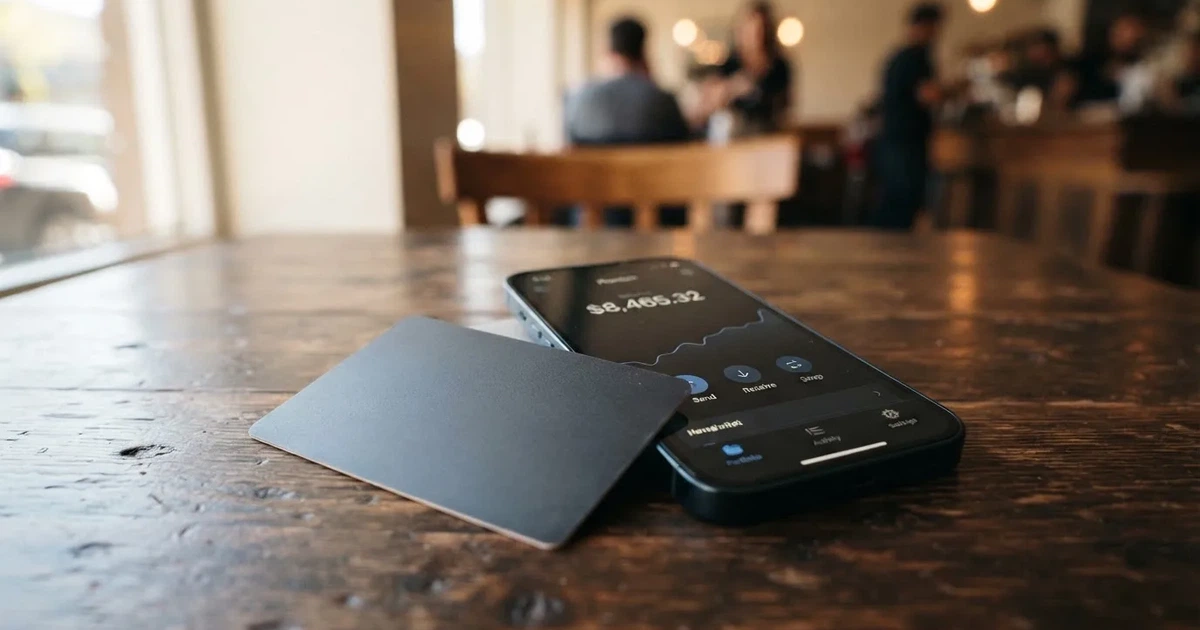
The conditions described here are current as of October 28, 2026.
One thing to be clear about before anything else: I have not used this card, and I have not held money in it. Everything below comes from what BitFree publishes about itself — its app listings, its website, its own terms — plus general knowledge about how crypto cards work as a category. Where the card’s public pages do not say something, I say so rather than filling the gap with a guess. That happens quite often here, and I have flagged each occurrence.
Verdict: 5.2 out of 10
BitFree scores 5.2 / 10. That is not a rejection, and it is not a recommendation either — it is a card whose visible surface is well described and whose economics are not, and you cannot fairly score something higher when the numbers you need to compare it against other cards simply are not published.
What BitFree is, in one line: a prepaid virtual card that you manage in the BitFree app and top up from crypto. No physical card is involved. The card is issued by an unnamed licensed partner, and BitFree sits in front of that partner rather than being the issuer itself.
Who it suits, on the evidence available: someone who already has decided they want a virtual prepaid card, holds crypto, is comfortable topping up from a balance rather than from a bank account, lives in a supported App Store region outside the excluded countries, and is willing to accept that they cannot see the fee schedule, the supported networks, or the card network before committing money. That is a narrow group, and it is worth being honest about how narrow. Someone who wants to compare conversion costs, who plans to use the card heavily, or who needs a physical card in a wallet will not find what they need here.
Who it does not suit: anyone who treats a card as an account. This is not a bank, and the categories of protection users often assume from bank cards — chargebacks, deposit guarantees, or established complaint routes — are not published for this product. It also does not suit someone who needs to know the exact cost of a purchase before they make it, because that fee schedule is not disclosed.
| Criterion | Mark | Why |
|---|---|---|
| Who can get it | 7 / 10 | Available in supported App Store regions, excluding mainland China, plus Hong Kong, Macau and the US, subject to partner terms and local rules |
| Cost | 5 / 10 | Fees are not disclosed; conversion is done by the partner, and the rate is visible before you confirm a top-up |
| Top-up options | 4 / 10 | Supported digital assets are for prepaid card top-up only; the coins and networks are not named |
| Reliability and complaints | 5 / 10 | Bitfree Limited / BITFREE INC., issuer is an unnamed licensed partner, no third-party reviews found, KYC with AML monitoring |
| Everyday use | 4 / 10 | Virtual prepaid card in the app only; wallets and ATM are not disclosed |
| Total | 5.2 / 10 | A simple, understandable product described in a way that leaves the numbers out |
Will they give you the card?
Yes, in most places — but the list of where you cannot is more informative than the list of where you can.
BitFree states the card is available in supported App Store regions, excluding mainland China, and also that it is not available in Hong Kong, Macau and the US. Availability also depends on the issuing partner’s terms and on local regulations. That is the whole eligibility statement as published. There is no country-by-country table, no list of accepted proofs of address, and no indication of what happens if your app store region and your actual residence disagree.
Two things are worth drawing out of that. First, the exclusion of the US is unusual enough to be worth noticing on its own. A great many crypto cards in this category are built around US dollar stablecoins and US-issued Visa or Mastercard cards; BitFree rules the largest market of them out. That suggests either a licensing constraint or a deliberate product boundary, and the public material does not say which. Second, the phrasing “supported App Store regions” is doing a lot of quiet work. It does not mean “every country where the app downloads”; it means regions the app is available in, and the two lists are not identical in practice.
The exclusions do not stop at countries either. There is a whole category of person who cannot be served regardless of where they live, and you should know whether that includes you before you download anything: sanctions screening is routine, and under EU customer due diligence rules it covers name, address, date of birth, nationality and identity documentation, a sanctions check, the purpose of the relationship, and whether you are a politically exposed person. In the US, the customer identification programme requires name, date of birth, address and an identification number, and electronic KYC systems also validate proof-of-address documents against records. Nationality is recorded and screened separately from residence, because sanctions screening and issuer risk policy are often applied to citizenship and country of birth as well as to country of address.
So the honest answer to “will they give you the card” is: probably, if you are an adult in a supported app store region outside the excluded five, with documents that pass verification — but the gatekeeper is the unnamed licensed partner, not BitFree, and the partner’s standards are not published.
How to get it
Before you can use the card at all, you pass KYC. BitFree states that KYC is required before use and that it involves a government-issued ID and liveness checks. That is the minimum modern baseline and it is a reasonable thing for the company to require. What it does not tell you: whether proof of address is required, whether an age check is applied separately, or what happens to your application if a document expires mid-review. All of that is not stated. There is a version note that mentions improvements to the KYC document upload flow, which is a small, oddly specific piece of evidence that the process is being worked on — it tells you the flow has been rough enough to be worth improving.
The card itself is virtual and prepaid, managed in the BitFree app, and issued by an unnamed licensed partner. The network it runs on and the currency it is denominated in are not stated. Those two omissions matter more than they might look. The network — Visa, Mastercard, or something else — determines which merchants will accept it and how online authorisation works, including whether 3-D Secure is available. 3-D Secure adds an identity check to online payments: the issuer assesses risk and either approves frictionlessly or challenges the cardholder with a one-time code or biometric step. Visa’s version is branded Visa Secure and Mastercard’s is Identity Check; EMV 3-D Secure 2, published in 2016, supports one-time passcodes and app-based authentication aligned with EU strong customer authentication. If the card runs on a network you do not expect, your subscriptions and your online payments will behave differently and you will find out at the worst moment.
The currency omission has a second layer. A prepaid card spends a stored balance, so that balance has to be in some currency. If it is not the currency of the country you are in, every purchase becomes a conversion, and conversion is exactly the thing whose cost BitFree does not publish. There is no physical card, so nothing is shipped and nothing needs activating in the usual way — the card lives in the app from the moment your account is live.
The sequence is straightforward: find the app in your region, create an account, complete identity verification, and the virtual card appears in the app. What I cannot tell you is how long any of that takes, because no timeline is stated, and I cannot tell you what to do if verification fails, because no escalation route is stated.
Fees: what it really costs
This is the weakest part of the product’s public description, and I want to be blunt about it rather than dress it up.
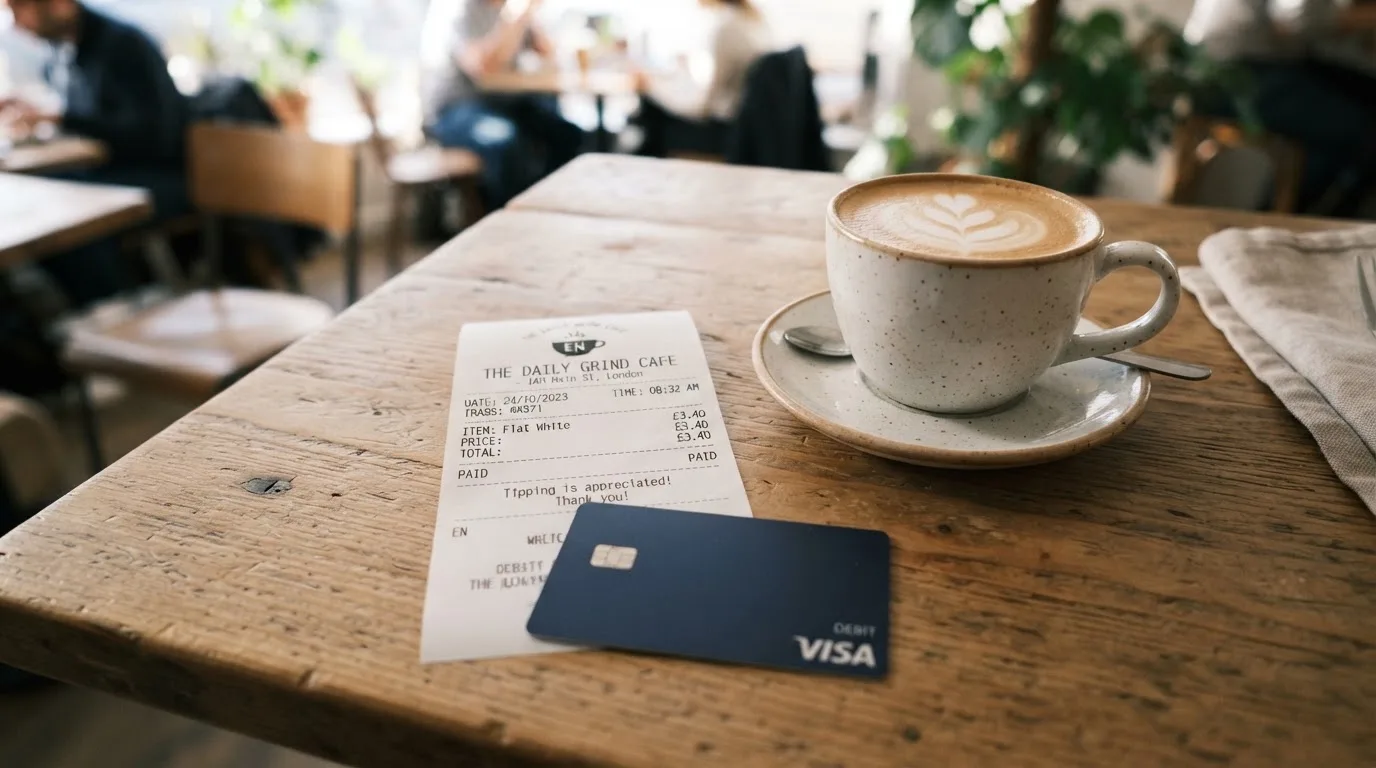
The card’s cost is not stated. There is no issuance fee published, no monthly fee published, no schedule of any kind. Conversion is performed by the issuing partner and the amounts are not stated — though the App Store text does say the reference rate can be reviewed before you confirm a top-up, which is at least a mechanism for seeing a rate rather than discovering it afterwards. ATM fees are not stated. Limits are not stated, beyond the general observation that limits and functionality are determined by the issuing partner and applicable network rules. Tiers, if there are any, are not stated. The card currency is not stated.
| Fee or limit | What BitFree publishes |
|---|---|
| Issuance fee | Not stated |
| Monthly fee | Not stated |
| Conversion fee | Done by the issuing partner; amounts not stated; reference rate viewable before a top-up is confirmed |
| Foreign exchange fee | Not stated |
| ATM fees | Not stated |
| Daily limit | Not stated — determined by the issuing partner and applicable network rules |
| Monthly limit | Not stated — determined by the issuing partner and applicable network rules |
Here is what that absence costs you in practice, with three everyday payments.
A coffee. If you spend in a local currency, the cost is whatever the merchant charges plus whatever the network charges — and here I have to say plainly that BitFree does not publish a per-transaction fee either, so the total is not knowable from the public pages. If the balance is in a different currency, a conversion happens at a rate set by the partner, and the spread on that rate is the part that is not disclosed.
An online subscription. This is where a prepaid virtual card is most exposed. The issuer can restrict a tokenised number — for example, block it for magnetic-stripe, phone or website use — and there is nothing you can do about that from outside. Online payments may also be challenged through 3-D Secure, which you would receive in the app or need an app-based confirmation for. Recurring payments are the specific thing prepaid cards are often refused on, and BitFree says nothing about whether yours would be.
An ATM withdrawal. Unknown, because ATM fees are not stated and it is not stated whether ATM withdrawals are possible at all. The iOS listing does not read as though a physical card is offered, so card-present ATM use looks unlikely, but I am not going to turn “unlikely” into “no” when the material is this thin.
There is one category of cost that is not the card’s fault and will still hit your balance: on-chain network fees. Gas and bandwidth for your deposit are charged by the blockchain, not by the card provider. So a top-up of a small stablecoin amount on a busy network can arrive with a materially smaller value than you sent, and that difference has nothing to do with BitFree.
Top up: how the money gets in
BitFree’s statement about funding is one sentence, and it is a restrictive one: supported digital assets may be used only for prepaid card top-up requests. That word “only” is doing real work. It means the crypto side is a funding mechanism for the card, not a wallet you can hold, spend from generally, or move freely. Whether the balance can then be withdrawn, transferred out, or moved to another BitFree account is not stated, and neither is how top-ups themselves work in mechanical detail.
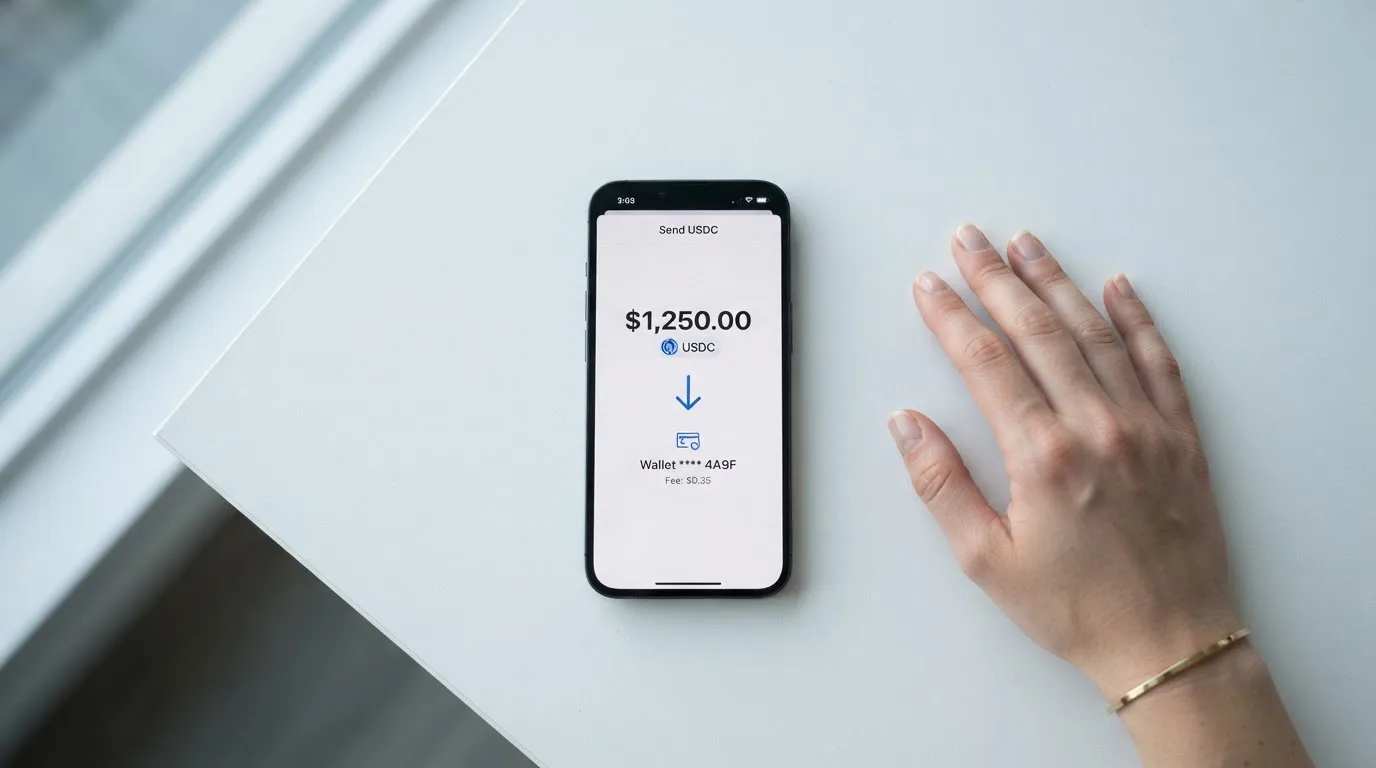
The critical gap is the one that catches people out. The coins are not named and the networks are not named. This matters enormously more than it sounds.
Networks are not interchangeable. ERC-20 is the Ethereum token standard, proposed in November 2015, and its gas fees are paid only in ETH — which means a wallet holding USDT and no ETH cannot send it at all. Tron prices transactions through bandwidth and energy, with fees often paid by burning TRX. Tether’s USDT has been issued on Ethereum, Tron, Solana, Polygon, Avalanche and others; Circle’s USDC is natively supported on 38 networks as of 16 September 2026, including Ethereum, Solana, Base, Polygon PoS, Avalanche, Arbitrum and Stellar. So “send USDC” is not a complete instruction. USDC over TRC-20 is not even a native option any more: Circle stopped supporting USDC on Tron in February 2024.
And the consequence of getting it wrong is severe. Blockchain transfers are irreversible. A deposit sent on a network the card provider does not support, or to an address belonging to a different network, can be lost entirely, or need manual support recovery with no guarantee of success. If the supported networks are not published before you deposit, you are depositing into a contract you have not been shown. My advice is not about how to circumvent anything — it is simply: do not send funds to a network until you have confirmed in writing which ones are accepted, and get that confirmation for the specific asset you hold.
One more assumption to break before you start. A stablecoin is designed to hold a stable value against a fiat currency, but as the BIS noted in July 2025, about 90% of stablecoin market capitalisation sits in USDT and USDC, and “despite the name, stablecoins are not necessarily stable.” TerraUSD collapsed in May 2022; USDC temporarily lost its peg in March 2023 during the US banking crisis. Circle says USDC is redeemable 1:1 for dollars and 100% backed by cash and cash equivalents, mostly in an SEC-registered government money market fund, with monthly reserve attestations — that is strong backing, not a guarantee. USDT is stablecoin-shaped too, and Tether says it disables tokens in wallets on the OFAC sanctions list and has frozen funds tied to illicit activity, so these assets are not censorship-proof in either direction.
Paying with it every day
Here the honest summary is thin, because the daily-use feature set is mostly not disclosed.
Wallet support is not stated. If you expected to tap your card on a phone at a shop, the material does not confirm that is possible — what the iOS listing implies is a virtual card, and Apple Pay works by replacing the card number with a device-specific Device Account Number stored in the Secure Element, never on Apple servers, with a one-time dynamic security code per payment. Whether that is set up here is not stated, and the search terms people use about adding BitFree to Apple Wallet point at a question the company has not answered on the pages I reviewed.
There is no cashback, no rewards tier, and no incentive programme published for the BitFree card.
Disputes are not stated, and this one deserves emphasis rather than a footnote. A chargeback is a refund ordered by the card issuer to settle a dispute, with reason codes such as fraud, duplicate billing or goods not received. US debit card reversal rights come from Regulation E and credit card rights from Regulation Z, and prepaid-card coverage varies and should not be assumed. Nothing in BitFree’s public material tells you what a prepaid virtual card issued by an unnamed partner is entitled to when a shop takes your money and does not deliver. Assume nothing, and treat the balance you load as spendable money you could lose to a bad merchant.
On the app itself, there is concrete evidence: the Android app is listed under the Google Play id com.yykj.bitfree.en with a rating that was not read, and the iOS app, published by Bitfree Limited under id1453815920, shows 3.3 from 99 ratings on the Japan App Store. That figure was not re-read at the time of checking, so treat it as a snapshot rather than a live number — but it is a public, first-party-adjacent signal, and it is the only user-facing rating I could find anywhere for this product. A 3.3 on 99 ratings is not a disaster and it is not a endorsement. It is what a small app with a small audience looks like.
Acceptance is where you should expect friction. A payment card number starts with a 6- or 8-digit issuer identification number, and merchants can look that up to see which institution and country issued the card, applying extra scrutiny if the issuer country differs from the billing address. This is why a card issued in one country can look foreign to a shop in another. Some merchants decline prepaid or foreign BINs for exactly that reason, and it is a policy decision on their side, not a defect in your card. Address Verification Service, which compares the numeric parts of the billing address a buyer typed against issuer records, is mainly offered in the US, Canada and the UK and is generally unavailable for foreign-issued cards — another cause of declines that has nothing to do with you. A merchant category code for gambling may be blocked by policy rather than by law, and the blocked list varies by issuer.
Two more practical facts you should carry around. A declined authorisation can leave a hold on your funds for several days, typically up to seven, even though the money never left. And gambling and similar categories are the ones most often closed off; if that is part of what you need, check before you load, not after.
What can go wrong
The most obvious thing to say first: I found no official incidents and no third-party reviews. No Trustpilot page for BitFree was found either. That is not a clean record so much as an absence of a public one, and the two readings are very different. Either this product has not been around long enough or large enough to generate complaints, or complaints exist somewhere I did not look. Details are not stated. An absence of reviews is what you would expect from a card with 99 ratings on one app store and nothing visible elsewhere.
The structural risks are clearer than the reputational ones.
You are dealing with an unnamed issuer. Bitfree Limited is the iOS publisher and BITFREE INC. the Android one. The issuer is described only as a licensed card issuing partner operating under its own financial licenses, and the registration is not stated. You do not know who holds your balance, under which licence, or in which jurisdiction. That single fact undermines every other answer on this page.
The company behind the card can disappear, and has happened. Visa terminated its global agreements with FTX on 13 November 2022 and the FTX US debit card was wound down by its issuer. WaveCrest, a Visa issuer that supplied crypto card brands, was suspended by Visa in Europe in 2018, closing all WaveCrest-issued Visa programmes. And Visa and Mastercard themselves do not issue crypto cards to consumers — they license issuers and can suspend a programme. The usual pattern when a programme closes is a notice period, then spending and loading stop, then users are asked to withdraw remaining balances. One 2026 closure reported by a secondary source had new loads ending on 8 July 2026 and spending stopping on 8 August 2026; that is a single unconfirmed source, but it shows how abruptly this category can move.
Custody is undefined. Whether your crypto is held by BitFree, by the partner, or never leaves your own wallet is not stated, and the difference is not academic. Control of crypto belongs to whoever holds the private key or seed phrase, so with a custodial wallet you must trust the provider completely. A seed phrase — typically 12 to 24 words — is an unencrypted form of the private key, and anyone who obtains it can restore the wallet and spend its funds. Transfers are typically irreversible with no built-in recovery: the network cannot freeze or return funds. Custodial platforms have a real record of failure: Mt. Gox, about US$350 million reported stolen between 2011 and 2014; Coincheck, about US$400 million in 2018; and Ronin Network, US$625 million in 2022. If the answer here is custodial, you are carrying counterparty and hack risk; if it is self-custody-linked, you are carrying sole responsibility for key loss, phishing, and clipboard-hijacking malware that swaps a copied address.
Regulatory ground can move under you. MiCA, the EU’s markets-in-crypto-assets regulation, took legal effect in June 2023; its rules on asset-referenced tokens and e-money tokens applied from 30 June 2024, and the remaining provisions including crypto-asset service provider rules applied from 30 December 2024. Under MiCA, e-money tokens may be issued only by a credit institution or an electronic money institution. The transitional period lets providers operating under national law continue only until 1 July 2026 or until they receive or are refused a MiCA authorisation, whichever comes first — and that date has already passed. ESMA maintains an interim register of authorised CASPs, white papers and non-compliant entities, which is worth checking a provider against. Note also that the card itself is a payment service regulated separately under e-money and payment-services law: a crypto card often depends on two licences, and one of them sits with the unnamed partner.
Your protection may be thinner than you assume. If an electronic money institution holds the balance, it must safeguard customer funds by segregating them in dedicated accounts or insuring them — but those funds are not the same as bank deposits and may not be covered by deposit guarantee schemes. Under 3-D Secure, liability for fraudulent online payments can shift from the merchant to the cardholder’s bank, or, per critics, to the cardholder. And if due diligence cannot be completed, EU rules require the institution to refrain from the transaction and, where necessary, end the relationship — which is why accounts close or freeze pending documents, and nothing here tells you how that is handled here.
Support exists, with limits. There is [email protected], and [email protected] for media and regulatory inquiries. The site is available in Russian. Languages and hours are not stated. No news or announcements are stated.
Tax sits outside all of this. In the US the IRS treats digital assets as property, so exchanging them for goods, services, dollars or other digital assets generally produces a taxable gain or loss, measured in local fiat currency at the fair market value on the transaction date. That is context, not advice — I am not a tax adviser and nothing here should be treated as guidance for your situation. Check with a professional in your own country.
What to take instead
None of these is a recommendation either. They are the cards I could evaluate more fully because they publish more, and because you should be comparing them. All three sit in the same 5–6 band, which tells you something about how thin the published information is across this category as a whole.
| BitFree | Cardex | TakeCard | OkiCard | |
|---|---|---|---|---|
| Score | 5.2 / 10 | 5.6 / 10 | 5.5 / 10 | 6.0 / 10 |
| Who can get it | Supported App Store regions, excluding mainland China, Hong Kong, Macau, the US | “One crypto card, 200+ countries”; no exclusions listed, App Store listing is Naira-focused | Physical card Bolivia only; starting data lists virtual card for several countries, not confirmed on a readable page | “150+ countries” (some pages say “200+”), no geo-blocking by passport; must not be in a sanctioned jurisdiction |
| Card | Virtual prepaid, in-app; network and currency not stated | Debit crypto card on VERVE, VISA, Mastercard, UnionPay; virtual and physical; currency Naira per listing | Virtual immediately, physical Bolivia only; Visa named; issued in the US; prepaid; currency USD, paid 1:1 | Virtual card, physical mentioned without detail; network not specified; currency USD/EUR pegged |
| Cost | Not stated | Not stated | Virtual USD 5; physical Bolivia USD 20 issuance + USD 20 shipping (another article says USD 10 — conflicting); no monthly fee stated | Issuance $0, monthly $0 on the pricing page, $15 starting price for virtual; FAQ mentions a one-time issuance fee — pages disagree |
| Fees | Conversion by the partner, amounts not stated | Real-time conversion at payment, “AI-Powered Conversion Rate”; no percentage stated | 1% per purchase; USD 1:1, other currencies at the official Visa rate of the day | Load fee 3%, USD transaction fee 0%, “no hidden exchange spreads”; FX fee not stated |
| Top-up | Supported digital assets, only for top-up; coins and networks not named | USDT, USDC and BTC wallets; networks not stated | From the Takenos account; coins not named in the article | USDT on BSC (BEP-20), Ethereum (ERC-20), Tron (TRC-20), Solana (SPL); USDC “soon”; BTC and altcoins “coming soon” |
Cardex at 5.6 tells you one useful thing and one worrying thing. The useful thing is that it names its networks — VERVE, VISA, Mastercard and UnionPay — and offers both virtual and physical cards, which tells you more about acceptance than any fee table would. The worrying thing is that the App Store listing is Naira-focused, so “200+ countries” and a Naira card currency sit together in a way that needs explaining. Its conversion is described as real-time, with a rate picked by scanning global exchange rates at the moment you spend, but no percentage fee is published.
TakeCard at 5.5 is the most transparent on the two questions that matter most: what the card costs and what each purchase costs. Virtual issuance USD 5, physical USD 20 plus shipping, 1% commission per purchase, US dollar payments 1:1 with no currency adjustment, other currencies at the official Visa rate of the transaction day. That is a cost you can compute in advance, which is more than I can say for BitFree. Against it: the physical card is Bolivia-only, the listed countries for the virtual version come from starting data I could not confirm on a readable page, and the physical price is quoted inconsistently within the same help centre — USD 20 versus USD 10 — which is a small but telling sign of documentation quality.
OkiCard at 6.0 has the widest top-up disclosure of the three: USDT on BSC, Ethereum, Tron and Solana, with USDC “soon” and BTC and altcoins “coming soon”. Deposits go to a generated address and are converted to fiat at the moment of spending. Its fee line is also unusually concrete — 3% to load, 0% transaction fee in dollars, “no hidden exchange spreads” — with an initial deposit of 100 USDT. But the site contradicts itself on price: the pricing page shows issuance $0, monthly $0, starting price $15 for the virtual card, while the FAQ mentions a one-time issuance fee. It also asks users to confirm they are not in a sanctioned jurisdiction, and its claimed country count differs between pages.
Set them side by side and the pattern is clear. TakeCard and OkiCard publish numbers that may be wrong or contradictory, which is a different and in some ways better problem than publishing none. Cardex names its networks but not its prices. BitFree names its networks as not applicable because it does not have a physical card, and publishes no prices at all. If your deciding factor is knowing what a payment will cost you, BitFree loses to both of the priced alternatives on evidence, not on reputation.
Who I would recommend it to
I would recommend BitFree to someone in this specific position: you live in a supported App Store region, you are not in mainland China, Hong Kong, Macau or the US, you already hold crypto and have a way to move it that you trust, you want a virtual prepaid card and nothing more, and you are content to learn the fee schedule by experiencing it rather than reading it. If that is you, the product sounds straightforward and the app exists on both platforms, and the top-up flow described is the normal one.
I would steer everyone else elsewhere, and specifically: anyone who needs a physical card; anyone whose spending depends on knowing the cost in advance; anyone planning to use a stablecoin on a network they have not confirmed is supported; anyone who expects bank-grade protections and has not read the disclaimers; and anyone who has previously lost money to a collapsed crypto platform or a closed card programme.
Two suggestions before you go further, both of which cost nothing. First, ask [email protected] the four questions the public pages do not answer — which networks and coins are accepted for top-up, what the fee schedule is, what the daily and monthly limits are, and which entity actually issues the card and holds the balance. Write the answers down and keep them. Second, check ESMA’s interim register of authorised CASPs, white papers and non-compliant entities, since a provider’s status there is public and BitFree’s licensing position is not something the marketing material addresses.
And keep the balance small until the first statement arrives and the second top-up behaves the way the first one did. That is not caution for its own sake; it is the only advice I can give with confidence when the fee schedule is not stated.
Frequently asked questions
What is the BitFree card?
BitFree is a prepaid virtual payment card managed inside the BitFree app and funded from crypto rather than from a linked bank account. It exists only as a virtual card — there is no physical version — and it is issued by an unnamed licensed partner rather than by BitFree itself. The card’s network and currency are not stated in the public material. You complete identity verification before use, then top up and spend.
How does the BitFree card work?
You verify your identity with a government-issued ID and liveness checks, then add supported digital assets to your prepaid balance and spend that balance through the virtual card in the app. Because it is prepaid rather than a debit card tied to an account, it draws on stored value and cannot overdraw. The practical details — which coins, which networks, what the balance is denominated in — are not stated publicly.
Is BitFree a bank?
No. BitFree is a crypto card front-end published by Bitfree Limited on iOS and BITFREE INC. on Android, and the card itself comes from an unnamed licensed card-issuing partner operating under its own financial licenses. That partner’s registration is not stated. Treat this as a prepaid payment product rather than a bank account: bank deposit protections should not be assumed to apply to a balance held here.
Who owns BitFree?
The two publisher entities are Bitfree Limited on the iOS App Store (id1453815920) and BITFREE INC. on Android. Beyond those names, no ownership or registration details are published, and the identity of the issuing partner is not public. There are no third-party reviews and no Trustpilot page, leaving limited independent information about the operator.
Is the BitFree card available in my country?
It is available in supported App Store regions, excluding mainland China, and not available in Hong Kong, Macau or the US. Availability also depends on the issuing partner’s terms and local regulations. Note the distinction: “supported App Store regions” is not the same as every country where the app downloads. Cards of this type are generally available to adults aged 18 and over, and some issuers set higher limits.
What are the BitFree card’s fees?
They are not stated. The card’s cost, monthly fee, conversion amounts, foreign exchange fee, ATM fees, and daily and monthly limits are all absent from the public pages. Conversion is carried out by the issuing partner, though the App Store text says the reference rate can be reviewed before you confirm a top-up. On-chain network fees for your deposit are charged by the blockchain separately and are not the card provider’s.
How do I top up the BitFree card?
Supported digital assets are used only for prepaid card top-up requests. The coins and networks are not named, which is the single most important gap for anyone about to send funds. Blockchain transfers are irreversible, so a deposit on an unsupported network or to an address of another network can be lost. Get written confirmation of the accepted networks for your specific asset before sending anything.
Is the BitFree card safe?
Define safe carefully before answering. Identity checks with AML monitoring and device checks are in place, which is a reasonable baseline. But the custody model is not stated, so you cannot tell whether funds sit with BitFree, with the partner, or in your own wallet until it is too late. Unnamed issuers, undisclosed networks and unpublished limits all increase the consequences of getting something wrong.
Is the BitFree card free?
Nobody can tell you from the published material — the cost of the card is not stated. Some cards in this category charge a one-time issuance fee, some charge nothing, some take a percentage per purchase, and BitFree publishes none of these. Treat any assumption that it is free as an assumption. The only figure you can rely on seeing is the conversion reference rate displayed before you confirm a top-up.
Can I add the BitFree card to Apple Wallet?
The public material does not say, and wallet support is not stated. BitFree’s iOS listing describes a virtual card rather than a physical one, which is not the same as confirming mobile wallet provisioning. Apple Pay itself works by replacing the card number with a device-specific number in the device’s Secure Element, but whether that pairing is available for this card is a question only [email protected] can answer.
Virtual cards: the entry point – cryptocardportal.com
Content created by the «cryptocardportal.com» team