
A free Mastercard with cashback up to 7%, aimed at European tax residents — and a lot of the detail lives outside the official page
 Available in US
The Bit2Me card is a Mastercard, physical or virtual, that you spend from a crypto balance inside a Spanish platform. There is no monthly fee, no maintenance charge for keeping the card, and the reward rate is advertised as “up to 7%” cashback. That is the pitch, and it is a real one for the right person: someone based in a supported European country who wants an ordinary-looking Mastercard, decent cashback, Apple Pay and Google Pay, and the option to pay from a euro wallet when the crypto side is not worth touching.
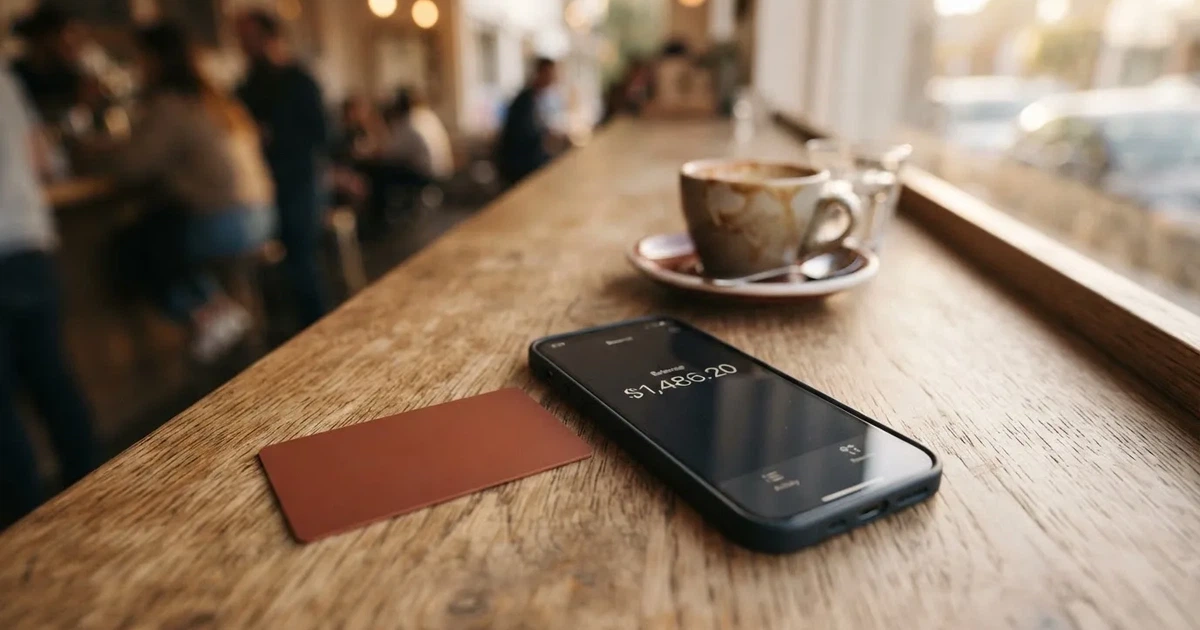
It is not a bank account. The card and the payment account are issued by PECUNIA CARDS EDE, S.L.U., an electronic money institution supervised by the Bank of Spain, trading as PECUNPAY. Bit2Me itself is the crypto platform in front of it, and it holds a MiCA authorisation from the Spanish regulator CNMV. So there are two regulated parties in the chain, which is normal for this product category and worth understanding before you put money through it.
The awkward part of reviewing this card is that the official card page is thin. It does not list countries, does not state identity-check requirements, and does not print conversion or foreign-exchange fees. Almost everything a reader wants to know — availability, the exact cost of spending from crypto, cash-withdrawal prices, spending limits — comes from third-party sites that I have marked as unofficial below and could not confirm on Bit2Me’s own pages. That is not a reason to avoid the card. It is a reason to know which numbers are the company’s and which are somebody else’s.
Conditions are current as of October 28, 2026.
Verdict: 6.8 out of 10
| Criterion | Mark | Why |
|---|---|---|
| Who can get it | 5 / 10 | The official card page lists no countries; unofficial sources say 29 countries, mostly EEA, with tax residence in a supported country required and Canada, Ireland, Japan and the United States closed |
| Cost | 7 / 10 | No maintenance fee is stated; unofficial figures put the virtual card at 0 EUR, the physical card at 20 EUR at levels 0–2, euro-wallet spending at 0%, crypto-funded spending at 0.95%, and non-euro payments at 1.75% and 2% |
| Top-up options | 7 / 10 | “Dozens of currencies”, you choose which wallet pays, a stablecoin can be linked — but the full coin list is not on the card page |
| Reliability and complaints | 7 / 10 | Issuer is PECUNIA CARDS EDE, S.L.U. under Bank of Spain supervision and Bit2Me holds a MiCA licence from CNMV; Trustpilot shows 3.9/5 from 2,484 reviews, with withdrawal delays and account blocks among the complaints |
| Everyday use | 9 / 10 | Physical, virtual or both, Mastercard, Apple Pay and Google Pay, cash withdrawal 24/7 |
Total: 6.8 / 10.
The card suits EU residents who want a Mastercard with high cashback, and it suits them well: 9 out of 10 for everyday use is not decoration, because the things you do every day — pay in a shop, pay online, pay with your phone, take money out at 2am — all work. The cashback ladder, if the unofficial numbers hold, is genuinely competitive up to its top levels.
It suits you badly if you are outside the supported country list, if you need a card in a currency other than the euro, if you want to know exactly what a payment costs before you make it, or if you are the kind of person who would rather hold your own keys than let a platform convert them. It also suits you badly if a blocked account would strand you, because the complaint pattern on Trustpilot is dominated by exactly that.
Will they give you the card?
Short answer: probably, if you are a tax resident in a supported European country — but the card itself does not tell you that. The official card page lists no countries at all, and it does not say whether eligibility runs on citizenship or on residence. That is not stated, and it is the first thing to check yourself before spending an afternoon on an application.
What third-party sources say, and I am marking this as unofficial because Bit2Me’s own pages do not confirm it: the card is available in 29 countries, mostly inside the EEA — Austria, Belgium, Germany, Poland, Spain, Sweden and others — and it is restricted in countries including Canada, Ireland, Japan, Tajikistan, the United States, Iran and Cuba. One such source, CryptoCardHub on 11 August 2026, says tax residence in a supported country is required. Another, a competitor’s blog, gives a slightly different picture: EEA tax residents excluding Ireland, plus Argentina for virtual cards only. Two unofficial sources disagreeing on Ireland is exactly why I would not build a plan around either version.
So the practical test is simple: are you tax-resident in a country on the current list, and can you prove it with documents? If yes, you are in the likely audience. If you are a citizen of a supported country living and paying tax somewhere else, the answer may be no even though your passport would qualify elsewhere.
How to get it
The official pages, read on 20 October 2026, say only that the card requires a Bit2Me account and that you can have a physical card, a virtual card, or both. It is a Mastercard, usable “at any online or physical store that accepts Mastercard payments”. The card’s own currency is not stated. Shipping countries, delivery time and delivery cost do not appear on the card page either.
Verification requirements are not stated on the official pages I read. Unofficially — CryptoCardHub in August 2026 and reporting in DPL News — you need a registered and verified Bit2Me account plus tax residence in a supported country. The base tier is said to require a government photo ID and a liveness check, with proof of address for higher tiers. Both sources also report users being asked for extra documents and put through manual review.
Read that last part as the normal experience rather than the exception. Any regulated European financial operation is required to verify identity and check sanctions lists, and EU rules say plainly that if due diligence cannot be completed the institution must hold back the transaction or end the relationship. That is why accounts freeze pending papers, and it is why a “why was I asked for my passport again” complaint appears so often in reviews of this and every comparable card. It is also why the higher cashback tiers, which need proof of address, may not be reachable on day one.
Fees: what it really costs
The clearest thing Bit2Me says about money is that you do not pay for maintenance: “Don’t pay anything for the maintenance of your virtual or physical cards.” Everything else — issuance, conversion, foreign exchange, cash withdrawal, limits — is not stated on the card page. The table below is therefore built almost entirely from unofficial sources, chiefly CryptoCardHub on 11 August 2026, and you should treat every figure as something to confirm with support before you rely on it.
| Fee or limit | Value | Source status |
|---|---|---|
| Maintenance fee | None for virtual or physical cards | Stated on the card page |
| Virtual card issuance | €0 | Unofficial |
| Physical card issuance | €20 at levels 0–2; €10 at L3; €5 at L4; €0 at L5–7 | Unofficial |
| Delivery | Plus €5 outside Spain | Unofficial |
| Spending from the euro wallet | 0% | Unofficial |
| Spending funded by crypto | 0.95% | Unofficial |
| SEPA payment in a non-euro currency | 1.75% | Unofficial |
| Other foreign-currency payment | 2% | Unofficial |
| ATM in Spain | €0 from Bit2Me | Unofficial |
| ATM in the rest of the Eurozone | €2.50 | Unofficial |
| ATM outside the Eurozone | €0.55 + 1%, minimum €0.75 | Unofficial |
| ATM limits | €300 per day, €3,000 per month, €30,000 per year; 5 per day, 50 per month, 150 per year | Unofficial |
| Purchase limits | €2,500 per transaction and per day, €20,000 per month, €200,000 per year | Unofficial |
| Card currency | Not stated | — |
| Conversion and FX fees | Not stated on the card page | — |
Three everyday payments show how those numbers actually land, and the third one is where this card quietly becomes expensive.
- Coffee in a euro shop, paid from the euro wallet. This is the cheapest case and the one the card is designed around: 0% according to the unofficial list. Nothing is converted, nothing is lost.
- Anything paid while your balance is funded from crypto. At the unofficial 0.95% rate, a hypothetical €100 purchase costs you €0.95 on top. Small in isolation, and invisible if you are not watching. It is the price of convenience, not a trap, but it is a real charge and it applies to every payment, not just the ones you think of as crypto spending.
- A purchase in a currency other than the euro. Here the unofficial figures split: 1.75% if it is a SEPA payment in another currency, 2% otherwise. On a €100 purchase that is €1.75 to €2. One of those sources, a competitor blog, gives the same 1.75% and 2%, which is mild corroboration — but two sites copying one number is not confirmation.
Two more cost facts deserve a line. Bit2Me says it will “refund up to 7%* on all your purchases”, and the asterisk is not explained on the page: payout currency and conditions are not stated. And the reward ladder is entirely unofficial — eight levels, 0 to 7 by points, cashback paid in B2M rather than as euro, not applied to euro-wallet purchases, with casinos, lotteries and betting excluded from the categories. That is a lot of structure to hold in your head, and it is the single best reason to read the support site rather than the card page.
How to top it up
Bit2Me’s own words: “Dozens of currencies”, and you choose which wallet pays. You can fund from crypto or from the euro wallet, and you can optionally link a stablecoin. The company also says you can “pay in euros without any commission”. What is not stated anywhere on the card page: the deposit fee, the minimum top-up, and any network fee. The full coin list is not there either — it sits on the support site.
Practically, top-up is where this card is different from an ordinary prepaid card, and where the real care is needed. Transfers on a blockchain are irreversible. If you send on a network the provider does not support, or to an address belonging to a different network, the money can be lost or need manual recovery with no guarantee attached. Two specific traps are worth memorising. ERC-20 tokens on Ethereum need ETH in the wallet to pay the gas; a wallet holding USDT and nothing else cannot send. And “USDC over TRC20” is not a native option, because Circle stopped supporting USDC on Tron in February 2024 — the common advice to send cheap USDC over Tron can therefore send the wrong asset. Tether’s own USDT does run on Ethereum, Tron, Solana, Polygon, Avalanche and others, and Tether says it disables tokens in wallets on the OFAC sanctions list and has frozen funds tied to illicit activity, which is worth remembering when someone tells you stablecoins are censorship-proof.
Withdrawal is the other half of the same question. The card page confirms cash withdrawal 24/7 and says nothing about taking the balance out or closing the account — not stated.
Paying with it every day
This is the card’s strongest suit, and it is why the everyday-use score is 9 out of 10. You can hold a physical card, a virtual card, or both; both are Mastercard, so they work anywhere Mastercard is accepted. Apple Pay and Google Pay are supported, and when you add the card to your phone the number is replaced by a device-specific token held in the phone’s Secure Element, never on Apple’s servers, with a fresh one-time code each payment — that part is genuinely good practice.
Cash withdrawal works 24/7. The reward claim is the headline: “We refund up to 7%* on all your purchases”, “up to 39% cashback” when combined with other products, up to 7% yield on purchases if you link a stablecoin, and up to +25% extra with Bit2Me Life at ten or more merchants. Every one of those carries a condition that is not stated on the page, so treat them as ceilings rather than rates.
Three practical realities temper this. Blocked merchant categories are not stated, which matters because gambling (MCC 7995 — casinos, betting, lotteries) is blocked by many issuers by policy rather than by law, and the blocked list varies by issuer. The company app is on iOS, iPad, Mac (M1+) and Android, with an App Store listing in Spain at 4.5/5 from about 3.8K ratings when read on 20 October 2026; the Google Play rating was not read. And a declined payment can leave a hold on your money for several days, typically up to seven. Disputes and chargeback process are not stated on the card page, which matters more for US readers than EU ones — prepaid-card coverage varies and should not be assumed.
What can go wrong
Start with the reviews, because they are the most concrete risk signal here. On Trustpilot, Bit2Me overall sits at 3.9/5 from 2,484 reviews as read on 20 October 2026, with 26% one-star and replies to 97% of negative reviews. No card-specific complaint thread was found, and no official incidents — this is the wider platform’s reputation, not the card’s. The themes cluster in mid-2026: withdrawals and transfers held under review in July and April 2026, account lockouts or a hack with phone calls unanswered between March and April 2026, slow support between February and April, and high fees on a small purchase in July. Against that, phone and WhatsApp support is praised repeatedly between May and August 2026, and an earlier report describes an account locked with funds held for over a year where Bit2Me replied that it prioritises security. Nothing on Reddit, no official incidents found.
Next, structure. The card is issued by PECUNIA CARDS EDE, S.L.U. (see above for regulatory details). E-money funds must be safeguarded — segregated in dedicated accounts or insured — but they are not bank deposits and may not be covered by a deposit guarantee scheme. So “your money is safe” is a question with a qualified answer, not a slogan.
Then the crypto side. Until you spend, your crypto sits with the platform: the provider holds the credentials, so you trust them completely. Transfers are irreversible and a stolen private key has no recovery path — the network cannot freeze or return funds. Custodial platforms have a real record of failures: Mt. Gox (about US$350 million reported stolen, 2011–2014), Coincheck (about US$400 million, 2018) and Ronin Network (US$625 million, 2022). The platform’s standing is not the same as its own record, but counterparty risk is real. And stablecoins can depeg: TerraUSD collapsed in May 2022 and USDC temporarily lost its peg in March 2023. If you link a stablecoin to earn yield on purchases, you take that risk knowingly.
Regulation cuts both ways, which is unusual and worth seeing clearly. Bit2Me holds MiCA authorisation from CNMV — press reports call it the first Spanish platform to receive it, with the register listing 2025-10-31 and press dates conflicting. Bankinter joined the capital in a EUR 30 million round with Tether taking a minority stake. That is real regulatory standing. But MiCA governs the crypto side; the card itself is a payment service under separate law, which is why a crypto card like this depends on two licences. And the card business can end: Visa terminated its global agreements with FTX on 13 November 2022, Visa suspended WaveCrest in Europe in 2018 closing all WaveCrest-issued programmes, and programme closures typically mean a notice period, then spending and loading stop, then you are asked to withdraw what is left.
Two smaller risk notes. Merchants can look up the BIN and see which institution and country issued the card, and may apply extra scrutiny when the issuer country differs from your billing address — that is normal for a Spanish-issued card used elsewhere, and it is one reason a payment gets declined. And address verification, which compares the numeric parts of a billing address with issuer records, is generally unavailable for foreign-issued cards, which can cause declines too.
Support is offered in nine languages, though the list and the hours are not given; the email [email protected] and phone +34 910913788 come from the App Store listing. Two-factor authentication, instant freeze, spending limits and custody model are not stated on the card page.
What to take instead
| Card | Score | Issuer / network | Who it is for | Main gap |
|---|---|---|---|---|
| Bit2Me | 6.8 / 10 | PECUNIA CARDS EDE, S.L.U. — Mastercard | EEA tax residents who want Mastercard with high cashback | Costs and eligibility live off the official page |
| Whop Cards | 5.2 / 10 | Visa | Consumers in 31 US states; businesses in 41 | No official country list outside the US; fees unstated |
| Stella | 6.5 / 10 | VISA | Custodial crypto deposit funding the card automatically | Sanctions terms bar many users; no cashback stated |
| UniFi Card | 4.7 / 10 | Lead Bank — Visa debit, USD | US-centric, send money routes | Fees unstated, and much of the coverage is unconfirmed |
Whop Cards is the closest thing to a US answer: Visa, works anywhere Visa is accepted, “No extra fees” on the page with no amounts listed, 5% cashback at select merchants currently Uber. Its weakness is geography — 31 US states for consumers (including California, Florida, New York, Texas, Washington) and 41 for businesses, with a long unsupported list including Belarus, China (Mainland), Cuba, Hong Kong, India, Iran, Iraq, Israel, Russia, Turkey, Ukraine and Vietnam. Whether eligibility runs on citizenship or residence is not stated. It spends from a Whop balance, backed by stablecoin collateral from a linked wallet, coins not stated.
Stella offers virtual and physical VISA cards working at “over 40 million VISA merchants globally”, funded by depositing crypto into the account, which tops up the card automatically. Its terms bar users under economic sanctions programmes and route US and European users through affiliates, the official card page states no cashback, and its costs are “described under this User Agreement and/or on the App” — none of which I could read as a figure.
UniFi Card is a prepaid Visa debit issued by Lead Bank, US dollar, with Apple Pay support and funding by ACH, wire, SEPA or SPEI, or by getting paid to a USDC wallet. Beyond USDC, coins and networks are not stated. Fees are covered by “Fees may apply. See UniFi website for more details”, and a 3% rewards-on-balances claim appears in the listing while card cashback is not stated. Much of its geographic coverage could not be confirmed from official pages; the app lists send-money routes to the Philippines, Mexico and the eurozone, with release notes mentioning Colombia, Brazil and the UK.
If your problem is that a mainstream bank will not open an account for you, the honest ranking is: Bit2Me first if you are in a supported European country, Whop Cards if you are in a listed US state, and neither if you are anywhere else without a tax residence you can document.
Who I would recommend it to
I would recommend this card to a person living and paying tax in a supported European country who already holds crypto, wants to spend it without manually converting every time, and values a phone-friendly Mastercard with a meaningful cashback rate more than exact cost transparency. For them the trade is clean: 0.95% on crypto-funded spending, in exchange for not having to think about networks, token choices or conversion timing on the shop floor.
I would not recommend it to someone who is outside the supported list and hoping, because the official page will not tell them and the unofficial lists already exclude the obvious candidates. Nor to someone whose income depends on a stablecoin balance, since a depeg would land directly on their spending money. Nor to anyone who needs predictable per-payment costs, a non-euro card, or certainty about chargeback rights — the numbers are all there, but they are not on the company’s page, which means you are relying on a third party to tell you what a payment costs.
And I would treat it as a spending tool, not as a place to keep money. E-money safeguarding is real but is not a bank deposit guarantee, reviews show frozen accounts and delayed withdrawals, and the card programme could in principle be wound down the way FTX’s and WaveCrest’s were. Keep what you need on the card, not what you cannot afford to wait for.
Frequently asked questions
What is the Bit2Me card?
The Bit2Me card is a Mastercard — physical, virtual, or both — that spends from your balance inside the Spanish crypto platform Bit2Me. It works at any online or physical store that accepts Mastercard, supports Apple Pay and Google Pay, and offers cash withdrawal 24/7. The card and payment account are issued by PECUNIA CARDS EDE, S.L.U. (trading as PECUNPAY); Bit2Me itself holds a MiCA authorisation from CNMV.
Is Bit2Me a bank?
No. Bit2Me is a crypto platform, not a bank. The card comes from PECUNIA CARDS EDE, S.L.U., and Bit2Me acts as the platform in front of it. Customer funds must be safeguarded by segregation or insurance, but e-money is not a bank deposit and may not be covered by a deposit guarantee scheme, so treat the balance as safeguarded rather than banked.
Who owns Bit2Me?
Ownership is not stated on the card page. What is publicly known: Bit2Me holds MiCA authorisation from CNMV, described in press reports as the first Spanish platform to receive it, with the register listing 2025-10-31 and press dates conflicting. Bankinter joined the capital in a EUR 30 million round in which Tether took a minority stake.
Does Bit2Me card require KYC?
The official card pages do not state the verification requirements. Unofficially — CryptoCardHub in August 2026 and DPL News — you need a registered and verified Bit2Me account and tax residence in a supported country, with a government photo ID and liveness check at the base tier and proof of address for higher tiers. Users report extra document requests and manual reviews, which is normal for a regulated EU firm.
Is the Bit2Me card available in my country?
The card page lists no countries, and whether eligibility follows citizenship or residence is not stated. Unofficial sources say 29 countries, mostly EEA — Austria, Belgium, Germany, Poland, Spain, Sweden among them — with Canada, Ireland, Japan, Tajikistan, the United States, Iran and Cuba restricted, and tax residence in a supported country required. Check with support before applying.
How do I top up the Bit2Me card?
Bit2Me says “Dozens of currencies” and that you choose which wallet pays, so you can fund from crypto or from the euro wallet, and you can optionally link a stablecoin; it also says you can pay in euros without any commission. The deposit fee, the minimum top-up and any network fee are not stated. Be careful with networks — transfers are irreversible, and Circle stopped supporting USDC on Tron in February 2024.
Is the Bit2Me card free?
Keeping it is free: the company says you do not pay anything for maintenance of your virtual or physical cards. Issuance is not stated on the card page, but unofficial figures give a virtual card at €0 and a physical card at €20 at levels 0–2, falling to €0 at levels 5–7, plus €5 delivery outside Spain. Spending from the euro wallet is said to be 0%, crypto-funded spending 0.95%.
What are the fees and limits?
Neither is stated on the card page. Unofficially: SEPA payments in a non-euro currency cost 1.75% and other foreign-currency payments 2%, with ATM withdrawals at €2.50 in the rest of the Eurozone and €0.55 + 1% outside it (minimum €0.75). Purchase limits are given as €2,500 per transaction and per day, €20,000 per month, €200,000 per year.
Is the Bit2Me card safe?
Regulated, with real caveats. The issuer is supervised by the Bank of Spain and Bit2Me holds a MiCA licence, which is genuine. But customer funds are e-money safeguarded rather than bank deposits, your crypto is held custodially until you spend it, and blockchain transfers are irreversible. Trustpilot shows 3.9/5 from 2,484 reviews, with withdrawal delays and account blocks among the recurring complaints.
Is the Bit2Me card worth it?
For an EEA tax resident who already holds crypto and wants a phone-friendly Mastercard with cashback advertised at up to 7%, probably yes — the everyday-use side is the strongest part of the offer. If you need predictable per-payment costs, a card in another currency, or certainty about chargeback rights, the detail is not on the official page and you would be relying on third-party figures. If you are outside the supported countries, the answer is no regardless of the rewards.
App and neobank cards: the entry point – cryptocardportal.com
Content created by the «cryptocardportal.com» team